
Writing is like stepping into the mind of a mad artist—except instead of paint, we’re hurling words at the canvas, desperate for them to stick in some coherent, haunting form. Each sentence is a gamble, a calculated risk, as we peel back the layers of our own psyche and let the chaos spill out. We do it because it’s the only way to exorcise the thoughts, the ideas, the feelings that claw at the edges of our sanity. It’s like that dream where you’re soaring through the sky, weightless and free… until you wake up, gasping, tangled in your bedsheets, the phantom sensation of falling still gripping your chest.
But what if you didn’t wake up? What if the dream kept going, twisting, unraveling, pulling you deeper into its labyrinth? Writing a psychological thriller is exactly that—a descent into the unknown, where every word is a breadcrumb leading your reader into the dark. And once they’re there, there’s no turning back.
My life feels like one long psychological thriller, each chapter more twisted than the last. Since retiring, I’ve finally had the time to dive headfirst into the labyrinth of my own thoughts—a place both exhilarating and unnerving. Since 2012, I’ve been sharing these musings with you, attempting to shape them into books, novels, or any form of written escapism that might help me make sense of the chaos. Writing, after all, is the only way to wrestle with the shadows lurking in the corners of the mind.
This medium—this glorious, maddening medium—has no boundaries. Well, except for the ones imposed by caffeine levels and the occasional existential crisis. The only limits are the depths of your imagination and how long you can resist the siren call of Netflix. Here, you’ll find a kaleidoscope of thoughts: heartfelt gratitude, sharp-edged disdain, and opinions—so many opinions. Politics, technology, the eternal mystery of why socks vanish in the laundry—nothing is off-limits.
As a self-proclaimed “humanist,” I like to believe humanity is doing its best. But some days, it feels like we’re toddlers fumbling with IKEA furniture, missing half the pieces and pretending we know what we’re doing. Still, I cling to optimism. Why? Because enlightenment through self-awareness is the key—or so I tell myself. At the very least, it’s a great excuse to spend hours overanalyzing everything while sipping overpriced coffee and wondering if the darkness ever truly lifts
But here’s the thing about writing: it’s not just an escape. It’s a mirror. A way to confront the shadows, the doubts, the questions that keep you awake at night. And maybe, just maybe, it’s a way to find the light—or at least a flicker of it—amid the chaos.
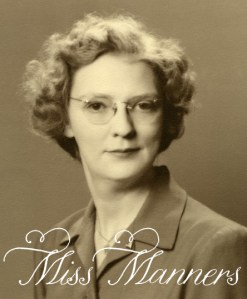
 “Who are you?”
My passions are as varied as a buffet at an all-you-can-eat restaurant, but they all orbit around the arts—visual, audio, and the written word. Whether it’s painting a masterpiece (or at least something that vaguely resembles one), crafting a story that makes people laugh, cry, or question their life choices, or simply enjoying the sweet sound of music that isn’t auto-tuned to oblivion, I’m all in.
The arts, after all, are humanity’s way of saying, “Hey, look what I made!”—whether it’s a breathtaking sculpture, a novel that keeps you up all night, or a song that gets stuck in your head for three days straight. It’s about taking the chaos of life and turning it into something beautiful, meaningful, or at least mildly entertaining. And let’s be honest, sometimes it’s just about doodling stick figures and calling it “abstract.”
For me, the arts are like a playground for the imagination—no rules, no boundaries, and definitely no judgment (except maybe from that one guy who thinks he’s an art critic because he once watched a documentary about Picasso). Whether it’s visual arts, performing arts, or literary arts, I love diving into the creative process and seeing where it takes me. Sometimes it’s a masterpiece, and sometimes it’s… well, let’s just call it “experimental.”
At the end of the day, the arts are about connection—connecting with others, with ourselves, and with the world around us. And if I can make someone laugh, cry, or even just raise an eyebrow in confusion, then I’d say my work here is done.

As a proud child of the “atomic” age, my fascination with technology feels as inevitable as a mushroom cloud in a 1950s sci-fi movie. I mean, when you grow up in an era where people were naming swimsuits after nuclear test sites and selling “atomic” cereal box toys, it’s hard not to feel like technology is your destiny. It’s almost like the universe handed me a Geiger counter and said, “Go forth and marvel at the gadgets!”
After all, if the atomic age taught us anything, it’s that humanity can split atoms, build rockets, and somehow still think hiding under a school desk will protect us from a nuclear blast. Truly inspiring stuff.
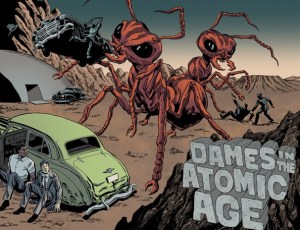 “Them”
Growing up, I witnessed the evolution of entertainment technology firsthand—starting with the humble radio, then the black-and-white TV (which made everything look like a noir film), and finally the glorious arrival of color TV in the late ’60s. Back then, seeing a show in color felt like discovering a whole new dimension. It was like Dorothy stepping out of Kansas and into Oz, except Oz was mostly just sitcoms and game shows.
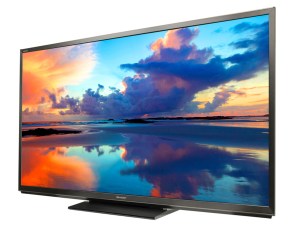
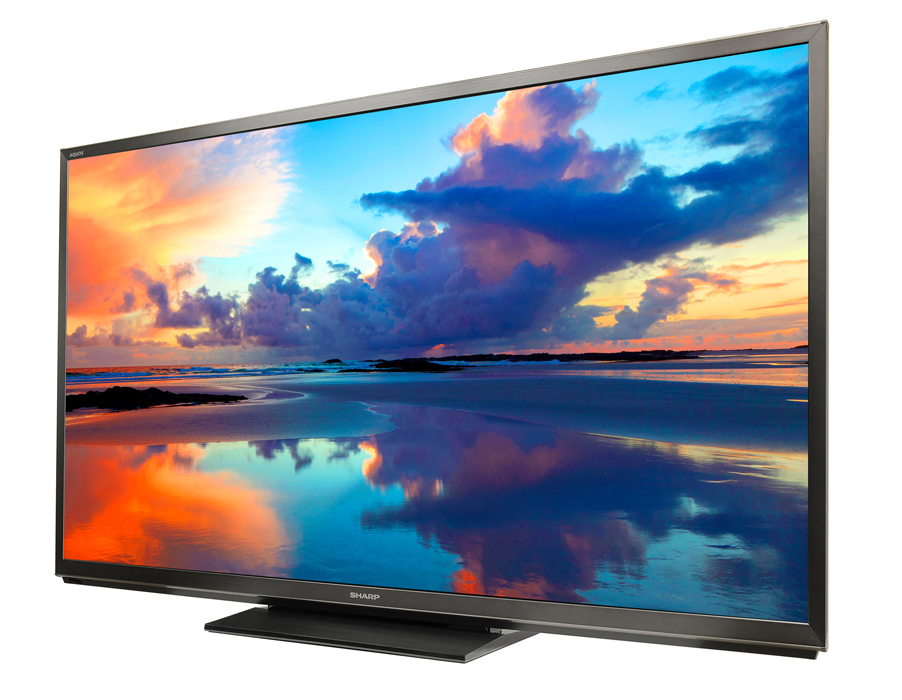
But let’s be honest—those old TVs now look like ancient relics compared to the flat-screen, super-high-definition marvels that hang on walls today like modern-day Monets. These screens are so sharp and vibrant that you can count the pores on an actor’s face or spot a stray hair on a CGI dragon. It’s almost unfair to compare them. The TVs of my childhood were bulky, fuzzy, and required constant fiddling with rabbit-ear antennas, while today’s TVs are sleek, smart, and practically scream, “Look at me, I’m the future!”
.
Now, every home in America seems to have a flat-screen TV so big it could double as a drive-in movie screen. And with 4K, 8K, and whatever-K resolution, the picture quality is so good it feels like the actors are about to step out of the screen and ask for a snack. Honestly, it’s a miracle we ever survived watching sports or movies on those old TVs without squinting and asking, “Wait, is that a football or a smudge?”
.
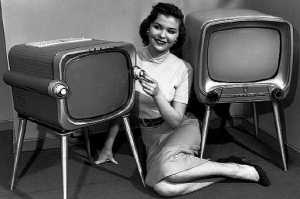 “I actually had the TV that she is touching.”
I grew up in a time when we had a whopping half-dozen TV channels, and they all politely went to bed after the nightly news. If you stayed up late, you’d be greeted by static or that weird rainbow test pattern, as if the TV was saying, “That’s enough, go to sleep!” Fast forward to today, and we’ve got hundreds of channels running 24/7, all competing to see who can keep us awake the longest. News, reality shows, cooking competitions, and even channels dedicated to fireplaces—there’s something for everyone, including insomniacs.
And then there’s our phones. These little pocket-sized miracles are more powerful than all the computers that sent a man to the moon. Think about that: NASA had rooms full of computers the size of refrigerators, and now we’ve got more computing power in a device we mostly use to scroll through memes and argue with strangers on social media. If the Apollo astronauts had smartphones, they probably could’ve live-streamed the moon landing on TikTok.
It’s wild to think how far we’ve come. From rabbit-ear antennas and “please stand by” screens to binge-watching entire seasons on a flat-screen while ordering pizza with a single tap on our phones. The future is here, and it’s both amazing and slightly ridiculous.
 This was what things looked like…
We went from integrity with the news media to them becoming lapdogs for whatever administration is in power. I doubt Walter Cronkite would have buried a story if it did not make the current administration look stellar.
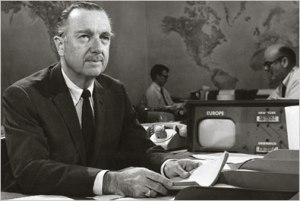
 These two were worlds apart.
We’ve gone from the days when the news media prided itself on integrity to a time when they seem more like lapdogs eagerly waiting for a treat from whichever administration is in power. Back in the day, Walter Cronkite wouldn’t have buried a story just because it didn’t make the current administration look like the second coming of George Washington. No, Uncle Walter would’ve calmly adjusted his glasses, delivered the facts, and signed off with his iconic, “And that’s the way it is,” leaving no room for spin or fluff.
Today, though? It feels like some news outlets are auditioning for the role of cheerleader-in-chief, pom-poms and all. Cronkite, who was once dubbed “the most trusted man in America,” earned that title by calling it like he saw it—whether it was JFK, Nixon, or the moon landing. He didn’t play favorites, and he certainly didn’t let political agendas dictate the news. Can you imagine him trying to navigate today’s 24/7 news cycle, where every story comes with a side of bias and a sprinkle of outrage? He’d probably shake his head, mutter something about journalistic standards, and go back to covering the facts, no matter how inconvenient they were for those in power
Cronkite’s legacy reminds us of a time when the news was about informing the public, not entertaining them or pandering to their political leanings. It’s hard not to wonder what he’d think of today’s media landscape, where the line between news and opinion is blurrier than a bad Zoom call
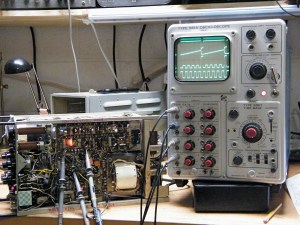
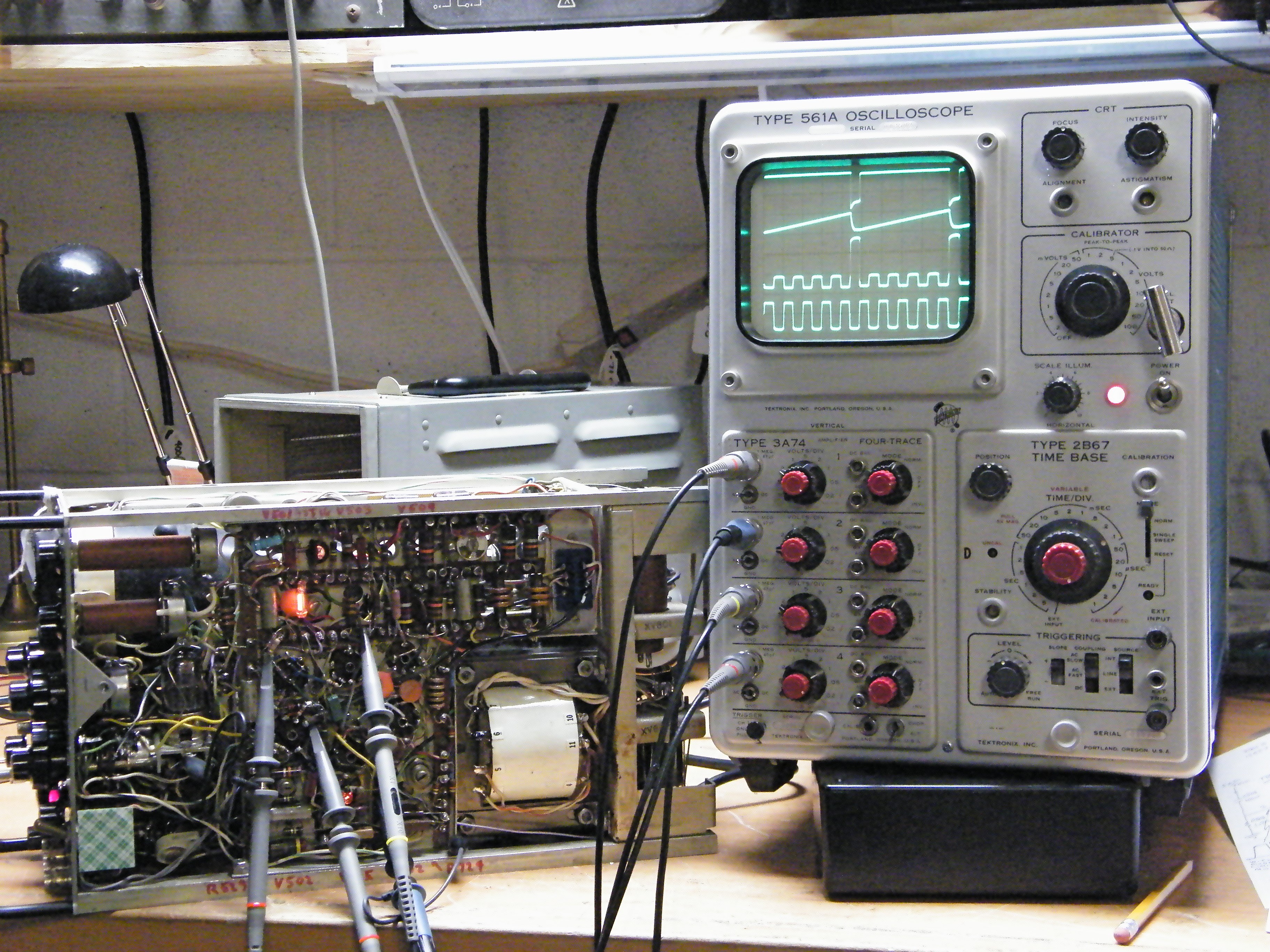
While my peers were out playing ball, chasing girls, and generally living the carefree lives of future sitcom characters, I was busy chasing electrons and trying to wrap my head around the mysteries of biasing tubes and transistors. Let’s just say, while they were figuring out how to ask someone to prom, I was figuring out how to keep a circuit from frying itself. Priorities, right?
DC electronics? That was the easy part—straightforward, predictable, like a well-behaved child. But AC? Oh, that was a whole new ball game. It was like trying to tame a wild horse that kept changing direction just to mess with you. And then there was RF (radio frequency), which wasn’t just a ball game—it was the World Series of electronics. Understanding RF was imperative, not just because it was fascinating, but because it felt like the secret handshake of the tech world. If you could master RF, you were in the club. If not, well, you were stuck on the sidelines with the AM radio static.
So while others were perfecting their curveballs or their pick-up lines, I was perfecting my understanding of circuits, oscilloscopes, and the delicate art of not electrocuting myself. And honestly? I wouldn’t have had it any other way.
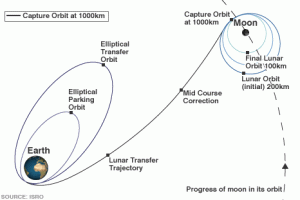
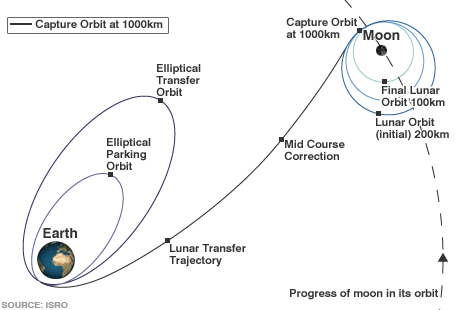
School was mind-numbingly boring. While my classmates were dutifully memorizing the dates of ancient empires and marveling at the architectural genius of pagodas, my brain was busy calculating the velocity needed to escape Earth’s atmosphere. I mean, sure, the Great Wall of China is impressive, but have you ever thought about how to slingshot a spacecraft around Jupiter using gravity? Now that’s exciting.
History class? Forget it. While everyone else was debating the significance of the Ming Dynasty, I was sitting there wondering how to harness gravitational assists to save fuel in space travel. My teachers probably thought I was daydreaming, but in reality, I was mentally launching rockets and plotting orbital trajectories. AC circuits and RF frequencies were my real homework, even if the school didn’t assign them.
Honestly, it was hard to focus on the rise and fall of empires when I was busy trying to figure out how to conquer the cosmos. After all, who needs to know about ancient trade routes when you’re busy mapping out the fastest way to Mars?
Physics had me hooked from the moment I learned that apples don’t just fall—they accelerate. By elementary school, I was already fascinated by the mysteries of the universe, and by the time I discovered particle physics, I was asking the big questions: How exactly does gravity work? Can you explain magnetism without making my brain hurt? And why did Einstein lose sleep over the whole wave-photon argument? (Seriously, if it drove Einstein nuts, what hope do the rest of us have?)
When I hit a mental block while writing, I don’t just stare at the wall—I escape into the mind-bending world of particle physics or dive headfirst into the grandfather paradox. You know, the classic time-travel conundrum: What happens if you go back in time and accidentally (or intentionally, no judgment) prevent your grandfather from having kids? Would you cease to exist? And if you never existed, how could you have gone back in time in the first place? It’s like trying to untangle a pair of headphones that have been in your pocket for a week—frustrating, fascinating, and borderline impossible.
The grandfather paradox is one of those puzzles that makes you question everything. Some physicists argue that time travel might still be possible, but the universe would find a way to keep things consistent. For example, if you tried to off your grandfather, something would intervene—maybe you’d trip over a rock, or your weapon would jam, or your grandfather would suddenly develop ninja reflexes
Others suggest that time travel could create alternate timelines, where you’d just hop into a parallel universe where your actions don’t mess up your own existence.
And then there’s the idea that the universe itself might “self-correct,” like a cosmic spell-checker, ensuring that no paradoxes ever actually occur. It’s comforting to think that the universe has our backs, even if it’s just to stop us from breaking reality.
So, while some people unwind with a good book or a walk in the park, I relax by pondering whether time travel is theoretically possible or if gravity is just the universe’s way of keeping us grounded—literally and figuratively. It’s a great way to clear my head, even if it occasionally leaves me questioning whether I’m stuck in my own time loop.
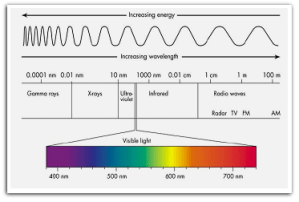
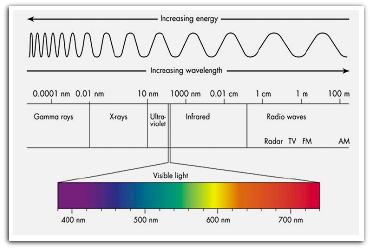
In elementary school, we had this thing called “show and tell,” where kids would bring in their latest vacation souvenirs, shiny new Christmas presents, or some random rock they swore was special. When it was my turn, though, I didn’t just show—I taught. While my classmates were showing off seashells or action figures, I was up there giving mini-lectures on radio wave propagation or breaking down the electromagnetic spectrum. Nothing says “elementary school fun” like a deep dive into the mysteries of light waves, right? I’m sure my teacher was thrilled to have a 10-year-old hijack the class with a science seminar.
The science fair was my real time to shine, though. I loved it. While other kids were erupting baking soda volcanoes or gluing macaroni to poster boards, I was busy conducting experiments that probably required a disclaimer and a safety manual. The only problem? I don’t think anyone actually understood what I was doing. My projects were met with a lot of blank stares and polite nods—until I finally dumbed one down enough to explain static electricity. Rub a balloon on your head, stick it to the wall, and suddenly I was a genius. Who knew all it took to impress people was a little hair-raising fun?
Looking back, I probably should’ve just brought in a cool rock like everyone else. But hey, someone had to keep the class informed about the wonders of science. You’re welcome, third grade.
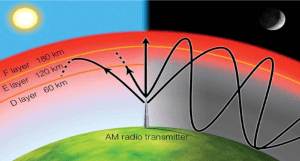
When speaking, one must consider their audience.

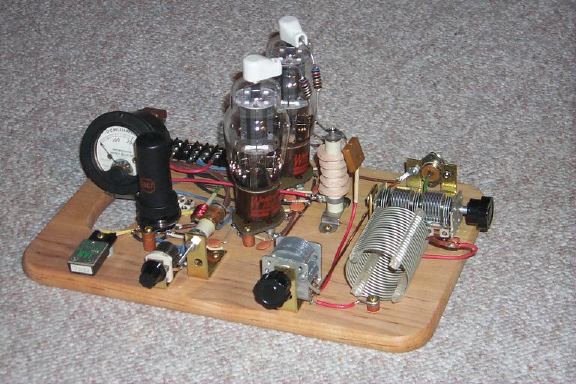
I earned my first amateur radio license at the ripe old age of 13, which, in hindsight, probably made me the nerdiest kid in the neighborhood—and I wore that badge with pride. While my friends were busy riding bikes or playing baseball, I was scavenging old TV parts and flipping through the ARRL handbook like it was the holy grail of electronics. I built my first transmitter from those salvaged parts, which was basically the tech equivalent of Frankenstein’s monster, and paired it with a borrowed Hallicrafters receiver
Let’s just say it wasn’t exactly cutting-edge, but it got the job done.
With about 15 watts ERP (effective radiated power), I started talking to people all over the world through Morse Code. That’s right—while other kids were learning to throw curveballs, I was tapping out “CQ” and making friends in far-off places. It was like the original social media, except instead of emojis, you had dots and dashes. And let me tell you, there’s nothing quite like the thrill of hearing a faint reply from halfway across the globe and realizing, “Hey, someone out there is actually listening to me!”
Eventually, I upgraded my setup to a Hammarlund receiver and a DX-100 transmitter. Now, these things were massive. By today’s standards, they’re basically boat anchors—seriously, you could sink a small ship with them—but back then, they were top-notch gear. The DX-100 was a beast, and the Hammarlund receiver? Let’s just say it made my old Hallicrafters look like a tin can with a string attached
Looking back, those early days of ham radio were some of the best. Sure, my setup wasn’t fancy, and my experiments often involved a lot of trial and error (and maybe a few sparks), but there was something magical about connecting with people through the airwaves. It was like being part of a secret club where the password was Morse Code and the handshake was a perfectly tuned frequency
 Not mine, but very much like mine.
I barely scraped through school, mostly because it was mind-numbingly boring and taught me almost nothing I actually cared about. Seriously, sitting through lectures about things I had zero interest in felt like watching paint dry—except the paint was also lecturing me about pagodas or long division. But here’s the twist: after I graduated and escaped the monotony, I went back and re-taught myself every single subject I did poorly in. Why? Because, apparently, I’m the kind of person who finds things fascinating after they’re no longer mandatory.
The first thing I tackled was math, because, let’s face it, you can’t dive into electronics or physics without knowing your way around numbers. Back in school, math felt like a cruel punishment, but now? It was like unlocking a secret language that made everything click. Suddenly, equations weren’t just abstract torture devices—they were tools I could use to build and understand the world around me. Who knew math could actually be… useful?
Then there was history. In school, history was just a blur of dates, wars, and names I couldn’t pronounce. But now, talking to all these wise, fascinating people from around the world, I realized history wasn’t just about memorizing facts—it was about understanding why things happened and how they shaped the world we live in. Every time I learned something new, it was like a lightbulb went off in my head, and I’d find myself saying, “Oh… that’s why!” It was like discovering the director’s commentary for the movie of humanity.
So, while school may have bored me to tears, I’ve since discovered that learning on my own terms is a whole different ballgame. Turns out, the problem wasn’t the subjects—it was the way they were taught. Now, I’m making up for lost time, one “Oh…!” moment at a time.
Imagine a world where teachers stopped teaching to the test and stopped treating kids like they all came out of the same cookie-cutter mold. What if, instead of drilling students on standardized answers, they actually excited them about the wonders of math or the messy, fascinating truths of history? Picture a classroom where kids weren’t just memorizing formulas but were genuinely curious about why 2 + 2 equals 4—and why that matters when you’re trying to build a rocket or balance a budget.
What if teachers got students fired up about the idea that power corrupts, and wars don’t just “happen”—they’re often the result of misunderstandings, egos, and a couple of narcissists who couldn’t agree on whose mustache looked better? Imagine a history lesson where kids learned not just what happened, but why it happened—and how those same patterns still play out today, just with fancier technology and better PR teams.
And what if, instead of just glossing over the moon landing as a historical footnote, teachers got kids excited about why it was so important? Not just because it was a giant leap for mankind, but because it showed us what humans are capable of when we dream big, work together, and maybe throw a little math and duct tape into the mix. Imagine students sitting on the edge of their seats, wondering how we used gravity to slingshot a spacecraft or how a misunderstanding between two world leaders could spiral into a global conflict. That’s the kind of learning that sticks—the kind that makes kids go home and say, “You won’t believe what I learned today!”
The truth is, teaching isn’t just about delivering information; it’s about sparking curiosity and showing students how the world works—and why it matters. As one study points out, effective teaching happens when educators recognize that students are diverse, with different interests, strengths, and motivations
When teachers tap into those differences and make learning personal, students are more engaged and motivated to learn.
But here’s the kicker: this kind of teaching requires creativity, flexibility, and a willingness to throw out the script. It’s not about cramming facts into kids’ heads; it’s about helping them connect the dots and see the bigger picture. As Sir Ken Robinson once said, “Teaching to the test gets an ‘F’” because it stifles creativity and curiosity. Instead, we need classrooms where students are encouraged to do something with what they learn—whether it’s solving real-world problems, debating big ideas, or just asking, “What if?”
So, imagine a world where teachers weren’t just instructors but storytellers, scientists, and explorers, guiding students through the wonders of the universe and the complexities of human nature. A world where kids left school not just with answers, but with better questions. Now that would be an education worth getting excited about.
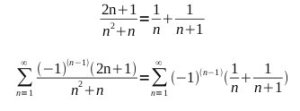
Geography started to feel almost too easy once I began talking to people from all over the world. Suddenly, it wasn’t just about memorizing capitals or tracing rivers on a map—it was about asking, “So, where in the world are you?” and actually caring about the answer. I had one of those big world maps with stick pins marking every place I’d made contact. At first, it looked neat and organized, but before long, it resembled a bad case of measles. If someone had walked into my room, they might’ve thought I was tracking an outbreak instead of radio signals.
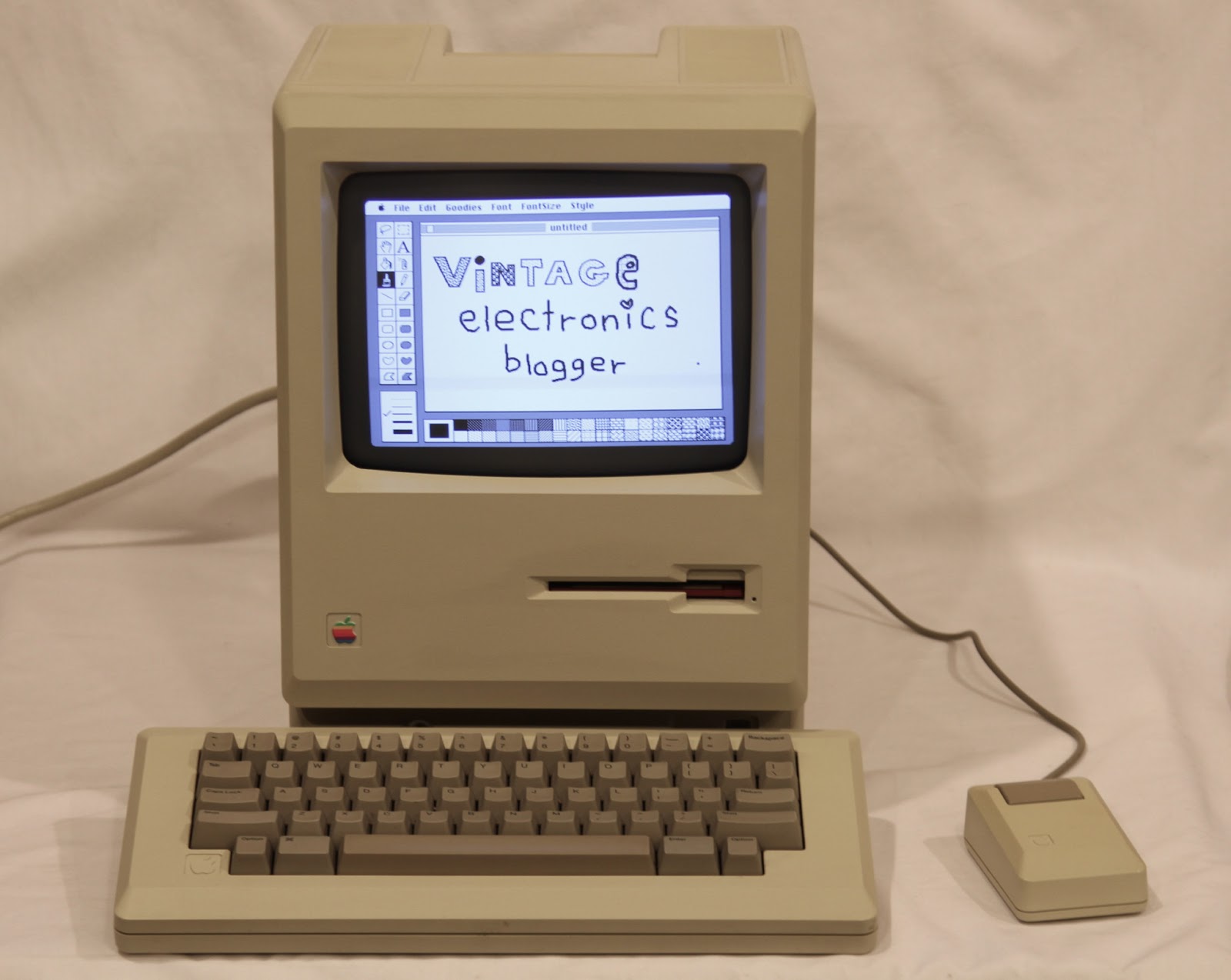
Then came the early ’80s, and with it, the dawn of personal computers. This was long before Microsoft and Steve Jobs became household names—back when computers were more like mysterious boxes of magic and less like the sleek, pocket-sized devices we carry today. I dove headfirst into this new world, fascinated by the possibilities. Programming quickly became my obsession. Forget hobbies, forget sleep—I was glued to that keyboard like it was a lifeline to the future.
There were days when I’d sit down at the computer “just for a little while,” and the next thing I knew, the sun was coming up. I’d glance at the clock, realize I had to be at work in an hour, and think, “Well, I guess coffee is my new best friend.” It wasn’t just a hobby—it was a full-blown time warp. One minute I’d be debugging some code, and the next, I’d be wondering why the birds were chirping and why I hadn’t eaten in 12 hours.
Looking back, those were some of the most exciting and exhausting days of my life. Between mapping the world with stick pins and programming until dawn, I was living in a constant state of discovery. Sure, I might’ve looked like a zombie some mornings, but hey, who needs sleep when you’re busy exploring the universe—one radio wave and one line of code at a time?
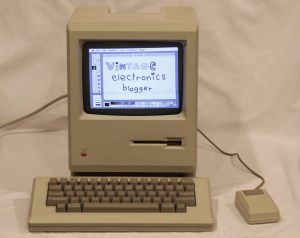 This was not my first computer, but I did have one later in life.
Most of my adult life has revolved around technology—and, more importantly, managing the people who use it. Let me tell you, wrangling humans and technology at the same time is no small feat. It’s like being the ringmaster of a circus where the performers are half programmers, half machines, and the lions are just rogue printers refusing to connect to Wi-Fi.
Technology has been the backbone of everything I’ve done, from solving problems to creating new ones (because let’s be honest, every solution in tech seems to come with at least three new bugs). But the real challenge? Managing the people who use it. Humans and technology have a love-hate relationship, and I’ve spent years playing referee. One minute, someone’s marveling at how a piece of software has revolutionized their workflow, and the next, they’re threatening to throw their laptop out the window because “the system froze again.”
The digital revolution has made life faster, more interconnected, and, occasionally, more chaotic. As one study points out, technology has become so complex and intertwined with our daily lives that even simple things—like cars, medical devices, or financial transactions—rely on more software than ever before. It’s a double-edged sword: on one hand, it’s amazing how much we can do with a few clicks; on the other, it’s terrifying how much can go wrong when those clicks don’t work.
But despite the occasional chaos, I’ve always been fascinated by how technology shapes the world—and how people adapt to it. Whether it’s helping someone understand a new system or figuring out how to make tech work better for everyone, I’ve found that the real magic happens when humans and machines work together. Sure, it’s not always smooth sailing, but when it works, it’s like watching a symphony of circuits and creativity come to life.
So, while my life has been centered on technology, it’s really been about the people behind it—the ones who use it, break it, and occasionally curse at it. And honestly? I wouldn’t have it any other way.
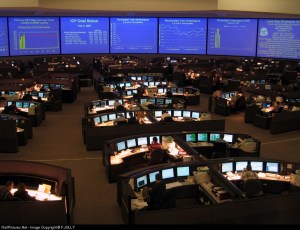

Science has always been woven into the fabric of who I am—it’s like my DNA came pre-programmed with a curiosity for how the universe works. But alongside my love for science, fiction snuck in, fueled by my constant need to ask, “What if?” And let’s be honest, once you start asking “What if?” it’s a slippery slope into the world of science fiction. One minute you’re pondering how gravity works, and the next, you’re imagining a world where humans live on a planet with reverse gravity and have to strap themselves down just to eat breakfast.
That insatiable curiosity is what led me to writing science fiction. It’s the perfect playground for a mind that refuses to stop asking questions. As one source puts it, science fiction thrives on the “what if” question—it’s the driving force behind the genre
What if we could travel faster than light? What if artificial intelligence became self-aware? What if aliens showed up and were terrified of us? The possibilities are endless, and the more I explored them, the more I realized I wanted to create my own worlds, my own “what ifs,” and my own stories.
Writing science fiction is like conducting a grand experiment, except instead of a lab coat, you’re armed with a keyboard. You get to blend the extraordinary with the ordinary, creating worlds that feel both fantastical and eerily possible
And the best part? You can use science fiction to explore big ideas—power, humanity, technology, and the consequences of our actions—while still having fun imagining things like time-traveling coffee machines or intergalactic karaoke competitions.
When I hit a mental block, I remind myself of the advice from sci-fi greats: start with a big question and let it guide you. As one source explains, the best science fiction stories don’t just ask “what if,” but also “and then what happens?”
It’s not just about the cool tech or the futuristic setting—it’s about the human element, the drama, and the choices characters make when faced with the unknown. That’s what makes science fiction so compelling—it’s not just about the science; it’s about the people navigating it.
So, while science has always been my foundation, fiction has become my launchpad. Together, they let me explore the impossible, the improbable, and the downright bizarre—all while asking the biggest question of all: “What if?”

Education needs a serious overhaul—or maybe just a sledgehammer. Looking back, I can confidently say that much of my young life was wasted trying to cram useless crap into my brain that I wasn’t remotely prepared for. It’s like they handed me a calculus textbook and said, “Here, figure this out,” while I was still trying to master the fine art of tying my shoes. And don’t even get me started on the idea of a “one size fits all” education system. People aren’t socks, for crying out loud. That’s why so many kids get lost in the shuffle—because we’re still clinging to some rigid structure that’s been around since the school matron of the 1600s. You know, back when “education” meant learning how to churn butter and not get burned at the stake.
Sure, they’ve stopped smacking kids with wooden rulers (and, unfortunately, stopped smacking them on the ass too—some of them could’ve used it), but the structure hasn’t changed much. If anything, it’s gotten worse. Now we’re “teaching to the test,” as if a standardized test is the holy grail of intelligence. Spoiler alert: it’s not. People aren’t standard. We’re messy, weird, and complicated, and trying to shove everyone into the same little box is like trying to fit a watermelon into a coffee cup. It’s not going to work, and it’s going to make a huge mess.
And let’s talk about critical thinking—or rather, the complete lack of it. It’s in such short supply these days that I’m starting to think it’s an endangered species. Instead, we’ve got “progressive teaching” infiltrating society like some kind of ideological virus. It’s all about feelings and “safe spaces” now, while actual education takes a backseat. Meanwhile, mental health is circling the drain because we’re feeding kids a steady diet of crazy ideologies that do more harm than good. Newsflash: kids are the real treasure of any country, not some half-baked political agenda.
And don’t even get me started on the teachers who think communism is a good thing. Yeah, because nothing says “great idea” like a system that’s historically failed every time it’s been tried. These people are pushing that shit onto our kids like it’s the cure for all society’s problems, when in reality, it’s more like a cancer. And just like cancer, it spreads if you don’t cut it out. Those who harm our children—whether it’s by teaching them garbage or, God forbid, physically harming them—need to be held accountable. Period. No excuses, no “but they meant well.” If you’re screwing up the next generation, you’re part of the problem, and you need to be stopped.
So yeah, education needs to be revisited. Burn it down, start over, and maybe this time, let’s try something that actually works. Like teaching kids how to think critically, how to solve problems, and maybe—just maybe—how to survive in the real world without needing a participation trophy for breathing. Just a thought.
Since creating this page in 2012, a few things have changed. I have written over 90 million words and counting, and my books sell worldwide. You can find them here.
I often enter short story contests on the Reedsy Site when not creating novels.
At this link, you can read my stories for free.

My journey is not over, and I intend to share parts of it through this medium.
-Best


 “Who are you?”
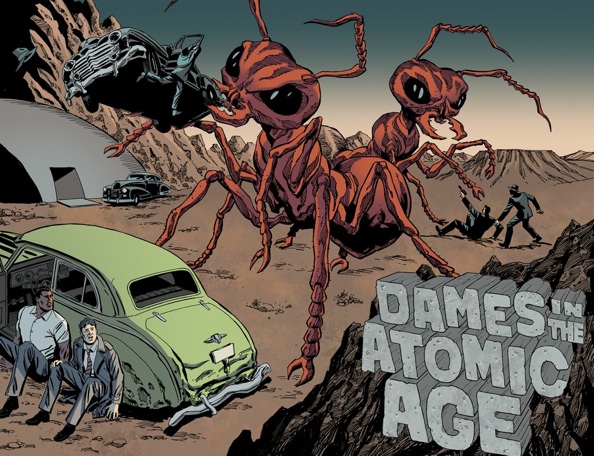 “Them”
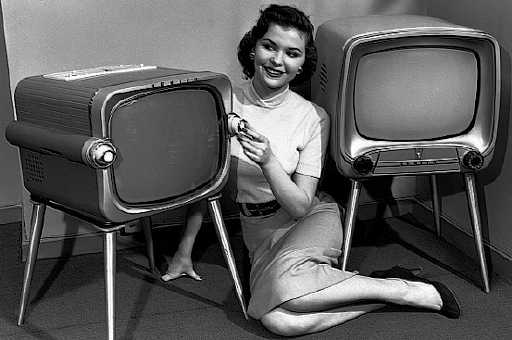 “I actually had the TV that she is touching.”
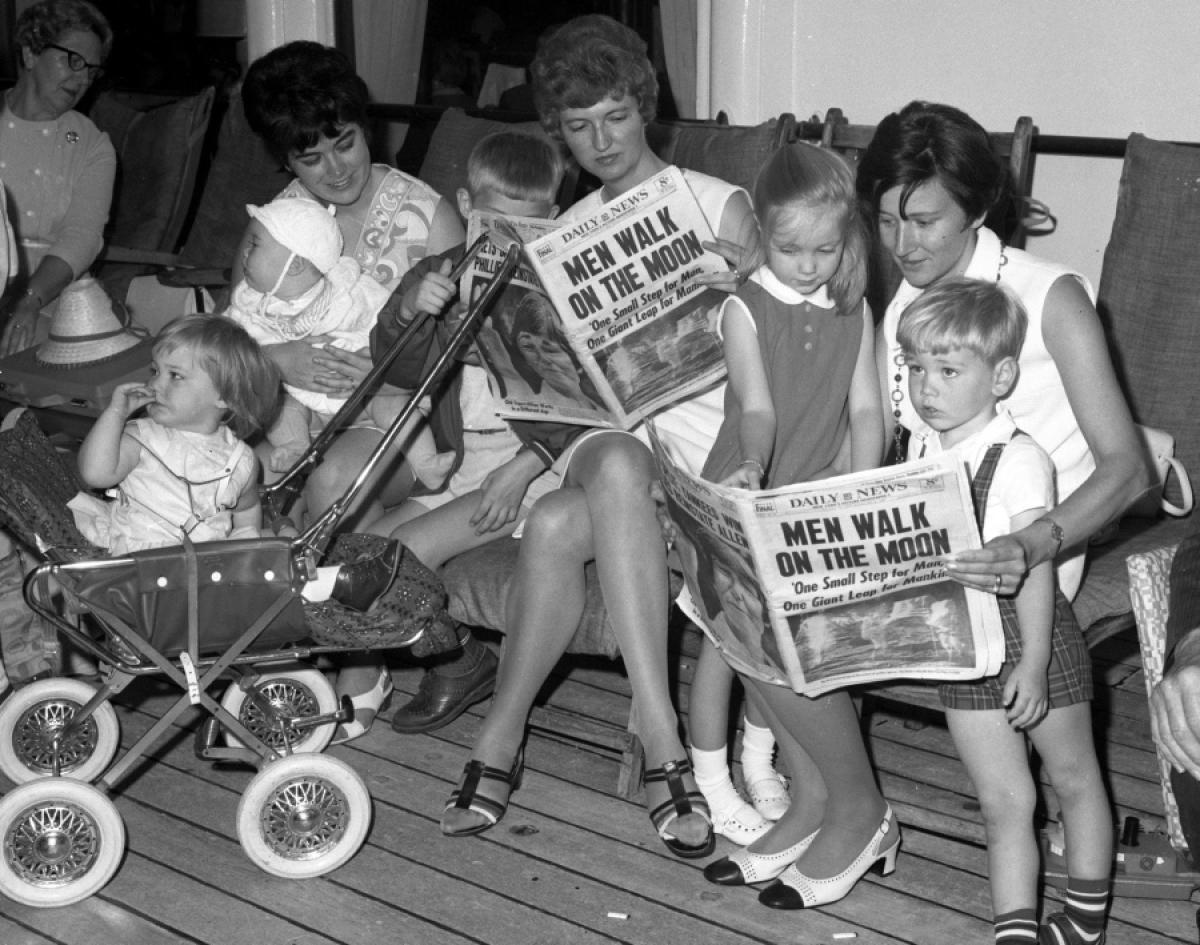 This was what things looked like…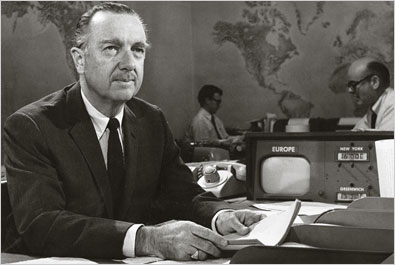

 Not mine, but very much like mine.
 This was not my first computer, but I did have one later in life.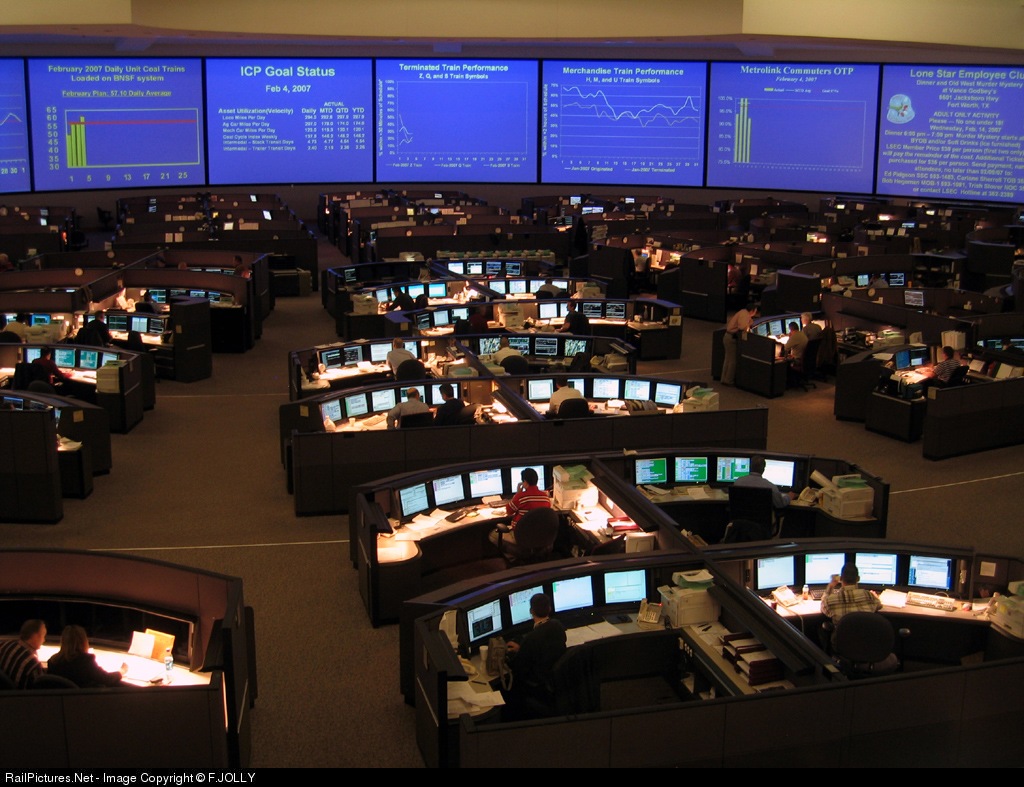


Quite an origin story – enjoyed it!