Tag: fiction

The Eyes That Held Starlight

The Eyes That Held Starlight

A Tale of Moonflowers and Magic


The autumn market was closing, its last lanterns breathing embers into the violet dusk, when Thomas first saw her.She stood behind a stall of dried herbs, strange glass vials, and most curiously, a single potted flower with tightly furled white petals that seemed to pulse with an inner glow . Her dark hair cascaded over a cloak the color of midnight, and the shadows pooled at her feet like devoted creatures, swaying when she did not move. The other vendors avoided her corner, whispering words like hex and cursed, but Thomas had never been one to heed whispers.

“You’re staring,” she said without looking up, her fingers sorting bundles of lavender. The dried flowers seemed to bloom again beneath her touch, their brittle gray stalks flushing with impossible color .

“Forgive me.” He stepped closer, his eyes drawn to the mysterious flower on her table.

“I’ve never seen anyone so…”

“Dangerous?”

A smile tugged at her lips.

“Lonely.”

The word hung between them, and for a moment, the wind itself paused to listen . As if in response, the white flower on her stall began to stir, its petals unfurling ever so slightly, though the sun had not yet fully set.Her hands stilled. For the first time, she lifted her gaze to meet his.Her eyes were the color of amber holding ancient insects, of honey left too long in the sun ; and Thomas felt, with sudden certainty, that she had looked at him this way before, not yesterday, not in any life he could name, but somewhere, in a time that existed only in the margins of dreaming.

“The moonflower,” she breathed, glancing at the plant in wonder. “It only opens for those whose hearts carry magic. It has never bloomed for a stranger before.”

“You should go,” she added softly. The lavender in her hands had wilted again, its petals curling inward like small fists . “Men who see loneliness instead of danger rarely survive the difference.”I know you, he thought, though he did not speak it aloud. I have always known you.

But the moonflower continued its impossible unfurling, releasing a perfume like silver and starlight and forgotten promises. Its luminous petals reached toward Thomas as though greeting an old friend.Thomas did not step back.”Perhaps,” he said, “I’m not interested in surviving.”

Something flickered behind her amber gaze…a light that did not belong to the lanterns, a light, he would later realize, that did not belong to this world at all .She laughed, quiet and unwilling, and the sound tasted of rain.


Thomas had expected darkness when he looked deeper into her eyes.He found instead an impossible cosmos: her irises swirled with flecks of gold and violet, like nebulae being born in the depths of her gaze. He saw the slow wheeling of constellations that had no names, the birth and death of stars compressed into the space of a heartbeat .The world around him dissolved.He felt the hum of the earth beneath his feet, a vibration older than language. He heard the silent song of the wind, a melody that had been playing since the first breath of creation. He sensed the threads of energy connecting every living thing, and woven through it all, he saw them: moonflowers, thousands upon thousands, blooming across the world in secret gardens and forgotten groves, their white petals opening like prayers to the night sky, each one a vessel of pure, ancient magic.When he finally blinked, the market had returned. But something had shifted. In his chest, where his heart had once beat in simple rhythm, there now thrummed a second pulse, faint, foreign, and unmistakably hers .”What… what was that?”

“Magic,” she whispered, and the word left her lips like a living thing . The moonflower on her stall had now bloomed fully, its petals impossibly bright in the gathering darkness. “But it shouldn’t be possible. Only those with the gift can see it reflected back.”

“I don’t have any gift.”Even as he spoke, Thomas felt the lie of it. That second pulse in his chest beat stronger now, syncing with hers in a rhythm that predated time itself .She reached out, her fingers brushing his cheek, warm, trembling, carrying the static charge of a thousand unspoken words.

Where her skin met his, he felt something unfurl inside him: a door opening onto a room he had never known existed .”Perhaps you didn’t,” she said. “Until now.”She pressed the moonflower into his hands. Its petals were cool as moonlight against his palms, and where he held it, the glow intensified…two magics recognizing each other at last.Above them, unnoticed by the departing merchants, a single star blinked into existence in the still-violet sky…newborn, impossible, and burning only for them .


They met every evening after that, in a secret grove where moonflowers grew wild, their luminous blooms turning the forest floor into a sea of living starlight.Elara, for that was her name, she finally confessed, a name that meant “shining light”…taught him to listen to the language of flames .

She taught him to coax flowers into bloom with a thought, though his first attempts produced only roses that wept silver and daisies that opened their petals at midnight, confused and luminous .But what Thomas treasured most were the quiet moments: her laughter when he failed spectacularly, the way she leaned into him when the night grew cold, as though his warmth were the only magic she had ever truly needed.

“The moonflowers,” she told him one night, as they lay among the glowing blooms, “they only grow where true love has touched the earth. That’s why people fear me…I tend gardens that remind them what they’ve lost. What they’ve never been brave enough to find.”She turned to face him, and he saw tears gleaming like captured moons in her amber eyes.”For so long, I thought I was meant to be alone. The keeper of magic no one wanted. The guardian of flowers that bloomed only in darkness.

“Thomas cupped her face in his hands. Around them, the moonflowers blazed brighter, responding to the emotion swelling between them.”They’ll never accept us,” she whispered. “A witch and the carpenter’s son .”Thomas took her hand. Where their fingers intertwined, small sparks drifted upward, lazy and golden, vanishing into the dark .”Then we’ll build our own world. Here, among your flowers. Where the only light we need blooms from the love we tend.”She turned to him, and in her eyes he saw not just magic now, but something far more powerful: hope .

“You saw me,” Elara whispered. Her voice trembled with the weight of years spent unseen. “When everyone else only saw something to fear, you saw me .”He kissed her beneath a canopy of moonflowers, and the magic between them needed no spell to ignite. Every bloom in the grove opened at once, releasing a perfume so sweet it would linger in that place for a hundred years. The grass beneath them bloomed out of season; the wind carried the scent of jasmine from a garden that existed only in memory .And the moonflowers…those faithful keepers of night and magic and impossible love, they whispered their blessing in a language only hearts could understand.


Some say love is its own kind of sorcery, the oldest and most unbreakable magic of all . And perhaps they are right.For in the years that followed, long after the village had crumbled to dust and the forest had swallowed the meadow whole, their story remained . It lived in every moonflower that dared to bloom, each white petal a love letter, each silver glow a promise that even the loneliest hearts, if they are brave enough to see past the danger, can find their way home to each other.And on quiet nights, when the moon hangs full and heavy, they say you can still find that grove, carpeted in eternal white blossoms, fragrant with magic, forever tended by two souls who proved that the deepest enchantment of all is simply this:To be truly seen.


The End

What did you think? I’d love to hear your thoughts in the comments below! Did this story make your heart flutter? Bring a tear to your eye? Remind you of someone special? Let’s chat about it. I read every single comment and truly treasure your reflections. 💬And if this little story touched your soul, please share it with someone who could use a dose of love today. Maybe it’s a friend going through a tough time who needs a gentle pick-me-up. Perhaps it’s someone whose heart is healing and could use a reminder that romance still exists in this world. Or maybe it’s simply someone who deserves to smile today.Stories like this are meant to be passed along, like love notes tucked into unexpected places.Share it. Spread the warmth. Let’s remind each other that tenderness still matters. 💕Until next time, keep believing in love…the quiet kind, the bold kind, and everything in between.

My Author Page

The Woman Who Learned to Listen

The Woman Who Learned to Listen

Elena had forgotten the sound of her own breathing. Forty-seven years of city noise, deadlines, and the electric hum of fluorescent lights had buried it somewhere beneath layers of static, pressed into that velvet darkness where forgotten things take root and wait.

So when her doctor (a soft-spoken woman whose silver-threaded hair caught light that wasn’t there, holding it like small, patient ghosts) told her to “find stillness,” Elena drove until the road turned to gravel and the gravel turned to sand.

The highway signs began to lose their letters somewhere past the third town, words slipping away like names from an aging tongue. She did not find this strange. The sand, when she finally stopped, hummed a frequency just beneath hearing, a sound her lungs seemed to recognize before she did. When she inhaled, truly inhaled, the breath tasted of salt and years, and something inside her chest unfolded like a letter she had written to herself long ago and never sent.

The beach was unremarkable at first glance. Gray-blue water. Foam curling like lace against the shore.

A weathered wooden bench that seemed to have grown from the dunes rather than been placed there; its grain twisted in the same spirals as the seagrass, its wood soft and salt-worn, remembering tides it had no business knowing.


She sat.


For the first hour, nothing happened. Her mind churned with grocery lists and unanswered emails, those small tyrannies of the living. But as the sun dipped lower, painting the clouds in shades of apricot and rose, Elena noticed something peculiar.


The waves were speaking.

Not in words, exactly, but in rhythm; a language older than syllables, older than the naming of things. And stranger still, she understood them. Each wave that kissed the shore carried a message: Let go. Let go. Let go. The words arrived not through her ears but through her sternum, settling into her ribs like birds returning to a familiar roost.


She laughed, thinking herself foolish.

But then she saw the herons. Three of them stood in the shallows, perfectly still, their reflections unbroken on the water’s surface (as if the sea had chosen, just for them, to hold its breath). And as Elena watched, they turned their long necks toward her in unison, not with curiosity, but with recognition, as though they had been waiting for her all along, as though her name had been written in the tide charts for forty-seven years.

Over the following days, Elena returned to the bench. She learned that if she sat quietly enough, the sea would show her things. Memories rose from the water like mist: her grandmother’s hands kneading bread (flour dusting the air like small, edible stars), her daughter’s first steps, a summer evening when she’d felt, for one perfect moment, completely whole. These visions arrived without explanation, and Elena did not ask for one. The sea gave what it chose to give.

The tide pulled her grief out gently, grain by grain, carrying it past the breakwater to wherever sorrow goes when it is finally ready to leave.

One morning, an old man appeared beside her. His skin was weathered like driftwood, and his eyes held the silver of deep water; not the color of it, but its weight, its patience, its memory of every drowned thing it had ever cradled. He smelled of salt and woodsmoke and something older, something before.

“You’re learning,” he said.

“Learning what?”

He smiled and gestured toward the endless horizon, where the sky stitched itself to the sea with threads of light. “That peace isn’t something you find. It’s something you become when you stop running from the silence.”

When Elena turned to respond, he was gone. In his place, a single white feather rested on the bench, still warm, as though it had only just remembered how to be still.

She never told anyone about the speaking waves or the herons or the old man who might have been the sea itself wearing a human shape, trying on bones and breath the way one tries on an old coat. Some truths aren’t meant for telling; only for carrying, quietly, like a stone smoothed by centuries of water. They live best in the body’s hidden rooms, in the spaces between heartbeats where language has no jurisdiction.


But her daughter noticed the change.


“You breathe differently now,” she said one evening, her voice soft with something close to wonder. “Like you finally have enough air.”


Elena smiled and thought of the ocean, still murmuring its ancient lullaby miles away, singing her name in a voice made of foam and forgetting.

She thought of the bench that grew from the dunes, the feather she still kept in her pocket (warm, always warm, as though it remembered flight). She thought of how silence, when you stop fearing it, becomes a kind of homecoming.

Somewhere, past the city lights and the hum of a world that never rests, the tide was turning. And deep in her chest, where her breath had finally learned to settle, Elena felt the waves answer.


Let go. Let go. Let go.


She had. And in the letting go, she had, at last, arrived.

When clickbait and other forms of noise enter your life, remember this story. The clamor of the city does not stop at your front door; it slips through your screens like water through cracks, hums from the radio in frequencies designed to unsettle, and arrives even through friends who carry their own static, their own buried breath, their own need to hear what the waves have always been saying.


Fear and anxiety are not merely emotions. They are small, patient thieves. They breed toxins in the marrow, shorten the years the body was promised, and fill the spaces where stillness ought to live with a noise that masquerades as urgency.


But somewhere, there is a bench growing from the dunes. Somewhere, herons stand in the shallows, waiting with recognition in their ancient eyes. Somewhere, the tide is turning, ready to carry your grief out past the breakwater, grain by grain, to wherever sorrow goes when it is finally ready to leave.


Sit by the ocean (or by whatever ocean you can find; silence wears many shapes). Listen for the rhythm older than syllables.


And let it go.


Let it go.


Let it go.


—Scott

He spent his whole life working. Now he has nothing but time.

Jack Harper was the most dedicated employee his company ever had. Forty-one years without missing a deadline. Forty-one years without truly living.

When a forced retirement leaves him lost in the silence of his empty apartment, a letter from beyond the grave changes everything. His oldest friend, Ed, has died and left Jack a farmhouse in Vermont, along with a message he can no longer ignore:

“You’ve spent your whole life working. Now, it’s time to actually live.”

But the farmhouse holds more than memories. An antique radio plays songs from decades past. Fireflies rise from the grass like childhood returning. And sometimes, in the golden light of sunset, Jack sees Ed standing at the edge of the overgrown rose garden, waiting. Can a man learn to live when he’s spent a lifetime forgetting how?

12 Activities to Energize Your Writers’ Group and Elevate the Craft

12 Activities to Energize Your Writers’ Group and Elevate the Craft

May 28, 2026


As the director of a League of Writers, I’m constantly searching for activities that bring genuine value to our members. Over time, I’ve realized that writers’ groups exist everywhere—each one filled with passionate individuals striving to improve their craft and find community. With that in mind, I’ve compiled a list of activities that have worked well for us and might benefit your group too.Whether you’re leading a small local circle or a larger organization, these ideas can transform your meetings into dynamic spaces for creativity, learning, and mutual support.


1. Guest Speakers and Workshops

Inviting guest speakers breathes fresh energy into any group. Consider reaching out to published authors, editors, literary agents, or experts in fields relevant to your members’ interests.For example:

  • A sci-fi author could discuss world-building techniques
  • A psychologist could share insights into crafting realistic characters with complex psychological profiles
  • A comedian or humorist could explore how to weave humor into prose

These sessions expose members to new perspectives and provide invaluable insider knowledge.


2. Critique and Feedback Sessions

Constructive feedback is the lifeblood of improvement. Establish a structured critique process that feels safe and productive:

  • Writers read their work aloud or distribute it beforehand
  • Listeners provide constructive feedback while the author listens quietly—no defending or explaining during the critique
  • End with a Q&A where the author can ask clarifying questions

This approach helps writers truly absorb feedback rather than react defensively, allowing them to refine their craft with fresh eyes.


3. Creative Writing Prompts and Challenges

Prompts spark imagination and push writers outside their comfort zones. Try these approaches:

  • Write a short story based on a single evocative word or phrase
  • Use provocative music or artwork as inspiration for a scene
  • Challenge members to write in a genre they’ve never attempted—sci-fi, psychological thriller, romance, or horror

The element of surprise and constraint often produces surprisingly powerful work.


4. Themed Writing Exercises

Align exercises with your group’s collective interests:

  • Humor Writing: Craft a comedic piece inspired by a favorite comedian’s style
  • World-Building: Collaboratively create a fictional universe, with each member contributing a unique element—technology, culture, history, or geography
  • Character Deep Dives: Develop a character harboring a dark secret and brainstorm how it could drive an entire plot

Themed exercises create cohesion and allow members to learn from each other’s interpretations.


5. Book and Style Analysis

Studying the masters sharpens our own skills. Dedicate sessions to analyzing published work:

  • Compare the opening lines of two novels to discuss style, tone, and hooks
  • Have members share a favorite book and explain why the author’s voice resonates with them
  • Dissect humor writing techniques by examining essays or routines from beloved comedians

Understanding why something works teaches us how to replicate that magic.


6. Writing Retreats

There’s something transformative about stepping away from daily life to focus entirely on writing. Organize a retreat where members can immerse themselves in their projects:

  • A weekend getaway at a cabin, hotel, or retreat center
  • A virtual retreat with scheduled writing blocks and group check-ins

The camaraderie, shared goals, and uninterrupted focus can be profoundly motivating—and often produce breakthrough progress.


7. “Brags” and Celebrations

Writing can be isolating, and achievements often go unnoticed. Dedicate time at each meeting for members to share their wins:

  • Completing a chapter or draft
  • Submitting a manuscript to agents or publishers
  • Publishing a piece, receiving positive feedback, or hitting a word count goal

Celebrate these milestones with applause, small rewards, or simple acknowledgment. This fosters a sense of accomplishment and reminds everyone that progress—however small—matters.


8. Collaborative Projects

Working together builds community and teaches valuable lessons about the writing process:

  • Anthology: Each member contributes a short story around a shared theme
  • Collaborative Novel: Use the Snowflake Method or another plotting technique to outline a novel together, then divide chapters among members
  • Round-Robin Stories: One member writes the opening paragraph, then passes it to the next person to continue

These projects create tangible results the group can be proud of—and potentially publish.


9. Skill-Building Sessions

Target specific craft elements that challenge your members:

  • Writing natural, compelling dialogue
  • Crafting openings that hook readers immediately
  • Editing and revision techniques
  • Show versus tell
  • Pacing and structure

Use writing craft books, online resources, or invite a writing instructor to guide the session. Focused skill-building creates measurable improvement.


10. Fun and Interactive Activities

Not every meeting needs to be serious. Inject playfulness into your group:

  • Storytelling Games: Use random prompts or words to create a story collaboratively in real-time
  • Writing Roulette: Each member writes a paragraph, then passes their paper to the next person to continue—chaos and creativity ensue
  • Genre Swap: Rewrite a scene from your current project in a completely different genre (turn a thriller into a comedy, or literary fiction into sci-fi)

Laughter and play unlock creativity in unexpected ways.


11. Unconventional Inspiration Exercises

Draw writing prompts from unexpected sources:

  • Craft a story based on overheard conversations, mysterious radio transmissions, or strange signals
  • Use historical photographs or news headlines as story seeds
  • Write from the perspective of an inanimate object or an unusual narrator

Unusual starting points lead to original stories.


12. Psychological Exploration for Character Development

Deep, believable characters drive memorable fiction. Create exercises that explore psychology:

  • Write a scene from the perspective of a character with a specific psychological trait, fear, or condition
  • Explore how a character’s past trauma influences their present decisions and relationships
  • Develop detailed backstories that never appear on the page but inform every action

Understanding the human mind—its quirks, defenses, and desires—makes characters leap off the page.


Final Thoughts

A writers’ group should be more than a meeting—it should be a space where creativity flourishes, skills sharpen, and writers find the support they need to keep going. By incorporating a variety of activities, you can keep your group fresh, engaged, and continuously growing.I hope this list proves useful to writers’ groups everywhere. After all, when we lift each other up, we elevate the entire craft.What activities have worked well for your writers’ group? I’d love to hear your ideas.


Happy writing!

Here are a few of my projects…

Ellie Morrow: A Tale of Grief and Magic

Ellie Morrow: A Tale of Grief and Magic

Ellie Morrow has spent six years in the foster care system learning one lesson above all others: she breaks things.

Televisions implode when she’s angry. Pipes rupture when she dreams. Crows gather wherever she goes—silent, watchful—as though waiting for a signal only they can hear. And deep behind her sternum, something that is not quite a heartbeat pulses with a power she never asked for: a residual fire left over from the night a mysterious golden light filled her parents’ car on Route 9, killed everyone inside except her, and left a seven-year-old child without a scratch or an explanation.

“You are not broken, Ellie. You are not dangerous. And you are not disposable.”

But the foster care system disagrees. And so, when an estranged grandmother named Agatha Morrow arrives to claim her—a woman who chose thirty years of silence over the burden of explanation—Ellie is pulled from the only world she has ever known into something older and stranger: the breathing, sentient world of the Morrow women. A bloodline of immense power stretching back centuries. A house on a nameless mountain, built above a nexus of forces older than language. A legacy of magic and grief, of doors that should not be opened and things that sleep beneath foundations, of wards that answer to family and a home that has been waiting for the right Morrow to return.But Ellie is not merely inheriting power. She is awakening something. The blood moon is coming, and whatever has been dreaming in the deep places beneath the Morrow house—vast, impossibly old, and stirring for the first time in generations—has begun to rise, drawn upward by a girl whose emotions can crack buildings and whose light can fill a room with the color of old gold.

Part coming-of-age story, part Gothic supernatural mystery, and part meditation on grief, survival, and the terrible weight of belonging to something larger than yourself, the Girl Who . . . series asks one question and dares its heroine to answer it:

Get your copy here…

Where they are
Plotter + Pantser = Planster: The Best of Both Worlds

Plotter + Pantser = Planster: The Best of Both Worlds

What happens when you stop choosing sides in the great writing debate and embrace the chaos and the structure? You get what I like to call a Planster — and it just might be the most productive approach to writing you’ve never tried.


The Pantser Days

When I first started writing, I was a pure stream-of-consciousness writer — much like Stephen King, who famously describes his process as uncovering a fossil, brushing away the dirt one sentence at a time. I’d sit down, let the words pour out, and trust the story to find its own shape. There was a raw, electric energy to writing that way. The surprises my characters threw at me were my surprises too.But here’s the thing about pantsing: for every story that found its way to a satisfying ending, there were others that wandered into dead ends, spiraled into subplots that led nowhere, or simply ran out of steam halfway through. I had hard drives full of half-finished manuscripts collecting digital dust — stories with heart but no spine.

The Shift to Plotting

Eventually, I began studying story structure — the beats, the arcs, the underlying architecture that makes a narrative work. I dove into frameworks like the three-act structure, Save the Cat, and the Hero’s Journey. I learned about inciting incidents, midpoint reversals, dark nights of the soul, and satisfying climaxes.And suddenly, I understood why some of my old stories had stalled. They had voice. They had characters I loved. But they were missing the bones that hold a story upright.So I became a plotter. I outlined. I structured. I mapped every scene before writing it.And something was lost.The outlines were solid, sure — but sitting down to write a scene I’d already planned in detail felt like retracing someone else’s steps. The spontaneity, the discovery, the magic of pantsing had dried up.

The Planster Revelation

Then a thought hit me: What if you plot the structure but pants the beats?What if, instead of choosing one camp or the other, you used story structure as a roadmap — just the major landmarks, the critical turns — and then let your pantser brain run wild between them?That’s the Planster method in a nutshell:

  1. Create a beat sheet. Identify the key structural moments your story needs — the hook, the inciting incident, the first plot point, the midpoint, the crisis, the climax, the resolution.
  2. Know your destination for each beat. Understand what needs to happen at each structural turn and why it matters.
  3. Pants everything in between. Let the characters breathe. Let the scenes surprise you. Let the dialogue flow the way it wants to. Trust your creative instincts to fill the space between the signposts.

You get the reliability of structure with the energy of discovery. The bones are there, but the flesh is alive.

The Proof Is in the Publishing

I decided to put this method to the test — not with a brand-new idea, but with those old stories buried on dusty hard drives from my pantsing days. Stories that had voice, had spark, but had never found their shape.I pulled three of them out, built beat sheets around their cores, and then pantsed my way through the beats.The results? Three completed novels in a fraction of the time it would have taken me using either method alone:

  • 📖 Written in Skin — published on Amazon
  • 📖 Nothing But Time — published on Amazon
  • 📖 The Girl Who Broke Everything — coming soon

Three abandoned stories. Three finished books. That’s not a fluke — that’s a process that works.

Why the Planster Method Works

  • Structure prevents you from getting lost. You always know where you’re headed next.
  • Pantsing keeps the writing alive. You’re still discovering the story as you write it — just within guardrails.
  • It’s faster. You spend less time staring at a blank page and less time rewriting entire drafts that went off the rails.
  • It resurrects old work. Got abandoned manuscripts? They might just need a skeleton to stand on.

Are You a Planster?

If you’ve ever felt torn between the freedom of pantsing and the security of plotting, give yourself permission to be both. Grab a beat sheet template, sketch out your structural landmarks, and then let yourself fly between them.You might be surprised how many stories you’ve already started that are just waiting for the right structure to finally be told.


Have you tried the Planster method? Got old manuscripts collecting dust? I’d love to hear about your experience — drop a comment below or find my published works, Written in Skin and Nothing But Time, on Amazon. And keep an eye out for The Girl Who Broke Everything, coming soon.

A Tiny, Totally Non-Desperate Plea From Your Friendly Neighborhood Author

If you enjoyed this post — or even if you just tolerated it with mild amusement — I have a few small, completely reasonable requests:1. Share this post. Hit that share button like it owes you money. Text it to a friend. Email it to your mom. Print it out and leave it on a stranger’s windshield. I don’t judge distribution methods.2. Spread the word. Tell people about this blog. Whisper it in crowded elevators. Mention it casually at dinner parties. Skywriting is also acceptable.3. Buy a book. Look, I’m not starving. Let’s not be dramatic. But I am a coffee-dependent creature with a very real and very expensive caffeine habit, and those lattes aren’t going to fund themselves. Every book purchase keeps a moderately-fed author adequately caffeinated and typing away at the next thing you’ll (hopefully) enjoy.So if you’re feeling generous, kind, or just impulsive enough to click “Add to Cart” — I salute you, you beautiful human.☕ Keep the coffee flowing. Keep the words coming.

Where they are
The Uncomfortable Truth About Writing Contests: Where’s the Feedback?

The Uncomfortable Truth About Writing Contests: Where’s the Feedback?

Let us speak of something that has been troubling me, and likely many of you, about the writing contest industry. It is a thing that hums beneath the surface of our submissions like a second heartbeat we have learned to ignore.

The Business Behind the “Opportunity”

Here is the hard truth, plain as the words that appear unbidden on a blank page at three in the morning: writing contests are a money-making business. There is nothing altruistic about the companies that hold them. They rely on your ego, your dreams, and your hope to willingly surrender that entry fee for a chance at recognition. The fee slips from your fingers like sand, like memory, like the last line of a poem you swore you would remember. Sound familiar? It should. This strategy is not new. The lottery counts on your optimism (and perhaps your misunderstanding of probability) to keep buying tickets. Vegas has built an empire on this exact psychology for generations. Writing contests? They are playing the same ancient game, only dressed in literary clothing, their true nature hidden behind promises that shimmer and shift like heat rising from summer pavement.

My Real Frustration: The Silence

What bothers me most is not the business model itself; everyone needs to make money. It is the complete lack of engagement with the work we submit. Our stories vanish into the void, swallowed whole, and we are left listening for an echo that never returns. Is it too much to ask for some modicum of evidence that someone actually read our stories? Even the smallest bit of feedback would transform the experience:

  • “Your opening didn’t hook me.”
  • “Did you read the prompt?”
  • “Strong voice, but the pacing faltered.”

These words, however brief, would be enough. They would prove that our stories had weight, that they existed somewhere beyond the submission portal, that they touched, however briefly, another human mind. With platforms like Reedsy, I understand that a five-dollar entry fee is not breaking the bank. But still, is it really too much to ask for something in return beyond silence and a form rejection? The silence is its own kind of haunting. It lingers in the inbox, in the space between refreshing the page and accepting, once again, that no reply will come.

The Bottom Line

We are paying for a service. Should that service not include at least a sentence of human acknowledgment? A single line to prove that our words, however flawed, were witnessed? Tell me your thoughts in the comments below. Am I asking for too much, or is it time contests stepped up and broke their long, strange silence?

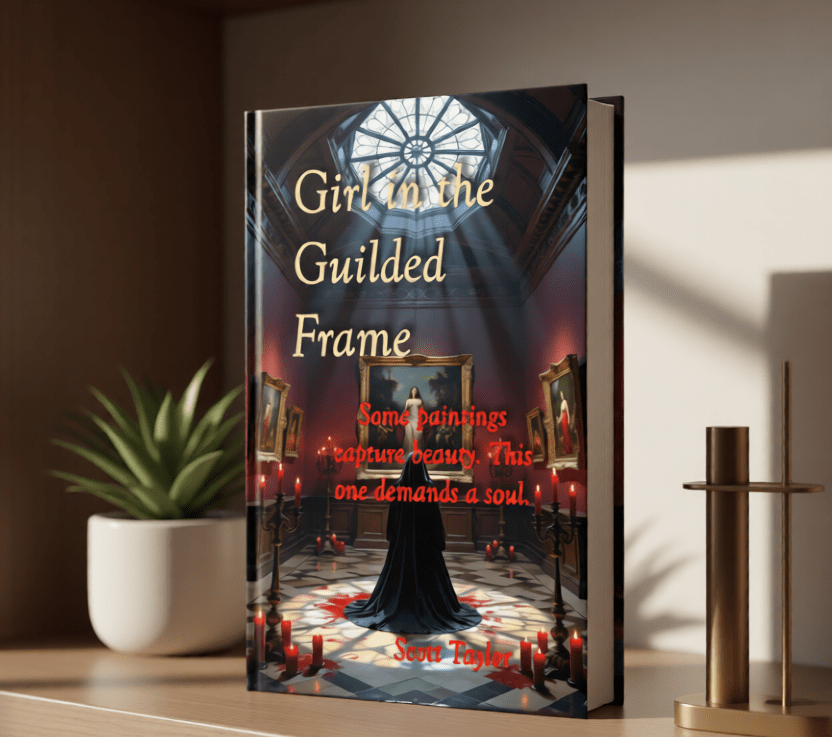
The Girl in the Gilded Frame

The Girl in the Gilded Frame

Some love stories are eternal. But at what cost?

I took a short story and turned it into a full fledged novel. If Dark Romance of the Vampire type is your thing, look no further.

How far would you go to save someone who’s already stolen your heart?

The painting had always hung in the east corridor, though no one could say precisely when it arrived. It existed the way certain old things do: quietly, with the certainty of having been there longer than the walls themselves. It was not supposed to matter. And then, one October evening, it did.

Peter Thomas had taken the night guard position for ordinary reasons. A young art student with empty pockets and a reverence for beauty, he believed that proximity to masterpieces might teach him what textbooks could not. He did not anticipate the portrait of the woman in the guilded frame, nor the warmth that radiated from her canvas on cold nights, nor the way hunger could live inside oil and pigment.

The painting breathed. This was not metaphor.

As Peter wandered deeper into the museum’s shadowed galleries, he uncovered the story of Vanessa, a king’s daughter folded into gold leaf and varnish by an ancient curse, and the vampire who had spent centuries whispering promises of liberation through the lacquer. But freedom required an exchange: one living soul for another. Under October’s blood moon, Peter understood what the portrait had been asking of him all along.

Caught between a love story older than memory and the quiet horror of Vanessa’s imprisonment, Peter faced an impossible choice: his life, or hers.

For readers who cherish Crimson Peak, The Picture of Dorian Gray, and stories where love and sacrifice blur into haunting beauty, The Girl in the Guilded Frame invites you through a door that cannot be closed.

How far would you go to save someone who has already stolen your heart?

Click here to see the books I have published.

Explore Love and Adventure in Tides of the Heart

Explore Love and Adventure in Tides of the Heart

Set Sail with My New Novel: Tides of the Heart

Any author will tell you, writing a book is only half the journey. The other half? Sharing it with the world and inviting readers to embark on the adventure with you. I’ve poured my heart into this story, and now I’m thrilled to introduce you to what I believe is one of my favorite creations yet.

Let me ask you this: What happens when love pulls you off course and into uncharted waters?

That question is at the heart of my new novel, Tides of the Heart, a sweeping tale of love, self-discovery, and the courage to rewrite your story.

About the Story

Meet Lily Pemberton, a librarian who’s always lived a life of quiet predictability. Her days are carefully structured, her evenings buttoned-up, and her future shaped by her parents’ expectations. But everything changes when she crosses paths with Jack Rothwell, a roguish sailor with a thirst for adventure.

Jack pulls Lily into a world she’s only dared to dream of—filled with sun-drenched horizons, daring escapes, and the kind of love that shakes the foundation of everything she thought she wanted. As their worlds collide—his wild and free, hers measured and cautious—Lily finds herself at a crossroads. Will she stay anchored in the safe harbor of her past, or will she take a leap of faith and set sail toward an unknown but exhilarating future?

Set against the stunning backdrop of Hawaiian beaches and the open ocean, Tides of the Heart is about more than just romance. It’s a story for anyone who’s ever questioned their path, dreamed of a second chance, or longed for a life filled with adventure.

Why This Story Matters

This book holds a special place in my heart, and here’s why: even as the author, I couldn’t put it down during the editing process. It’s a story that reminded me of the importance of taking bold chances, of living fully, of choosing a life that’s wild, beautiful, and uniquely your own.

For anyone who loves magical realism, daring romance, and the kind of characters who feel like old friends, this is a story for you.

Get Your Copy Today!

I’m thrilled to announce that Tides of the Heart is now available in paperback! You can grab your copy here: Amazon Paperback.

The e-book version is still publishing, but I promise it’ll be available soon. Keep an eye out!

Your Feedback Means the World

When you’ve had a chance to read Tides of the Heart, I’d love to hear your thoughts. Whether it’s a short review on Amazon, a comment on social media, or an email, your feedback helps me grow as a writer and reach more readers who might connect with Lily and Jack’s journey.

Let’s keep this conversation going—what did the story make you feel? Which moments resonated most with you? Your voice is as much a part of this journey as mine.

Thank You for Being Part of This Adventure

Writing a book is an adventure, but sharing it with readers like you is the most rewarding part of the process. Thank you for coming along on this journey with me. Whether you’re a longtime reader or new to my work, I’m so grateful to have you here.

So, what do you say? Are you ready to set sail with Tides of the Heart?

Grab your copy today, and don’t forget to share your thoughts—I can’t wait to hear from you!

Write, Edit, Market: The Writer’s Journey

Write, Edit, Market: The Writer’s Journey

As a writer and someone passionate about helping others find their voice, I often tell those in my circle that writing comes down to three simple words: Write, Edit, Market. These three steps are the foundation for every writer, whether you’re scribbling in a private journal or dreaming of becoming the next bestselling author.

Writing is a deeply personal act. It can be exhilarating, cathartic, and even terrifying. But no matter where you are in your writing journey, there’s one truth that underpins it all: writing has value—even if you never share it.

The Joy (and Fear) of Writing for Fun

Writing for fun is one of the most satisfying things you can do. It’s even better than painting (although I’m sure artists might argue with me on that one). Why? Because writing can exist in secret. Your words can live tucked away in a diary, scribbled in a notebook, hidden on your phone, or stored in the depths of your computer. For many, writing is a private act of self-expression—a way to process emotions, explore ideas, or escape from the chaos of daily life.

Yet, here’s the catch. While many people write for fun, they’re often unwilling to share it. In my role as a director of a writers’ league, I’ve encountered countless writers who confess that they write—but they keep their work hidden. Why is this?

Why Writing Feels So Personal

Writing is deeply personal because it comes from the core of who we are. It’s more than just putting words on a page; it’s a reflection of our thoughts, emotions, and experiences. Sharing that with others can feel like exposing your soul. Here are a few reasons why many writers hesitate to share their work:

1. A Window into the Soul

Writing often reveals our innermost thoughts—even when we don’t intend it to. Whether it’s fiction, poetry, journaling, or essays, writing tends to carry pieces of the writer. Our values, fears, dreams, and even vulnerabilities are woven into our words. For some, sharing that feels like standing naked in front of an audience.

2. Fear of Judgment

When we share our writing, we open ourselves up to critique. For many writers, it’s hard not to take feedback personally because our work feels like an extension of ourselves. The fear of rejection or misunderstanding can make it easier to keep our writing hidden.

3. Imposter Syndrome

A lot of writers struggle with self-doubt. Thoughts like, “What if my work isn’t good enough?” or “Who am I to call myself a writer?” creep in. This self-doubt can make sharing our words feel intimidating.

4. Writing as a Safe Space

For some, writing is a sanctuary—a place to process emotions or work through challenges. Sharing that space with others can feel like an intrusion or a loss of control. Once someone reads your work, it’s open to interpretation, and that can be uncomfortable.

5. The Intimacy of the Creative Process

Writing is often a solitary act. The process of crafting a story, poem, or essay is personal and raw. Sharing unfinished work, or even polished pieces, can feel like exposing something fragile.

Why Sharing Your Writing Matters

While it’s completely valid to keep your writing private, sharing your work can be transformative. It can lead to personal growth, connection, and even fulfillment. Here’s why:

Connection with Others

When you share your writing, you create an opportunity to connect with readers who understand your experiences or emotions. There’s something powerful about knowing your words have resonated with someone else. It reminds you that you’re not alone.

Feedback for Growth

Constructive criticism can be scary, but it’s also invaluable. It helps you refine your skills, discover your unique voice, and grow as a writer. No one becomes great without feedback and practice.

Empowerment

Sharing your writing is an act of courage. It’s a way of stepping into your creative identity, embracing vulnerability, and owning your story. That empowerment can translate into other areas of your life as well.

Inspiring Others

You never know how your words might impact someone else. Your story could inspire, comfort, or motivate a reader in ways you never imagined. Writing has the power to change lives—yours and others.

Building a Safe Space for Writers

In my writers’ league, one of my biggest goals is to create a safe space for sharing. It’s my job to push, nudge, and encourage writers to step out of their comfort zones and let their voices be heard. Many of us are here because we aspire to be the next [insert your favorite author], but even if you’re just writing for yourself, sharing your work can be incredibly rewarding.

One of my writer friends once joked, “Talking with my friends or family about my hobby is like talking to accountants.” That’s why groups like ours exist—to provide a supportive community of like-minded individuals who understand the highs and lows of writing.

In our group, we set standards to ensure everyone feels comfortable sharing. It could range from “family-friendly” to “anything goes,” depending on the group dynamic. For larger groups, subgroups can form for specific genres, so everyone gets feedback tailored to their work. The key is creating an environment where writers feel safe to take risks.

A Personal Example: Writing as a Window into the Soul

In yesterday’s blog, I talked about a memoir I released, Lessons Learned from the Wrong Side of a Badge. Writing it was an incredibly personal experience—a true window into the soul. Memoir writing, in particular, forces you to confront your past and share it with the world. It’s not easy, but it’s one of the most rewarding things I’ve ever done.

I encourage everyone to write, whether it’s for mental health, literacy, or just for fun. And if you’re ready to take the next step, consider sharing your work. You never know who you might inspire.

What’s Next?

In my next blog, we’ll dive into the second step of the process: editing. Writing is only the beginning—editing is where the real magic happens. We’ll talk about tools, techniques, and how to approach editing without losing your mind.

In the meantime, I’d love for you to check out my memoir, Lessons Learned from the Wrong Side of a Badge. You can find it here on Amazon. Let me know what you think!

Until next time, keep writing—and don’t be afraid to share your story. The world needs your voice.

– Best, Scott Taylor

Klaatu Barada Nikto: A Nostalgic Look at Sci-Fi, Society, and Earth’s Last Hope

Klaatu Barada Nikto: A Nostalgic Look at Sci-Fi, Society, and Earth’s Last Hope

You’ve likely heard the iconic phrase “Klaatu Barada Nikto” from the 1951 masterpiece The Day the Earth Stood Still. This is true if you’re a fan of classic science fiction. This legendary film didn’t just entertain—it left an indelible mark on the genre, inspiring countless creators, including me. My book Earth’s Last Hope carries a parallel to that iconic movie. I didn’t fully realize the connection until the manuscript was finished. Let me take you back to the past. I will show you the worlds that shaped me. You will see how they influenced my writing.

To understand my story, you first must know: I wasn’t a typical child. (If you’ve read my introduction on this site, you’ll already know this.) While I did the usual socializing at school, I hated it with a passion. My peers, mostly, embraced values I couldn’t stand—those of a society steeped in war, violence, racism, and harmful gender roles. I didn’t fit in with beer-crushing antics or “hold my beer” bravado. My real friends were older, wiser, and far more thoughtful. They were the people who encouraged curiosity, creativity, and a broader perspective on life.

These influences, combined with the era’s entertainment, shaped my imagination. Back then, writers infused their work with moral undertones. TV shows like Leave It to Beaver and The Andy Griffith Show taught lessons in kindness and integrity. Movies like Father Goose and The Long, Hot Summer offered a mix of humor and introspection. And then, of course, there was the Golden Age of Science Fiction. The Thing, The Blob, Forbidden Planet—these weren’t just films. They were immersive experiences. They transported you to other worlds while reflecting on our own. The fear, the suspense, the wonder—it was all there. Sci-fi from that era captured your imagination completely. It was like the classic horror scenario. A character walks into a dark closet. You know the chainsaw-wielding villain is waiting. You knew what was coming, but you couldn’t look away.

Recently, I stumbled upon a notebook from my childhood, filled with stories I wrote in cursive. I started writing very early. I spun my own tales inspired by the books I consumed. I was also influenced by the world I observed. Those were the best of times and the worst of times. The Vietnam War was raging. Through the magic of delayed TV broadcasts, I remember hearing actual gunfire from the front-lines. Today, live coverage is commonplace. Back then, it was a chilling glimpse into a world far removed from our own.

Amid this chaos, I sought connection. Ham radio became my gateway to the world, allowing me to communicate with people across the globe through Morse code. In those dots and dashes, I found humanity—the good in people I might never meet in person.

Fast forward to today, and Earth’s Last Hope stands as a reflection of those experiences, influences, and inspirations. My story parallels The Day the Earth Stood Still. However, instead of a towering robot and an unfamiliar alien, it features Samantha—a redheaded protagonist with an extraordinary journey. Her life begins in a precarious situation. Through the magic of Roswell and alien artifacts, she transforms into Earth’s last hope. Samantha’s story isn’t just about saving the world. It explores what it means to be human. Her journey dives into themes of identity, sexuality, and discovery. These elements, while not traditionally associated with science fiction, are integral to the genre because they’re integral to us.

Fans of The Day the Earth Stood Still are welcome to explore my book. It has intriguing parallels with the movie. Samantha’s journey might surprise you, challenge you, or even inspire you to see the world—and yourself—in a new light.

If you’ve ever been captivated by the magic of classic sci-fi, give Earth’s Last Hope a try. If you’ve pondered the deeper questions of humanity, this story is for you. And if you’re curious about where it all began, stick around—I have many more stories to share.

Enjoy the journey,

Scott

(P.S. Don’t forget to click the link and follow along—there’s so much more to come!)