Month: February 2026

TDR

TDR

A Humorous Take on Campaigning for Jury Duty

Imagine this: running a full-blown election campaign… to be a juror. Yes, I’m talking about knocking on doors, kissing babies, raising funds, and making promises you absolutely have no intention of keeping. “Vote for me, I swear to be impartial! I’ll fight for justice! Free snacks in the deliberation room!” All for the privilege of sitting on a jury destined to end in a hung verdict. Truly, the dream. And let’s not forget the “committees.” Oh, the committees! If elected, you’ll join a room full of people who prove that the phrase “common sense” is anything but common. It’s a front-row seat to humanity’s greatest hits of idiocy. If you’ve ever wondered where the dumbest people on Earth gather, I have your answer: jury duty.

My Time in the Hot Seat (A.K.A. Jury Duty)

Take this gem of an experience I had. We were deliberating a case where a man raped and murdered a young woman. Grim, I know. But the evidence? Rock solid. Open-and-shut case. Even with all the lawyer shenanigans—objections flying like confetti and attempts to suppress evidence because, get this, one of the investigators once knew someone who had once been raped (a friend of a friend of a friend situation)—we still managed to find the guy guilty. Victory for justice, right? But wait, there’s more! When it came time for sentencing, I thought, “Surely this is the easy part.” Nope. One juror decided the defendant reminded her of her grandson. And wouldn’t you know it, the lawyers played that angle like they were auditioning for the Oscars. Suddenly, we’re in a stalemate. I’m over here advocating for hanging the bastard (figuratively speaking, of course), while Grandma-of-the-Year is suggesting we let him off with a pat on the back and time served. Now, here’s the worst part: on a jury, you can’t just stand up and call someone a “stupid ass.” Oh, no. That’s “frowned upon.” Instead, you have to carefully craft arguments within the confines of what the judge deems “appropriate,” all while refraining from saying what you’re really thinking, which is, “Are you serious right now? Are we even on the same planet?”

Why Bother?

Act I: The Sacred Ritual of Jury Duty

So why would any sentient human voluntarily endure this exquisite form of psychological waterboarding? Picture it: you, a marginally functioning adult, trapped in a room with twelve strangers who were specifically selected because neither lawyer thought they were clever enough to be dangerous. These are the “peers” the Constitution promised you—people who list “breathing” as a hobby and whose critical thinking skills peaked when they successfully operated a revolving door on the third try. But I digress. You didn’t come here to read about the jury box. You came because of the title. So let’s pivot, shall we?


Act II: The $19 Million Question

Ask yourself this delightful riddle: Why would a grown adult spend $19 million of their own money to secure a position that pays $174,000 a year? At that rate of return, they’d make their money back in roughly… checks notes …109 years. Clearly, these are not people motivated by the paycheck printed on paper. No, no. They’re motivated by the paycheck printed on offshore account statements. If you’ve ever had the distinct displeasure of watching Congress “work”—and I use that word with the same enthusiasm one uses to describe a sloth “sprinting”—you’ll notice something remarkable. Half of them speak to the press with the intellectual firepower of a wet match in a dark cave. Three neurons? That’s generous. Some of these folks would lose a debate to an automated customer service line. And yet, somehow, they retire with more money than a dragon sitting on a pile of gold in a fantasy novel. Curious, isn’t it?


Act III: The Alchemy of Public Service

Follow the money, dear reader, and you’ll find it leads to a magical kingdom where laws are written by the people they conveniently don’t apply to. Take, for example, the estimated $278 million net worth of one Nancy Pelosi—a woman whose stock portfolio performs with the uncanny precision of someone who definitely doesn’t have access to classified briefings before making trades. If you traded stocks on insider information, you’d get a lovely pair of matching bracelets and a rent-free room with bars on the windows. But when they do it? It’s called “savvy investing” and featured admiringly in financial magazines. And when Hillary Clinton solemnly declares that “no one is above the law,” one can only assume she’s performing avant-garde comedy at this point. A truly bold artistic choice. Because obviously, when they say “no one,” they mean “no one who matters less than us.” You see, in the fine print of American democracy—written in ink visible only to those earning above a certain tax bracket—there’s a small but important clause: “Laws apply to citizens. Congress members, however, have ascended to a higher plane of existence where laws are merely suggestions, ethics are optional, and accountability is a word that only appears in dictionaries owned by peasants.”


Act IV: Gods Among Us

Perhaps this is the real revelation. Our elected officials don’t consider themselves people in the traditional, law-abiding sense. They are demigods—mortal enough to need campaign donations but divine enough to be exempt from the rules they impose on the rest of us. Laws are for the little people. Insider trading restrictions are for the little people. Consequences are for the little people. And the little people? Well, they’re too busy sitting in jury duty, debating with flat-earthers about reasonable doubt, to notice.


Behold, the magnificent spectrum of “public service” in America—a system so beautifully designed that it makes feudalism look like a fair-trade agreement. On one end, we have Jury Duty: the sacred civic obligation where you, the humble taxpayer, are graciously compensated six whole American dollars for a full day of your rapidly depleting lifespan. Six dollars. Not per hour. Per day. That’s less than a footlong sandwich. That’s less than two gallons of gas. That is the republic looking you dead in the eye and saying, “We value your service the way we value a vending machine coffee—barely, and only because nothing better was available. “You will sit. You will deliberate. You will miss work. And for this noble sacrifice, the government will hand you a check so small that your bank will laugh when you try to deposit it. The Founding Fathers wept tears of pride. On the other end, we have Congress: the other sacred civic obligation where elected officials are compensated in a currency far more sophisticated than mere dollars. They deal in favors—a shadow economy so elaborate it makes cryptocurrency look transparent. A favor here, a favor there, a mysterious consulting gig for a spouse, a book deal nobody asked for, a speaking fee that costs more than your house, a stock tip whispered in a hallway that technically wasn’t a hallway so it technically doesn’t count.

The Unforgivable Crime of Curing Cancer: A Media Response Simulation


Breaking News: Orange Man Does Thing. Nation in Crisis.

Let us engage in a thought experiment so absurd it might actually happen. Imagine—just imagine—that Donald J. Trump walked up to a podium tomorrow, slapped a glowing vial on the lectern, and announced: “I have cured cancer. All of it. Every kind. You’re welcome. “Now, a rational species might respond with cautious optimism. Perhaps even gratitude. Maybe a polite golf clap. Not us. Not this timeline.


The Headlines Write Themselves

Within approximately 0.003 seconds, every major news network would erupt like a volcano of righteous indignation:

  • CNN: “Trump’s Reckless Cancer Cure Threatens Millions of Healthcare Jobs—Here’s Why That’s Dangerous”
  • MSNBC: “Oncologists React With Horror as Trump Dismantles an Entire Medical Field Without Congressional Approval”
  • The Washington Post: “Democracy Dies in Darkness, and Apparently So Does Chemotherapy: How Trump’s Cure Undermines Institutional Norms”
  • The New York Times: “Opinion: I’m a Tumor, and I Deserve to Live—How Trump’s Cure Is an Attack on Biodiversity”
  • Vox: “Trump Cured Cancer. Here’s Why That’s Actually Bad. (Explained with 47 charts)”

The Expert Panel Weighs In

A somber Anderson Cooper would turn to the camera with the gravity of a man announcing an asteroid impact: “Tonight, we ask the hard questions. Yes, cancer is gone. But at what COST?”

Cut to a panel of four experts, three of whom are openly weeping: Expert 1 (Pharmaceutical Lobbyist): “Do you have ANY idea how much revenue chemotherapy generates? We’re talking about a $200 billion industry. Trump didn’t cure a disease—he committed an act of ECONOMIC TERRORISM against hardworking pharmaceutical shareholders. “Expert 2 (Hospital Administrator): “Our oncology wings are the crown jewels of our revenue model. Without cancer patients hooked up to IV drips filled with chemicals that cost $47,000 per session and make you feel like you’ve been run over by a freight train hauling more chemicals—how are we supposed to afford our fourth administrative building? “Expert 3 (Unnamed Source Familiar With the Matter): “This cure was developed without peer review, without FDA approval, and most importantly, without consulting the people who were making an EXCELLENT living off the disease. This is a direct attack on the established order of profiting from human suffering. “Expert 4 (Political Analyst): “The real question isn’t whether the cure works. The real question is: what are Trump’s MOTIVATIONS? Nobody just cures cancer out of the goodness of their heart. This is clearly a distraction from [gestures vaguely] …something.”


Big Pharma Issues a Statement

“We at MegaChem Therapeutics™ are deeply concerned by this so-called ‘cure.’ For decades, we have been committed to providing patients with a carefully calibrated treatment experience—one that manages symptoms just enough to keep you alive, but not so much that you stop needing us. This is called SUSTAINABLE HEALTHCARE. Trump’s ‘cure’ is reckless, untested, and worst of all—it’s FREE. How are we supposed to monetize FREE? This man is a menace to quarterly earnings.”


The Inevitable Fact-Check

PolitiFact Rating: MOSTLY FALSE

“While Trump claims to have ‘cured cancer,’ our analysis shows that cancer was already declining at a rate of 0.003% per decade, meaning it would have eventually cured itself in approximately 47,000 years. Trump is taking credit for something that was already happening. We rate this claim: Pants on Fire.”


The Moral of the Story

In the grand theater of modern media, the disease was never the villain. The disease was the business model. And anyone who threatens the business model—be they saint, scientist, or spray-tanned former president—must be destroyed with the full fury of a 24-hour news cycle that hasn’t had a good ratings week since the last time something was on fire. Because in America, we don’t cure diseases. We subscribe to them. And canceling your subscription is an act of insurrection.


“First, do no harm—unless harm is billable, in which case, do a LOT of it and file it under ‘treatment.'” — The Hippocratic Suggestion, Revised Edition, Sponsored by Pfizer™

The Great Meme Wars: Where Civics Goes to Die


A Final Dispatch from the Frontlines of Electoral Stupidity

Ah, election season. That magical time of year when the air is thick with yard signs, attack ads, and the unmistakable aroma of people who haven’t cracked open a civics textbook since the Clinton administration—the first one. The ritual is simple: find the least politically corrupt candidate—which is a bit like shopping for the freshest item in a dumpster—vote them in, and then watch in slow-motion horror as they proceed to loot the treasury with the efficiency of a raccoon who found an unlocked Costco. You must act fast, of course, because the incumbent raccoons are already in there filling their tiny raccoon pockets, and if you don’t get YOUR raccoon in soon, there won’t be anything left to steal. Democracy. Beautiful, isn’t it?


Enter: The Meme

But tonight, dear reader, I must address a cultural artifact of staggering intellectual bankruptcy. A meme. Shared with the confidence of a man who brings a calculator to a spelling bee. This particular meme—posted, shared, liked, and reshared by an army of people whose understanding of government structure could fit comfortably inside a thimble with room left over for their attention span—targets Governor Greg Abbott of Texas. The accusation? Republicans want your vote to “fix” taxes! The evidence? A screenshot of a property tax bill. The problem? Oh, where to begin.


A Brief Civics Lesson for People Who Apparently Slept Through All of Them

Let us walk through this slowly, the way one explains object permanence to a toddler:

Level of GovernmentWho Runs ItWhat They TaxWho to Yell At
FederalCongress & the PresidentIncome, capital gains, your will to liveWashington, D.C.
StateGovernor & State LegislatureSales tax, some fees, your patienceAustin, in this case
County/CityLocal officials & city councilsPROPERTY TAXES, local fees, your sanityYour local courthouse, Karen

You see that? That third row? The one labeled County/City? That’s where property taxes live. Not in the Governor’s mansion. Not in the state capitol. In your local government—which, in the case of most major Texas cities, is run by… drumroll …Democrats. That’s right. The meme-posting intellectual titan is screaming at the state Republican governor about a tax bill set by their local Democratic county officials. This is the governmental equivalent of calling your landlord to complain about the weather. It is the civic literacy equivalent of suing McDonald’s because Burger King gave you the wrong order.


The Anatomy of a Meme Scholar

Let’s profile this brave digital warrior, shall we?

  • Can they name their county commissioner? Absolutely not.
  • Do they know what a county commissioner does? They think it’s a type of kitchen appliance.
  • Can they distinguish between state and local taxes? About as well as they can distinguish between astronomy and astrology.
  • Did they Google anything before posting? Google is for the weak. Memes are peer-reviewed by vibes.
  • Are they registered to vote in local elections? LOL. They didn’t even know local elections existed. They thought government was just the President and “the other ones.”

This person saw a tax bill, felt an emotion, found a meme that confirmed the emotion, and launched it into the digital void with the righteous fury of someone who has never once attended a city council meeting but has VERY strong opinions about governance.


The Beautiful Irony

Here’s the chef’s kiss: these are the same people who will passionately argue about “holding politicians accountable” while being constitutionally incapable of identifying which politician is responsible for what. They want to drain the swamp but can’t tell you which level of government the swamp is in. Federal swamp? State swamp? County swamp? It’s all just… swamp.

“I don’t need to know how government works to know it’s broken!” — Every meme poster, confidently, while blaming the wrong person for the wrong thing at the wrong level of government


The Takeaway

So the next time someone shares a meme about taxes, please—please—ask them one simple question: “Which level of government sets that tax? “Then sit back and watch the loading screen behind their eyes buffer for eternity like a 2004 Dell laptop trying to run Crysis. Because in America, we don’t need to understand government to have loud opinions about it. Understanding is for nerds. We have memes. And memes don’t need citations, context, or a basic understanding of federalism. They just need a font that looks angry and a share button.


“Give a man a civics education and he’ll understand government for a lifetime. Give a man a meme and he’ll misunderstand government loudly, daily, and with absolute conviction.” — Benjamin Franklin, probably, if he’d had Wi-Fi and a migraine.

My last bit of advice as far as Texas goes. If you can look at New York and think it is just swell and Texas is terrible, well they need you in New York. Move…

For the rest of you, thanks for reading. I hope you enjoyed my thoughts on things. I really am practicing Satire for my book…The Big Beautiful Book of Stupid Shit… Coming soon.

Explore Love and Adventure in Tides of the Heart

Explore Love and Adventure in Tides of the Heart

Set Sail with My New Novel: Tides of the Heart

Any author will tell you, writing a book is only half the journey. The other half? Sharing it with the world and inviting readers to embark on the adventure with you. I’ve poured my heart into this story, and now I’m thrilled to introduce you to what I believe is one of my favorite creations yet.

Let me ask you this: What happens when love pulls you off course and into uncharted waters?

That question is at the heart of my new novel, Tides of the Heart, a sweeping tale of love, self-discovery, and the courage to rewrite your story.

About the Story

Meet Lily Pemberton, a librarian who’s always lived a life of quiet predictability. Her days are carefully structured, her evenings buttoned-up, and her future shaped by her parents’ expectations. But everything changes when she crosses paths with Jack Rothwell, a roguish sailor with a thirst for adventure.

Jack pulls Lily into a world she’s only dared to dream of—filled with sun-drenched horizons, daring escapes, and the kind of love that shakes the foundation of everything she thought she wanted. As their worlds collide—his wild and free, hers measured and cautious—Lily finds herself at a crossroads. Will she stay anchored in the safe harbor of her past, or will she take a leap of faith and set sail toward an unknown but exhilarating future?

Set against the stunning backdrop of Hawaiian beaches and the open ocean, Tides of the Heart is about more than just romance. It’s a story for anyone who’s ever questioned their path, dreamed of a second chance, or longed for a life filled with adventure.

Why This Story Matters

This book holds a special place in my heart, and here’s why: even as the author, I couldn’t put it down during the editing process. It’s a story that reminded me of the importance of taking bold chances, of living fully, of choosing a life that’s wild, beautiful, and uniquely your own.

For anyone who loves magical realism, daring romance, and the kind of characters who feel like old friends, this is a story for you.

Get Your Copy Today!

I’m thrilled to announce that Tides of the Heart is now available in paperback! You can grab your copy here: Amazon Paperback.

The e-book version is still publishing, but I promise it’ll be available soon. Keep an eye out!

Your Feedback Means the World

When you’ve had a chance to read Tides of the Heart, I’d love to hear your thoughts. Whether it’s a short review on Amazon, a comment on social media, or an email, your feedback helps me grow as a writer and reach more readers who might connect with Lily and Jack’s journey.

Let’s keep this conversation going—what did the story make you feel? Which moments resonated most with you? Your voice is as much a part of this journey as mine.

Thank You for Being Part of This Adventure

Writing a book is an adventure, but sharing it with readers like you is the most rewarding part of the process. Thank you for coming along on this journey with me. Whether you’re a longtime reader or new to my work, I’m so grateful to have you here.

So, what do you say? Are you ready to set sail with Tides of the Heart?

Grab your copy today, and don’t forget to share your thoughts—I can’t wait to hear from you!

Write, Edit, Market: The Writer’s Journey

Write, Edit, Market: The Writer’s Journey

As a writer and someone passionate about helping others find their voice, I often tell those in my circle that writing comes down to three simple words: Write, Edit, Market. These three steps are the foundation for every writer, whether you’re scribbling in a private journal or dreaming of becoming the next bestselling author.

Writing is a deeply personal act. It can be exhilarating, cathartic, and even terrifying. But no matter where you are in your writing journey, there’s one truth that underpins it all: writing has value—even if you never share it.

The Joy (and Fear) of Writing for Fun

Writing for fun is one of the most satisfying things you can do. It’s even better than painting (although I’m sure artists might argue with me on that one). Why? Because writing can exist in secret. Your words can live tucked away in a diary, scribbled in a notebook, hidden on your phone, or stored in the depths of your computer. For many, writing is a private act of self-expression—a way to process emotions, explore ideas, or escape from the chaos of daily life.

Yet, here’s the catch. While many people write for fun, they’re often unwilling to share it. In my role as a director of a writers’ league, I’ve encountered countless writers who confess that they write—but they keep their work hidden. Why is this?

Why Writing Feels So Personal

Writing is deeply personal because it comes from the core of who we are. It’s more than just putting words on a page; it’s a reflection of our thoughts, emotions, and experiences. Sharing that with others can feel like exposing your soul. Here are a few reasons why many writers hesitate to share their work:

1. A Window into the Soul

Writing often reveals our innermost thoughts—even when we don’t intend it to. Whether it’s fiction, poetry, journaling, or essays, writing tends to carry pieces of the writer. Our values, fears, dreams, and even vulnerabilities are woven into our words. For some, sharing that feels like standing naked in front of an audience.

2. Fear of Judgment

When we share our writing, we open ourselves up to critique. For many writers, it’s hard not to take feedback personally because our work feels like an extension of ourselves. The fear of rejection or misunderstanding can make it easier to keep our writing hidden.

3. Imposter Syndrome

A lot of writers struggle with self-doubt. Thoughts like, “What if my work isn’t good enough?” or “Who am I to call myself a writer?” creep in. This self-doubt can make sharing our words feel intimidating.

4. Writing as a Safe Space

For some, writing is a sanctuary—a place to process emotions or work through challenges. Sharing that space with others can feel like an intrusion or a loss of control. Once someone reads your work, it’s open to interpretation, and that can be uncomfortable.

5. The Intimacy of the Creative Process

Writing is often a solitary act. The process of crafting a story, poem, or essay is personal and raw. Sharing unfinished work, or even polished pieces, can feel like exposing something fragile.

Why Sharing Your Writing Matters

While it’s completely valid to keep your writing private, sharing your work can be transformative. It can lead to personal growth, connection, and even fulfillment. Here’s why:

Connection with Others

When you share your writing, you create an opportunity to connect with readers who understand your experiences or emotions. There’s something powerful about knowing your words have resonated with someone else. It reminds you that you’re not alone.

Feedback for Growth

Constructive criticism can be scary, but it’s also invaluable. It helps you refine your skills, discover your unique voice, and grow as a writer. No one becomes great without feedback and practice.

Empowerment

Sharing your writing is an act of courage. It’s a way of stepping into your creative identity, embracing vulnerability, and owning your story. That empowerment can translate into other areas of your life as well.

Inspiring Others

You never know how your words might impact someone else. Your story could inspire, comfort, or motivate a reader in ways you never imagined. Writing has the power to change lives—yours and others.

Building a Safe Space for Writers

In my writers’ league, one of my biggest goals is to create a safe space for sharing. It’s my job to push, nudge, and encourage writers to step out of their comfort zones and let their voices be heard. Many of us are here because we aspire to be the next [insert your favorite author], but even if you’re just writing for yourself, sharing your work can be incredibly rewarding.

One of my writer friends once joked, “Talking with my friends or family about my hobby is like talking to accountants.” That’s why groups like ours exist—to provide a supportive community of like-minded individuals who understand the highs and lows of writing.

In our group, we set standards to ensure everyone feels comfortable sharing. It could range from “family-friendly” to “anything goes,” depending on the group dynamic. For larger groups, subgroups can form for specific genres, so everyone gets feedback tailored to their work. The key is creating an environment where writers feel safe to take risks.

A Personal Example: Writing as a Window into the Soul

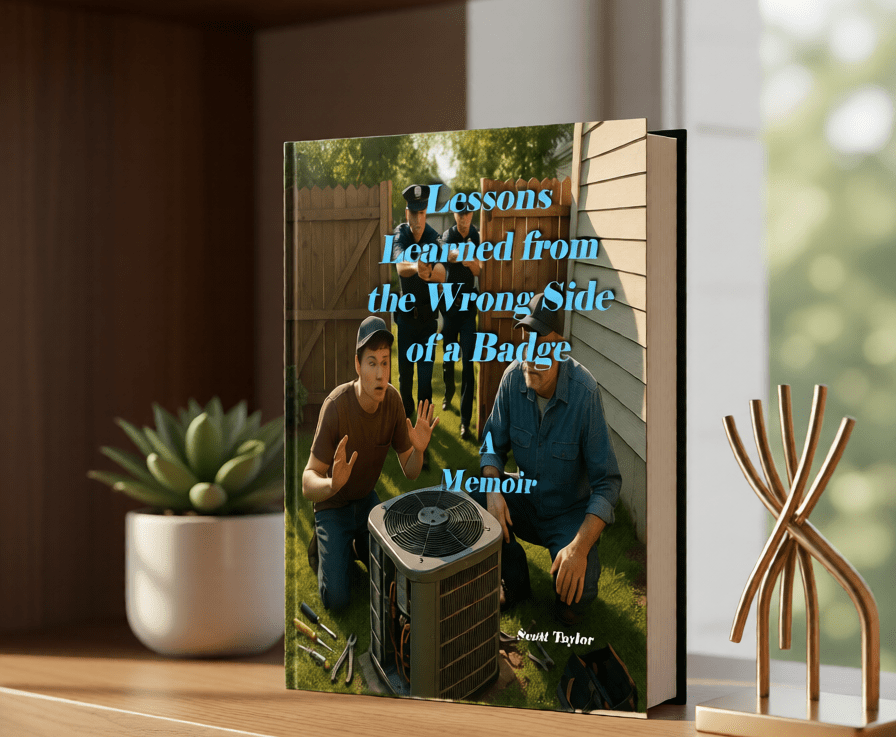
In yesterday’s blog, I talked about a memoir I released, Lessons Learned from the Wrong Side of a Badge. Writing it was an incredibly personal experience—a true window into the soul. Memoir writing, in particular, forces you to confront your past and share it with the world. It’s not easy, but it’s one of the most rewarding things I’ve ever done.

I encourage everyone to write, whether it’s for mental health, literacy, or just for fun. And if you’re ready to take the next step, consider sharing your work. You never know who you might inspire.

What’s Next?

In my next blog, we’ll dive into the second step of the process: editing. Writing is only the beginning—editing is where the real magic happens. We’ll talk about tools, techniques, and how to approach editing without losing your mind.

In the meantime, I’d love for you to check out my memoir, Lessons Learned from the Wrong Side of a Badge. You can find it here on Amazon. Let me know what you think!

Until next time, keep writing—and don’t be afraid to share your story. The world needs your voice.

– Best, Scott Taylor

Hilarious Life Lessons from a Memoir on Chaos

Hilarious Life Lessons from a Memoir on Chaos

Have the police ever pulled you over for speeding, on a bicycle? —I have.

Lessons Learned from the Wrong Side of a Badge” by Scott Taylor is a raw, hilarious, and thought-provoking memoir that takes readers on a wild journey through the absurd, poignant, and sometimes downright ridiculous moments of life. From mischievous teenage escapades in suburban North Dallas to laugh-out-loud encounters with law enforcement and life-shaking events that redefine resilience, Scott weaves a tale that’s equal parts entertaining and deeply reflective.

In this no-holds-barred account, Scott reflects on the humor, pain, and lessons learned from a life lived on the edge of chaos. Whether it’s dodging speeding tickets in “Arrest-Me Red” sports cars, navigating the quirks of small-town life, or facing the fallout of a life-altering accident, Scott’s stories are packed with wit, wisdom, and an unflinching honesty that will resonate with anyone who’s ever wondered, “What the hell was I thinking?”

Perfect for fans of memoirs with heart and humor, “Point Blank” reminds us that even life’s stupidest moments have something to teach us—if we’re willing to laugh, learn, and keep. For anyone who’s ever had to reinvent themselves, find unexpected strength, or discover joy in the messiness of life, this book is a must-read.

  • #PointBlankMemoir
  • #LessonsFromTheRoad
  • #StoriesThatMatter
  • #MemoirWithAGrip
  • #LifeUnfiltered
  • #LaughCryLearn
  • #BooksWorthReading
  • #MemoirLovers
  • #RealLifeStories
  • #LaughOutLoudReads
  • #AbsurdButTrue
  • #FunnyAndRaw
  • #LifeIsHilarious
  • #StupidShitStories
  • #HumorWithHeart
  • #LifeLessonsLearned
  • #ResilienceInWriting
  • #OvercomingLife
  • #ReinventYourself
  • #SurviveAndThrive
  • #StrengthThroughStories
  • #Farmers Branch Police
  • #Carrollton TX Police

BTW to create an M Dash its ALT 0151…, #tipoftheday

My Books