Tag: creative-writing

“How to Create Characters That Don’t Suck (and Maybe Even Kick Ass)”

“How to Create Characters That Don’t Suck (and Maybe Even Kick Ass)”

How to Build Characters : A Guide for Writers

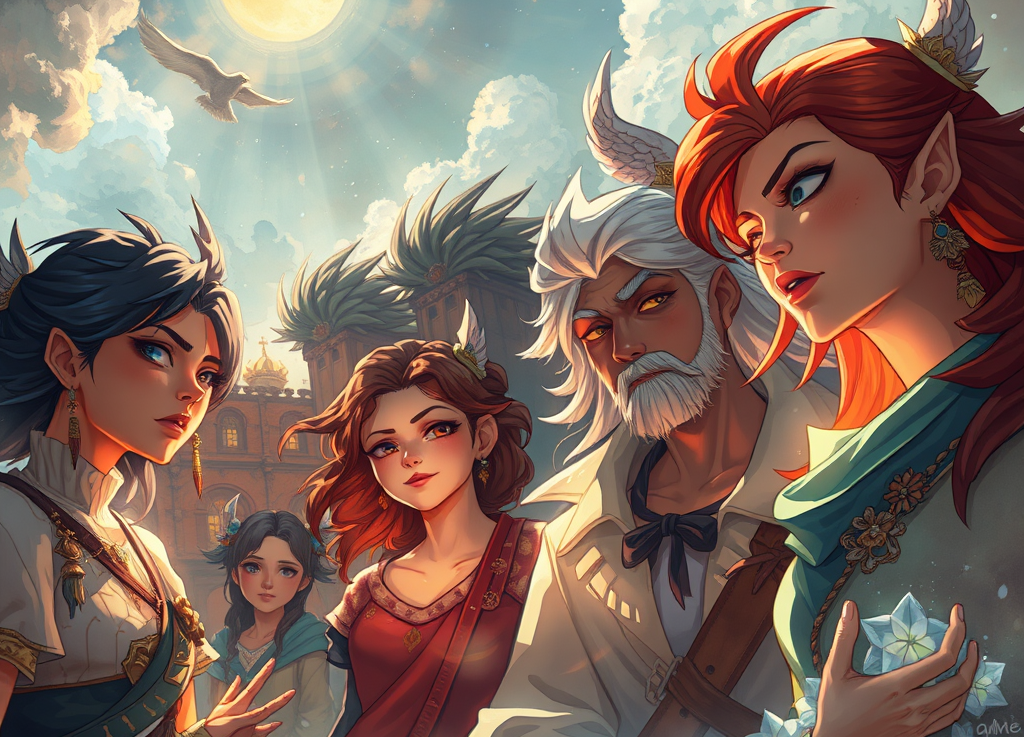
So, while slogging through some stories (bless their hearts), it hit me that some folks could really use a crash course in character development. Because, let’s face it, reading about flat, lifeless characters is about as fun as watching paint dry on a rainy day. Great stories are built on great characters, so let’s talk about how to make them memorable, relatable, and, you know, not garbage.

Here’s the rundown:

1. Give Them a Damn Good Reason to Exist (aka Motivation)

Every character worth their salt wants something—something big, something juicy. It doesn’t matter if it’s love, revenge, a fat stack of cash, or just not dying a horrible death. Ask yourself: What’s their deal? What are they willing to burn down (figuratively, or literally) to get it? Take Harry Potter, for instance; he’s on a mission to take down Voldemort because, well, Voldemort killed his parents, and that’s kind of a dick move. See? Motivation. Clear as day.

2. Nobody Likes a Perfect

Perfect people don’t exist. (Except maybe Beyoncé, but even she probably has something.) If your character’s flawless, they’re boring. Like, “I ‘m-skipping-to-the-next-book” boring. Give them a mix of good and bad traits. Maybe your hero is brave as hell, but can’t keep their mouth shut when they should. Or maybe your villain is a manipulative jerk but secretly cries when they see stray puppies. People are messy; make your characters messy, too.

3. Growth Is Cool, but Stubbornness Is Also Fun

Look, people change or they don’t. Either way, it’s entertaining. Great stories often show characters evolving because of all the crap they go through. But hey, if your character is the kind of person who doubles down on their bad decisions instead of learning from them, that’s cool too. We all know someone like that in real life. (And we probably talk about them behind their back.)

4. Choices, Choices, Choices

Want your characters to feel real? Make them do stuff. Let them screw up, make bold moves, or accidentally burn down a metaphorical (or literal) bridge. Their decisions should have consequences, good ones, bad ones, or “holy-shit-did-they-really do that” ones. Actions reveal who your characters truly are. Plus, it keeps your plot from dying a slow, uneventful death.

5. Backstory: Sprinkle, Don’t Dump

A character’s past is like salt in a recipe, use just enough to enhance the flavor, but don’t go dumping the whole shaker in. Nobody wants to sit through five pages about your character’s traumatic childhood unless it actually affects how they act right now. Give us little breadcrumbs. Let us connect the dots. You’re not writing a therapy session, you’re writing a story.

6. Make Them Sound Like Actual Humans

Here’s a hot tip: not everyone talks like you. Shocking, I know. Give each character their own voice and quirks. Maybe one swears like a sailor, another spouts motivational quotes like they’re auditioning for a TED Talk, and another mumbles so much you’re not even sure what they’re saying half the time. Different speech patterns, body language, and habits make your characters stand out, and keep them from blending into one big, boring blob.

7. Make the Stakes Hit Home

If your character doesn’t care about what’s happening, why the hell should the reader? The stakes need to matter on a personal level. Sure, saving the world is great and all, but what if your protagonist is only doing it because their kid’s life is on the line? Or because their ex is leading the apocalypse and they want to prove they’re better at literally everything? Make it personal. Make it hurt.

8. Let Them Do Weird Shit Every Now and Then

Some of the best moments in stories come when a character does something you didn’t expect—but it still makes sense for who they are. Maybe your buttoned-up accountant suddenly punches someone in the face because they’ve finally had enough. Or your villain has a weirdly tender moment with their pet tarantula. Let your characters surprise you. Let them be unpredictable, but not completely out of character. There’s a fine line between “unexpected” and “WTF just happened.”

Final Words of Wisdom

At the end of the day, characters are the heart of your story. If you know them inside and out, their dreams, fears, secrets, and what kind of pizza they’d order at 3 a.m.—they’ll practically write the story for you. (Okay, not really, but you get the idea.) Keep them real, messy, and interesting, and your readers will stick around for the ride.

Now go forth and create some badass characters. Or don’t. But if you don’t, don’t blame me when your readers start yawning three chapters in.

In case you’re wondering… The Big Beautiful Book of Stupid Shit is still coming. I have to focus on editing, and I hate editing.

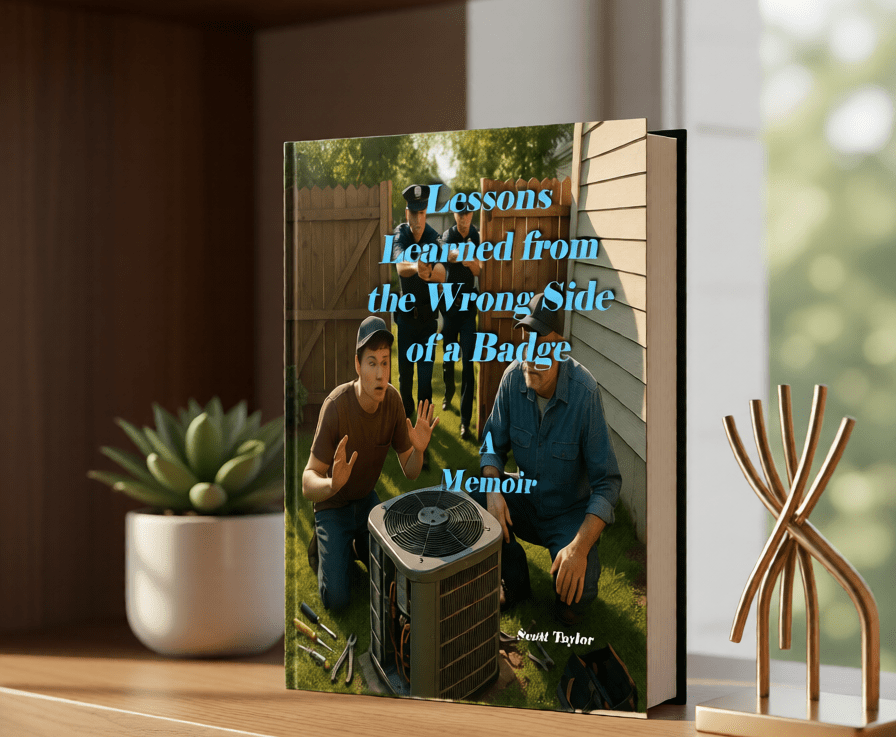
I did publish a memoir called “Lessons I learned at the wrong side of a badge. Yes, I had guns pointed at me and every mean, ugly, nasty thing you could imagine. After you read it, come back here, or there where you purchase it and tell me your thoughts.

BTW, it’s cheap and almost free if you’re on KDP.

#CharacterDevelopment #CreativeWritingTips #WritingCharacters #StorytellingTips #HowToWriteCharacters #FictionWriting #WritingAdvice #CreateRelatableCharacters #WritingHelp #BuildBetterCharacters

Navigating the Challenges of Writing in the AI Era

Navigating the Challenges of Writing in the AI Era

I had lunch with a dear friend recently—a lovely person who discovered that writing is, in fact, a business. Yes, a business. Like selling hot dogs or running a laundromat, except with more existential dread and fewer health inspections. Over sandwiches, we discussed the latest in literary absurdity: AI-driven software that can crank out an entire book faster than you can say, “What the actual fuck?” Apparently (and I can’t confirm this, but it sounds stupid enough to be true), Kindle Direct Publishing (KDP) now limits authors to uploading no more than three books a day. Three. A. Day. Because, you know, that’s a totally normal output for a human being and not at all a sign that Skynet is moonlighting as a romance novelist.

Let’s talk about writing a book the way most authors do—or at least the way we used to before AI started pooping out novels like a malfunctioning vending machine. Writing a book used to be a deeply personal, soul-crushing process that required creativity, discipline, and the kind of stubbornness usually reserved for toddlers refusing to eat broccoli. Here’s how it went down in the pre-AI era:

1. Generating Ideas

Back in the day, authors had to rely on their own brains to come up with ideas. No ChatGPT, no Bard, no “AI Muse 3000.” Just raw, unfiltered human creativity. Inspiration came from life experiences, dreams, or that one weird conversation you overheard at Starbucks where someone said, “I don’t care if it’s illegal, I’m marrying the ferret.” Writers carried notebooks everywhere, jotting down ideas like lunatics scribbling manifestos.

For example, when I wrote a book about sailing, I didn’t just Google “how to sail” and call it a day. No, I lived it. I chartered a sailboat, had the crew walk me through the process, and spent the day pretending I was Captain Jack Sparrow (minus the eyeliner and rum). That night, when I lay down in my hotel bed, the room was still swaying. That’s the kind of detail you can’t fake. That’s world-building, baby.

2. Outlining the Story

Once you had an idea, you had to outline it. This was where the real masochism began. You’d map out the plot, develop characters with backstories more complicated than your family drama, and, if you were writing sci-fi or fantasy, create entire worlds with their own rules, languages, and economies. It was like playing God, except no one worshipped you, and you didn’t get a day off.

Some writers “pantsed” their way through the story (a.k.a. winging it like a drunk pilot), while others meticulously planned every chapter. I personally use a beat sheet from Save the Cat, because apparently, I enjoy turning my creative process into a spreadsheet. Nothing says “art” like Excel.

3. Writing the First Draft

Ah, the first draft. The part where you sit down, stare at a blank page, and think, “Why the hell did I decide to do this?” Writing was slow, painful, and required the kind of discipline usually associated with monks or Navy SEALs. You’d aim for a specific word count each day, and if you hit it, you’d reward yourself with chocolate or alcohol—or both.

Writer’s block was a constant companion. Without AI to suggest ideas, you had to push through it on your own. Some people went for walks. Others screamed into the void. I personally found inspiration in coffee, wine, and the occasional existential crisis.

4. Revising and Editing

Once the first draft was done, the real torture began: revising. You’d read your manuscript over and over, catching typos, fixing plot holes, and wondering why your protagonist sounded like a cardboard cutout. Beta readers would give you feedback like, “I didn’t connect with the characters,” or “This part was boring,” and you’d resist the urge to reply, “Well, Karen, maybe you’re boring.”

If you could afford it, you’d hire a professional editor. If not, you’d edit it yourself, which was like performing surgery on your own child. Painful, messy, and guaranteed to leave scars.

5. Research

Research is the necessary evil of writing, especially for non-fiction or historically accurate fiction. It’s the part of the process where you willingly dive headfirst into a rabbit hole of facts, only to emerge hours later wondering why you now know the mating habits of 18th-century pigeons but still haven’t figured out what your protagonist’s name is. Research is both a blessing and a curse—it gives your work depth and believability, but it also makes you question your life choices when you’re Googling things like, “How long does it take for a body to decompose in a swamp?” and praying your internet provider isn’t judging you.

For example, if you’re writing sci-fi, you might find yourself studying quantum physics or emerging technologies, which sounds impressive until you realize you’re just trying to figure out how to explain time travel without sounding like a lunatic. Or, if you’re me, you might Google “how to sabotage an airplane” and then spend the next week convinced that the FBI is about to kick down your door. I mean, imagine it: covert agents taping over your outdoor cameras, RF jamming your phone so you can’t call for help, cutting the power to your house, shooting your dogs (RIP, Fido), and snipers perched in trees a mile away, just waiting for you to answer the door in your pajamas—or, let’s be honest, nude—so they can interrogate you about your questionable search history.

Wait. I never Googled that. Nope. Never happened. But damn, wouldn’t that make a killer chapter in a thriller? Picture it: the protagonist is a writer who accidentally stumbles onto some classified government conspiracy while researching their next book. Suddenly, their innocent Google searches turn into a one-way ticket to paranoia-ville, complete with black SUVs tailing them and mysterious men in suits showing up at their local coffee shop. Someone call Netflix—I think I just wrote their next hit series.

But seriously, research is the backbone of good writing. Whether you’re crafting a historical epic or a sci-fi adventure, you need to know your shit. As Patricia Leslie points out, research is essential for both fiction and non-fiction writers. It helps develop characters, make settings believable, and weave fact and fiction together so seamlessly that readers can’t tell where one ends and the other begins

For non-fiction, accuracy is king. For fiction, it’s more like a benevolent dictator—you can bend the rules a little, but you still need to know what you’re doing.

The trick is to use research as a tool, not a crutch. Sure, you could spend weeks poring over vintage newspapers or interviewing experts, but at some point, you have to stop researching and start writing. Otherwise, you’ll end up with a head full of useless trivia and no book to show for it. And let’s be honest, no one’s going to be impressed that you know the exact dimensions of a 16th-century guillotine unless you actually use that knowledge in your story.

So, to all the writers out there: research responsibly. And maybe clear your browser history every now and then, just in case. You never know when the FBI might decide to pay you a visit.

6. Finding a Publisher

Before self-publishing, authors had to grovel at the feet of literary agents and publishers. You’d write query letters, pitch your book, and wait months for a response, only to get a rejection that said, “Not for us, but good luck!” It was like online dating, except instead of ghosting you, they sent a polite “no.”

7. Marketing and Promotion

Even after all that, the work wasn’t done. Authors had to promote their books like used car salesmen. Book tours, media appearances, social media campaigns—you name it. You’d beg people to buy your book, and they’d say, “I’ll wait for the movie.” Thanks, Aunt Linda.

The AI Problem

Now, thanks to AI, anyone can “write” a book in minutes. But let’s be honest: these programs aren’t writing books; they’re shitting them out. And the result? A flood of mediocre, soulless content clogging up the literary world like a fatberg in a sewer.

I’m all for technology as a tool. Word, Grammarly, ProWritingAid—these are great. But AI-generated books? That’s where I draw the line. I’m pushing for legislation that requires AI-generated books to wear a big, ugly label that says, “This was written by a robot.” Readers deserve to know if the “author” of their favorite romance novel is a human or a glorified toaster.

Final Thoughts

Writing is a job. A hard, thankless, occasionally soul-sucking job. There are days when I stare at my manuscript and think, “Why am I doing this?” But then I remember: because I love it. Because it’s who I am. And because the world needs more books written by real people with real stories to tell.

My book, Stupid Shit, is coming soon. Subscribe today so you can grab a copy when it drops. Trust me, it’ll be worth it. Or don’t. I’m not your mom.

-Best

Show Don’t Tell

Show Don’t Tell

‘Show don’t tell’ is one of the foundational principles of writing, emphasizing the importance of vividly illustrating instead of simply stating.

The principle of “show, don’t tell” is a fundamental technique in writing that enhances storytelling by allowing readers to experience emotions and events more vividly. Here are several reasons this approach is effective:
Engages the Reader’s Imagination
When writers show rather than tell, they invite readers to interpret the emotions and actions of characters through descriptive language and sensory details. This engagement encourages readers to visualize scenes and feel emotions alongside the characters, creating a more immersive experience.
Creates Emotional Depth
Showing emotions through actions, dialogue, and body language adds layers to character development. For instance, instead of stating that a character is angry, a writer might describe clenched fists, a flushed face, and a sharp tone of voice. This method allows readers to understand the character’s emotional state more deeply and personally.
Enhances Character Development
Characters become more relatable and realistic when their emotions are demonstrated through their behavior. Readers can infer motivations and personality traits based on how characters react to situations, making them feel more authentic and complex.
Builds Tension and Conflict
By showing rather than telling, writers can create suspense and tension in a narrative. For example, a character’s internal struggle can be illustrated through their actions and decisions, allowing readers to sense the stakes without explicitly stating them. This technique keeps readers engaged and invested in the outcome.
Encourages Reader Interpretation
When writers show emotions and events, they allow readers to draw their own conclusions and interpretations. This active participation can lead to a more rewarding reading experience, as readers connect with the story on a personal level and reflect on its themes and messages.


Here are some basic emotions

Joy – A feeling of great pleasure and happiness.
Trust – A positive emotion characterized by reliance on someone or something.
Fear – An emotional response to perceived threats or danger.
Surprise – A reaction to unexpected events.
Sadness – A feeling of sorrow or unhappiness.
Disgust – A strong feeling of aversion or repulsion.
Anger – A strong feeling of annoyance, displeasure, or hostility.
Anticipation – A feeling of excitement about something that is going to happen.

Detailed or nuanced emotions.

Affection
Amusement
Anxiety
Apathy
Compassion
Confusion
Contentment
Curiosity
Despair
Disappointment
Empathy
Envy
Excitement
Fearfulness
Frustration
Guilt
Hope
Horror
Hostility
Interest
Jealousy
Loneliness
Nostalgia
Pride
Relief
Remorse
Satisfaction
Shame
Surprise
Tenderness
Worry


Examples:
Opening his birthday present, Tim was joyful when he saw the latest video game.

Opening his birthday present, Tim’s face lit up with joy as he saw the latest video game. He eagerly imagined the hours of fun ahead.


Tim was disappointed to learn he would have to wait to play the game until the weekend, as tomorrow was a school day.


The following example may be a bit excessive, but it effectively conveys his disappointment.

As Tim’s face fell, a deep furrow etched itself across his brow. His eyes, which had sparkled with anticipation just moments before, now held a hint of sadness. The corners of his mouth, which had been curved up in a hopeful grin, now turned downward, reflecting the weight of his disappointment. He sighed, a long, slow exhalation that seemed to carry the burden of his unmet expectations.
He stared at the game console, its vibrant colors and intricate graphics now a stark reminder of the fun he would have to postpone. His fingers, which had been itching to wrap around the controller, now drummed a slow, disheartened rhythm against the table.
The room, once filled with the excited chatter of friends eagerly discussing strategies and predicting outcomes, now fell silent, save for the soft ticking of the clock on the wall. The hands moved inexorably forward, marking the passage of time that Tim could not reclaim.
As the reality of his situation sunk in, Tim’s shoulders slumped, and his body language indicated his despondency. He glanced at his friends, their faces a mirror of his own emotions, and then back at the game console. The screen, with its glowing promise of adventure and excitement, now seemed cold and distant, a cruel reminder of the joy that was now out of reach.
With a final, resigned sigh, Tim turned away from the game, his eyes downcast, his heart heavy with disappointment. He knew he would have to wait until the weekend to play, but for now, he could only endure the long, slow hours until then.


Try your hand at it. Pick a couple of the basic emotions, tell the story, and then show the story.

If you want more of these types of interactions, share your thoughts or stories in the comments.

-Best

A Tribute to Miss Thunberg. Apprehended in the pursuit of different windmills.  

A Tribute to Miss Thunberg. Apprehended in the pursuit of different windmills.  


In search of monsters…

In an age where the winds of change blew with an unwavering fervor,

A young and determined damsel lived, her spirit as unyielding as steel.

With locks shining like the sun’s golden rays and eyes as deep and endless as the sea.

Setting sail upon the azure waves, she felt the salty mist on her face, her spirit ignited with a courageous mission.

“Forsooth!” she cried, her voice echoing through the air with a clarity that couldn’t be ignored.

“I long for the passion of protest, where voices crescendo, and hearts ignite with purpose.

At the point where the ocean meets the sky, the seagulls soar freely.

I shall find my brethren in arms, their resolute voices echoing in the air.”

Her sturdy galleon gracefully glided across the sparkling brine.

As she searched for the clarion call, her ears strained to catch even the faintest whisper of the divine.

Through raging storms and tranquil seas, she sailed tirelessly day and night.

In relentless pursuit of a cause most just, they were determined to face whatever challenges lay ahead.

And behold! Where the sea and future intertwine on the horizon, a gentle breeze carried the scent of salt and adventure.

Her eyes caught sight of a defiant throng, united in their unwavering resolve.

With banners held high and stanch spirits, they defiantly stood their ground against the relentless tide.

And with open arms, they warmly embraced her, inviting her to stand by their side.

Once a sailor of the vast ocean, the young lady now found herself amidst the honking horns and busy streets.

She found her protest, her voice, her unwavering pride, echoing through the crowd.

The fellowship of the brave filled her heart with joy, as she eagerly embraced the adventure ahead.

In the chorus of the just, her voice resonated with strength and conviction.

Even if she blindly hitched her ride to fiction.

Like the fading glow of twilight, the luster of renown slowly diminished.

Our intrepid lady found herself amidst a breathtaking new landscape, stretching as far as the eye could see.

The air was filled with the passionate cries of a fervent throng of souls.

They chanted rebellion enthusiastically, their voices echoing with passion for any cause, regardless of what it was.

“Here, here!” they shouted, their voices filled with an electrifying energy that could light up the skies.

“Let your voice resonate, fair maiden, as your spirited echoes reverberate!”

Filled with fiery passion and unbridled energy, she fearlessly pursued her dreams.

She joined the chorus of dissent, passionately advocating for her own cause.

For it didn’t matter the flag they carried or the beliefs they upheld,

The unity of voices echoed through the air, carrying with it a sense of purpose and determination.

Amidst the camaraderie of the crowd, her voice gained momentum and commanded attention.

A piercing cry for justice reverberated across the globe, as the world faced its most dire hour.

Her cries echoed, carrying the weight of the news of a world in chaos. The sky, once a solid canopy, now shattered and raining down fragments of blue. The earth, once a gentle orb, now stretched out before her as a vast, flat expanse where the edges seemed to meet the abyss.

In the shadow of the devil’s decree, a cause most foul and dire, the air grew heavy with a sense of impending doom.

Our maiden found herself surrounded by a raging inferno, the crackling flames dancing dangerously close.

To the world, she was the crier of wolves, whose haunting howls echoed through the night.

Nevertheless, there was a part of her that craved to be acknowledged from a fresh perspective.

Instead of tilting at windmills our maiden wanted more of them. The world’s capacity for CO2 had reached its limit, not even the emissions of a single cow could be tolerated. They had to be eliminated, or else humanity faced certain doom.

Our maiden, devoid of any scientific or mathematical knowledge, continued on her path with fervent outbursts, as if she had been bestowed a divine mission by the Goddess of the cosmos. Or so she believed.

With every cry she raised, the haunting howl of a wolf echoed closer.

As the moonlight illuminated its bared fangs, its intentions became unmistakably clear.

Fearless and determined, the maiden ignored the facts and embraced the lie..

“Behold!” she proclaimed, as the beast loomed to devour,

“I am more than just a crier, I possess a greater power.

To stand and face the darkness, to challenge the night’s devour,

I am the maiden of the hour, in this, my final bower.”

And so the tale is woven, of a maiden so brave and true,

Who cried wolf not in jest, but as a call to arms anew.

In the pages of Cervantes, her story finds its due,

A lesson of analphabetism, for me, and for you.

In the tapestry of time, where stories and images intertwine,

The maiden’s visage joins the gallery of those who once did shine.

Captured in a moment, her image eternally cast,

With those who wore disgrace as a badge, their ignorance is vast.

Pride they took in folly, a mantle they bore with ease,

Unaware that history’s pages would judge as they please.

Yet, in the relentless march of days, memories fade to dust,

And the foolishness of yesteryears is lost in time’s robust.

For when the next tirade ascends, with its clamorous sound,

The past’s disgraced figures are but shadows on the ground.

Their tales, once written with the ink of infamy and scorn,

Are eclipsed by the present’s uproar, as new sagas are born.

So let the maiden’s story be a whisper in the gale,

A lesson that in the end, even the loudest voices pale.

And though her image lingers, with others in disgrace,

‘Tis the future’s cry that echoes, in this ever-changing space.

In days of yore, when the quill was mightier than the sword,

And parchment bore the weight of words untold,

The scribes, with hands both steady and assured,

Wrote tales of the past, both brazen and bold.

“There is a reason,” they’d whisper, their voices low,

“For which we inscribe these chronicles of yesteryear.

To remember and reflect, to learn and to know,

The deeds of the past, both far and near.”

For in the annals of history, truth finds its stage,

And lessons of old are passed from age to age.

The triumphs and trials, the joy and the sorrow,

Are captured in ink, for today and tomorrow.

So let us thank the scribes, those keepers of time,

For their tales of the past, in prose and in rhyme.

For through their words, we travel to days long gone,

And the wisdom of the ages is forever drawn.

I love Miguel de Cervantes. This blog is me paying homage to him and serves as a warning to those who might follow in the path of this arrogant young fool. The pen is mightier than the sword, and scribes such as yours truly will make sure your mark in history is indelible.  

Society could experience substantial enhancements if individuals directed their efforts toward studying history rather than expending energy on imagined adversaries. It would be beneficial for parents to ensure that they read Henny Penny to their children multiple times during their bedtime routine.

-Best

Scott