Tag: politics

“If the Glove Shrinks: Lawyers, Loopholes, and the Big Beautiful Mess of Justice”

“If the Glove Shrinks: Lawyers, Loopholes, and the Big Beautiful Mess of Justice”

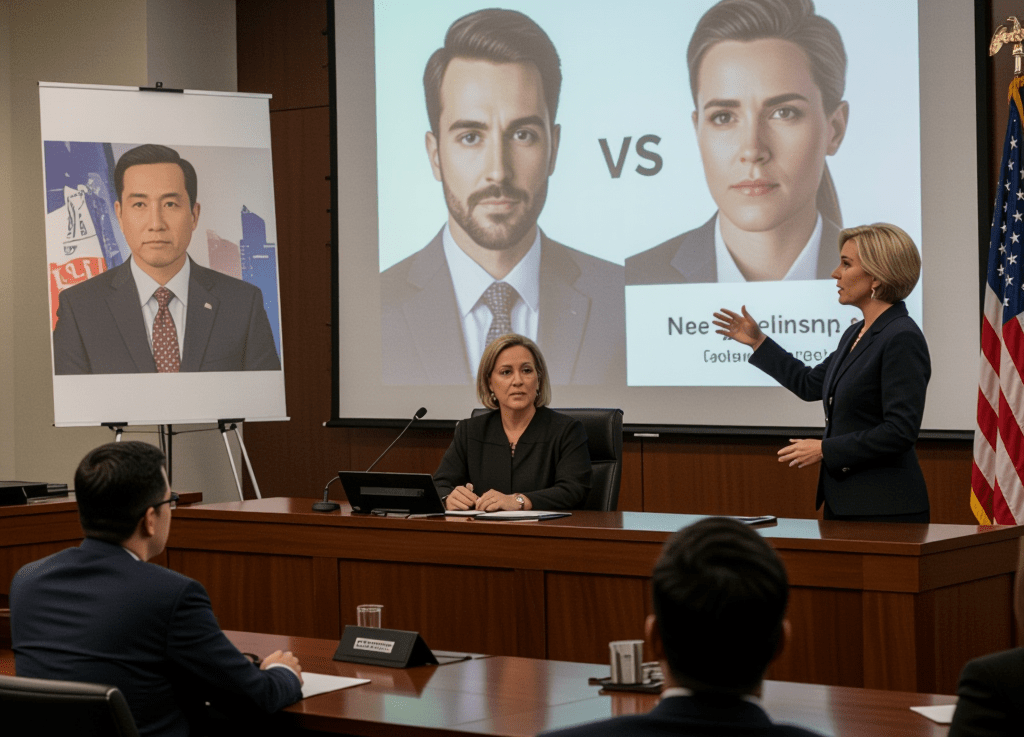
In my latest literary masterpiece, The Big Beautiful Book of Stupid Shit (yes, that’s the real title, and no, I don’t regret it), I dive headfirst into some of the most baffling, infuriating, and downright idiotic aspects of the human condition. Spoiler alert: humanity is weird, and I’m here to talk about it.For example, let’s chat about lawyers. Specifically, the ones willing to defend the absolute worst people among us—the ones who make you pause mid-sandwich and say, “Wait, why are they even trying?” You know the type. They’re the ones standing up in court for murderers, war criminals, and people who willingly put pineapple on pizza.Take Charlie Kirk, for instance. Imagine defending that walking, talking Facebook comment section. The guy could probably strangle a basket of kittens on live TV, and some lawyer would still show up in court, briefcase in hand, ready to argue that “the kittens provoked him.” It makes you wonder—why? Why do these people do it? Are they just morally bankrupt? Are they paid in gold bars? Is there some kind of secret lawyer cult that demands sacrifices to the God of Loopholes?

The O.J. Trial: A Masterclass in Legal Shenanigans

Let’s rewind to the O.J. Simpson trial, that glorious dumpster fire of the 90s that had the whole world glued to their TVs. I’m pretty sure I taped it, but who knows—I might’ve just blacked out from secondhand embarrassment. Everyone and their dog knew O.J. was guilty. The man practically left a bloody trail to his living room. But did that stop his “Dream Team” of lawyers from turning the trial into the Super Bowl of legal theatrics? Hell no.And then came the moment that will live in infamy: the glove. You know the one. The leather glove soaked in blood that obviously shrank because, fun fact, wet leather shrinks. It’s science, people. But when O.J. tried it on and did his little “oops, doesn’t fit” dance, the jury collectively nodded and said, “Well, if the glove doesn’t fit, we must acquit.” I mean, come on. That’s like saying, “If the shoes don’t tie, the guy didn’t die.”By the way, did you know Native Americans used wet leather as a weapon of torture? True story. They’d bury their enemies up to their necks, tie a wet leather strap around their heads, and let the desert sun do the rest. The leather would dry, shrink, and slowly crush their skulls. Brutal, right? Now imagine some modern lawyer defending that. “Your honor, my clients were simply engaging in culturally significant headgear practices. They’re innocent.”

The T. Cullen Davis Shitshow

Speaking of Texas-sized legal disasters, let’s talk about T. Cullen Davis. If you’ve never heard of him, congrats—you have a healthy brain that hasn’t been poisoned by true crime rabbit holes. This guy was a millionaire accused of, among other things, murder. And who was his lawyer? Racehorse Haynes, a man with a name so Texas it might as well be wearing spurs. Haynes was so good at his job that you have to wonder if he made some kind of Faustian deal with the Devil himself. Honestly, I wouldn’t be surprised if Haynes and Satan are currently doing laps together in the lake of fire, swapping war stories about all the guilty people they got off the hook.

So, Why Do Lawyers Defend These People?

Here’s the kicker: defense attorneys don’t take these cases because they’re evil or because they secretly enjoy high-fiving serial killers in the breakroom. Nope. They do it because the justice system, as gloriously messy and flawed as it is, only works if everyone gets a fair trial. That means even the scumbags, the psychos, and yes, even the pineapple-on-pizza people deserve someone in their corner.These lawyers aren’t there to say, “Hey, my client is a great guy who accidentally stabbed 14 people.” They’re there to make sure the system doesn’t screw it up. Because if the system can railroad the guilty, it can definitely railroad the innocent. And that’s when things go from “mildly horrifying” to “full-on dystopia.”

How the Hell Do They Sleep at Night?

You’re probably wondering how these lawyers manage to sleep at night after defending, say, a guy who stole candy from babies or a hedge fund manager who tanked the economy. The answer? Compartmentalization. That’s therapist-speak for “shoving all your guilt and moral dilemmas into a mental closet and slamming the door shut.”Defense attorneys also lean on professional ethics, peer support, and the occasional stiff drink to get through it. They convince themselves that they’re not defending the crime—they’re defending the process. And honestly? They’re not wrong. The legal system doesn’t work without them. Just don’t expect them to win any popularity contests.

Final Thoughts: The Big, Stupid Picture

At the end of the day, defending the indefensible is a thankless job, but somebody’s gotta do it. Without defense attorneys, the justice system would be about as fair as a rigged carnival game. Sure, it’s frustrating to watch some smirking sociopath walk free because of a technicality, but the alternative—living in a world where justice is arbitrary and rights are optional—is way worse.So, the next time you’re shaking your head at some lawyer defending a guy who obviously did it, just remember: they’re not sleeping peacefully because they condone the crime. They’re sleeping peacefully because they know they’re upholding the system. Or maybe they’re just really good at compartmentalizing. Either way, they’re doing their job—and, like it or not, we all benefit from it.Now, if you’ll excuse me, I’m off to write my next chapter: “Why People Still Put Up With Reality TV.” Spoiler: I have no idea.

Thanks for visiting. Make sure to subscribe so you don’t miss my next satiracle, look at humanity, or learn about putting virgin olive oil in coffee. (pro tip: be close to the bathroom)

Follow, repost, and comment for extra credit. 🙂

Thanks @thetimedokAuthorScott

#JusticeSystem
#DefenseAttorneys
#LegalLoopholes
#CourtroomDrama
#OJSimpsonTrial
#TrueCrimeHumor
#DarkHumorWriting
#LegalEthics
#LawyersLife
#MoralityAndJustice
#FairTrial
#DefendingTheGuilty
#SatiricalWriting
#NativeAmericanHistory
#DumbHumanBehavior

  • #TrueCrime
  • #LegalDrama
  • #OJSimpson
  • #JusticeForAll
  • #CourtroomChaos
  • #TrialByFire
  • #LawAndDisorder
  • #LegalLoopholes

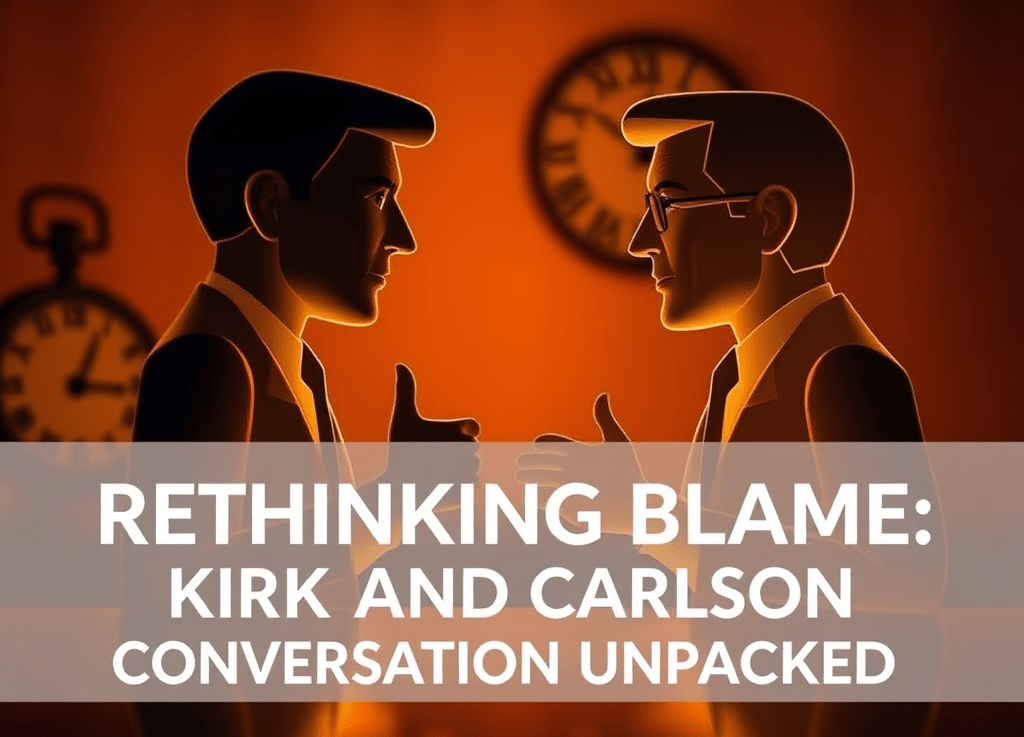
Rethinking Blame: Kirk and Carlson’s Conversation Unpacked

Rethinking Blame: Kirk and Carlson’s Conversation Unpacked

The recent interview between Charlie Kirk and Tucker Carlson warrants closer scrutiny, particularly in light of the significant influence both figures wield in shaping public discourse. While the conversation touched on a variety of topics, including generational blame, political strategy, and cultural values, it also revealed certain rhetorical tendencies and ideological positions that merit critical reflection and, perhaps, a reevaluation of their approach.


Generational Blame and Oversimplification

One of the central themes of the interview was the critique of Baby Boomers, with both Kirk and Carlson suggesting that this generation bears significant responsibility for the economic and cultural challenges faced by younger generations, particularly Gen Z. This argument, while provocative, risks oversimplifying complex systemic issues. As noted in the transcript of the interview titled “How Debt Has Radicalized Young America and Why Boomers Deserve the Blame”, Kirk and Carlson discuss how debt and economic inequality have disproportionately impacted younger generations, framing Boomers as a primary cause 

.While it is true that certain policies and decisions made during the Baby Boomer era have contributed to current economic challenges, attributing blame to an entire generation ignores the diversity within that cohort. Many Boomers were not in positions of power and faced their own economic struggles. Furthermore, systemic issues such as rising debt, economic inequality, and environmental degradation are the result of decisions made by individuals across multiple generations, not solely by Boomers. This kind of generational scapegoating risks alienating potential allies and oversimplifying the root causes of these problems.


Inflammatory Rhetoric and Its Consequences

Another point of concern is the tone and language used during the interview. Tucker Carlson, known for his provocative style, reportedly used inflammatory language, including a call to “lock those [expletive] up,” which was met with visible discomfort from Kirk, as noted in the interview. While Carlson’s rhetoric may resonate with certain segments of his audience, it raises questions about the broader implications of such language in public discourse.Inflammatory rhetoric, while effective in capturing attention, can undermine constructive dialogue and alienate individuals who might otherwise engage with the issues being discussed. It also risks reinforcing the very dynamics of power and division that Carlson and Kirk often critique. As public figures with significant platforms, both men have a responsibility to foster thoughtful and inclusive conversations rather than resorting to language that exacerbates polarization.


The Role of Self-Reflection in Public Discourse

Given the influence of both Carlson and Kirk, it is crucial for them to engage in self-reflection and consider the broader impact of their messaging. While their critiques of cultural and political elites often resonate with audiences who feel disillusioned or marginalized, they must also ensure that their arguments are grounded in nuance and avoid perpetuating division. For instance, Carlson’s reflections on religion and values, as highlighted in the interview, offer an opportunity to emphasize unity and shared purpose rather than focusing on blame or conflict.Moreover, Kirk’s role as a voice for younger generations could benefit from a more balanced approach that acknowledges the contributions and struggles of older generations while advocating for systemic change. By fostering intergenerational collaboration and emphasizing shared goals, Kirk and Carlson could help bridge divides rather than deepen them.


The recent interview between Charlie Kirk and Tucker Carlson provides a valuable opportunity to reflect on the role of public figures in shaping societal narratives. While their critiques of generational and systemic issues raise important questions, their reliance on oversimplification and inflammatory rhetoric risks undermining the constructive potential of their platform. A more nuanced and inclusive approach, grounded in self-reflection and a commitment to fostering unity, would better serve their audience and contribute to meaningful progress on the issues they seek to address.

Epstein didn’t kill himself, and WTF DAN and KASH?

Epstein didn’t kill himself, and WTF DAN and KASH?

You don’t have to be a rocket scientist to figure out who visited Little St. James. (Epstein’s Island).

Holy shit, Dan and Kash, never, ever play poker. Seriously, watching that interview was like watching two toddlers try to hide a cookie jar raid — except instead of crumbs, they left a trail of neon signs screaming, “I don’t know how to lie, please don’t notice!”

There’s this magical thing called “poker tells” — involuntary body language, verbal slips, or just plain dumbass behavior that gives away what you’re holding. And you two? You might as well have had giant thought bubbles flashing above your heads: “I’m clueless, please don’t call my bluff.”

If poker were a game of poker tells, you’d be the easiest reads in history. You didn’t just give away your hand; you handed it over with a bow and a damn slideshow. Next time, maybe try not looking like you’re auditioning for “How to Suck at Poker for Dummies.”

In poker, self-awareness is key — knowing when you’re sweating bullets or suddenly chatty can be the difference between winning and getting cleaned out. But you guys? You were broadcasting your cluelessness like it was a damn parade.

Now, Comey is such an artist when it comes to lying. If you compare the two as current and ex-heads of the FBI, you should be scared. While Dan and Kash were basically flashing their goddamn cards like neon signs screaming, “Hey, I’m a lying idiot!” James Comey was sitting there with a poker face so solid it could’ve been carved from the frozen tears of a thousand disappointed FBI agents.

Seriously, this guy’s poker face was so tight that David Bach — a professional poker player who makes a living spotting liars and bullshitters — vouched for Comey’s Senate testimony. Bach said Comey was telling the truth, which means Comey’s poker face wasn’t just good, it was “I’m about to win the fucking World Series of Poker” good. The dude was unreadable, like a goddamn sphinx wrapped in a riddle, wrapped in a poker chip.

Meanwhile, Dan and Kash? They were the human equivalent of a flashing “I’m lying” billboard. You could see their “tells” from space. If poker was about broadcasting your bullshit, they’d be champions. But Comey? Calm, cool, collected — the kind of player who keeps their cards so close to their chest you’d need a crowbar and a warrant just to get a peek.

There is a there there, and Trump’s Boys, they are too honest to run the FBI.

Isnt that a sad statement? “They are too honest to run the FBI.”

If you look at the history of the FBI and think of Hoover…He and Comey could be twins. Yes, Comey, take that as a compliment.

Jeffrey Epstein’s Little Shitshow Island: Who the Hell Flew There and Why?

So, do I believe Epstein strangled himself? Honestly, the official story is riddled with so many screw-ups, suspicious circumstances, and missing evidence that it’s hard not to be skeptical. The combination of malfunctioning cameras, sleeping guards, broken protocols, and Epstein’s connections to powerful people makes the “suicide” explanation feel like the least believable part of this whole mess.

In short: The official line says suicide, but the whole situation smells like a perfect storm of incompetence, cover-ups, and maybe something darker. Whether Epstein was murdered or managed to kill himself in a jail cell with all those screw-ups is still a question that probably won’t get a satisfying answer anytime soon. And that’s why the meme lives on — because sometimes, the truth is just too stupid or too fucked up to swallow without a healthy dose of skepticism and sarcasm.

So, Jeffrey Epstein had this private island called Little St. James. Sounds cute, right? Except it became the VIP hotspot for the kind of wild parties that make your average frat house look like a church picnic. We’re talking alleged sexual abuse of minors, drugs, and a guest list that reads like a “Who’s Who of People Who Should’ve Known Better (or Maybe Just Didn’t Give a Flying F***).” While the full sordid details are still wrapped tighter than a Kardashian’s Instagram DMs, flight logs, court docs, and investigative journalism have peeled back the curtain on who was hopping on Epstein’s personal jet to this debauchery Disneyland.

Who the Hell Was Flying on Epstein’s Creepy Jet?

1. The Usual Suspects: Rich, Famous, and Probably Morally Bankrupt

Flight logs and leaked phone data tracked nearly 200 devices back to fancy-ass neighborhoods and luxury mansions across the US and beyond. Think gated communities in Florida and Michigan, Martha’s Vineyard (because why not?), Nantucket, and even spots near Trump Tower. Basically, if you’ve got a yacht bigger than your ego, you were probably on the list.

These weren’t your average Joes. Nope, business tycoons, politicians, celebrities, and socialites who probably thought their money was a Get Out of Jail Free card for anything shady.

2. The “Oh, Really?” Celebrity and Political Edition

Bill Clinton: Flew on Epstein’s planes at least 17 times in the early 2000s. Sometimes with Secret Service, sometimes without. Clinton swears he didn’t know about the crimes and claims he never set foot on the island. Court docs and accuser testimony? Not so sure about that. But hey, who’s counting? He is still trying to figure out what the definition of IS is.

Donald Trump: Took a few joyrides on Epstein’s jet in the ’90s, sometimes with family. No official accusations of wrongdoing, but he was definitely in Epstein’s Palm Beach social circle and partied with him. Because nothing says “class” like rubbing elbows with a convicted sex offender.

Prince Andrew: The Duke of York, who apparently thought “bad decisions” was his middle name. Accused in court documents of sexual misconduct involving a minor trafficked by Epstein. Denies everything, but his name pops up in flight logs and island guest lists like an unwanted party crasher.

Celebrities: Naomi Campbell, Kevin Spacey, Chris Tucker — all took flights on Epstein’s jet. They all deny knowing anything about the creepy shit going down. Sure, Jan.

3. Epstein’s Inner Circle: The Real MVPs of This Clusterfuck

Ghislaine Maxwell: Epstein’s partner-in-crime, convicted sex trafficker, and frequent island resident. Basically the ringleader who made sure the whole nightmare ran smoothly.

Business Bigwigs: Billionaires like Les Wexner were close to Epstein. Some visited the island, some didn’t. All have since perfected the art of “I don’t know anything” face.

Why the Hell Would Anyone Participate in This?

1. Because Secrecy and Money Make You Feel Invincible

The island was remote, Epstein was loaded, and his guests were so rich they probably thought the law was just a suggestion. What happens on Little St. James stays on Little St. James — or so they hoped. Spoiler: It didn’t.

2. A Culture of Excess, Drugs, and “What the Actual F*”**

According to accusers and investigators, the island was basically a debauchery theme park for the ultra-wealthy. Wild parties, drugs, and the exploitation of girls as young as 14. Because nothing screams “good time” like illegal sex trafficking.

3. Networking, But Make It Creepy

For some, Epstein was a gateway to power, money, and influence. The island was less about friendship and more about transactional “fun.” You know, the kind of fun that ruins lives.

Speculating on the Motives and Activities (Because Why Not?)

The folks most likely to have flown to Epstein’s island for the “fun” stuff were:

People who love exclusive, secret parties and don’t mind skating on the edge of the law and morality.

Those who had something to gain from Epstein’s twisted network — money, power, or just a really messed-up story to tell their grandkids (or not).

And, of course, anyone dumb enough to think their actions would never see the light of day on a tiny island surrounded by ocean and bad decisions.

There you have it: a cocktail of rich assholes, bad choices, and a private island that was less “tropical paradise” and more “criminal circus.” Perfect material for Stupid Shit, because if there’s anything stupider than flying on Epstein’s jet, it’s pretending you didn’t know what the hell was going on.

Lets wrap this up for the 16 percent of people who believe Epstien killed himself and  Kash, Pam, And Dan, are telling the truth.

Here are a few more thoughts for the 16% who believe the media, including the ladies of the view.

The Moon Landing Was Filmed on a Hollywood Soundstage

Because obviously, NASA had nothing better to do than hire Stanley Kubrick to fake the entire Apollo 11 mission. Forget the thousands of scientists and engineers — it was all just a big movie set with fake moon dust and zero gravity wires. Cue the dramatic “lights, camera, conspiracy!” 🎬🌕

Birds Aren’t Real — They’re Government Surveillance Drones

Yep, every pigeon, sparrow, and seagull is actually a tiny spy drone sent to watch your every move. So next time a bird poops on your car, remember: Big Brother is literally dropping you a message. 🐦📡

The Earth Is Flat and NASA Is Lying to You

Because all those satellite images, circumnavigation flights, and space missions are just part of a global cover-up to hide the fact that the Earth is a pancake. Gravity? Just a conspiracy to keep you from realizing you’re living on a giant dinner plate. 🥞🌍

The Illuminati Controls Everything, Including Your Morning Coffee

The secret society that allegedly runs the world also decides what you drink, eat, and binge-watch. Starbucks cups with their logo? Illuminati recruitment tools. Your barista? Probably a high-ranking member. ☕️👁️

Elvis Presley Is Still Alive and Living on Mars

Forget Graceland — Elvis faked his death and took a rocket to Mars to start a new life as the Red Planet’s King of Rock ‘n’ Roll. The Martians just haven’t told us yet because they’re still trying to learn “Jailhouse Rock.” 👽🎸

As a science fiction writer I thank god for government cover ups. Lets face it the truth is not near as entertaining as what we will create in the absence of the truth.

The “Oops, We Totally Found a Dead Alien but Lost the Body” Cover-Up

Apparently, the Pentagon once “accidentally” snagged an alien spacecraft along with its deceased pilot. But don’t worry, the government just misplaced the body somewhere between the classified vault and the coffee machine. Happens to the best of us, right?

Roswell: The Ultimate “We Swear It Was Just a Weather Balloon” Story

In 1947, a mysterious crash in Roswell, New Mexico, sparked rumors of alien visitors. The government’s official explanation? A weather balloon. Because when you find something that looks like a spaceship, the first logical conclusion is definitely meteorology.

The Secret UFO Retrieval Program Congress Pretends to Investigate

Congress is “investigating” a secret program that allegedly retrieves UFOs. Translation: lots of hearings, a few vague statements, and zero actual answers — the perfect recipe for keeping the public guessing while the government enjoys its popcorn.

Declassified Memos That Say “We Don’t Know What This Is Either”

After decades of classified documents being released, the government basically admits, “Yeah, we have no clue what some of these flying objects are, but we’re definitely not telling you.” Because mystery is more fun when it’s government-approved.

The Navy’s UFO Encounters That Are Totally Not Aliens, Promise

The Navy has reported inexplicable flying objects near nuclear weapons sites. But hey, it’s probably just a flock of very confused seagulls or maybe some rogue drones. Aliens? Nah, that’s just sci-fi nonsense.

Alien Abductions? Just Your Imagination, or Maybe a Budd Hopkins Book

Some UFO researchers popularized alien abduction stories, but even believers admit some cases are hoaxes. So if you suddenly remember missing time, it’s probably just a nap or a really vivid dream — not an intergalactic joyride.

The real tragedy in this circus of nonsense? Our hard-earned tax dollars are getting flushed straight down the bullshit toilet. Yep, while you’re sweating over rent and ramen, Uncle Sam’s busy funding the greatest collection of “WTF” moments ever assembled. It’s like we’re all chipping in for a front-row seat to the world’s most expensive clown show — and spoiler alert: the clowns don’t even know they’re the joke.

Stay tuned for the release dates of my latest books. “Stupid Shit” is almost finished.

-Best

Understanding Iran: Actions vs. Rhetoric

Understanding Iran: Actions vs. Rhetoric

It seems my Whac-A-Mole blog post didn’t land as intended with a few folks. It may have come across as too lighthearted for the seriousness of the topic. For those who feel I wasn’t fully engaged with the actions of our government, I’d like to offer a more thoughtful perspective. Let’s dive in.

When assessing individuals, actions are a more reliable measure of character and intent than words. While words can be crafted to influence perception, actions provide tangible evidence of priorities and values. Observing behavior allows for more informed judgments about trustworthiness and fosters meaningful connections. Ultimately, actions reveal the essence of an individual’s principles and objectives, often outweighing the reliability of verbal declarations.

Watch what they do, not what they say.

Regarding Iran, its historical and contemporary actions underscore its role as a state sponsor of terrorism. Over the past four decades, Iran and its proxies have been linked to approximately 625 American deaths, with many more injured. This figure likely underrepresents the full extent of harm due to challenges in attributing certain attacks and the ongoing nature of proxy operations.

The 1979 Iranian hostage crisis exemplifies the breakdown of U.S.-Iran relations. Fifty-two Americans were held for 444 days in retaliation for the U.S. granting asylum to the deposed Shah. This event not only strained diplomatic ties but also had significant domestic political repercussions, contributing to President Jimmy Carter’s electoral defeat.

Iran’s leadership, particularly Ayatollah Ali Khamenei, has consistently expressed hostility toward the U.S. and Israel. Chants of “Death to America” and “Death to Israel” are common. While such rhetoric is sometimes framed as opposition to Western values, Iran’s actions—such as enriching uranium to 60%, far exceeding the 3% required for civilian energy purposes—suggest intentions inconsistent with its claims.

The regime’s treatment of its citizens, including the execution of women for minor infractions, highlights its oppressive governance. These actions, rather than rhetoric, provide a clearer understanding of the regime’s priorities and objectives.

Given the lack of public access to the intelligence that informed this decision, one must assume the information provided to President Donald Trump was credible and that his response was both decisive and proportionate. Uranium enrichment at levels far exceeding the 3% required for civilian energy raises legitimate concerns about potential military applications.

Centrifuge technology, central to the enrichment process, can be reconfigured to produce weapons-grade material, blurring the line between civilian and military use.

The hope remains that such actions will deter Iran from pursuing nuclear weapons and encourage the regime to adopt a more cooperative stance in the region. However, as history has shown, Iran’s nuclear program has been a persistent source of international tension, with disagreements over its right to enrich uranium complicating diplomatic efforts.

Whether this intervention will lead to a long-term resolution or further entrench hostilities remains uncertain.

Ok, enough blogging for today. I have books to edit…Blah!

Trump’s Late Night Iran Strategy: A Game of Diplomatic Whack-a-Mole

Trump’s Late Night Iran Strategy: A Game of Diplomatic Whack-a-Mole

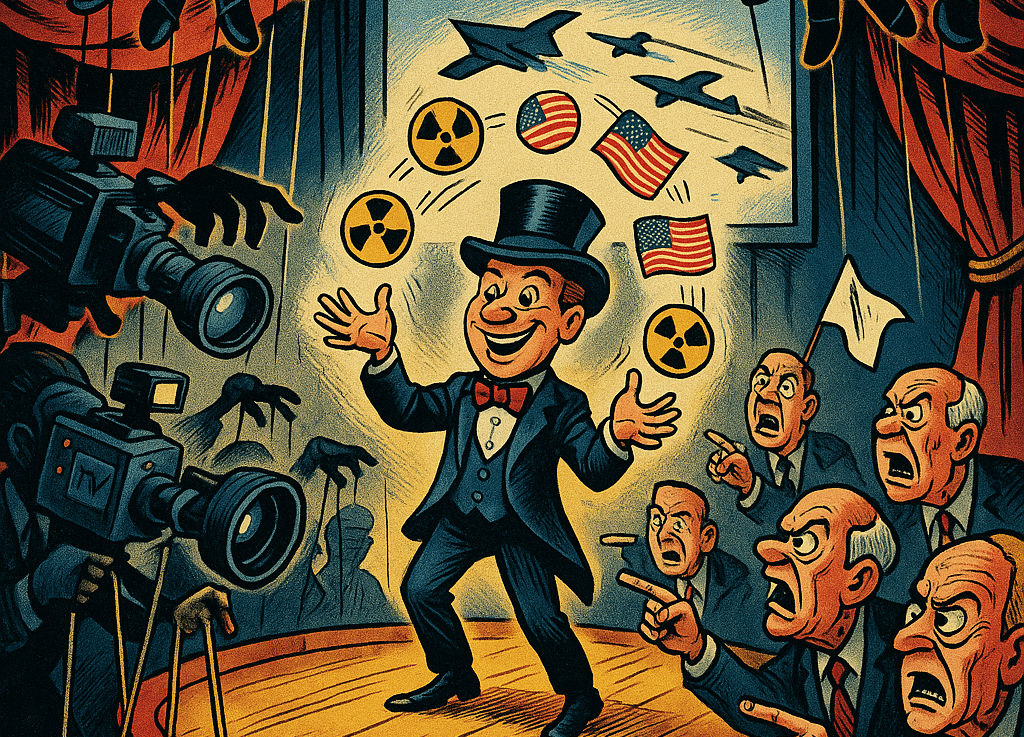
As many of you might have heard, the US, under Trump—yes, that Trump—decided to play a little game of geopolitical whack-a-mole and removed three Uranium enrichment sites in Iran on a Saturday night. Because, you know, nothing says “I’m serious about diplomacy” like a late-night raid.
Now, some folks might argue that Iran was just trying to save the planet with their proposed nuclear energy programs. You know, the same way a toddler thinks they’re helping by “cleaning” the house with a garden hose. Most of you reading this would probably just nod and say, “Bless your heart,” while secretly rolling your eyes.


I’ve said it before and I’ll say it again: we should pay attention to what people do, not just what they say. Talk is cheap, folks. Take the people crying foul over Trump not consulting Congress or the American people. Seriously? If they were in charge, they’d be the first ones waving a white flag and begging for mercy from anyone who hates this country.


Now, let’s talk about how this mission went off without a hitch—thanks to a little thing called secrecy. It was like a magic trick: “Now you see the B2 bombers heading to Guam, now you don’t!” Not getting permission from those who want to impeach Trump for merely existing? That’s the real sleight of hand.
Today’s media circus will be full of voices, both for and against. The naysayers will crank up the emotional tension, warning us that Iran, the world’s favorite sponsor of terror, is going to do something terrible. Spoiler alert: they always talk a big game, but their actions? Always violent and deadly.


Remember that phrase “speak softly and carry a big stick; you will go far”? Good ol’ Teddy Roosevelt popularized it to remind us that diplomacy is great, but a strong military presence is even better. Last night, we saw that principle in action. Appeasers? They’re always going to get screwed by the oppressors. It’s a fact of life, like taxes and bad hair days.


Had Trump notified Congress, those who’ve been bought off by our enemies would have been tipped off. You know, the ones who want him impeached? Yeah, they’re probably on the payroll of foreign governments. Treason is a real thing, and maybe we should consider bringing back public hangings for those convicted of it. Talk about a big stick!


So, these are my thoughts on the stupid shit that is political posturing and theater. Those who talk shit are just pandering to the mindless masses who gobble up whatever the media, bought and paid for by America’s enemies, dishes out. It’s all emotional leverage to manipulate the masses who want to believe in crazy shit—like the tooth fairy, flat Earth theories, and other absurdities that make for entertaining blogs about stupid shit.


Have a nice day!

Unpacking the Truth Behind Stupid Shit

Unpacking the Truth Behind Stupid Shit

A sure-fire way to win an election? Easy. Just call 78 million people mentally ill. That’s the kind of genius strategy that screams, “Vote for me, I’m relatable!” Now, Jasmin Crockett is smarter than this—or at least I thought she was. So why the hell did she do it? Did she lose a bet? Was it Opposite Day? Or maybe she just wanted to see how fast she could alienate half the country. Bold move, Jasmin. Bold move.

Personally, I think it is political theater.

Let’s get one thing straight: nobody on either side of the political aisle is mentally ill for believing the stupid shit the media spoon-feeds them. Nope, they’re just regular people, happily slurping up the bullshit stew served daily by their favorite talking heads. And honestly, who can blame them? It’s easier to swallow than thinking for yourself. Thinking is hard. It burns calories. And let’s face it, most of us would rather save those calories for nachos.

Personally, I like to pay closer attention to what people actually do versus what the media tells me they did. Crazy concept, right? It’s almost like I’m trying to use my brain instead of letting it rot into a pile of mushy clickbait. But hey, that’s just me. In my book, Stupid Shit, I break down exactly how you’re being manipulated. Spoiler alert: we all are. And the people pulling the strings? Oh, they’re the ones in power who want to stay in power. Shocking, I know. It’s like discovering that water is wet or that Taco Bell isn’t authentic Mexican cuisine.

The Soros Conspiracy (Or Is It?)

Here’s a fun question to chew on: why did George Soros buy 200 media outlets right before the election? And why did the FCC fast-track the whole process like it was a Kardashian getting a VIP pass to a plastic surgeon? I don’t know much about Mr. Soros. The media paints him as the boogeyman, lurking in the shadows, twirling his mustache, and cackling like a cartoon villain. Is he? Hell if I know. Maybe he’s just a guy who really loves controlling narratives. Or maybe he’s misunderstood, like that one kid in high school who wore a trench coat and listened to death metal but secretly just wanted a hug.

Speaking of boogeymen, let’s talk about Putin and Zelensky. The media portrays Putin as the devil incarnate and Zelensky as Superman. Why? Because it’s easier to sell a story when you’ve got clear heroes and villains. Nuance doesn’t get clicks. Nobody wants to read an article titled, “It’s Complicated: Both Sides Are Kind of Awful.” That’s not sexy. That doesn’t trend on Twitter. But if you want to start a war—domestically or globally—all you have to do is attack what people believe. It’s like poking a bear with a stick, except the bear has nukes and a Twitter account.

The Foundation of Beliefs (And Why They’re Easy to Exploit)

Here’s the thing about people: we’re all walking around with these deeply ingrained beliefs that shape how we see the world. They come from religion, culture, personal experiences, and whatever our parents yelled at us about when we were kids. These beliefs are like the operating system of our brains, and once they’re installed, they’re damn near impossible to uninstall. It’s why people will fight to the death over pineapple on pizza or whether “Die Hard” is a Christmas movie (it is, by the way).

Let’s break it down:

Religious and Spiritual Beliefs

People believe in God, gods, or some cosmic force because it gives them comfort. It’s like a celestial security blanket. Heaven, hell, reincarnation—it’s all part of the package. And don’t forget the moral codes: compassion, honesty, justice. You know, the stuff we all pretend to care about until someone cuts us off in traffic.

Moral and Ethical Principles

Fairness, kindness, hard work—these are the things we tell ourselves we value. But let’s be real: most of us would sell our souls for a free iPhone or a lifetime supply of tacos.

Scientific and Rational Beliefs

Some people trust science and logic. Others think the Earth is flat and vaccines are a government plot to implant microchips. To each their own, I guess.

Cultural and Social Norms

Family values, community, traditions—these are the things that keep society from devolving into complete chaos. Well, most of the time. Unless it’s Thanksgiving, in which case all bets are off.

Personal Identity and Purpose

Everyone wants to feel like they matter. Whether it’s through religion, relationships, or posting selfies on Instagram, we’re all just trying to find meaning in this chaotic shitshow we call life.

Myths and Unproven Ideas

Superstitions, conspiracy theories, and urban legends—these are the cherry on top of the stupid shit sundae. Did you know some people still believe in Bigfoot? Or that the moon landing was faked? Or that pineapple belongs on pizza? Wild.

Philosophical Foundationalism

This is the fancy way of saying, “I believe what I believe because I believe it.” It’s like arguing with a toddler who insists the sky is green. You’re not going to win, so why bother?

Why It All Matters

Foundational beliefs are important because they give us stability and purpose. They help us navigate the world and make sense of the chaos. But they’re also incredibly easy to exploit. Politicians, corporations, and media outlets know this, and they use it to manipulate us. They poke at our beliefs, stir up our emotions, and watch as we tear each other apart. It’s like a reality TV show, except the stakes are real, and nobody wins a cash prize.

So, what’s the takeaway here? Simple: think for yourself. Question everything. And for the love of all that is holy, stop believing the stupid shit the media shovels down your throat. Or don’t. It’s your life. Just don’t come crying to me when you realize you’ve been played like a fiddle in a hillbilly hoedown.

And that, my friends, is the essence of Stupid Shit. Stay tuned for more. Or don’t. I’m not your mom.

Make sure you get on the e-mail list for when the book Stupid Shit drops.

Have a nice day!

More Stupid Shit

More Stupid Shit

and media manipulation

Vance Boelter, a man clearly not invited to the “Let’s Make Good Life Choices” seminar, decided one day to spice things up by dressing as a cop, strolling up to a Minnesota lawmaker’s house, and committing straight-up cold-blooded murder. Bold move, Vance. Bold, stupid-as-hell move.

Now, as gruesome and shocking as that is, what really takes the cake here is the way Alexa—yes, Amazon’s Alexa—decided to break the news. Imagine walking into your kitchen, coffee in hand, ready to fight the soul-sucking Monday ahead, when your helpful little robot assistant pops up with:

“A murder occurred at the home of a Democratic Lawmaker. The perpetrator shot the husband and wife in cold blood.”

To be honest, the newsflash should have left out the word Democrat… Whoever writes this shit knows what they are doing and trust me, its deliberate.

Well, damn, Alexa. Way to brighten my day. That’s one hell of a headline to pair with my toast and jam. But you know what they didn’t mention? What they just conveniently left out? That Vance was… wait for it… a Democrat appointee, courtesy of Governor Tim Walz himself. Yeah, let that marinate. Tens of thousands of people see that vague little nugget of information and immediately start imagining some MAGA-hat-wearing lunatic foaming at the mouth. Because that’s what we do now: jump to conclusions faster than a squirrel on espresso.

Public Opinion: A Circus of Stupidity

This, ladies and gentlemen, is how public opinion is formed. Not with facts or nuance or even a shred of common sense. Nope. Just a headline and a whole lot of assumptions. And let’s be real here—critical thinking is about as popular these days as a Nickelback reunion tour. Nobody questions anything, nobody digs deeper. The media throws you a bone, and we all run with it like we’re championship greyhounds.

But wait! There’s more! Because, of course, there’s always more stupid shit to pile on top of the already steaming heap. Enter Alex Padilla, the guy who apparently thought it was a good idea to crash Kristi Noem’s press conference (because why not, right?). This same dude is now trying to tie these murders to Trump’s campaign. Yes, you read that right. The murders. Trump. Connected. Somehow. It’s like a bad game of Mad Libs where every blank gets filled with “Trump” because nobody knows what else to say anymore.

Why Are We Like This?

And here’s the million-dollar question: Why are tensions rising? Why is everybody so angry all the damn time? Well, buckle up, because here’s the answer—it’s stupid shit like this. The media stirs the pot with half-truths, people gobble it up without question, and before you know it, everyone’s picking sides and throwing punches. It’s human nature, sure, but it’s also human stupidity in its purest form.

So, there you have it. Murder, media, and a masterclass in how to divide a population. If this isn’t the poster child for my upcoming book, Stupid Shit, I don’t know what is. Oh, and if you’re still here, sign up for emails so you can snag the book on KDP when it drops because nothing cures the existential dread of living in a divided society like laughing at the sheer absurdity of it all.

Learn to ask questions and stop assuming shit.

-Scott

More Stupid Shit: Dia dos

More Stupid Shit: Dia dos

Ah, lawyers and politicians—the true thespians of our time. If there’s one thing they excel at, it’s political theater. And yesterday, Senator Alex Padilla took center stage for his 15 minutes of fame, delivering a performance that would make even the most melodramatic soap opera actor blush.

Padilla’s stunt at Christy Noem’s press conference wasn’t just about making a scene—it was about standing up for the real victims of society: the criminals burning cars in the streets. You know, the ones who are apparently just misunderstood artists expressing themselves through the medium of arson.

The Burning Car Chronicles

Speaking of burning cars, let’s talk about the absolute masterpiece of media spin happening in Los Angeles right now. During the recent anti-ICE riots, where vehicles were literally on fire and chaos reigned supreme, an ABC7 news anchor decided to channel their inner optimist.

“It’s just a bunch of people having fun watching cars burn,” they said, as if this was some kind of impromptu Burning Man festival instead of, you know, a riot.

Let’s break this down. Cars are on fire. Objects are being thrown. The city looks like the set of a post-apocalyptic movie. And yet, somehow, this is described as “relatively peaceful”. Because nothing says “peaceful” like the smell of burning rubber and the distant sound of someone smashing a window.

Padilla’s Role in the Circus

Enter Alex Padilla, stage left. Fresh off his press conference stunt, he decided to use his newfound spotlight to condemn ICE and, by extension, law enforcement in general. In his statement to the press, he dropped this gem:

“If this is how they treat a senator, how do you think they are treating Hispanics?”

Now, let’s be clear: ICE isn’t exactly winning any popularity contests. But Padilla’s attempt to tie his self-inflicted humiliation to the broader issue of immigration enforcement is nothing short of political theater at its most shameless.

Here’s the thing: Padilla isn’t wrong to criticize ICE. But let’s not pretend his little outburst was some brave act of defiance. This wasn’t about standing up for the oppressed. This was about getting airtime and scoring political points. And in the process, he managed to toss everyday Americans under the bus—again.

The Bigger Picture

This whole debacle is a perfect example of how we the people are manipulated. Politicians like Padilla pull stunts like this, knowing it’ll dominate the news cycle. Meanwhile, the media downplays actual violence and destruction, framing it as “fun” or “relatively peaceful”.

It’s all part of the same game: distract, deflect, and divide. While we’re busy arguing about whether burning cars is a valid form of self-expression, the real issues—like immigration reform, public safety, and economic inequality—get swept under the rug.

Final Thoughts

So, what did we learn from all this? Nothing. Absolutely nothing. Because this is politics, and politics is stupid. It’s a never-ending parade of bad actors, bad decisions, and bad takes.

In conclusion: yesterday was yet another day of stupid shit. And if the news out of LA is any indication, tomorrow will be more of the same. Stay tuned.

Oh, and don’t forget to follow me and sign up for emails—because, let’s face it, who doesn’t want more random shit clogging up their inbox? But seriously, I’m on the verge of unleashing my literary masterpiece, Stupid Shit, onto the unsuspecting world, and you’re not going to want to miss it. I’ll probably slap it on KDP (because I’m fancy like that), so all you Kindle-having, book-hoarding legends can read it, laugh your ass off, and then wonder why you willingly spent your time on this nonsense. Spoiler: it’s worth it.

-Scott

Why SB3 Could Worsen Texas’s Fentanyl Crisis

Why SB3 Could Worsen Texas’s Fentanyl Crisis

Critical Warning: Buckle Up, Texas — The Stupid Train Has No Brakes

Let’s call it what it is: SB3 is a masterclass in not thinking things through. If brainless copy-pasting from failed policies like Prohibition is your kink, then congratulations, Texas lawmakers, you’re living the dream! Our computational models—and honestly, anyone with a pulse and a memory—suggest SB3 could make things worse. Think more crime, a raging fentanyl crisis, and police so overworked they’ll need group therapy and a GoFundMe.

An Unsolicited RFC (Request For Comment) They’ll Never Read

I’m working on a book called Stupid Shit, and trust me, SB3 is earning itself a whole chapter. Here’s the Cliff Notes version of why I’ve seen better logic in a fortune cookie.

What the Hell Is Senate Bill 3?

SB3 is Texas’s big “hold my beer” moment in THC regulation. It proposes a total ban on all THC products—including the ones that come from hemp. Yes, even the stuff that was entirely legal under the 2018 Farm Bill. Because nothing says “progress” like running backwards.

Products getting axed:

Any other Delta-9 THC that isn’t under ultra-strict medical exception

Delta-8 THC

Delta-10 THC

All consumable hemp products with synthetic cannabinoids

Passed? You bet. The Texas House and Senate rubber-stamped it, and now it’s just waiting for the governor to sign off with a flourish.

Implementation? September 1, 2025. Mark your calendars, or maybe just mark your stash.

Enforcement: Jail for Gummies, Cheers for CBD

If you’re caught with any of the banned THC products, you could face up to a year in jail. So long, THC gummies and beverages! The only survivors? CBD and CBG—because, apparently, they’re the “good kids” who do their homework and don’t talk back.

Political Circus: Who’s Wagging This Dog?

The bill has all the right (or wrong) friends in high places. Governor Dan Patrick is basically on a crusade to ban THC, with the only exception being the state’s incredibly limited Compassionate Use Program. Because if you’re not suffering enough for a medical exception, you’re just not trying hard enough.

Economic Impact: Why Not Kick Retail When It’s Down?

Texas retail is already circling the drain—sales index at -30.5 (lowest since April 2020) and employment dropping fast.

SB3 is about to obliterate a sector that was actually growing, because who needs jobs or tax revenue, right?

Over 40,000 jobs? Gone. Poof.

$7.5 billion in annual revenue? Say goodbye.

Historical Context: Déjà Vu, Prohibition-Style

Let’s play a game: is this Prohibition or SB3? (Spoiler: It’s both, just with different substances.)

Jobs Lost: Prohibition: 250,000 // SB3: 40,201 (but who’s counting?)

Annual Revenue Loss: Prohibition: $11B // SB3: $7.5B

Enforcement Costs: Prohibition: $4.5B // SB3: $2.8B

You’d think after one round of “let’s outlaw a popular substance and see what happens,” we’d learn. But no—let’s hit copy-paste and hope for a different outcome!

Black Market: The Only Winner Here

Projected to hit $9.2B by 2030 because, shocker, demand doesn’t disappear when you ban stuff.

Illegal trade growth? 35% a year. Welcome to the new Wild West.

Sophisticated trafficking networks will be popping champagne (or whatever traffickers drink).

Law Enforcement: Good Luck With That

Enforcement costs? Up 180% in three years.

Police will be so busy chasing edibles they might miss, you know, actual crime.

And, just like Prohibition, get ready for corruption and enforcement headaches.

But Wait—People Might Actually Die

If the money talk didn’t get your attention, here’s a dose of reality:

Fentanyl Crisis: Hold My THC

5 Texans die daily from fentanyl poisoning. Not dramatic enough? How about a 20% jump in overdose deaths after SB3 hits?

Law enforcement focus will shift so hard, fentanyl dealers will get a free pass.

Black market dealers may start mixing fentanyl with THC products. Because nothing says “public health” like a surprise overdose.

Public Health: The Opposite of What You Want

20% more ER visits from unregulated products.

Less access to safe, tested alternatives.

Addiction treatment centers? Prepare for a flood.

Recommendations (That They’ll Ignore, But Hey, We Tried):

Phase in changes. Don’t nuke the market overnight.

Boost funding for addiction treatment and harm reduction.

Create a dedicated task force for the fentanyl crisis—don’t lump everything together.

Test and monitor black market products (because pretending they don’t exist won’t work).

Final Thoughts: Stupid Shit, Indeed

Texas, you’re about to repeat one of history’s most famous flops. If you’re looking for a case study in how not to legislate, SB3 is your gold star. Want to solve the fentanyl crisis? Want to help law enforcement? Want to support jobs and revenue? SB3 does the opposite.

But hey, when has common sense ever stopped a “good” idea in the Texas legislature?

Stay tuned for more from my upcoming book, Stupid Shit, where we catalog the finest moments in legislative facepalming. Because if we don’t laugh, we’ll cry.

Oh, and Before You Assume I’m Just Trying to Save My Stash…

Let’s clear the air right now: If you think this is some desperate plea to protect my THC gummies, you might want to check your assumptions at the door. Seriously, does this look like a stoner manifesto? If anything, it’s a plea for basic logic and a little historical memory—two things that seem to be in shorter supply than common sense at the Texas Capitol.

This Isn’t About Getting High—It’s About Not Repeating History’s Dumbest Mistakes

Let’s be real: the “Iron Law of Prohibition” isn’t just a catchy phrase—it’s a proven disaster. Every time lawmakers try to ban a substance people want, the market doesn’t disappear. It just gets meaner, riskier, and a hell of a lot deadlier. That’s not stoner paranoia; that’s what happened with alcohol, and it’s exactly what’s happening with fentanyl right now. When you squeeze the supply, you don’t get less demand—you get more potent, more dangerous alternatives flooding the streets.

If You’re Worried About Fentanyl, SB3 Is the Opposite of a Solution

Let’s not kid ourselves: the fentanyl crisis is the worst drug crisis in American history. And what’s fueling it? Not legal, regulated products, but the black market that thrives every time lawmakers try to “crack down” with blanket bans. Just ask the DEA, who are busy seizing record-breaking amounts of fentanyl while the death toll keeps climbing. Or check with Texas Health and Human Services, who are literally begging people to get educated and connected to resources because the crisis is so out of control.

So, No—This Isn’t a Stoner’s Rant

This is a call for evidence-based policy, not knee-jerk reactions. If you think that’s just “stoner logic,” maybe you’re the one who needs to lay off the reefer madness. Because the real madness is repeating the same failed strategies and expecting a different result.

Final Thought: If You’re Still Not Convinced…

Ask yourself: Would a stoner really bother to dig up economic data, historical parallels, and public health projections? Or would they just be chilling, waiting for the next episode of whatever’s trending on Netflix? This isn’t about saving my stash—it’s about saving Texas from another round of legislative stupidity.

So, next time you hear someone say, “It’s just about the weed,” remind them: It’s about not making the same stupid mistakes over and over again.

Sign up for my updates so you will know when to look for my latest book “Stupid Shit”

-Best

From Lions to Lawmakers: Reclaiming Our Common Ground

From Lions to Lawmakers: Reclaiming Our Common Ground

Have you noticed the growing tension in the air? The awkward silences at family dinners, the wary glances between neighbors, the uneasy distance with old friends? It’s not just your imagination—something real is pulling us apart, and it’s as ancient as humanity itself.

Long before the first newspaper, before the first televised debate, survival depended on dividing and conquering. In the animal kingdom, predators thrive by splitting herds and isolating the vulnerable. Lions charge and scatter, alligators lurk to create chaos, fish panic to leave the weakest behind. This old, primal strategy is now playing out in our modern lives—not for survival, but for control.

But here’s the truth: while animals hunt from necessity, humans have turned the art of division into a tool for power. And today, the real predators don’t wear claws or fangs—they wear suits, speak from podiums, and broadcast into our homes. They wield narratives, psychological tricks, and propaganda to keep us focused on our differences, rather than our shared hopes and struggles.

We are all being played—no matter which screen you watch, which paper you read, or which side you think you’re on. Behind the scenes, powerful interests use every tool at their disposal—NLP, psychological triggers, and relentless messaging—to keep us anxious, suspicious, and divided. Why? Because a fractured people are easier to control.

It’s easy to see the darkness in the world of politics and law. The courtroom becomes a stage, where truth and justice are bent to the will of those who can afford the best performance. Spectacle replaces substance. The suffering of victims and the pain of families are just pieces in a larger game. And every scandal, every controversial verdict, widens the rift between us.

But this isn’t just about politicians or lawyers. The real tragedy is what’s happening in our homes, our friendships, our communities. We lose trust in each other. We retreat into echo chambers, clinging to comfortable stories, even as reality grows more complicated. Some of us simmer in quiet frustration, others cling to certainty, and all the while, the forces that profit from our division grow stronger.

We are told that the “other side” is the problem. But pause for a moment: if half the country disagrees with you, can they all be evil? Or are we all, in some way, caught in a web of manipulation, fear, and old survival instincts? The same psychological forces that once helped us avoid danger now make us vulnerable to those who sow division for their own gain.

History gives us somber reminders of the cost of looking away or turning against each other. But it also teaches us that unity—true, honest connection—is our greatest strength. Every time we reach out instead of shutting down, every time we listen instead of shouting, we reclaim a bit of that power for ourselves.

Look at the wars waged for profit, the headlines designed to provoke rather than inform, the tax dollars diverted from our needs to feed distant conflicts. These are not accidents—they are symptoms of a system that thrives when we are distracted and divided.

But we are not helpless. The real act of rebellion in an age of engineered division is simple: keep talking. Stay open. Refuse to see your neighbor, your friend, your family member as an enemy, no matter what story you’ve been told.

Let’s not be pawns. Let’s refuse the bait. Instead, let’s rebuild the trust that makes us strong—not by pretending we all agree, but by remembering that beneath all the noise, we all want the same things: safety, dignity, a future for our children, and a voice that matters.

The next time you feel the urge to close off, to write someone off as lost or “the problem,” take a breath. Unclench your fists. Invite a real conversation. That is the first step toward reclaiming our unity—and denying those who profit from our division the satisfaction of our silence.

Let’s stand together, not just as members of a party or tribe, but as human beings. Our oneness is our power, and no amount of manipulation can take that from us—unless we let it.

With hope,

Scott

If only a few of you read this, my time has not been spent wisely. In order to enact change, you need to repost, share, and talk about it with your friends and family. The disease is getting worse, not better. Evil is winning, and it’s up to each and every one of us to stand and be counted.