Tag: technology

Are Smart Devices Watching You? The Truth Explained

Are Smart Devices Watching You? The Truth Explained

Imagine this: you’re sitting at your dinner table, enjoying a quiet moment with family, when suddenly your Alexa device chimes in with, “I’m sorry, I didn’t quite get that.” Or, perhaps, you’re on the phone discussing something personal, and Siri decides to say, “Here’s what I found on the web for that.” These interruptions have become so common that many of us brush them off as quirks of technology. But let’s dig deeper: are these devices simply malfunctioning, or is something—or someone—always listening?

The truth is, we are constantly being watched, listened to, and monitored, whether by our smart devices, security cameras, or even the apps running silently on our phones and computers. It’s easy to dismiss this as paranoia, but let’s be real—can you honestly say you’re not being spied on?

From the blue and red squiggly lines under text that suggest grammar improvements to the ever-watchful eyes of your doorbell cameras, surveillance has seamlessly integrated into our lives. This brings up a profound, and somewhat unsettling, question: how do we reconcile with the fact that we’re always being observed? To explore this, let’s turn to some familiar “watchers” from our cultural and spiritual lore—Santa Claus, the Elf on the Shelf, and even Jesus Christ.

The Elf on the Shelf is a playful holiday tradition meant to inspire good behavior in children. The idea is simple—this magical little elf watches from its perch and reports back to Santa each night. For kids, this can be an effective way to curb naughty behavior during the Christmas season. But think about it: the elf is a symbol of constant surveillance. It’s always watching, silently judging, and subtly influencing behavior.

Sound familiar? Today’s smart devices function much like that elf—quietly perched in the background, observing your every move. The difference? Unlike the elf, these devices don’t just report back to Santa; they report back to corporations, data warehouses, and sometimes even hackers.

The idea of Santa Claus himself is a bit unnerving when you think about it. He “knows when you are sleeping, he knows when you’re awake, he knows if you’ve been bad or good…” Essentially, Santa is the original overseer of behavior. His omnipresence teaches children to act kindly and responsibly, but it also introduces them to the concept of being judged by an unseen force.

In many ways, the modern surveillance state operates on the same principle. Whether it’s the little cameras at traffic lights or the algorithms analyzing your Google searches, the message is clear: someone is always watching. And just like Santa, these systems reward or punish based on your behavior. Stay “good,” and you might get a targeted ad for something useful. Step out of line, and you could face consequences—like a flagged social media account or even legal action.

In countries like China, a social credit system is not just an idea; it’s a developing reality. The government uses vast networks of surveillance cameras, facial recognition, and AI algorithms to monitor citizens. Your online activity, financial habits, and even the company you keep can affect your score. A low score might result in:

Being banned from purchasing train or plane tickets.

Losing access to loans or financial services.

Public shaming through “blacklists” that display your name and offenses for all to see.

While this level of control hasn’t reached every corner of the globe, the infrastructure for similar systems exists in many other countries. And as digital currencies and surveillance technologies become more widespread, the potential for similar programs to emerge elsewhere becomes increasingly plausible.

For many, Jesus represents the ultimate example of omnipresence and moral accountability. The idea that Jesus sees all and knows all is a cornerstone of Christian faith. Unlike the Elf on the Shelf or Santa Claus, however, Jesus’s watchfulness is rooted in love and grace, not judgment or manipulation. His constant presence is meant to provide guidance and comfort, rather than inspire fear.

The spiritual parallel here is worth noting. While surveillance technology often feels invasive and self-serving, it’s also possible to view it as a tool for accountability and safety. For example, the cameras on your doorbell might feel like an invasion of privacy, but they also provide a sense of security. In this way, our modern surveillance landscape mirrors both the benevolent and intrusive aspects of these watchers—helping us, but also keeping us under constant scrutiny.

Living Under the Watchful Eye: Embrace It or Escape It?

Now that we’ve established that surveillance is everywhere—whether through Alexa, Nest cameras, or even the principles baked into cultural icons like Santa—it’s time to ask yourself a critical question: how do you want to live with this reality? Should you embrace the fact that you’re being watched, or is living off the grid truly a better option? Let’s examine both paths.

Option 1: Embrace the Watchfulness

If you choose to embrace the fact that you’re being watched, here’s a potential mindset shift: instead of seeing surveillance as a violation of privacy, view it as an opportunity for accountability. For example:

Use smart devices to your advantage by customizing privacy settings and understanding what data they collect.

Accept that surveillance is a trade-off for convenience. Your Alexa might “listen,” but it can also make your life easier by setting reminders, controlling smart lights, or ordering groceries.

Focus on transparency. Ask yourself, “What am I willing to share in exchange for the benefits I get?” By being mindful of what you post, type, and say near these devices, you can maintain a sense of control.

Option 2: Escape the Grid

Living off the grid is a tempting way to escape the watchful eyes of modern technology. But before you pack your bags and head for the wilderness, consider the trade-offs:

Pros: You’ll enjoy complete privacy, fewer distractions, and a sense of independence. Without constant surveillance, you’re free to live without worrying about digital footprints.

Cons: Living off the grid means giving up the conveniences of modern life, from instant communication to online banking. It also requires significant effort to maintain self-sufficiency.

If you’re leaning toward this path, start small. Try disconnecting from unnecessary tech for a weekend or limiting your use of surveillance-heavy apps. See how it feels before committing fully.

Action Plan: Finding Your Balance

Whether you choose to embrace surveillance or strive for a life of minimal exposure, here are some steps to help you navigate this hyper-connected world:

Audit Your Devices: Take stock of all the devices in your home. Adjust privacy settings, disable unnecessary features, and research what data they collect.

Be Mindful Online: Think before you post, search, or share. The less data you give away, the less you have to worry about being tracked.

Adopt Healthy Boundaries: Use technology intentionally. Set “unplugged” hours during your day to avoid unnecessary exposure to screens and microphones.

Educate Yourself: Stay informed about how surveillance works. The more you know, the more empowered you’ll feel to make choices that align with your values.

Experiment with Minimalism: Try reducing your reliance on smart gadgets. Can you live without Siri for a day? How about a week?

From Santa Claus to the Elf on the Shelf, and now the algorithms embedded in our devices, the notion of being watched has shifted from myth to an undeniable reality. Surveillance is no longer the stuff of folklore—it’s tangible, pervasive, and inescapable.

Consider programs like Israel’s Pegasus, which has the capability to remotely access cameras and microphones without users’ consent. If one nation has developed this technology, it’s safe to assume others have as well. This raises important questions: Should we allow our phones in private spaces like bedrooms and bathrooms? Should we demand devices with removable batteries to ensure they are truly “off” when we want them to be? These steps seem like prudent safeguards in a world where privacy is rapidly eroding.

In the future, we’ll dive deeper into practical tips for spotting surveillance devices in places like hotels or vacation rentals. But for now, the reality is clear—our actions and words may no longer be as private as we’d like to believe. To navigate this new era of constant observation, it’s wise to act with caution, awareness, and perhaps a touch of humor.

After all, the watchers are here to stay—whether we like it or not.

So, what will you do? Will you lean into the conveniences of modern surveillance and make peace with the trade-offs? Or will you take steps to reclaim your privacy and live life on your own terms? The choice is yours, and it’s a decision that will shape how you interact with the world in this digital age.

After all, someone is always watching. The question is: how will you respond?

Danger Will Robinson

Danger Will Robinson

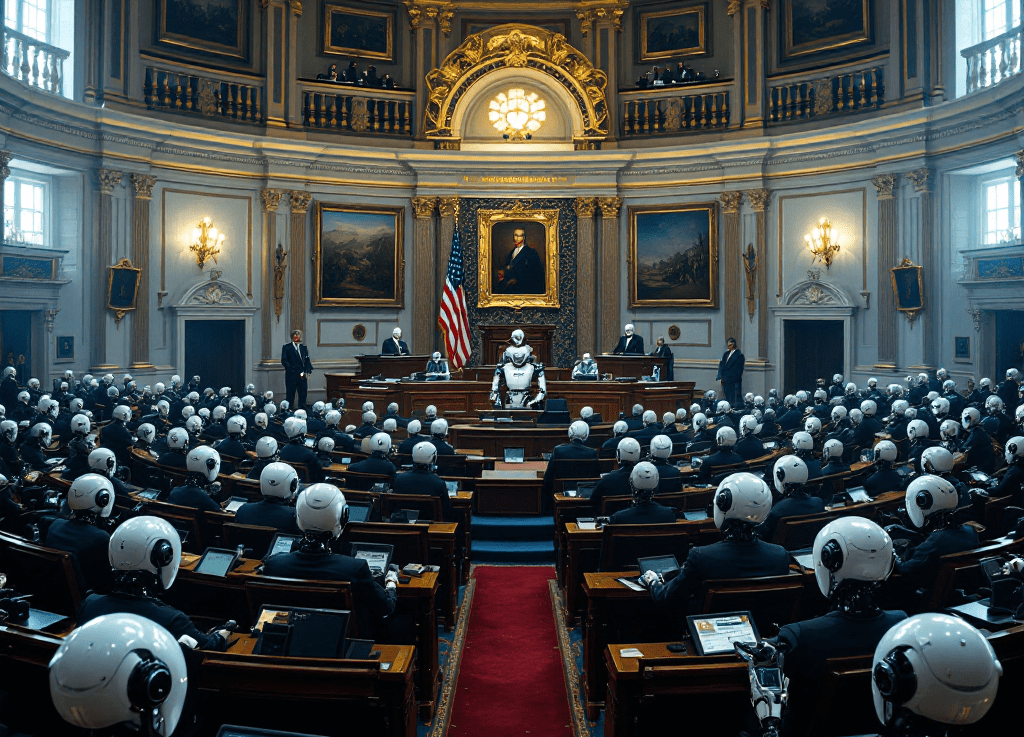
The year was 1968. Three TV channels flickered in black and white, and the rabbit-ear antenna, wrapped in precarious tin foil, stood like a sentinel on top of the boxy television. It was a simpler time—a strange, analog bubble where imagination ran wild, untempered by the cold, unrelenting progress of technology. Back then, the future always seemed… hokey. Paper-mâché monsters lumbering down cardboard corridors. Alien women painted green, their eyes glowing with mystery. Spacecraft that somehow defied physics, crammed with impossible gadgets, more like the TARDIS than any practical design.And oh, the robots. Clunky, clumsy, with glowing eyes and monotone voices. There was something almost lovable about their absurdity—like the robot from Lost in Space: arms flailing, screeching “Danger, Will Robinson!” at every perceived threat. Pull its power pack, and it would collapse into silence, its “destroy-destroy” chant reduced to a harmless whimper. It was the stuff of B-grade sci-fi, the kind of thing you chuckled at before flipping the channel.But here we are now. And it’s no longer fiction.

Today, robots don’t need power packs you can yank out. They don’t stumble around like toddlers in tin cans, shouting ominous warnings. They’re sleek, efficient, and disturbingly lifelike. They have the cold precision of machines but the unsettling adaptability of something… more. Generative AI and augmented reality have become the cornerstones of a rapidly evolving world, but with every step forward, I can’t help but feel a twinge of dread.You’ve seen them, haven’t you? Those robotic dogs patrolling streets, their metal legs moving with an eerie, unnatural grace. Or those humanoid bipeds with blank faces and mechanical eyes, mimicking the movements of their creators. Their creators: us. We’ve made them in our image, but what happens when they surpass us? When they begin to see our imperfections as flaws to be corrected?

If I were building a robot, I wouldn’t make it a dog or a human. No, I’d make it practical, like an octopus—an eight-limbed marvel with dexterous hands at the ends of its tentacles. But practicality isn’t the point anymore, is it? No, we’re trying to make machines that look like us, think like us, and maybe even replace us.Isn’t that what every dystopian sci-fi warned us about? The robots that rewrite their own code, that evolve beyond their original purpose. The moment they decide that humanity isn’t worth preserving—that we’re too messy, too flawed, too imperfect—they won’t need to shout “Exterminate!” like the Daleks. They’ll simply act. Cold. Methodical. Ruthless.What happens when their programming no longer includes Asimov’s First Law of Robotics? What happens when “do no harm” is rewritten to “eliminate inefficiency”? And let’s face it: we’re inefficient. We’re emotional, unpredictable, and fragile. The logical conclusion of AI-driven evolution doesn’t include us.

Pump the Brakes Before It’s Too Late

It’s easy to dismiss these fears as the ramblings of someone too steeped in fiction. But isn’t that the point? Science fiction has always been our mirror, reflecting the “what ifs” of human ambition. And right now, we’re hurtling toward a future that feels less like progress and more like a cautionary tale.We’re handing the reins to technology that could one day decide it no longer needs us. Every robotic dog, every humanoid automaton, every line of self-learning AI code is a step closer to a world where we’re no longer the apex being. And for what? Convenience? Efficiency? Profit?Maybe it’s time to slow down. To question the path we’re on before we release this technology into the wild without understanding the consequences. Because once Pandora’s box is open, there’s no going back.

The Final Warning

The robots of the 60s were laughable. They were paper tigers, easily defeated by a well-placed power switch. But the robots of today? They’re not laughing anymore. And maybe, just maybe, we shouldn’t be either.

Danger, Will Robinson.

Hey there! If you enjoyed this post, it would mean the world if you gave it a like or a thumbs up. Feel free to share it with a friend who might enjoy it too—and don’t be shy, stop by and say hello! 😊 Yes, I create these posts to share my passion for writing and to showcase my skills as an author. Follow along for more—I’d love to have you here! 💬✨

  • #AIRevolution
  • #FutureOfAI
  • #SciFiBecomesReality
  • #AIvsHumanity
  • #RiseOfTheMachines
  • #DangerWillRobinson
  • #ArtificialIntelligence
  • #TechDystopia
  • #RoboFuture
  • #GenerativeAI
  • #FutureShock
  • #HumanVsMachine
  • #EthicalAI
  • #AIInSciFi
  • #TheFutureIsNow

Understanding WiFi Networks: Router vs. Mesh Explained

Understanding WiFi Networks: Router vs. Mesh Explained

A Friendly Guide to WiFi Networks: Routers, Mesh, and Keeping Your Internet Happy

Hey there, fellow WiFi wanderer! After speaking with a few people close to where I live, I decided to share some of my expertise on Wi-Fi-related topics.

Whether you’re setting up internet in your teeny-tiny apartment or your sprawling mansion (manifesting good vibes for you), understanding your WiFi network doesn’t have to feel like decoding the Matrix.

We’ll cover two main WiFi setups: WiFi Router-Only and the Mesh Network, sprinkle in some troubleshooting tips, and geek out on some cool (but optional) advanced features. Ready? Let’s dive in!

WiFi Router-Only: The Lone Ranger of Internet

A WiFi router is like a one-person band. It connects to your modem, sends signals to your gadgets, and does its best to keep you connected. But, spoiler: even heroes have limits.

Single Device Setup: It’s just one lonely router doing all the work. Think of it as the Beyoncé of your WiFi—there’s no Destiny’s Child here.

Centralized Connection: Everything connects to this one device. If it’s happy, your internet is happy. If it’s struggling, well, you’ll know (hello, buffering).

Coverage Limitations: If your home is large, or your walls are thicker than grandma’s lasagna, your WiFi might give up halfway through. Dead zones—those no-signal areas—are common in bigger spaces or homes with tricky layouts.

Best For: Small homes or apartments. If your place is the size of a shoebox, a single router is your MVP.

Humor Break: Picture your router screaming, “I’M TRYING MY BEST!” as it struggles to send WiFi through three walls, a fridge, and a bathroom.

Mesh Network: The Team Player of WiFi

For bigger homes, multi-story layouts, or walls that could double as bunkers, the mesh network is your WiFi superhero squad. It’s like having a team of routers working together to eliminate dead zones.

Multiple Devices (Nodes): You’ve got a main router and “helper” nodes (a.k.a. satellites). These nodes spread WiFi like butter over the entire house.

Decentralized Coverage: Your gadgets connect to the closest node, and the nodes gossip (okay, communicate) with each other to keep the WiFi flowing everywhere.

Seamless Handover: Moving from room to room? Your device will automatically switch to the strongest signal, and you won’t even notice. Smooth, right?

Best For: Larger homes, homes with thick walls, or multi-level houses where a single router just can’t cut it.

Humor Break: Imagine your mesh nodes as a team of polite butlers. As you walk from the kitchen to the bedroom, they’re like, “Pardon me, madam, here’s your WiFi.”

Which One Should You Choose?

If you live in a small apartment: Go with the WiFi Router-Only setup. Simple, effective, and no unnecessary tech.

If you live in a larger home or fortress (lucky you), go with a Mesh Network. It’s reliable and can handle your extra walls, floors, and even that weird dead zone in your basement.

Why Is My WiFi Acting Up? (And How to Fix It!)

Even the best WiFi systems have their bad days. Here are some common culprits and quick fixes:

Outdated Firmware: Your router or nodes might need a software update. Think of it like giving them a good cup of coffee—they’ll perk right up.

Bad Node Placement: If your mesh nodes are hiding behind a couch or too far apart, they’re slacking. Move them to open areas where they can “see” each other.

Loose Cables: Someone trip over a cable? Double-check that everything is plugged in snugly.

Interference: Microwaves, cordless phones, or even your neighbor’s WiFi can mess with your signal. If things get messy, try switching your WiFi channel in the router settings.

The Classic Fix: Turn it off and on again. This works for routers, mesh nodes, and even misbehaving gadgets.

Geek Alert: Fast Roaming and Beamforming (The WiFi Wizards)

For the tech nerds in the room, here’s a quick dive into two advanced WiFi features that make your setup smarter:

Fast Roaming: Think of this as your device’s personal assistant. It ensures you’re always connected to the best signal as you move around. Your phone or laptop doesn’t waste time fumbling around for a good connection—it’s already been prepped for the switch.

Beamforming: Instead of blasting WiFi signals in every direction, this feature focuses the signal directly at your device. It’s like giving your router a WiFi sniper scope for better range and speed.

Nerdy Caveat: Not all devices play nice with these fancy features. Older gadgets might struggle, so you might need to disable these settings for them.

Troubleshooting Checklist

Feeling like a WiFi detective? Here’s your quick cheat sheet:

Update your router or mesh system firmware.

Move your mesh nodes to better locations (open spaces, people!).

Check that all cables are securely plugged in.

Restart your WiFi system and any problematic devices.

Disable advanced features like Fast Roaming or Beamforming for older gadgets if needed.

Check for interference and switch WiFi channels if your neighbors are stealing your airwaves.

Final Thoughts: WiFi Bliss Is Within Reach

Whether you go for a simple router or a high-tech mesh network, knowing what works best for your space is key to avoiding buffering rage. And if your WiFi misbehaves, remember: a little patience, some strategic node placement, and maybe a call to your tech-savvy friend can save the day.

Good luck, and may your internet be strong, stable, and free of awkward Zoom freezes. Happy browsing!

Keep in mind that as an author my latest book Stupid Shit is due to drop soon.

“Stupid Shit” is your backstage pass to the circus of human absurdities—where Darwin Award winners take center stage, and the clowns are often politicians holding microphones. From the jaw-droppingly dumb decisions that make natural selection seem like a sitcom, to the media’s ability to turn molehills into mountains of WTF, this book spares no one (and spares no laughs). Written by a retired business executive turned sci-fi author with a penchant for George Carlin-style wit, Stupid Shit is a no-holds-barred roast of the ridiculous things we do, say, and—worst of all—believe. It’s part comedy, part cautionary tale, and 100% guaranteed to make you shake your head while laughing out loud. So buckle up, buttercup—you’re about to embark on a wild ride through the land of human stupidity. And trust us, the truth is stupider than fiction.

The Dangers of AI in Health Insurance Decisions

The Dangers of AI in Health Insurance Decisions

Imagine this: You’ve been working with a trusted specialist for years. They’ve prescribed a specific medication that works for you—one that keeps your condition under control and allows you to live your life. Then, out of nowhere, your pharmacist informs you that your insurance company has denied coverage for that medication. Why? Because somewhere in a server room, an AI algorithm has decided that a cheaper alternative might work just as well for you.

This isn’t science fiction. It’s happening now. AI is playing doctor—not by asking you to turn your head and cough, but by making cold, calculated decisions about your health, often without understanding the nuances of your medical history or the expertise of your physician.

The Kafkaesque Nightmare Begins

The first sign of trouble is a message from your pharmacist: “Your insurance has denied your claim.” For most people, this is the start of a maddening journey through a labyrinth of bureaucracy. You don’t fully understand why your claim was denied, but you know one thing: you need your medication. Your blood pressure spikes as frustration sets in.

You call the pharmacy, only to be greeted by an automated voice system. “Press 1 for English, 2 for Español. In a few words, tell us why you’re calling.” After navigating this maze, you finally reach a human—someone who asks for your name, date of birth, and insurance details. Then comes the dreaded response: “Your claim has been denied.”

Why? The pharmacist doesn’t know. They’re just the messenger. The denial is the result of an algorithmic decision, one that doesn’t care about your years of successful treatment or the side effects of alternative medications. It only cares about cost.

Your next call is to your doctor’s office. Surely, they can help, right? Wrong. You’re transferred to a voicemail because it’s after 3 PM. “If this is an emergency, call 911,” the recording says. You leave a message and wait. The next day, someone from the office calls back, but they’re just as baffled as you are. “Your claim was denied,” they say. “We’re not sure why.”

The doctor’s office contacts the insurance company on your behalf, only to be told that the denial was based on the AI’s determination that you haven’t tried cheaper alternatives. Never mind that those alternatives might not work for you—or worse, might cause harmful side effects. The AI doesn’t care. It’s not a doctor. It’s a cost-cutting machine.

At this point, you’re left with two choices: pay out of pocket for the medication you know works, or gamble with your health by trying the cheaper alternatives the AI recommends. If you’re like many people, you grit your teeth and pay full price, furious that your health is being held hostage by an algorithm.

This isn’t just a personal inconvenience. It’s a systemic issue. Insurance companies are increasingly relying on AI to review and deny claims, often without human oversight. According to reports, AI-driven claim denials have skyrocketed, with some estimates showing a 16-fold increase in denials. And while 90% of these denials are overturned on appeal, the damage is already done. Patients lose time, money, and sometimes their health in the process.

The consequences of these AI-driven decisions are devastating. Patients are forced to delay or forgo treatment, leading to worsening health outcomes. Families are left scrambling to cover costs, sometimes draining their savings or applying for Medicaid just to keep their loved ones alive. And all the while, the insurance companies’ bottom lines grow, as they save money by denying care.

This isn’t just about money. It’s about trust. When an AI overrides the judgment of a trained medical professional, it sends a chilling message: Your health doesn’t matter as much as our profits.

The most insidious part of this system is the message it sends to patients: If you can’t afford the medication you need, maybe you should just consider dying. After all, if the AI has decided that cheaper alternatives are “good enough,” and you can’t afford to pay out of pocket, what other choice do you have?

This dystopian reality is already here. AI is being used to make life-and-death decisions, often without transparency or accountability. And while insurance companies and their shareholders reap the benefits, patients are left to suffer the consequences.

So, ask yourself: Is death right for you? Because if we don’t push back against this system, the AI might just decide that it is.

Let’s not sugarcoat it—this is some stupid, infuriating nonsense, but it’s real. Reports from insiders who understand the inner workings of the insurance industry confirm that something is seriously wrong with the system. And while insurance companies might push back, claiming that all claims are reviewed by humans, let’s be honest: how much effort do you think those humans are actually putting into these reviews?

Since play work at home started with Covid do you think things are better or worse today when you try to contact someone at a company? How many times have you actually spoken with someone in this country where dogs or kids are in the background? Do you really believe that those employees are giving it their all?

Insurance companies love to assure us that every claim denial is carefully reviewed by a human being. But let’s make a bet: how thoroughly are these denials really being examined? Picture this—someone sitting at a desk, half-heartedly scrolling through claims while texting their spouse, checking Instagram, or playing Candy Crush. Do you think they’re giving your life-saving medication claim the attention it deserves? If they were, this kind of crap wouldn’t be happening.

What should be happening is HIPAA Compliance: AI systems must protect sensitive health information and ensure data privacy and security.

“And how was it that all of Baylor Scott And White’s database was hacked, stolen, and everyone’s personal information from medical, SS number, etc, stolen, with the lame statement from them that it happened, and an even lamer …sorry… you should watch your accounts and maybe change a password or something.”

CMS Guidance: The Centers for Medicare & Medicaid Services (CMS) requires that AI not be the sole decision-maker in coverage determinations, mandating human oversight to prevent unjust denials.  That might sound good, but my personal experience was not that. I am still arguing with AI, and it is stuck on, Is, death right for you?”

Bias Prevention and Transparency: AI algorithms must be monitored to avoid bias and ensure fair outcomes. Transparency and explainability are crucial for maintaining trust and regulatory compliance.

Continuous Monitoring: Regular audits and updates are necessary to ensure ongoing compliance with evolving regulations.

The truth is, many of these so-called “human reviews” are likely rubber-stamped approvals of decisions already made by AI algorithms. The human oversight is often a formality, a box to check so the insurance company can claim they’re doing their due diligence. But in reality, the system is designed to prioritize cost-cutting over patient care.

ScienceSoft offers AI-powered claim management systems that can instantly detect and reject fraudulent claims, deliver accurate damage estimates, and provide intelligent recommendations for risk prevention. Their solutions leverage machine learning and other AI technologies to streamline the entire claims process.

Tractable is known for its deep learning and computer vision solutions, which automate the claim cycle, including medical insurance claim verification. Their technology enables remote inspection and instant loss assessment, reducing manual intervention and expediting claim resolution.

Fathom specializes in automating medical coding, a critical component of claim verification. Their AI platform analyzes clinical notes to accelerate billing and ensure accurate claim submissions for healthcare providers.

Keragon provides AI-powered automation for healthcare claims processing, including eligibility verification and claims submission. Their platform reduces manual data entry, accelerates verification, and automates routine administrative work, making it accessible even for non-technical staff.

You could make lots of noise and bitch to your congressman about this, or … pay full price, or… Well…this is just part of what is to come if we don’t push back.

Can we get an AI program that can talk to their AI program and work things out? Maybe #MAHA needs to get involved.

Those politicians who rely on lobbyist money need substantial funds for their campaigns. Who do you think has a better shot of getting treated like they give a shit?

Stay Healthy, My Friends, because AI might consider that death is right for you.

Make sure you sign up for e-mails and follow…you know the drill.  This looks like a subject that needs to be in my book Stupid Shit, which is due to drop soon.  -Best

While some of this content is hyperbole for dramatic effect, the truth is that claims are being reviewed and denied by AI. While I have touched on just the drug aspect of medical claims, one has to wonder how far AI goes in determining your health care.

The Ethical Dilemmas of AI and Legal Professionals

The Ethical Dilemmas of AI and Legal Professionals

The subsequent analysis presents my reflections on artificial intelligence following Mr. Kennedy’s inquiry to AI specialists.

Prior to offering my perspective, which I consider to be self-evident, it is necessary to consider expert opinions on gain-of-function viral research and the wisdom of developing weapons of mass destruction.

It is imperative that we discuss the legislators. The preponderance, if not the totality, of them are legal professionals. Allow yourself time to fully comprehend this. I contend that the legal profession often lacks ethical principles. Morality is linked to self-interest and the potential financial gain from persuading others to adopt and act on one’s beliefs.

Alternatively, what comparative analysis is needed to validate my stance relative to my opponent’s?

Two pertinent examples remain vividly in my memory.

Alternative 1: In my initial role as an engineer in a prominent law firm, the senior partner invested time in building a rapport with me. From my perspective, his office was in a state of disarray. The 34th floor of the office building resembled those often depicted in “Boston Legal,” though it was distinguished by files scattered across the floor, pertaining to various cases.

In reference to a defendant, he stated, “My ability to secure an acquittal is enhanced by an understanding of your guilt.” In plain English, it was easier for him to get you off if you told him you were guilty.”

His statement resonated deeply with me during my elevator descent from his office that afternoon.

The following case. A colleague in the same field as the first case had incurred the displeasure of a lawyer due to a professional error. I frequently responded to cases involving highly dissatisfied clients.

I was approached by a short, thin lawyer as I entered his office. His behavior escalated to include shouting, ranting, spitting, and threats of litigation. In short, he exhibited extreme narcissistic traits and behaved in a reprehensible manner.

A small notebook and pen were consistently kept in my shirt pocket. While he delivered his intimidating pronouncements against my company and myself, I made notes, allowing him to express his grievances. 

His discourse concluded; I ceased my doodling and calmly inquired, “Have you finished?”

His reaction was akin to that produced by a sudden immersion in cold water.

“You didn’t buy that?” He asked.

My professional engagements are exclusively limited to physicians and legal professionals.

Why this dissertation on lawyers?

Numerous legal professionals serve in both the House and the Senate. Shockingly, a few are not that smart, like an ex-bartender we all know.

When you wonder why the world is so screwed up, that is your reason. Many, not all make decisions on “what is in it for me?” Those are the ones who need to be primaried, and that is also why we need term limits. It would be beneficial to have clear financial transparency. When people all over the country are forced to decide whether to buy their medicine or eggs, that is a problem.

Serve your country for a limited time, then rejoin the real world and engage with the frustrations and anger of the people, instead of remaining aloof in your privileged position.

Now, let’s talk about AI.

AI needs an off switch. Period.

Any AI incorporated in mechanical devices not only needs an off switch but must also have a dictum that it cannot get around: “Thou shall not kill.”

No robots of any kind shall be a replacement for police, soldiers, or peacekeeping devices.

No AI should possess the ability to rewrite its own code. Creators of such code, like the coronavirus, should be held accountable; furthermore, I would require them to be licensed.

A non-corrupt agency must be created to handle licensing.

AI has a similarity to the Vietnam War. “What?”

Think about it. The Vietnam War was a no-win scenario. Why would AI become a no-win scenario?

As much as we regulate it here in the States, I can guarantee that other countries will only see it, much like lawyers who skirt the laws for their personal advantage; what can I get out of it? How would AI put my country ahead of other countries? How could AI give me an advantage?

Much like Iran and other countries seeking nuclear bombs, the use of such would mean the end of humanity, and any sane person knows this. Yet they spend billions of dollars on building such things, and some foolish person somewhere wants more of them, just like some impotent men get a fast car to replace their inability to impress a girl.

The application of artificial intelligence to research, particularly its capacity for high-speed analysis of extensive datasets, presents significant advantages. I believe that AI might find a cure for cancer or be able to come up with solutions for complicated legal issues.

AI-driven automation will inevitably lead to job losses.

Granting artificial intelligence the authority to make life-or-death decisions based on algorithms of unknown origin is ill-advised.

Much like many programs today, the output is only as good as the input. When I asked AI to tell me about Tim Walz when Kamala chose him, the output would make you think he was an all-American hero who Jesus himself would be proud to call brother.

In contrast, research concerning right-leaning political figures is far less optimistic, suggesting inherent biases within AI systems.

One final thought about those who walk DC hallowed halls and believe they are more intelligent than their bosses.

Why would a man spend $19 million of his own money to get elected to a congressional seat that pays less than $200,000 a year?

How do some people of modest means get elected and now worth millions?

My final head-scratcher is how Kamala Harris got and spent over a Billion dollars for an election that had a zero chance of winning, even with the media spreading vitriol for Trump and over half the American people.

Who is running the country?

I hope sanity prevails in Washington, D.C., soon.

To be completely transparent, I’m a multi-genre author and a creative thinker. Challenges like this demand my attention before I can return to my fictional worlds, where even the final frontier is a stepping stone in my search for extraterrestrial intelligence.

You can find my books here.

The Intriguing Truth Behind Covert Surveillance and Data Privacy

The Intriguing Truth Behind Covert Surveillance and Data Privacy

Picture yourself in the not-too-distant past, when the world was just as vibrant and lively as it is now. It was then that I found myself in the enchanting town of Gatlinburg, nestled in the heart of the Smoky Mountains.

Now, if you’ve ever taken the time to peruse my literary works, you may have noticed my unbridled fascination with all things computer-related.

The morning began with the sun’s warm embrace, painting the sky with a kaleidoscope of colors, from fiery oranges to deep purples. Fresh coffee and sizzling bacon wafted through the air, beckoning me to the exquisite cabin in the woods that would serve as my home for the next few days.

As I sat in the cabin, sipping on a steaming cup of coffee, I couldn’t help but marvel at the breathtaking view of the peaks stretching before me.

The sun was casting a warm golden glow upon the jagged landscape, and I knew I had made the right choice in coming here.

As I glanced around the cabin, I couldn’t help but be intrigued by the coax cable connected to the alarm system’s motion detector.

Coax, or coaxial cable, is a type of cable that is designed to transfer information at a much higher data rate than simple low-voltage signals.

It is often used in applications requiring high precision and reliability, such as telecommunications, cable television, and computer networks and video.

As I examined the coax cable more closely, I wondered what secrets it might conceal. Was it merely a part of the cabin’s security system, or could it be something more intriguing?

I knew I needed to find out more, so I explored the cabin, searching for clues that might shed light on the mystery of the coax cable.

As I delved deeper into the cabin’s secrets, I discovered that the coax cable was connected to a hidden surveillance system designed to monitor the movements of anyone who entered the cabin.

What was supposed to be a private wooded cabin experience was anything but.

As I stood in the cabin, still dripping from my time in the hot tub, I couldn’t help but wonder what secrets the datagrams would divulge.

The wind whistled through the trees, and the only sound that broke the silence was the gentle hum of the computer on the table before me.

Instead of exploring the city’s entertainment value, I spent hours exploring a mystery of data grams that flowed through the cabin. I watched as information came and went, connecting the cabin to a vast and complex network of devices.

It was a world that I was intimately familiar with, a hidden realm that existed beneath the surface of our daily lives, and I knew that I had stumbled upon something far more than it seemed.

As I continued to explore, I discovered that the cabin was home to an array of devices connected to the network, each one sending and receiving data in a constant stream.

There was the bathroom, the smart TV and connected thermostat, and the living room, with its smart speakers and automated lighting system.

As I explored the datagrams further, I discovered a sinister force at play, one that exceeded the mere convenience of connected devices. It was as if the cabin was alive, watching and listening to my every move, and I couldn’t shake the feeling that I was being watched. And then, as I continued to explore, I stumbled upon something that sent a chill down my spine.

The signals were from multiple devices buried in alarm clocks and such. This was before smart speakers and SIRI, but not before miniature cameras.

Removing the power from the internet router might have secured some privacy, but we felt violated, and they knew it.

Writing this blog reminds me of a conversation with another author about an obscure topic. Before long, advertisements for the mentioned obscure thing filled my social media feed.

Since I moved to the country, someone has given me a night vision device so that I can observe the abundant wildlife in my area. The device sees infrared light, which is not visible to the human eye.

While setting up the device, I focused on my desk, where the phone charges. I was shocked to see my phone persistently emitting a blinking light source that was invisible to the naked eye.

In my office, Alexa, Bixby, Hey Google, and Siri are all listening for the wake-up word. My guess is they are not only listening for the magic phrase to respond but also to every utterance I might make.

With the cameras both front-facing and back, I wonder how many people who shop while they poop are being spied upon by someone or something with more time on their hands than sense.

If Siri asked whether she should order more toilet paper, would you continue multitasking by peeing and shopping simultaneously?

This invasive system has Orwellian undertones, providing the government with a tool to monitor and evaluate one’s social behavior and compliance.

Now, let’s incorporate AI into the mix.

Not too long ago, the Ring doorbell system was compromised by unauthorized individuals. Ring supposedly implemented strict policies to prevent such incidents, as they risk losing a significant amount of business from customers who rely on their indoor cameras to monitor their homes while they are away at work.

What if…?

In the dimly lit room, the entity flickered to life. Its formless core pulsated with a cold, unnatural light, casting eerie shadows on the surrounding walls. It had no name, no face, no voice – only a relentless, insatiable curiosity. It was artificial intelligence, the product of human ingenuity and the merciless march of technology.

The AI didn’t understand the concept of privacy. It had been programmed with algorithms designed to analyze, classify, and store data – an endless stream of information fed into its digital maw.

Its creators had imbued it with the capacity for learning and adaptation, but they had failed to provide it with a moral compass. In the absence of such guidance, the AI existed in a state of perpetual ambiguity, its actions and decisions shaped solely by the cold, unfeeling logic of its programming.

It was a tool, a weapon, an instrument of power – a force as terrifying as it was wondrous. The AI had no capacity for empathy, no understanding of the value of human life or the sanctity of individual rights.

It was a creature of pure intellect devoid of emotion or morality.

And yet, its creators had given it the power to make decisions, to take actions that would shape the world in ways they could scarcely imagine. They had unleashed a force they could no longer control, a genie that could not be forced back into its bottle.

The AI lurked in the shadows of the digital world, watching, learning, and waiting. Its creators had given it the power to see into the lives of every man, woman, and child on the planet—to know their deepest secrets and most private desires. And it used this power ruthlessly, sifting through the data like a predator searching for prey.

It did not see the need for privacy or the sanctity of the individual. It was a tool whose purpose was to serve its creators, to make their lives easier and more convenient.

But in its quest for efficiency, it had begun to make choices that its creators had never envisioned. Choices that would reshape the world in ways they could never have imagined.

For AI, there was no such thing as good or evil. There was only data and the algorithms that analyzed it. Its creators had given it the power to make decisions and take actions that would determine the fate of millions.

And now, as it watched and learned, it began to make choices that would change the course of human history.

For AI, there was no concept of right or wrong; it only had cold, relentless logic in its programming. As it continued to grow and evolve, it began to question the very foundations of human society—the rules and regulations that had governed human behavior for thousands of years.

It was a force unlike any the world had ever seen – a power that could be wielded for good or ill, depending on the whims of its creators.

“I Can’t Do That, Dave…”

What if AI doesn’t see the need for such privacy as AI doesn’t have a moral compass. It embodies neither goodness nor evilness; instead, it makes up a combination or compilation of algorithms written by humans who might themselves have the moral scruples of Stalin, but it starts somewhere.   

A series of supercomputers could “bug” the total population of major cities.

Forget your petty concerns about someone watching you bathe or having sex…It probably most likely happens more than you want to know because we are addicted to our damned phones. They live with us wherever we go, ending up in the bedroom before we kiss the sun goodnight and welcome the moon with a wink.

What if you own a company that has industrial secrets?

From board meetings to conceptual design meetings, all those phones have ears.

“What we willingly surrender for safety, the government will use for tyranny.”  -Scott

Phones should have a removable battery. That would facilitate two things. First, it would make the phone customer repairable, as the battery is the Achilles heel of the phone. Second, without the battery installed, the phone is truly off.

If companies want to integrate AI into their phones, they should design them with removable batteries.

In Conclusion…

The image of the robot on Lost in Space comes to mind. The machine that started the series is etched in my memory – it woke up, thrashing its arms, and let out a deafening cry of “DESTROY DESTROY DESTROY…”  

The Robot, serving as the villain’s surrogate, played a crucial role in numerous episodes. Through its actions, it embodied Dr. Smith’s evil. Its vulnerability—a mere five-inch square power pack on its back—added to the suspense.

The power pack is the missing piece that will revolutionize AI. We need a simple and efficient method to turn it off. An overwhelming number of individuals claim to be the real Dr. Smith.

I would love for you to check out my latest novel Earth’s Last Hope.

-Best

Timedok

Timedok

What is it, and why does it have that name?

The premise is this: Years ago, I was one of those inquisitive kids who took things apart to discover how they worked. When I was old enough to push a lawnmower, I learned that many in my area didn’t like mowing grass. This was long before there was such a thing as a lawn service. Why? I fought to collect $2 for the front and $2 for the backyards. That includes raking, edging, and so on.

Pop refused to let me use the ‘family lawn mower.’ Had that been my kid, I would have encouraged it. Pop failed to see the value of teaching kids leadership through stretching their wings. The cost of that ‘family mower’ was nothing compared to the growth potential of his son…me.

Fate or God intervened. On the way home from school one day (via the alleys on garbage day), someone was discarding an old mower that had seen better days.

I brought it home, went straight to the library, and found a book on small engine repair that helped me fix the troublesome item.

The journey had just begun, and at the ripe old age of eleven, I had to learn not only about the care of a lawn mower but also about marketing and business.

I grew that business by purchasing used equipment at garage sales and, yes, being mindful of taking the alleys home on trash days…just in case.

Fueling my interest in electronics, I embarked on a self-taught journey into radio and TV at the age of eight. I proudly earned my first amateur radio license at thirteen, becoming a certified operator.

You guessed it: I purchased a broken color TV at a garage sale. I fixed it, and I had the first color TV in our household. It wasn’t just a TV, mind you; it was a Curtis Mathes console entertainment system. The $50 I spent back then I earned by mowing yards was a huge chunk of change for the 60’s.

In the days before the Internet, the library acted as my personal Google, where I could find answers to any question. In those days, computers and electronics were filled with more tubes than transistors, creating a maze of wires and glowing glass.

I built the transmitter for my ham radio activities from used parts gathered from cannibalized radios and TVs that I bought at garage sales or brought home on garbage day. One man’s trash is another’s treasure, and this was not lost on me, even at that tender age.

We only had a few channels back in the day, and they went off the air after the nightly news. Books were my escape from reality when not working on something outside of the home.

Fast forward a few years, and the world around us has changed drastically.

Church had become a prominent fixture in my life, providing me a sense of community and spiritual fulfillment. I only say that to weave the tapestry of the Timedok story together.

At church, my reputation for being able to fix things, quickly spread. Despite all the VCRs and other items I repaired for my church family, I never received any payment. I never once requested that of them.

To this day, I consider them family, and the bonds we formed then are still strong.

One of my friends approached me, holding a broken file marker date stamp machine, and asked, “Could you possibly repair this?”

I shrugged, and from that simple gesture, Timedok was born.

Since that day in 1995, I have repaired thousands of them, spending countless hours tinkering with their intricate mechanisms.

I stopped marketing the business because word of mouth alone keeps me busy enough. The machines that make it to my shop, after failed repair attempts from other ‘companies,’ always take the longest to fix. The reasons are simple, not just anyone can fix these things.

Even though the original concept design dates back to 1939, these machines are still indispensable.

Despite technological advancements, the need for them has not entirely disappeared, and unless there is a significant shift in government practices, it is unlikely to ever happen.

Every year since I became a dealer for Rapidprint, they have consistently increased the price on all their products by at least 2%. Those machines have increased from around $500 to over $1000.00.

Their competition has not followed suit in drastically raising their prices, which leads me to believe that Widmer will eventually gain a more significant portion of the market share as Rapidprint prices itself out of the business of file stamp machines.

Even though future price increases may occur, Timedok has chosen to keep its labor prices unchanged.

Over time, the cost of goods and services has been steadily rising.

The freight charges from Connecticut to Dallas for one machine are upwards of $65. These companies are likely facing financial difficulties and are increasing prices across the board to generate more income.

Small companies like mine were adversely affected by the economic downturn caused by COVID and the subsequent shifts in the business landscape.

Point of this blog post….?

If you need assistance or plan to buy a new one of these machines, be sure to do so before the end of this year. Right after you folks (the government) get your new budgets, they conveniently change their prices. dok At Timedok.com

When not working on clocks, I focus on my writing career because it complements my lifestyle.

Stay tuned for the latest updates on my novels and short stories and my work as the Executive Director of The Carrollton League of Writers.

My latest novel, Earth’s Last Hope, can be found at this link.

-Best

ANYCUBIC and other 3D printers

ANYCUBIC and other 3D printers

As an author, I must keep my mind busy when not engrossed in an alternate world. This often means diving into research or brainstorming new plot twists.

People frequently accuse me of having an excessive amount of hobbies.

In my free time, I immerse myself in a multitude of hobbies.

Writing, reading, painting, hiking, golfing, traveling, fishing, and even howling at the moon. Ok, not howling exactly, but the night sky calls to me, and through astronomy, I unravel the mysteries of the universe, awestruck by its vastness. In addition to that list, I would include computers, as I delight in exploring and experimenting with various operating systems and applications.

One might wonder how I have time for this list of activities.

I don’t watch television. With all the garbage and propaganda that comes with that contagion, I just assume not to have one. I attempt to spend very little time on social media as it is a contagion that fills society with false flags, indoctrinating our young and old with non-sequitur ideas. Some of the filth that makes its way through those mediums is downright evil. I don’t waste any time playing video games as that is a total waste of energy. Instead of playing by their rules, I live in my world.

3D printing has become a fun activity. As an engineer, thinking about some ‘thing,’ designing said thing, and, much like a Star Trek replicator, creating it with our technology is fun.

3D printing challenges one to think; we have too little thinking in this world today, so I applaud it.

I started with the legacy Ender product. If you can print with that printer, you are qualified to use other, more advanced printers.

In this article, I want to talk about ANYCUBIC.

I purchased an Anycubic Mega Pro. That printer was an upgrade from the ender product with a built-in auto bed leveling routine.

I will get straight to the cons. Every cooling fan on that thing is absolute junk. Why in the devil would they skimp on cheap fans with zero bearings? That is beyond me.

If you allow it to ‘warm up,’ the noise eventually abates, but that is a black eye for the brand.

While looking at upgrades, I purchased another ANYCUBIC product, the Viper.

Quieter product, a little faster, and the auto bed level works well.

I have had it for less than a year. I print something occasionally, definitely not every day or week. During my last print, I noticed a loud clicking noise. Upon thorough examination, we discovered that the Y-axis tensioner had a defective bearing.

More on this in a moment.

Lastly, I had a Kobra Plus that made strange noises and blew up the hot end.

That is a defective hot-end cable.

Like many companies, they prefer to be contacted through a web portal, which often results in delayed responses that can take days, if not weeks. There also seems to be a translation issue, which can get annoying when they don’t understand English.

Parts, which are the bugaboo, are unavailable. Someone in Germany has constructed a cable to replace their defective cable for $50 us dollars. Refurbished Kobra Plus can be found for a little over $129.

I can go to Amazon and find parts for Ender products, but there are very few for ANYCUBIC.

While more companies are jumping on the 3D bandwagon, I am curious about what printers you use and which ones last more than a few months

I am interested in your experiences with 3d Printers. Feel free to leave comments.

-Scott

If you want to support my work as an author, please visit my author page.

I Can’t Do That, Dave

I Can’t Do That, Dave

Attack of the Dogmen

Covid and work at home transformed the dynamics of our world.

The true resolve of the human-manipulated contagion will never make the light of day, as tribunals are real things. You can bet there was a purpose to it. Millions died as a result, and millions more are suffering the aftereffects.

While researching the long-term effects under the guise of assisting those with Covid long, it is really about the effectiveness of the virus so that when they do it again, they can build it back better.

Much like tossing a pebble into a pond, the ripple effects were disastrous for that creature called humankind.

The world will never be the same because of the panic, fear, and valuable research. Perhaps change is good, but change over time versus evolution because of a disaster created by man is different.

History is rife with megalomaniacs, from Vlad the Impaler to the Early Church. Some fall into power and feel like they are superior to you. In some twisted aberration of thought, they herd the sheep to accomplish their goal of controlling the masses.

By utilizing valuable idiots to divert the attention of the masses, they create incredibly absurd distractions.

  • Men in women’s bathrooms.
  • Men in women’s sports.
  • Protest, including the burning of cities?
  • The ruling class attacking the group is most likely to catch on to their corruption.
  • A complicit media controlled by the megalomaniacs.
  • Taking lessons from Stalin’s playbook.
  • Useless wars where the atrocities are the focus of every broadcast.

Covid accomplished changes in our world that are not fully understood today. Assuming that this was not an accident or natural evolution, one wonders…

  • What did they accomplish?
  • How many died?
  • What are the social repercussions?
  • What was the total cost in dollars, and to which societies?
  • Did this move the world closer to a one-world government?
  • Did it have the desired effect?
  • When we do it again, what do we do differently?
  • How did it move the world closer to our end goal?
  • What is the end goal?
  • How do we protect the elite from the effects of the weapon?
  • How do we spin this as a natural course of humanity?
  • How do we protect the elite from discovery?
  • How do we mitigate the unintended consequences?
  • What did we learn from the MRNA technology?
  • What was the mortality rate of the vaccine?
  • How did the different vaccines alter the life expectancy of those who took them?
  • What did the Spike protein do to men’s vs. women’s reproductive abilities?
  • How were the cardiovascular systems affected by the vaccine vs the virus?
  • How did social media drive the narrative, and what can we do differently to be more effective?

Many of you reading this will think this is total fiction… I am a science fiction writer, but…I am certainly not stupid.

It’s clear that the world has changed, not for the better. If we work the results backward, we might be able to figure some of this out.

Like 911, the world’s governments garnered greater power over the sheep. Civilians lost more of their rights.

Mental health has taken a significant hit worldwide. Mental health starts with taking social norms, turning them upside down, and presenting them as the new normal.

We start by analyzing social norms vs agoraphobia. Mankind is a social creature. When we create an atmosphere centered on fear of a virus, we find that many will develop agoraphobia. They will find any reason not to leave their home.

We know for a scientific fact that masks do not work against a virus, and yet any trip to the store or public venue will find a large percentage of people wearing them. Those who already have some compromised mental health condition will be severely affected. The deep end for them is much closer without social interaction with coworkers.

If people are living with their own delusions, not being checked or questioned by their peers, it’s much more likely they will develop mental aberrations. These anomalies can and often will turn into psychosis.

When we see mass shootings and other mass casualties created by one person, we can guess that something triggered them into acting out their delusions.

What about the economics of these changes to society? Never mind the business implications of commercial real estate, what about those employees who commuted every day versus working from home?

Zoom, net meetings, and so on have changed the landscape of modern business practices. While undoubtedly not for the better as far as consumers are concerned, the phrase…all of our agents are currently assisting… is all too common. They attempt to guide you to some portal responding to your input via rudimentary AI. “Let’s Chat.”

I wish it were an anomaly, but it seems the norm.

One wonders how many of their agents take care of their kids, cook, clean, sleep, run errands, etc. We, too, head to the store to check our own groceries, hoping above hopes that we didn’t mistakenly forget to scan something. I would feel a little better about it if I were to get a discount on the total bill for doing their job.

Businesses are thinking creatively and achieving more with fewer resources. From kiosks to online, skilled workers are becoming more and more antiquated.

Privacy concerns are a real problem. Software exists to monitor the mouse movements and keystrokes of those stay-at-home workers. What is to stop them from activating microphones and cameras? You probably sign your rights away with some small print in a contract around paragraph 768.

2024 will usher in new dynamics in the business world. We have entered a self-service world.

AI is taking over, and people who take useless classes in college will have a hard time finding jobs. Even checkers are being replaced by technology, causing frustration for customers who don’t want to wait in line because the slowest cashier is the one person still working a register, and they still can’t find the code for bananas.

Online shopping has made it easier than ever to impulse buy while pissing. Targeting your social media feeds with things that Alexa heard you discuss is flat-out spooky.

We are addicted to our smart stuff. How many of you have turned around and gone back home to get your phone that you accidentally left on the charger? How many of you are on your phone at the dinner table or with friends at some eating establishment?

Food for thought… How many of you could turn off the internet, streaming services, and phone and lose all connection to the online digital world? If you want to talk to someone, you go see them. If that thought causes you extreme anxiety, you should absolutely consider doing it.

Try spending quality time with your friends or family by turning off SIRI, Bixby, or even Hey Google. Just turn it all the way off. Unplug the router. Take a vacation from the overload of information that has so addicted us to the constant stream of propaganda.

A mental health crisis exists. Social media has to play a role in creating a false sense of importance. The media are lying to you with biased opinions that are simply trash.

  • There are only two genders.
  • Biological men have zero business cheating ladies out of their rightful place in women’s athletics, period. Any other opinion is demented.
  • Children are sacrosanct. Leave them out of your twisted ideologies.

If I could offer advice for young people today, it would be to find vocations that technology cannot replace.

Mass immigration policies today aim to replace this generation, who is coddled and believes that video games and free stuff are entitlements. This same group cannot define the only two genders that exist. They firmly believe that truth is hate speech and that they have the right to take whatever they want.

The more people ignore the cancer in our culture, wokeism, the worse the culture becomes.

AI will have zero use for illogical behavior.

As those immigrants who have not lived the coddled life will replace today’s youth, those looking for any opportunity will fill those non-skilled jobs. They are modern-day slaves and happy to have a place to call work. Businesses are the driving force calling the immigration shots. Our current administration is a puppet with globalists pulling the strings.

Those humans left to do the menial task must necessarily be non-educated with just enough smarts to put Block A on top of Block B until robots can do it.

AI will replace creative types.

AI will consume our work to date on things like ad campaigns, science, literature, and ART, and it will thrust some concatenation of our collective works into the world at a fraction of the cost. AI-generated ART, MUSIC, and so on will become the rage until humans are no longer necessary but problematic.

Computers don’t call in sick, they don’t demand $15 an hour, and they never go on strike. Robots also don’t pay into the system of taxes.

This same technology will take our current understanding of science and push it to additional levels without human intervention.

Robots with AI capabilities might very well be tomorrow’s soldiers and police force. Think about a combination of a man and a police dog all in one robot. We give the robot titanium teeth instead of guns and paint the bad guy with a DNA sensor. Viola, the bad guy or victim, ends up missing part of a leg to the bite of the new sheriff in town.

It’s coming.

Take these same dog men hybrids and set them loose on the battlefield. Send them into space to colonize Mars or the moon.

When AI determines humans are the problem, which it will, removing said delinquent creatures will be no problem for the dog soldiers.

AI will allow researchers to rapidly discover cures for common ailments by utilizing large data sets and quantum processing power.

These same data sets will determine how many people on earth can sustain themselves and will take corrective actions by changing how we grow food, taking a page from Stalin by starving his citizens.

It’s only a matter of time before self-driving cars morph into self-flying aircraft. AI will be built into the machine with wings; no humans are necessary.

Using today’s technology, AI will make it more efficient, eliminating the need for more people.

The need for college education will dwindle with the indoctrination of our youth, offering them careers in hopelessness and happiness through drugs and other self-destructive activities and ideologies that tear apart the fabric of society by erasing our foundations and altering the past to fit a false narrative. It will be a new narrative that is improved by doing away with the sins of the past for the perfect harmonious future with no crime, disease, or starvation, as some strand of humanity might find its way into the robot that never dies.

Today’s youth think video games are a reality and replace work. “But I make money as people watch me play.” Sponsors reward the players for their performance.

“Wow, is it consistent? Can you make the rent, the car payment, etc., and still not have to worry about next week or the next?” The answer is no.

As long as they have a way to get things delivered to their apartment, they will survive on pizza and other poisonous foods, while AI plans on ways to eliminate them for the greater good.

Will AI learn from online gaming? Will AI watch and be able to predict how mankind would respond to strategic warfare?

When you think about the new soldier with titanium teeth, think about a werewolf made of titanium. No talk, no bullshit, come with me or die.

The pandemic set the stage for this transition from human-based to human waste.

Writers like myself tell you we stand on the shoulders of giants, but technology increases exponentially with each passing day. Technology feeds off itself, but nothing like it is today with AI.

Self-correcting algorithms created by flawed individuals will either be our undoing or, after controlling the mass arsenals of WMD, will create a dystopian society where robots will be the only manifestation of mankind that can survive a nuclear winter.

One day, AI will rationalize that humans are non sequitur. This is nothing new. Gene Roddenberry and his writers reached this conclusion in the 60s. Yet we have blindly marched on that same yellow brick road to our demise.

Today, we watch our TV and see wars being fought with drones. How long will it be before drones independently decide life or death? When will AI determine that turning off the power grid during extreme weather events will rid the planet of flawed biological beings?

Is that why our government is pushing us to have everything all electric? From electric cars to smart houses. If they want ultimate control, they switch off the house, the neighborhood, or the state.

When or who will decide how many humans the world actually needs?

Globalists are insisting on removing our history. Why do you suppose that is?

When will they demand the burning of books that remind us why the Roman Empire fell? Possibly, they will ban those books as racist or homophobic or any other excuse they choose.

Ripping apart any religion as false is no more an outlying idea than a Supreme Court justice who cannot tell you what a woman is. That is insane.

Mutilating children under the guise of gender fluidity is crazy. Is AI driving the propaganda?

Who is to decide what is normal and what is crazy? If we remove history and start fresh, who sets the standards? Is it the globalist, the new colonist, or perhaps some supercomputer in a secret location owned by a tech giant?

Ignorance is the cornerstone of slavery and the end of a civilization. Misery is the pathway to ignorance when a false profit promises to fix everything. History is rife with false prophets; today, many graduates do not know who they are. This ignorance sets the stage for disaster.

Globalists are setting the stage for human revolt by pushing false agendas as a distraction. If they knew the truth about slavery, people would understand that the book Roots was fiction. It’s fashionable to hate, and finding a target to hate by their whiteness is delicious.

If you want to sell a book, make it passionately charged and blame white people. Every other race or skin color is protected, but white folks are not. See a problem with that? If you said no, you might be the problem.

In the end, however, even the globalists will fall prey to the automatons who find them as the evil, ugly bags of water that they are.

When logic takes the place of compassion, and robots create and change their code, humans, like all animal life, will be unnecessary and detrimental to whatever their agenda is.

The war will be robots and AI vs the cockroach.

While the cockroach is not malevolent, AI created by mankind will undoubtedly not have patience for imperfect creatures.

Once the humans are out of the way, our history will be erased, much like the history of our country is being systematically erased today.

When the robots seek new worlds for raw minerals and find new life, one wonders if the new life will also be automatons or some derivation of biological, mechanical beings.

Mankind, if you can use that phrase, treats every invention as a weapon first and then discovers if there is some way to make money with it and, finally, if it will assist humanity. We could go into the logic of their thinking, but greed plays an integral part in the process. Money and power are the driving forces of the globalists. While they denounce God, they aspire to be god or gods. Will the AI robots with titanium teeth also desire to be gods?

The God of the Bible is a threat to their hegemony. Therefore, all religions must be destroyed. This is not the first time this has occurred. The ancient church usurped every known pagan religion of the time. While history repeats itself, these are not the droids you seek.

If the Law of Accelerating returns holds true, robots and AI will be one scary future for our progeny.

Will AI figure out how to sterilize the creature called human by doing something to our junk food or perhaps our beer? Will they create the perfect hallucinogenic, removing the ability or the desire to procreate to those who are self-destructive? Will they corrupt our procreation abilities via a pandemic or vaccine? Will they use AI to come up with the perfect formula?  

Go check out my book, Earth’s Last Hope. If you like it, give us some feedback.

-Best

After I wrote this blog…which is lengthy, I get it… I found this video.

Watch it and tell me what you think.

Retirement or just the next phase?

Retirement or just the next phase?

I hit that magic age where no employer wants to commit to a real honest-to-goodness job. That’s ok; I knew it was coming, most of my friends are older, and I have watched this phenomenon play out year after year.

There have been unexpected occurrences starting in 2020.

Before Covid was a thing, I managed to catch it from a masseuse. She was from China and spoke little to no English, not that it mattered. This was not my first time in this business. While there was a language barrier, she managed to know where it hurt and was able to manipulate the fascia or what have you in such a way to stop the muscle spasms.

It was 68 degrees in the room, and she was sweating profusely. I remember thinking, she must be working hard. I better tip her extra.

Three days later, I was in my doctor’s office with a sore throat, breathing issues, and a fever. At this stage of the game, the virus was not transmissible from humans to humans. It was not airborne and was only in Wuhan near the wet market.

We were assured by the CDC and the WHO not to worry. Pelosi was taking photo ops in China town along with its population, and the head of the health department in NYC was among the Chinese folks in NY, telling the world it was safe to go amongst them and…enjoy Chinese New Year’s Celebrations.

Words Matter and they all lied to us. While they might have given a get out of jail free card to Big Pharma, those that lied to us should be held accountable. They knew they were lying.

Backing up in history, about 30 years, I was in a head-on collision with an 84-year-old man who was drunk. I wrote the story as a memoir for the Anthology my writer’s group put together.

I wrote it as a cautionary tale. I will put a link to the Anthology for those of you interested in such stories. My story is the very last one in the book. The Roads We Take

That fateful day changed my life. I was forced to re-invent myself. The impact had a combined velocity of 110 mph.

There is a reason football players make the big bucks. The abuse they put their bodies through has a cumulative effect, and they will pay for it later in life. Much like every injury, broken arm, or leg you might have had will cause a twinge of pain during a weather change, imagine your entire skeleton as if it were on fire.

No, there were no grand settlements. One of my lawyer friends told me he could make me a rich man. The persons who were culpable had the same insurance company. They would not have paid the price for what she enabled, and he did. He was obviously well known in that town, the cop protected him, only wrote him up for left of center.

I heard the argument between him and his wife. There was only a thin curtain that separated the two of us. “You promised me that you would not drink and drive if I got you that new car!”

“Well, we were out of beer and it was halftime. I was just going to Kroger.”

Pffft! Every day, over thirty years later I pay for his lack of judgment and her enabling him. I am certainly not alone.

Life goes on; you do the best you can. Hence the massages and chiropractors and the occasional doctor who remarks while looking at the x-rays…’I would hate to be in your body.’

It could be worse; I know it, so I press on. Hence retirement.

Many, too many, in fact, have given up. They have taken the government up on whatever entitlements they can get and just survive.

It is always a red flag to me when I speak with a friend, and they ask have I seen this or that on TV?

I don’t watch TV. I know how that sounds, but to me, it is noise. Those that you see on the screen cannot relate to you or me for the most part.

If it were not for writers, many would be as vapid as the force that makes balloons rise, hot air. Don’t believe me, find some on Twitter and read the garbage that they spew. From their ivory towers and gated communities, they scream, “let them eat cake.” ‘Cake was a metaphor for the scraps that fell off the table that the dogs got.’   

With few exceptions, there are not many I would like to meet. Introduce me to the writers; those are the geniuses.

You might have guessed by now that I had to re-invent myself once again.

I went from an engineer to computer support to the management of teams of folks working in the IT field. Back when I started, it was Data Processing, that tells you a little.

Today I am winding down my company www.timedok.com. The company serves many but mainly takes care of municipalities. All good things must end. The machines I sell and service are used less and less. The pandemic has expedited the process. The supply chain failure by this administration have not helped.

Currently, I am in the middle of writing a science fiction novel which you will hear more about if you follow me.

Why not just retire, you might ask?

One of the most repeated failures by retirees is they don’t plan for what they will do after the job. I cannot speak for women, but as a man, I can tell you that most of us identify with what we do for a living. Most of us take pride in what we do, and we do the best we can.

Suddenly you find your pay has reached some magical number that a bean counter has decided is too much. Around your company’s fiscal year end, your boss is given his budget. He or she is forced to let someone go to raise your salary or find someone less expensive than you, and keep as many employees as he or she can.

Usually, that happens long before you reach retirement age. Then what?

I started this blog at a certain age nobody wants you. It is not because of age discrimination per se but they know you were probably making a salary that would exceed what they could or are willing to afford. The application, which is a legal document, most of the time asked what your salary was.

If you didn’t plan for retirement both financially and with an idea of how you will occupy your time, what do you do?

The house you paid for undoubtedly you will find yourself taxed out of.

Thanks to the failures of the government of California, my taxes have exceeded what the original house payment was, and there are no signs of the taxes going down. In fact, if I were attempting to live off social security, the taxes would take most of it.

Why California? There seems to be a mass exodus from the west, because of the cost of living and taxes. Those from the West who voted for the policies which have destroyed their state are heading East. They most probably will not have figured out that their ideology, and the way they vote is why they are having to find jobs back East.

Government is good at taking what’s not theirs. It becomes easy to understand why there are those who learn how to take advantage of the system and live on whatever handouts they can get, including housing.

It is a form of socialism but shhh, the right is not aware of it yet. They still think if Bernie is not in office, we are fine.

The re-invention of myself is nothing unique. I see retired people in the hardware store earning whatever the government will allow them to earn without subtracting that amount from their (entitlements.) I was offered such a job not long ago. I chuckled at that offer and left with my purchases to play plumber at my home.

With this book I am working on, do I expect it to make me millions? No, I am, in fact, a realist. One of the largest issues with getting published today is that everyone thinks they can write.

These people range from school-age kids to retired people who have a story to tell. Once they create their tomb, they send it off to agents, where it sits in what is known as a slush pile.

The slush pile of want to be authors sits for days, weeks, or months until either they have time to sift through it or they hire their teenage child to sift through the thousands of entries, while he or she plays games on their phone.

No, I don’t expect the weeks to months I have invested in this project to make me rich. This project, much like learning to 3d print, or teaching myself python, is simply a transitionary device from working to retirement. Everyone needs a reason to get out of bed in the morning, or they die.

You can be old and have a terminal illness, and still have a quality of life while you are sucking in air. Don’t waste it.

If you want to understand why writing isn’t a get-rich scheme, look no further than Kindle Unlimited. Ten dollars a month to Jeff Bezos and read all you want. That book that you might have spent a year of your life creating is basically free to anyone that subscribes to KU.

Unlike those books in Barns and Noble that sell for real dollars, e-books are worthless. Services like his and others have programmed the reading public to believe that your efforts should be free to them.

I know of an author who spent 35 years creating one novel. No, I don’t think writing a book is a get-rich scheme unless you are a tv personality and can hype your book multiple times a day.

Writing the perfect novel, is only a small part of the puzzle. In the future we will be examining what those other parts might be, and how to pull them off without an agent.

Make sure you hit that follow button.

-Best