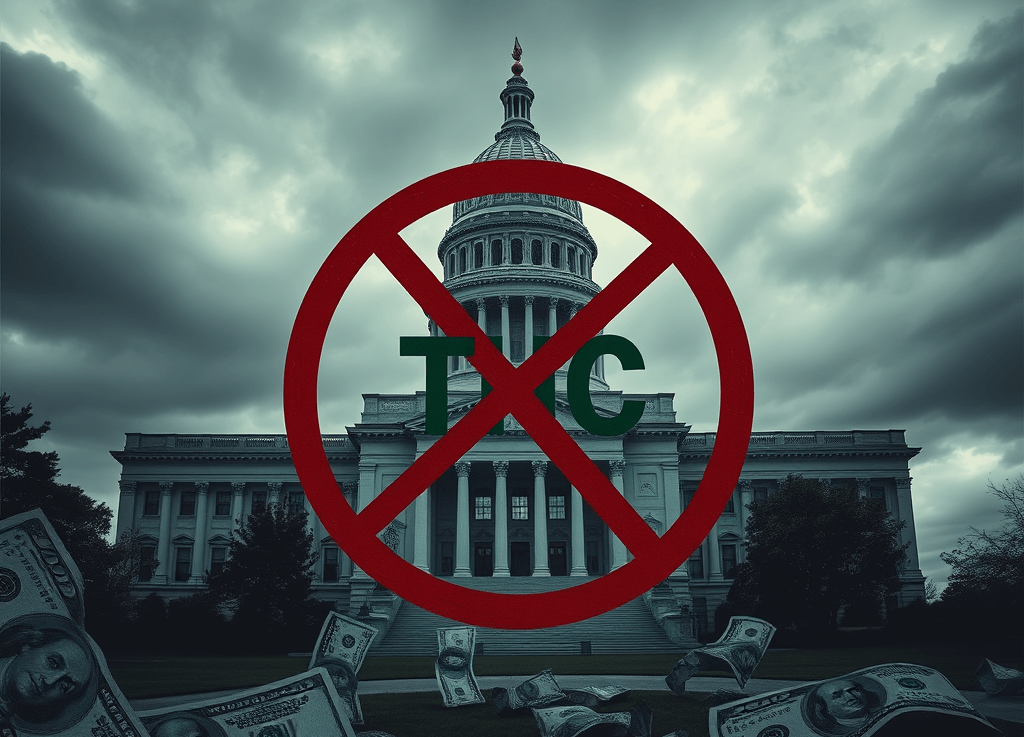
Critical Warning: Buckle Up, Texas — The Stupid Train Has No Brakes
Let’s call it what it is: SB3 is a masterclass in not thinking things through. If brainless copy-pasting from failed policies like Prohibition is your kink, then congratulations, Texas lawmakers, you’re living the dream! Our computational models—and honestly, anyone with a pulse and a memory—suggest SB3 could make things worse. Think more crime, a raging fentanyl crisis, and police so overworked they’ll need group therapy and a GoFundMe.
An Unsolicited RFC (Request For Comment) They’ll Never Read
I’m working on a book called Stupid Shit, and trust me, SB3 is earning itself a whole chapter. Here’s the Cliff Notes version of why I’ve seen better logic in a fortune cookie.
What the Hell Is Senate Bill 3?
SB3 is Texas’s big “hold my beer” moment in THC regulation. It proposes a total ban on all THC products—including the ones that come from hemp. Yes, even the stuff that was entirely legal under the 2018 Farm Bill. Because nothing says “progress” like running backwards.
Products getting axed:
Any other Delta-9 THC that isn’t under ultra-strict medical exception
Delta-8 THC
Delta-10 THC
All consumable hemp products with synthetic cannabinoids
Passed? You bet. The Texas House and Senate rubber-stamped it, and now it’s just waiting for the governor to sign off with a flourish.
Implementation? September 1, 2025. Mark your calendars, or maybe just mark your stash.
Enforcement: Jail for Gummies, Cheers for CBD
If you’re caught with any of the banned THC products, you could face up to a year in jail. So long, THC gummies and beverages! The only survivors? CBD and CBG—because, apparently, they’re the “good kids” who do their homework and don’t talk back.
Political Circus: Who’s Wagging This Dog?
The bill has all the right (or wrong) friends in high places. Governor Dan Patrick is basically on a crusade to ban THC, with the only exception being the state’s incredibly limited Compassionate Use Program. Because if you’re not suffering enough for a medical exception, you’re just not trying hard enough.
Economic Impact: Why Not Kick Retail When It’s Down?
Texas retail is already circling the drain—sales index at -30.5 (lowest since April 2020) and employment dropping fast.
SB3 is about to obliterate a sector that was actually growing, because who needs jobs or tax revenue, right?
Over 40,000 jobs? Gone. Poof.
$7.5 billion in annual revenue? Say goodbye.
Historical Context: Déjà Vu, Prohibition-Style
Let’s play a game: is this Prohibition or SB3? (Spoiler: It’s both, just with different substances.)
Jobs Lost: Prohibition: 250,000 // SB3: 40,201 (but who’s counting?)
Annual Revenue Loss: Prohibition: $11B // SB3: $7.5B
Enforcement Costs: Prohibition: $4.5B // SB3: $2.8B
You’d think after one round of “let’s outlaw a popular substance and see what happens,” we’d learn. But no—let’s hit copy-paste and hope for a different outcome!
Black Market: The Only Winner Here
Projected to hit $9.2B by 2030 because, shocker, demand doesn’t disappear when you ban stuff.
Illegal trade growth? 35% a year. Welcome to the new Wild West.
Sophisticated trafficking networks will be popping champagne (or whatever traffickers drink).
Law Enforcement: Good Luck With That
Enforcement costs? Up 180% in three years.
Police will be so busy chasing edibles they might miss, you know, actual crime.
And, just like Prohibition, get ready for corruption and enforcement headaches.
But Wait—People Might Actually Die
If the money talk didn’t get your attention, here’s a dose of reality:
Fentanyl Crisis: Hold My THC
5 Texans die daily from fentanyl poisoning. Not dramatic enough? How about a 20% jump in overdose deaths after SB3 hits?
Law enforcement focus will shift so hard, fentanyl dealers will get a free pass.
Black market dealers may start mixing fentanyl with THC products. Because nothing says “public health” like a surprise overdose.
Public Health: The Opposite of What You Want
20% more ER visits from unregulated products.
Less access to safe, tested alternatives.
Addiction treatment centers? Prepare for a flood.
Recommendations (That They’ll Ignore, But Hey, We Tried):
Phase in changes. Don’t nuke the market overnight.
Boost funding for addiction treatment and harm reduction.
Create a dedicated task force for the fentanyl crisis—don’t lump everything together.
Test and monitor black market products (because pretending they don’t exist won’t work).
Final Thoughts: Stupid Shit, Indeed
Texas, you’re about to repeat one of history’s most famous flops. If you’re looking for a case study in how not to legislate, SB3 is your gold star. Want to solve the fentanyl crisis? Want to help law enforcement? Want to support jobs and revenue? SB3 does the opposite.
But hey, when has common sense ever stopped a “good” idea in the Texas legislature?
Stay tuned for more from my upcoming book, Stupid Shit, where we catalog the finest moments in legislative facepalming. Because if we don’t laugh, we’ll cry.
Oh, and Before You Assume I’m Just Trying to Save My Stash…
Let’s clear the air right now: If you think this is some desperate plea to protect my THC gummies, you might want to check your assumptions at the door. Seriously, does this look like a stoner manifesto? If anything, it’s a plea for basic logic and a little historical memory—two things that seem to be in shorter supply than common sense at the Texas Capitol.
This Isn’t About Getting High—It’s About Not Repeating History’s Dumbest Mistakes
Let’s be real: the “Iron Law of Prohibition” isn’t just a catchy phrase—it’s a proven disaster. Every time lawmakers try to ban a substance people want, the market doesn’t disappear. It just gets meaner, riskier, and a hell of a lot deadlier. That’s not stoner paranoia; that’s what happened with alcohol, and it’s exactly what’s happening with fentanyl right now. When you squeeze the supply, you don’t get less demand—you get more potent, more dangerous alternatives flooding the streets.
If You’re Worried About Fentanyl, SB3 Is the Opposite of a Solution
Let’s not kid ourselves: the fentanyl crisis is the worst drug crisis in American history. And what’s fueling it? Not legal, regulated products, but the black market that thrives every time lawmakers try to “crack down” with blanket bans. Just ask the DEA, who are busy seizing record-breaking amounts of fentanyl while the death toll keeps climbing. Or check with Texas Health and Human Services, who are literally begging people to get educated and connected to resources because the crisis is so out of control.
So, No—This Isn’t a Stoner’s Rant
This is a call for evidence-based policy, not knee-jerk reactions. If you think that’s just “stoner logic,” maybe you’re the one who needs to lay off the reefer madness. Because the real madness is repeating the same failed strategies and expecting a different result.
Final Thought: If You’re Still Not Convinced…
Ask yourself: Would a stoner really bother to dig up economic data, historical parallels, and public health projections? Or would they just be chilling, waiting for the next episode of whatever’s trending on Netflix? This isn’t about saving my stash—it’s about saving Texas from another round of legislative stupidity.
So, next time you hear someone say, “It’s just about the weed,” remind them: It’s about not making the same stupid mistakes over and over again.
Sign up for my updates so you will know when to look for my latest book “Stupid Shit”
-Best

