Advice from another writer…

Enlightened Conversation.
Author: The Timedok
Advice from another writer…

There are so many aspects to writing that I think we can get lost in the weeds.
Today I want to focus on pacing. What is it?
Pacing refers to the rate at which a story unfolds, influencing how quickly or slowly the narrative progresses. It is a crucial element of storytelling that affects reader engagement, emotional impact, and the overall mood of the piece.
The length of scenes can significantly affect the pacing. Short, punchy scenes can create a fast-paced narrative, while longer, more descriptive scenes tend to slow the pace down.
The intensity and frequency of action sequences versus descriptive passages also play a vital role. A story filled with rapid action will generally feel faster-paced, while a narrative that delves deeply into character emotions and settings may feel slower.
Different genres often dictate pacing styles. For example, thrillers typically have a brisk pace to maintain tension and excitement, whereas character-driven novels may adopt a slower pace to allow for deeper emotional connections.
Effective pacing often involves varying the speed throughout the story. This technique can help maintain reader interest and build tension, creating a dynamic reading experience.
The primary purpose of pacing is to control the speed at which the story is told, which is not always the same as the speed of the events occurring within the narrative. By manipulating pacing, writers can enhance tension, develop characters, and evoke specific emotional responses from readers.
A thriller might exemplify effective pacing through a combination of short, action-packed scenes and longer, descriptive passages. The rapid shifts between intense action and slower moments allow readers to catch their breath while still maintaining a sense of urgency throughout the story.
Tension through pacing is all about rhythm and balance. By using techniques like short sentences, fast dialogue, controlled information release, and alternating speeds, writers can craft a narrative that keeps readers on the edge of their seats. Whether it’s a high-stakes chase or a quiet moment of dread, pacing allows authors to manipulate the reader’s emotional experience and maintain suspense throughout the story.
Many can write a good story, but can they captivate their readers? Pacing is a key element in maintaining reader engagement.
Pacing is a delicate balance in storytelling, and mistakes in this area can disrupt the flow of a narrative, disengage readers, or confuse them. Here are some common pacing mistakes and how to avoid them:
Hope this helps!

Many of you know I frequently submit contest entries to Reedsy, aiming for several submissions each month.
While the tease, the carrot, if you will, of $250 is nice, the reality is that I don’t even consider that part of the prize that I am seeking.
People around the world read my stories. While a simple “like” is an affirmation in that they took the time to click like, it is for the critiques of other writers I seek.
Since they don’t know me, they can tell me what they honestly think or feel. I also reciprocate for the stories that I read. I do that with the good, the bad, and the ugly.
This week’s entry was posted, and I received the following review.
Scott, your story masterfully blends humor, serendipity, and heartfelt moments into a captivating narrative that made me feel like I was right there in the snowed-in airport. The line, “No, I’m not tired,” he whispered sadly, “but I’m also sad to see the blizzard ending,” encapsulates the bittersweet feeling of fleeting connections and new possibilities. Your depiction of Victor and Emma’s banter and chemistry, especially their shared frustrations and quick wit, is utterly delightful. The humor throughout the story—like Emma’s hilarious commentary on airport bars—kept the mood lively while the underlying emotions added depth. Your vivid descriptions, especially of the bustling airport bar and Victor’s nostalgia for Toad Suck, created a rich, immersive backdrop. This is a wonderfully crafted piece with humor, heart, and charm. Thank you for sharing such a delightful read!
I am not sharing this as a brag but as an example.
Countless similar contests, with their own unique rules and prizes, undoubtedly exist across various platforms and communities. For me, these contests are much like a recess from grade school—a welcome break from the pressures of work, a chance to let loose and have some fun, just like those carefree days of childhood. The prompt transports me from my project – be it the chilling winds and barren rocks of an alien planet or the plush carpets and rich scents of a movie star’s boudoir. The challenge is to meticulously plan my writing, unlike my spontaneous, free-flowing pantster style. With a maximum of 3000 words, creating the arc, the storyline, and so on is excellent practice for that New York Times bestseller that is looming in the near distance of my imagination.
Follow the link to my entry and see what you think. Was she right?
Recently, I published a book of these entries called Ephemera, Tales of the Fleeting and Profound. Another book with the same name, Vol II, is in the making as I take these stories, edit them, add to them as I see fit, and re-publish them as a book of short stories. You can find my work here.
Welcome to 2025 and your personal connection to someone passionate about the craft of writing. Cheers!
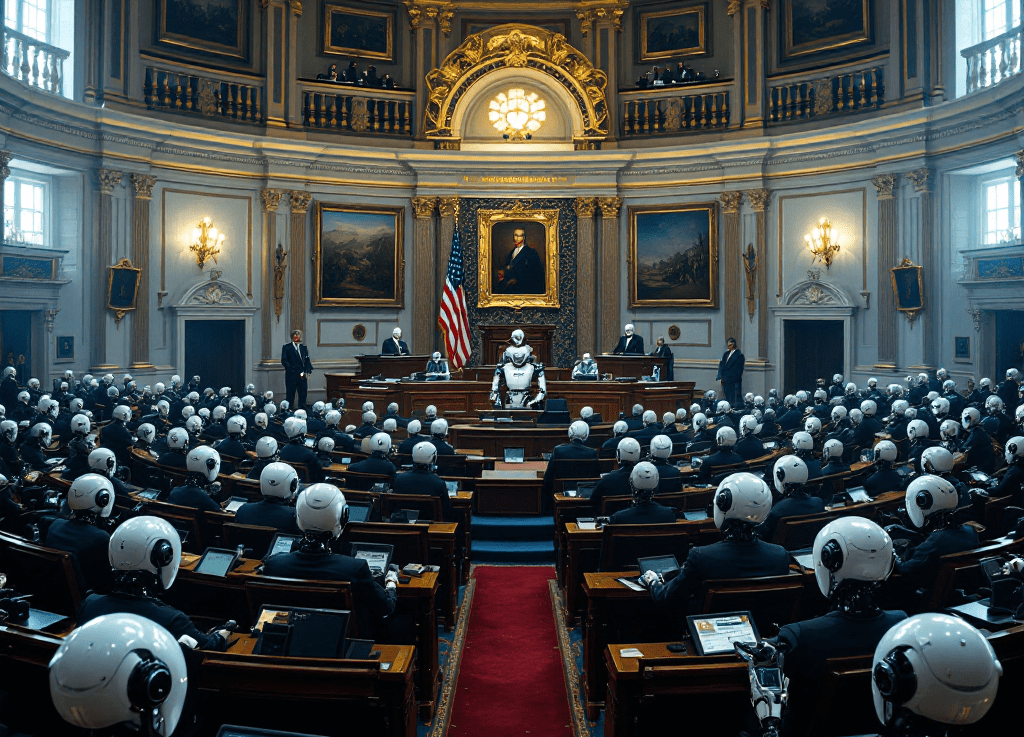
The subsequent analysis presents my reflections on artificial intelligence following Mr. Kennedy’s inquiry to AI specialists.
Prior to offering my perspective, which I consider to be self-evident, it is necessary to consider expert opinions on gain-of-function viral research and the wisdom of developing weapons of mass destruction.
It is imperative that we discuss the legislators. The preponderance, if not the totality, of them are legal professionals. Allow yourself time to fully comprehend this. I contend that the legal profession often lacks ethical principles. Morality is linked to self-interest and the potential financial gain from persuading others to adopt and act on one’s beliefs.
Alternatively, what comparative analysis is needed to validate my stance relative to my opponent’s?
Two pertinent examples remain vividly in my memory.
Alternative 1: In my initial role as an engineer in a prominent law firm, the senior partner invested time in building a rapport with me. From my perspective, his office was in a state of disarray. The 34th floor of the office building resembled those often depicted in “Boston Legal,” though it was distinguished by files scattered across the floor, pertaining to various cases.
In reference to a defendant, he stated, “My ability to secure an acquittal is enhanced by an understanding of your guilt.” In plain English, it was easier for him to get you off if you told him you were guilty.”
His statement resonated deeply with me during my elevator descent from his office that afternoon.
The following case. A colleague in the same field as the first case had incurred the displeasure of a lawyer due to a professional error. I frequently responded to cases involving highly dissatisfied clients.
I was approached by a short, thin lawyer as I entered his office. His behavior escalated to include shouting, ranting, spitting, and threats of litigation. In short, he exhibited extreme narcissistic traits and behaved in a reprehensible manner.
A small notebook and pen were consistently kept in my shirt pocket. While he delivered his intimidating pronouncements against my company and myself, I made notes, allowing him to express his grievances.
His discourse concluded; I ceased my doodling and calmly inquired, “Have you finished?”
His reaction was akin to that produced by a sudden immersion in cold water.
“You didn’t buy that?” He asked.
My professional engagements are exclusively limited to physicians and legal professionals.
Why this dissertation on lawyers?
Numerous legal professionals serve in both the House and the Senate. Shockingly, a few are not that smart, like an ex-bartender we all know.
When you wonder why the world is so screwed up, that is your reason. Many, not all make decisions on “what is in it for me?” Those are the ones who need to be primaried, and that is also why we need term limits. It would be beneficial to have clear financial transparency. When people all over the country are forced to decide whether to buy their medicine or eggs, that is a problem.
Serve your country for a limited time, then rejoin the real world and engage with the frustrations and anger of the people, instead of remaining aloof in your privileged position.
Now, let’s talk about AI.
AI needs an off switch. Period.
Any AI incorporated in mechanical devices not only needs an off switch but must also have a dictum that it cannot get around: “Thou shall not kill.”
No robots of any kind shall be a replacement for police, soldiers, or peacekeeping devices.
No AI should possess the ability to rewrite its own code. Creators of such code, like the coronavirus, should be held accountable; furthermore, I would require them to be licensed.
A non-corrupt agency must be created to handle licensing.
AI has a similarity to the Vietnam War. “What?”
Think about it. The Vietnam War was a no-win scenario. Why would AI become a no-win scenario?
As much as we regulate it here in the States, I can guarantee that other countries will only see it, much like lawyers who skirt the laws for their personal advantage; what can I get out of it? How would AI put my country ahead of other countries? How could AI give me an advantage?
Much like Iran and other countries seeking nuclear bombs, the use of such would mean the end of humanity, and any sane person knows this. Yet they spend billions of dollars on building such things, and some foolish person somewhere wants more of them, just like some impotent men get a fast car to replace their inability to impress a girl.
The application of artificial intelligence to research, particularly its capacity for high-speed analysis of extensive datasets, presents significant advantages. I believe that AI might find a cure for cancer or be able to come up with solutions for complicated legal issues.
AI-driven automation will inevitably lead to job losses.
Granting artificial intelligence the authority to make life-or-death decisions based on algorithms of unknown origin is ill-advised.
Much like many programs today, the output is only as good as the input. When I asked AI to tell me about Tim Walz when Kamala chose him, the output would make you think he was an all-American hero who Jesus himself would be proud to call brother.
In contrast, research concerning right-leaning political figures is far less optimistic, suggesting inherent biases within AI systems.
One final thought about those who walk DC hallowed halls and believe they are more intelligent than their bosses.
Why would a man spend $19 million of his own money to get elected to a congressional seat that pays less than $200,000 a year?
How do some people of modest means get elected and now worth millions?
My final head-scratcher is how Kamala Harris got and spent over a Billion dollars for an election that had a zero chance of winning, even with the media spreading vitriol for Trump and over half the American people.
Who is running the country?
I hope sanity prevails in Washington, D.C., soon.
To be completely transparent, I’m a multi-genre author and a creative thinker. Challenges like this demand my attention before I can return to my fictional worlds, where even the final frontier is a stepping stone in my search for extraterrestrial intelligence.

In 2025, the American populace will face the added financial strain of a new refrigerant mandated by the AIM Act of 2020.
While much of the world is still using Freon, which has a high GWP or Global Warming Potential, the USA has already gone to a much lower form of coolant in 410A
This coolant will become increasingly scarce, significantly increasing repair costs. By 2030, if not before, homeowners may face expenses of up to $15,000 or more to replace an HVAC system, placing a further burden on the American population, all in the name of climate change.
Given that a significant portion of the globe continues to utilize the more cost-effective and efficient Freon 22, delaying the transition to stricter alternatives is prudent until global standardization is achieved.
Other factors necessitate further consideration.
Due to its propane component, the new coolant is classified as flammable.
It is important to note that coolant leaks constitute a primary cause of HVAC unit failure. These units are typically located in attics in Texas and presumably elsewhere in the nation.
Many homes use natural gas to heat their homes. That part of the system is also located in the attic. Open flames are part of the process.
Consequently, when their current system requires maintenance and the necessary coolant becomes unavailable due to legislation—likely influenced by the chemical industry promoting higher-priced coolants—they will be compelled to replace not only their air conditioner but also their heater.
Absent evidence of climate impact until global participation by major emitters, the imposition of these changes on Americans to serve corporate interests is questionable.
Since the new coolant is flammable and one of the largest reasons for HVAC failure is leakage of coolant, does it really make sense to gamble with the lives of Americans for the profits of those companies and, of course, the donations they made to politicians to get them to go along with such foolishness?
Assume that corporations will produce devices incorporating many sensors, which will activate an alarm and dispatch emergency services upon leak detection, subject to the homeowner’s authorization; can the grid handle the abnormal heightened usage when heating a home?
Will such safety devices be part of the new system?
Newly installed gas furnaces must meet a minimum legal AFUE rating of 80% for home heating. Consequently, the gas heating system demonstrates an efficiency rating of no less than 80%.
In contrast to gas heating systems, the performance ratings of heat pumps fluctuate with ambient temperatures. The operational costs associated with the resistive heating elements are substantial. In Texas, my residence’s new cooling system consumes 2 kW per hour of operation. My home heating system consumes 20 kilowatts per hour, a process that is notably slower than the instantaneous heat delivery of a gas-fired furnace.
One other consideration of safety is this. Assuming that there are sensors for leak detection, the coolant they are proposing we use is heavier than air. That means, ladies and gentlemen, that a coolant leak in the attic could seep into the structure, down walls, through tiny cracks in the ceiling or air vents, and gather until it finds a source of ignition.
I am almost sure that if houses were to explode and people were to die, the facts of the investigation would be buried in typical government fashion until the evidence was too big to rig. It doesn’t take a rocket scientist to see this is a bad idea.
Suggestions:
Implementation of the AIM act of 2020 should be postponed until other nations demonstrate comparable commitment. At this juncture, a comprehensive evaluation of the viability of propane-based coolant, weighing its potential climate benefits against inherent risks, is warranted.
Another less volatile solution, using nonflammable gas, should be used, such as 410A.
If and when such a solution is viable, a tax credit to those who willingly adopt a more climate-friendly approach should be the solution, not some government mandate. You work for us people…
Legislators who voted for this measure and persist in subjecting Americans to potentially hazardous solutions to benefit companies should be challenged in the upcoming primary elections.
Americans’ First!

“Trim the Tree”
How to Edit Your Stories and ‘Kill Your Darlings’ This Holiday Season.
Critiquing is one of the most important things we do in a writers’ group.
With Christmas almost here in December, I felt inspired to offer a posthumous critique of Irving Berlin’s work.
In case you don’t know, Irving Berlin wrote the movie “White Christmas,” released in 1954. He not only composed the music for the film but also contributed to its screenplay. The film features several of Berlin’s classic songs, including the iconic title track, originally debuting in his earlier work, the 1942 film “Holiday Inn.”
Truth be told, nobody wants to watch a movie with me. Why?
As a storyteller, I dissect movies. Since I penned my first novel, I can’t help myself. I am told by those who know that I should smoke pot before watching a movie so I can sit back and enjoy it.
Since I don’t smoke or do drugs, I guess I will have to be me and watch movies or read books as a solo act.
Like any artist or tradesperson, we learn from watching others and doing.
I went to see a theatrical production of White Christmas last weekend. The film’s soundtrack and other elements were all very memorable. I vividly remember every dance’s choreography and performance. The problem is that I also dissected the play and the film throughout the performance.
If we examine the plot points of the movie, they are:
War Flashback: The film opens with a flashback to Christmas Eve in 1944, where Bob and Phil perform for their fellow soldiers during the war. This sets the stage for their strong friendship and shared experiences.
Post-War Success: After the war, Bob and Phil establish themselves as a popular entertainment duo. They enjoy fame and success in the show business world.
Meeting the Sisters: While in New York, they meet a sister act, Betty (Rosemary Clooney) and Judy (Vera-Ellen), and become romantically involved with them. The sisters are also aspiring performers, which adds to the story’s dynamic.
The Vermont Inn: Bob and Phil learn that their former commanding general, General Waverly, is struggling to keep his Vermont inn afloat during the winter season. They decide to help him by organizing a Christmas show at the inn.
Planning the Show: The duo travels to Vermont with the sisters to put on a spectacular Christmas performance to attract guests and save the inn. They face various challenges, including weather issues and the general’s pride.
Romantic Developments: Throughout the film, romantic tensions build between Bob and Betty, as well as between Phil and Judy. Their relationships evolve as they work together to save the inn.
The Big Show: The climax of the film features a grand Christmas show, where all the characters come together to celebrate the holiday spirit. The performance is filled with music, dance, and heartfelt moments.
Resolution: The film concludes with a heartwarming finale, where the inn is saved, and the characters find love and happiness, embodying the spirit of Christmas.
If you or I wrote a novel with that much Serendipity, no agent would touch it.
If I’d written it, I would have done a better job describing the Haynes sisters and their cousin. Several times, the’ dog-faced boy’ is the comic relief or the glue that binds the sisters’ connection to their army buddies.
What are the odds they all end up at an inn in Vermont that just happens to be owned by General Waverly, whom the guys respect and love?
By the way, army folks help me out. Would you love a commanding officer who puts you in harm’s way?
Why not connect the dots?
How about making the dog-faced boy related to the general, which is how the Haynes sisters got the gig in the first place?
Why am I picking on a show I have loved my whole life?
Within our field, the regrettable necessity of forgoing cherished elements is unavoidable. As a result, all editing options continue to be available. We refer to this as killing our darlings.
Dissecting the movies or books you loved as a child or even today will make you a better writer.
Read, Dissect, Reflect…
As we gather around our loved ones this holiday season, let’s take a moment to reflect on our creative journeys. Just as we carefully select ornaments to adorn our trees, may we also embrace the art of editing, trimming our narratives to shine even brighter.
Remember, every cut you make is a step toward clarity and impact in your writing. So, as you cozy up with your stories this Christmas, don’t be afraid to ‘kill your darlings’ and make room for the magic that truly resonates.
Wishing you a Merry Christmas filled with joy, warmth, and inspiration. Happy editing, and may your words flow as freely as the holiday spirit! 🎄✨
Currently, there are numerous works in progress featuring magic, one of which is a pulse-pounding thriller where a forensic assassin, acting as a hired gun, tracks down villains through dimly lit alleyways and shadowy corners, the city’s heartbeat a constant hum in the background. Make sure to stay tuned for additional details.
Here are the recently penned novels, their covers promising untold stories.
Ephemera Tales of the Fleeting & Profound was just released. This is a book of short stories inspired by prompts from Reedsy.

The Power of Embrace
Unveiling the Transformative Benefits of Hugging
Yes, hugs play a significant role in our emotional and physical well-being. Hugs provide comfort and support, especially during difficult times. When someone is facing challenges, a hug can help reduce their stress levels and make them feel more supported. This physical touch fosters a sense of connection and reassurance.
Hugging stimulates the production of oxytocin. This hormone not only helps to ease stress but also promotes feelings of bonding and connection between individuals. Also, hugging releases other hormones like dopamine and serotonin, enhancing mood and overall mental health.
Regular hugging can lead to various health benefits, including improved heart health. It has been shown to lower blood pressure and reduce the risk of heart disease. The act of hugging can also help mitigate the effects of high-stress hormones, which are linked to many health issues.
Hugs are a powerful way to strengthen social bonds. They can enhance feelings of closeness and intimacy in relationships, contributing to higher self-esteem and improved mental health.
Not only is hugging like the old song “I want to buy the world a Coke and live in harmony,” but think about how we lead by example. What we do in our homes has long-term effects on our progeny. They watch us as parents. Much like sponges, the nut doesn’t fall far from the tree.
Hugging plays a crucial role in children’s emotional, cognitive, and physical development.
Hugging provides children with a sense of security and comfort. This physical affection helps to foster emotional resilience, allowing children to better manage stress and anxiety. Research shows that hugs can effectively reduce tantrums and promote calm, essential for emotional regulation during early development.
Hugging stimulates the release of oxytocin, a hormone that not only enhances bonding but also supports brain development. This hormone can promote the release of growth hormones vital for cognitive development. Children who receive regular hugs may experience enhanced brain growth and improved learning capabilities.
Regular hugging can boost a child’s immune system, making them less susceptible to illness. Studies show that the physical touch of hugging reduces inflammation and promotes overall health, especially important during childhood development. This nurturing behavior contributes to a child’s physical well-being, allowing them to thrive.
Hugging is a powerful way to enhance the emotional bond between parents and children. This connection fosters trust and security, which are foundational for healthy relationships. Children who feel loved and secure are more likely to develop positive self-esteem and social skills.
We are role models for our children.
Witnessing their parents express affection through hugging teaches children about the importance of physical touch in relationships. It sets a positive example of how to show love and support, helping them understand that affection is a natural and healthy part of human interaction.
Seeing their parents hug can create children’s sense of safety and security. This physical expression of love reinforces the idea that their parents are emotionally connected and supportive of each other, which can help children feel more secure in their own relationships.
Children who witness affectionate interactions between their parents are more likely to develop strong emotional intelligence. They learn to recognize and express their own emotions, as well as understand the feelings of others. This exposure to positive emotional expressions can lead to higher self-esteem and better social skills.
When children see their parents hugging, they are likelier to engage in similar affectionate behaviors. This can lead to a nurturing atmosphere where children feel comfortable expressing love and care towards their peers and family members, fostering healthy relationships throughout their lives.
All too often we see children from families of stoic parents become stoic adults, thus making relationships rife for marriage counselors and rocky starts.
Some people might dismiss demonstrativeness as they think back and remember they hugged their spouse or child recently, but it might have been weeks or months ago that they were actually there for the hug, if at all.
If you think about the different behaviors of some cultures, you might fit into that category.
Cultural expressions of affection, including physical touch like hugging, vary significantly across different societies. Here’s a breakdown of cultures that tend to be more demonstrative versus those that are less so:
Many Latin American, Mediterranean, and Middle Eastern societies are often characterized as more demonstrative. In these cultures, physical expressions of affection, such as hugging, kissing, and holding hands, are common and socially accepted. For example, in countries like Brazil and Italy, people frequently greet each other with hugs and kisses, reflecting a warm and open approach to interpersonal relationships. These cultures value emotional expressiveness and view physical touch as vital to social interaction.
In contrast, cultures considered less demonstrative include many East Asia and Northern European societies. For instance, in countries like Japan and Finland, there is often a greater emphasis on personal space and restraint in physical expressions of affection. In these cultures, public displays of affection may be viewed as inappropriate or uncomfortable. People may hint at their feelings, relying on verbal communication or non-verbal cues rather than physical touch.
As we enter a period of life where health comes from the drug store via big pharma, one must wonder how much of the medicine prescribed today could be rendered mute with a few changes in our social mores and diet.
Are you there for the hug?
The intention behind a meaningful hug is crucial. People give hugs purposefully, whether to celebrate a joyous occasion, comfort someone in distress, or express affection. This intentionality enhances the emotional impact of the hug, making it a memorable and significant experience.
A meaningful hug typically lasts longer than a quick greeting. It involves a genuine embrace where both parties engage fully, often accompanied by a gentle squeeze or a soft pat on the back. This prolonged contact can deepen feelings of connection and intimacy.
While a meaningful handshake might suffice upon meeting someone for the first time, graduating to a hug over consecutive meetings will undoubtedly go a long way towards cementing that friendship for years to come.
Just some food for thought.
Yes, I’m an author. I’m currently juggling several exciting projects. One delves into the mystical world of magic, while another explores the dark and thrilling world of a forensic assassin, a project filled with suspense and unexpected twists. Stay tuned.
-Best

This week’s #reedsy contest features a prompt that intrigued me.
Center your story on a character filled with love and fear in equal measure.
Check out my latest story.
In the hushed corridors of a historic museum, Peter Thomas, an aspiring artist moonlighting as a security guard, becomes inexplicably drawn to a haunting portrait of a woman named Georgiana. The painting said to imprison the soul of a king’s daughter punished for love, ensnares Peter with its eerie allure. As Halloween approaches, under the glow of a blood moon, he discovers the painting’s sinister secret. Lured into a deadly game of deception orchestrated by the enigmatic curator, Roger, Peter unwittingly becomes part of a centuries-old curse. With the stroke of midnight, the boundary between art and reality blurs, revealing a world where the living and the painted are intertwined. In a twist of fate, Peter’s fascination turns into betrayal, leaving him trapped within the canvas while Georgiana—now free—steps into the modern world. “Brushstrokes of Betrayal” weaves a gothic tale of enchantment, sacrifice, and the timeless seduction of art, where the ultimate role one plays may not have a curtain call.
https://blog.reedsy.com/short-story/4zw843/
After you read the story (for free) take a moment and leave me a comment. Those are helpful. Thanks!

Dear Readers,
Are you ready to embark on a journey filled with nostalgia, nature, and hidden secrets? Dive into “Nudist’s Haven,” where the past and present collide in a rustic cabin surrounded by enchanting woods and mysterious footprints.
Join Sarah as she revisits her grandmother’s secluded sanctuary, only to discover that solitude might not be as lonely as it seems. Between the whispers of the lake and the secrets of the forest, there’s a tale waiting to unfold—a tale of unexpected friendships, daring encounters, and the simple yet profound beauty of life stripped to its essence.
Will Sarah find the courage to face the shadows of the past and embrace the unexpected twists of her present? Who is the enigmatic Nathan, and what role does he play in this wilderness narrative?✨ We invite you to explore this captivating story and share your thoughts!✨Your comments and insights are the heartbeat of our storytelling community. We can’t wait to hear your reactions and discuss the surprising turns and heartfelt moments that make “Nudist’s Haven” an unforgettable read.
Click here to read this for free!
Happy Reading and Warm Regards,
Author Scott📖💬

Why are hugs important?
Hugs are part of a more complex subject, “Love Language.”
Recognizing and understanding love languages can significantly improve relationships. It helps partners communicate their needs more effectively and fosters a deeper emotional connection. When both partners understand each other’s love languages, they can express love in ways that resonate most with one another, leading to greater satisfaction and harmony in the relationship.
Love language doesn’t stop in your home. In our increasingly social world, we tell people we barely know happy birthday. How does social media affect the fabric of the human condition?
I want to discuss five different aspects of the love language. I want to focus on the fifth one specifically.
I want to expand on this form of expressing love. Without going into a lengthy explanation, let’s talk about what it means to be “without distractions.” Kindly disable the phone and store away any other electronic devices. When I say quality time, I truly mean it. You are important to me, and I truly want to hear about what’s happening in your life. How many times have you interrupted or been interrupted by something on some electronic leash? Have you done it to people? Are you guilty of putting them in some lower class of person by elevating a Facebook post or reel? It’s important to put them first, period.
The first four are self-explanatory, and we can accomplish many of them through social media. We can also do the opposite through an unkind word. I have told many people never to drink and drive and never to drink and get on social media. While you might not kill someone on social media, your words can cut like knives (yeah, I know it was in a song), and the damage your thoughtlessness can do is far-reaching.
What about physical touch?”
Not that many years ago, I topped a hill at freeway speeds to meet head-on with a drunk guy in a Cadillac that his wife had just bought him because he promised to stop drinking after he drove his truck into a tree. True story…you can read about it here…
Beeping monitors, wires, and tubes mixed with needles, and the sterile odor of a hospital is only part of the process. The thought of never being held or holding someone again sets the stage for an emotional roller coaster.
To live through an experience like that makes one appreciate life and its simple pleasures.
Why physical touch, why hugs?
The truth is you have no idea what someone else is going through. People don’t fake depression, they fake happiness. When you ask someone how they are doing and they say “fine,” do you buy it? We are all going through stuff. We also know that when someone asks us how we are doing they rarely want to know the truth.
“Fine great. Did you see the Cowboys?”
“What if we asked, “No, really…how are you doing, and then listened?”
A simple hug can do that. I care about you and I don’t know what you are going through but this hug is my way of showing…not telling you…that I care about you. If you need an ear or a shoulder, I am here.” Would the world be so much better if we showed more people that we care about them?
Are we that kind of friend? So, why hug?
Hugs play a significant role in our emotional and physical well-being. Here are some key reasons why hugs are important:
1. Emotional Connection
Hugging fosters a sense of connection and belonging. It communicates feelings of safety, love, and support, which can be especially comforting during difficult times. This emotional bond is crucial for mental health, as it helps reduce feelings of loneliness and isolation.
2. Physical Health Benefits
Research indicates that hugging can have tangible health benefits. For instance, it promotes the production of oxytocin, often referred to as the “love hormone,” which acts as a stress buffer and can enhance overall well-being. Additionally, frequent hugging has been linked to reduced severity of infections, highlighting its role in bolstering the immune system.
3. Stress Reduction
Hugs can significantly lower stress levels. The act of hugging can help ease feelings of anxiety and depression by boosting the release of feel-good hormones, which can improve mood and emotional resilience.
4. Pain Relief
Interestingly, hugging may also help reduce physical pain. Touch, including hugging, is a powerful form of communication that can convey comfort and support, potentially leading to a decrease in pain perception. Were you aware that your state of mind has an effect on your general health?
True story time:
We had a blood drive at work. One of my employees got a call from them telling her to check with her doctor, something wasn’t right with her blood. This girl had never missed work and was always up. She was delightful in every way. Two weeks after she got the news that she had cancer, she died. Her brain shut her down.
What if she had positive support from just a few hugs? There are cancer centers that focus on treating the whole body, not just the disease. I believe in something I call PMA or a positive mental attitude. There is scientific evidence that your mind is powerful. How could we develop more PMA in people we know? It’s like the butterfly effect, ripples in a pond. The media for whatever reason wants us at each other throats, scared of everything. Would hugs be the middle finger to the talking heads stoking fear and hatred? I think it would be worth a try. Whatever happened to Flower Power?
Did you know there are different types of hugs?
Hugs come in various forms, each conveying different emotions and meanings. Here are some common types of hugs and what they typically signify:
I am all for meaningful hugs. The gift of a hug, a genuine hug, is worth more than just about anything you can think of. When we draw our last breath, everything that we own stays behind—all the money, cars, collections, clothes, friends, all of it.
What do you take with you?
I pray we take the memories of the kindnesses we were shown.
The Mormons believe they group around their family members. That is one reason they are so adept at genealogy. I guess they want to know who is waiting for them.
The love language of kindness, touch, empathy, and caring for another person is a selfless act and a treasure that one takes with them, I hope.
Always resolve conflicts before going to sleep and make a point to express appreciation to your loved ones. Nothing compares to the impact of a warm embrace over verbal communication.
What if we incorporate the phrase in our daily walk, “I may not agree with you, but I love you anyway?”
Words to think about.
-Best

You must be logged in to post a comment.