In nearly every profession, accountability is non-negotiable. Engineers who design faulty equipment face consequences. Pharmaceutical companies that release harmful drugs are held liable. Employees who perform negligently lose their jobs.Yet when decisions within our criminal justice system lead directly to preventable deaths, accountability remains elusive. The question we must ask: When dangerous individuals are released and kill again, who is responsible?
A Pattern of Preventable Tragedy
The year 2025 alone produced numerous cases that expose systemic failures:
Case
Background
Release Mechanism
Outcome
Eddie Duncan (Minneapolis, MN)
Arrested for police pursuit, illegal firearm possession
Posted $35,000 bail
Killed two cousins (ages 14 and 23) within three hours of release
Colorado Parolee
Prior violent convictions; assessed as “very high” risk
Released on parole
Accused of four murders across three counties
Roybal-Smith (Colorado)
On parole for violent offenses including murder; risk level downgraded from “very high” to “moderate”
Parole
Murdered three people
Virginia Case
30+ prior arrests; known violent offender
Prosecutor repeatedly declined or reduced charges
Killed a mother in violent attack
These are not isolated incidents. They represent a systemic pattern.
Case Study: Decarlos Dejuan Brown Jr.
Perhaps no case illustrates institutional failure more starkly than that of Decarlos Dejuan Brown Jr., who murdered Iryna Zarutska on a Charlotte light rail in August 2025.Brown’s criminal history spans nearly two decades:
2011–2014: Convicted of felony breaking and entering; received 30 days jail and probation
2013–2014: Convicted of robbery with a dangerous weapon and felon in possession of a firearm; sentenced to six years
2020: Released on parole after just over five years; subsequently arrested for assaulting his sister
2022–2024: Three additional arrests for assault and property crimes—no corresponding court records
January 2025: Arrested for repeated misuse of 911; released without bond on written promise to appear
July 2025: Court-ordered forensic evaluation never completed; remained free
August 2025: Murdered Iryna Zarutska
Critical questions remain unanswered:
Why were early charges repeatedly dismissed?
Who supervised his probation, and how was his progress evaluated?
Why did three arrests between 2022–2024 produce no court records?
Who was responsible for ensuring completion of his court-ordered mental health evaluation?
Brown had a documented schizophrenia diagnosis. His record shows clear escalation from misdemeanors to violent felonies. Yet at every juncture, the system failed to intervene meaningfully.
The Deeper Failure
Beyond the institutional breakdowns, the circumstances of Iryna Zarutska’s death reveal something equally troubling: bystanders on the train reportedly walked past her as she bled out. Audio captured Brown’s words as he exited: “I killed the white bitch.”This indifference compounds the tragedy.
A Call for Systemic Accountability
The path forward requires honest examination:
Mental health intervention must be prioritized and actually enforced—court-ordered evaluations cannot remain incomplete without consequence
Risk assessments must carry weight; downgrading a “very high” risk offender to “moderate” demands rigorous justification
Decision-makers must answer when their choices directly enable preventable violence
Transparency is essential—dismissed charges, incomplete evaluations, and missing court records must be explained
What You Can Do
Don’t let these stories disappear. Systemic change begins with sustained attention. These cases deserve public debate focused on identifying root causes—not political posturing, but genuine analysis of where and why interventions failed.The current status quo protects no one.
What are your thoughts? How should we balance rehabilitation with public safety? Who should be accountable when the system fails?
Imagine this: running a full-blown election campaign… to be a juror. Yes, I’m talking about knocking on doors, kissing babies, raising funds, and making promises you absolutely have no intention of keeping. “Vote for me, I swear to be impartial! I’ll fight for justice! Free snacks in the deliberation room!” All for the privilege of sitting on a jury destined to end in a hung verdict. Truly, the dream. And let’s not forget the “committees.” Oh, the committees! If elected, you’ll join a room full of people who prove that the phrase “common sense” is anything but common. It’s a front-row seat to humanity’s greatest hits of idiocy. If you’ve ever wondered where the dumbest people on Earth gather, I have your answer: jury duty.
My Time in the Hot Seat (A.K.A. Jury Duty)
Take this gem of an experience I had. We were deliberating a case where a man raped and murdered a young woman. Grim, I know. But the evidence? Rock solid. Open-and-shut case. Even with all the lawyer shenanigans—objections flying like confetti and attempts to suppress evidence because, get this, one of the investigators once knew someone who had once been raped (a friend of a friend of a friend situation)—we still managed to find the guy guilty. Victory for justice, right? But wait, there’s more! When it came time for sentencing, I thought, “Surely this is the easy part.” Nope. One juror decided the defendant reminded her of her grandson. And wouldn’t you know it, the lawyers played that angle like they were auditioning for the Oscars. Suddenly, we’re in a stalemate. I’m over here advocating for hanging the bastard (figuratively speaking, of course), while Grandma-of-the-Year is suggesting we let him off with a pat on the back and time served. Now, here’s the worst part: on a jury, you can’t just stand up and call someone a “stupid ass.” Oh, no. That’s “frowned upon.” Instead, you have to carefully craft arguments within the confines of what the judge deems “appropriate,” all while refraining from saying what you’re really thinking, which is, “Are you serious right now? Are we even on the same planet?”
Why Bother?
Act I: The Sacred Ritual of Jury Duty
So why would any sentient human voluntarily endure this exquisite form of psychological waterboarding? Picture it: you, a marginally functioning adult, trapped in a room with twelve strangers who were specifically selected because neither lawyer thought they were clever enough to be dangerous. These are the “peers” the Constitution promised you—people who list “breathing” as a hobby and whose critical thinking skills peaked when they successfully operated a revolving door on the third try. But I digress. You didn’t come here to read about the jury box. You came because of the title. So let’s pivot, shall we?
Act II: The $19 Million Question
Ask yourself this delightful riddle: Why would a grown adult spend $19 million of their own money to secure a position that pays $174,000 a year? At that rate of return, they’d make their money back in roughly… checks notes …109 years. Clearly, these are not people motivated by the paycheck printed on paper. No, no. They’re motivated by the paycheck printed on offshore account statements. If you’ve ever had the distinct displeasure of watching Congress “work”—and I use that word with the same enthusiasm one uses to describe a sloth “sprinting”—you’ll notice something remarkable. Half of them speak to the press with the intellectual firepower of a wet match in a dark cave. Three neurons? That’s generous. Some of these folks would lose a debate to an automated customer service line. And yet, somehow, they retire with more money than a dragon sitting on a pile of gold in a fantasy novel. Curious, isn’t it?
Act III: The Alchemy of Public Service
Follow the money, dear reader, and you’ll find it leads to a magical kingdom where laws are written by the people they conveniently don’t apply to. Take, for example, the estimated $278 million net worth of one Nancy Pelosi—a woman whose stock portfolio performs with the uncanny precision of someone who definitely doesn’t have access to classified briefings before making trades. If you traded stocks on insider information, you’d get a lovely pair of matching bracelets and a rent-free room with bars on the windows. But when they do it? It’s called “savvy investing” and featured admiringly in financial magazines. And when Hillary Clinton solemnly declares that “no one is above the law,” one can only assume she’s performing avant-garde comedy at this point. A truly bold artistic choice. Because obviously, when they say “no one,” they mean “no one who matters less than us.” You see, in the fine print of American democracy—written in ink visible only to those earning above a certain tax bracket—there’s a small but important clause: “Laws apply to citizens. Congress members, however, have ascended to a higher plane of existence where laws are merely suggestions, ethics are optional, and accountability is a word that only appears in dictionaries owned by peasants.”
Act IV: Gods Among Us
Perhaps this is the real revelation. Our elected officials don’t consider themselves people in the traditional, law-abiding sense. They are demigods—mortal enough to need campaign donations but divine enough to be exempt from the rules they impose on the rest of us. Laws are for the little people. Insider trading restrictions are for the little people. Consequences are for the little people. And the little people? Well, they’re too busy sitting in jury duty, debating with flat-earthers about reasonable doubt, to notice.
Behold, the magnificent spectrum of “public service” in America—a system so beautifully designed that it makes feudalism look like a fair-trade agreement. On one end, we have Jury Duty: the sacred civic obligation where you, the humble taxpayer, are graciously compensated six whole American dollars for a full day of your rapidly depleting lifespan. Six dollars. Not per hour. Per day. That’s less than a footlong sandwich. That’s less than two gallons of gas. That is the republic looking you dead in the eye and saying, “We value your service the way we value a vending machine coffee—barely, and only because nothing better was available. “You will sit. You will deliberate. You will miss work. And for this noble sacrifice, the government will hand you a check so small that your bank will laugh when you try to deposit it. The Founding Fathers wept tears of pride. On the other end, we have Congress: the other sacred civic obligation where elected officials are compensated in a currency far more sophisticated than mere dollars. They deal in favors—a shadow economy so elaborate it makes cryptocurrency look transparent. A favor here, a favor there, a mysterious consulting gig for a spouse, a book deal nobody asked for, a speaking fee that costs more than your house, a stock tip whispered in a hallway that technically wasn’t a hallway so it technically doesn’t count.
The Unforgivable Crime of Curing Cancer: A Media Response Simulation
Breaking News: Orange Man Does Thing. Nation in Crisis.
Let us engage in a thought experiment so absurd it might actually happen. Imagine—just imagine—that Donald J. Trump walked up to a podium tomorrow, slapped a glowing vial on the lectern, and announced: “I have cured cancer. All of it. Every kind. You’re welcome. “Now, a rational species might respond with cautious optimism. Perhaps even gratitude. Maybe a polite golf clap. Not us. Not this timeline.
The Headlines Write Themselves
Within approximately 0.003 seconds, every major news network would erupt like a volcano of righteous indignation:
CNN:“Trump’s Reckless Cancer Cure Threatens Millions of Healthcare Jobs—Here’s Why That’s Dangerous”
MSNBC:“Oncologists React With Horror as Trump Dismantles an Entire Medical Field Without Congressional Approval”
The Washington Post:“Democracy Dies in Darkness, and Apparently So Does Chemotherapy: How Trump’s Cure Undermines Institutional Norms”
The New York Times:“Opinion: I’m a Tumor, and I Deserve to Live—How Trump’s Cure Is an Attack on Biodiversity”
A somber Anderson Cooper would turn to the camera with the gravity of a man announcing an asteroid impact: “Tonight, we ask the hard questions. Yes, cancer is gone. But at what COST?”
Cut to a panel of four experts, three of whom are openly weeping: Expert 1 (Pharmaceutical Lobbyist):“Do you have ANY idea how much revenue chemotherapy generates? We’re talking about a $200 billion industry. Trump didn’t cure a disease—he committed an act of ECONOMIC TERRORISM against hardworking pharmaceutical shareholders. “Expert 2 (Hospital Administrator):“Our oncology wings are the crown jewels of our revenue model. Without cancer patients hooked up to IV drips filled with chemicals that cost $47,000 per session and make you feel like you’ve been run over by a freight train hauling more chemicals—how are we supposed to afford our fourth administrative building? “Expert 3 (Unnamed Source Familiar With the Matter):“This cure was developed without peer review, without FDA approval, and most importantly, without consulting the people who were making an EXCELLENT living off the disease. This is a direct attack on the established order of profiting from human suffering. “Expert 4 (Political Analyst):“The real question isn’t whether the cure works. The real question is: what are Trump’s MOTIVATIONS? Nobody just cures cancer out of the goodness of their heart. This is clearly a distraction from [gestures vaguely] …something.”
Big Pharma Issues a Statement
“We at MegaChem Therapeutics™ are deeply concerned by this so-called ‘cure.’ For decades, we have been committed to providing patients with a carefully calibrated treatment experience—one that manages symptoms just enough to keep you alive, but not so much that you stop needing us. This is called SUSTAINABLE HEALTHCARE. Trump’s ‘cure’ is reckless, untested, and worst of all—it’s FREE. How are we supposed to monetize FREE? This man is a menace to quarterly earnings.”
The Inevitable Fact-Check
PolitiFact Rating: MOSTLY FALSE
“While Trump claims to have ‘cured cancer,’ our analysis shows that cancer was already declining at a rate of 0.003% per decade, meaning it would have eventually cured itself in approximately 47,000 years. Trump is taking credit for something that was already happening. We rate this claim: Pants on Fire.”
The Moral of the Story
In the grand theater of modern media, the disease was never the villain. The disease was the business model. And anyone who threatens the business model—be they saint, scientist, or spray-tanned former president—must be destroyed with the full fury of a 24-hour news cycle that hasn’t had a good ratings week since the last time something was on fire. Because in America, we don’t cure diseases. We subscribe to them. And canceling your subscription is an act of insurrection.
“First, do no harm—unless harm is billable, in which case, do a LOT of it and file it under ‘treatment.'” — The Hippocratic Suggestion, Revised Edition, Sponsored by Pfizer™
The Great Meme Wars: Where Civics Goes to Die
A Final Dispatch from the Frontlines of Electoral Stupidity
Ah, election season. That magical time of year when the air is thick with yard signs, attack ads, and the unmistakable aroma of people who haven’t cracked open a civics textbook since the Clinton administration—the first one. The ritual is simple: find the least politically corrupt candidate—which is a bit like shopping for the freshest item in a dumpster—vote them in, and then watch in slow-motion horror as they proceed to loot the treasury with the efficiency of a raccoon who found an unlocked Costco. You must act fast, of course, because the incumbent raccoons are already in there filling their tiny raccoon pockets, and if you don’t get YOUR raccoon in soon, there won’t be anything left to steal. Democracy. Beautiful, isn’t it?
Enter: The Meme
But tonight, dear reader, I must address a cultural artifact of staggering intellectual bankruptcy. A meme. Shared with the confidence of a man who brings a calculator to a spelling bee. This particular meme—posted, shared, liked, and reshared by an army of people whose understanding of government structure could fit comfortably inside a thimble with room left over for their attention span—targets Governor Greg Abbott of Texas. The accusation? Republicans want your vote to “fix” taxes! The evidence? A screenshot of a property tax bill. The problem? Oh, where to begin.
A Brief Civics Lesson for People Who Apparently Slept Through All of Them
Let us walk through this slowly, the way one explains object permanence to a toddler:
Level of Government
Who Runs It
What They Tax
Who to Yell At
Federal
Congress & the President
Income, capital gains, your will to live
Washington, D.C.
State
Governor & State Legislature
Sales tax, some fees, your patience
Austin, in this case
County/City
Local officials & city councils
PROPERTY TAXES, local fees, your sanity
Your local courthouse, Karen
You see that? That third row? The one labeled County/City? That’s where property taxes live. Not in the Governor’s mansion. Not in the state capitol. In your local government—which, in the case of most major Texas cities, is run by… drumroll …Democrats. That’s right. The meme-posting intellectual titan is screaming at the state Republican governor about a tax bill set by their local Democratic county officials. This is the governmental equivalent of calling your landlord to complain about the weather. It is the civic literacy equivalent of suing McDonald’s because Burger King gave you the wrong order.
The Anatomy of a Meme Scholar
Let’s profile this brave digital warrior, shall we?
Can they name their county commissioner? Absolutely not.
Do they know what a county commissioner does? They think it’s a type of kitchen appliance.
Can they distinguish between state and local taxes? About as well as they can distinguish between astronomy and astrology.
Did they Google anything before posting? Google is for the weak. Memes are peer-reviewed by vibes.
Are they registered to vote in local elections? LOL. They didn’t even know local elections existed. They thought government was just the President and “the other ones.”
This person saw a tax bill, felt an emotion, found a meme that confirmed the emotion, and launched it into the digital void with the righteous fury of someone who has never once attended a city council meeting but has VERY strong opinions about governance.
The Beautiful Irony
Here’s the chef’s kiss: these are the same people who will passionately argue about “holding politicians accountable” while being constitutionally incapable of identifying which politician is responsible for what. They want to drain the swamp but can’t tell you which level of government the swamp is in. Federal swamp? State swamp? County swamp? It’s all just… swamp.
“I don’t need to know how government works to know it’s broken!” — Every meme poster, confidently, while blaming the wrong person for the wrong thing at the wrong level of government
The Takeaway
So the next time someone shares a meme about taxes, please—please—ask them one simple question: “Which level of government sets that tax? “Then sit back and watch the loading screen behind their eyes buffer for eternity like a 2004 Dell laptop trying to run Crysis. Because in America, we don’t need to understand government to have loud opinions about it. Understanding is for nerds. We have memes. And memes don’t need citations, context, or a basic understanding of federalism. They just need a font that looks angry and a share button.
“Give a man a civics education and he’ll understand government for a lifetime. Give a man a meme and he’ll misunderstand government loudly, daily, and with absolute conviction.” — Benjamin Franklin, probably, if he’d had Wi-Fi and a migraine.
My last bit of advice as far as Texas goes. If you can look at New York and think it is just swell and Texas is terrible, well they need you in New York. Move…
For the rest of you, thanks for reading. I hope you enjoyed my thoughts on things. I really am practicing Satire for my book…The Big Beautiful Book of Stupid Shit… Coming soon.
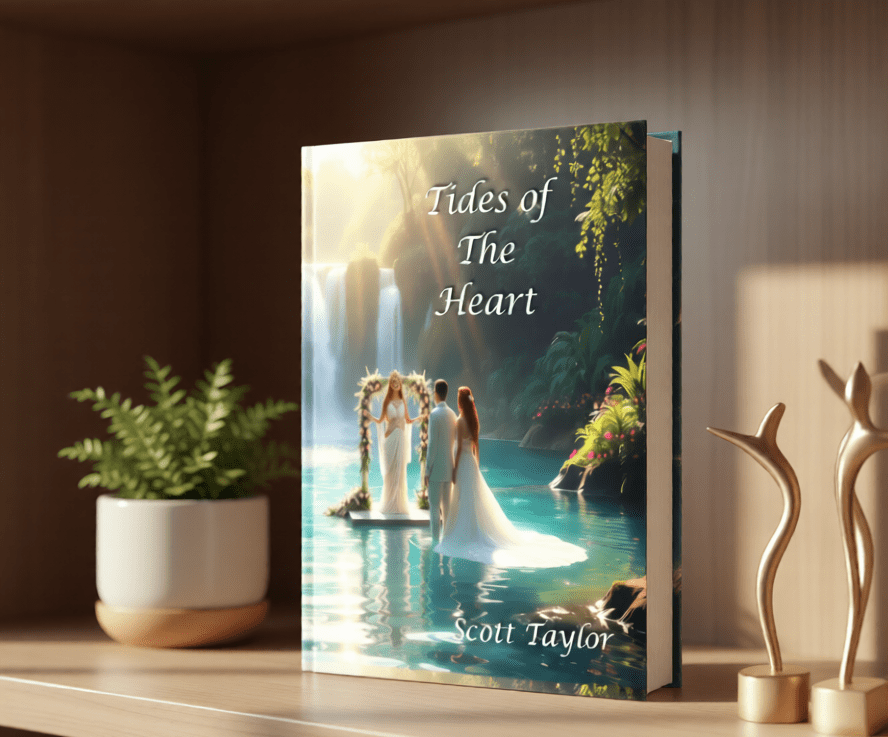
Any author will tell you, writing a book is only half the journey. The other half? Sharing it with the world and inviting readers to embark on the adventure with you. I’ve poured my heart into this story, and now I’m thrilled to introduce you to what I believe is one of my favorite creations yet.
Let me ask you this: What happens when love pulls you off course and into uncharted waters?
That question is at the heart of my new novel, Tides of the Heart, a sweeping tale of love, self-discovery, and the courage to rewrite your story.
About the Story
Meet Lily Pemberton, a librarian who’s always lived a life of quiet predictability. Her days are carefully structured, her evenings buttoned-up, and her future shaped by her parents’ expectations. But everything changes when she crosses paths with Jack Rothwell, a roguish sailor with a thirst for adventure.
Jack pulls Lily into a world she’s only dared to dream of—filled with sun-drenched horizons, daring escapes, and the kind of love that shakes the foundation of everything she thought she wanted. As their worlds collide—his wild and free, hers measured and cautious—Lily finds herself at a crossroads. Will she stay anchored in the safe harbor of her past, or will she take a leap of faith and set sail toward an unknown but exhilarating future?
Set against the stunning backdrop of Hawaiian beaches and the open ocean, Tides of the Heart is about more than just romance. It’s a story for anyone who’s ever questioned their path, dreamed of a second chance, or longed for a life filled with adventure.
Why This Story Matters
This book holds a special place in my heart, and here’s why: even as the author, I couldn’t put it down during the editing process. It’s a story that reminded me of the importance of taking bold chances, of living fully, of choosing a life that’s wild, beautiful, and uniquely your own.
For anyone who loves magical realism, daring romance, and the kind of characters who feel like old friends, this is a story for you.
The e-book version is still publishing, but I promise it’ll be available soon. Keep an eye out!
Your Feedback Means the World
When you’ve had a chance to read Tides of the Heart, I’d love to hear your thoughts. Whether it’s a short review on Amazon, a comment on social media, or an email, your feedback helps me grow as a writer and reach more readers who might connect with Lily and Jack’s journey.
Let’s keep this conversation going—what did the story make you feel? Which moments resonated most with you? Your voice is as much a part of this journey as mine.
Thank You for Being Part of This Adventure
Writing a book is an adventure, but sharing it with readers like you is the most rewarding part of the process. Thank you for coming along on this journey with me. Whether you’re a longtime reader or new to my work, I’m so grateful to have you here.
So, what do you say? Are you ready to set sail with Tides of the Heart?
Grab your copy today, and don’t forget to share your thoughts—I can’t wait to hear from you!
As a writer and someone passionate about helping others find their voice, I often tell those in my circle that writing comes down to three simple words: Write, Edit, Market. These three steps are the foundation for every writer, whether you’re scribbling in a private journal or dreaming of becoming the next bestselling author.
Writing is a deeply personal act. It can be exhilarating, cathartic, and even terrifying. But no matter where you are in your writing journey, there’s one truth that underpins it all: writing has value—even if you never share it.
The Joy (and Fear) of Writing for Fun
Writing for fun is one of the most satisfying things you can do. It’s even better than painting (although I’m sure artists might argue with me on that one). Why? Because writing can exist in secret. Your words can live tucked away in a diary, scribbled in a notebook, hidden on your phone, or stored in the depths of your computer. For many, writing is a private act of self-expression—a way to process emotions, explore ideas, or escape from the chaos of daily life.
Yet, here’s the catch. While many people write for fun, they’re often unwilling to share it. In my role as a director of a writers’ league, I’ve encountered countless writers who confess that they write—but they keep their work hidden. Why is this?
Why Writing Feels So Personal
Writing is deeply personal because it comes from the core of who we are. It’s more than just putting words on a page; it’s a reflection of our thoughts, emotions, and experiences. Sharing that with others can feel like exposing your soul. Here are a few reasons why many writers hesitate to share their work:
1. A Window into the Soul
Writing often reveals our innermost thoughts—even when we don’t intend it to. Whether it’s fiction, poetry, journaling, or essays, writing tends to carry pieces of the writer. Our values, fears, dreams, and even vulnerabilities are woven into our words. For some, sharing that feels like standing naked in front of an audience.
2. Fear of Judgment
When we share our writing, we open ourselves up to critique. For many writers, it’s hard not to take feedback personally because our work feels like an extension of ourselves. The fear of rejection or misunderstanding can make it easier to keep our writing hidden.
3. Imposter Syndrome
A lot of writers struggle with self-doubt. Thoughts like, “What if my work isn’t good enough?” or “Who am I to call myself a writer?” creep in. This self-doubt can make sharing our words feel intimidating.
4. Writing as a Safe Space
For some, writing is a sanctuary—a place to process emotions or work through challenges. Sharing that space with others can feel like an intrusion or a loss of control. Once someone reads your work, it’s open to interpretation, and that can be uncomfortable.
5. The Intimacy of the Creative Process
Writing is often a solitary act. The process of crafting a story, poem, or essay is personal and raw. Sharing unfinished work, or even polished pieces, can feel like exposing something fragile.
Why Sharing Your Writing Matters
While it’s completely valid to keep your writing private, sharing your work can be transformative. It can lead to personal growth, connection, and even fulfillment. Here’s why:
Connection with Others
When you share your writing, you create an opportunity to connect with readers who understand your experiences or emotions. There’s something powerful about knowing your words have resonated with someone else. It reminds you that you’re not alone.
Feedback for Growth
Constructive criticism can be scary, but it’s also invaluable. It helps you refine your skills, discover your unique voice, and grow as a writer. No one becomes great without feedback and practice.
Empowerment
Sharing your writing is an act of courage. It’s a way of stepping into your creative identity, embracing vulnerability, and owning your story. That empowerment can translate into other areas of your life as well.
Inspiring Others
You never know how your words might impact someone else. Your story could inspire, comfort, or motivate a reader in ways you never imagined. Writing has the power to change lives—yours and others.
Building a Safe Space for Writers
In my writers’ league, one of my biggest goals is to create a safe space for sharing. It’s my job to push, nudge, and encourage writers to step out of their comfort zones and let their voices be heard. Many of us are here because we aspire to be the next [insert your favorite author], but even if you’re just writing for yourself, sharing your work can be incredibly rewarding.
One of my writer friends once joked, “Talking with my friends or family about my hobby is like talking to accountants.” That’s why groups like ours exist—to provide a supportive community of like-minded individuals who understand the highs and lows of writing.
In our group, we set standards to ensure everyone feels comfortable sharing. It could range from “family-friendly” to “anything goes,” depending on the group dynamic. For larger groups, subgroups can form for specific genres, so everyone gets feedback tailored to their work. The key is creating an environment where writers feel safe to take risks.
A Personal Example: Writing as a Window into the Soul
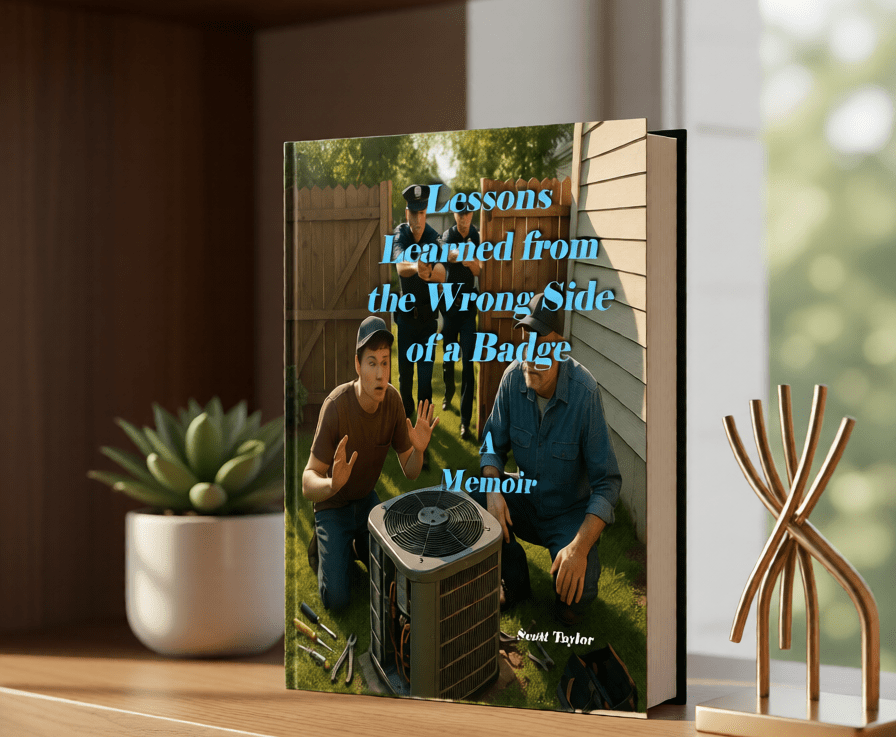
In yesterday’s blog, I talked about a memoir I released, Lessons Learned from the Wrong Side of a Badge. Writing it was an incredibly personal experience—a true window into the soul. Memoir writing, in particular, forces you to confront your past and share it with the world. It’s not easy, but it’s one of the most rewarding things I’ve ever done.
I encourage everyone to write, whether it’s for mental health, literacy, or just for fun. And if you’re ready to take the next step, consider sharing your work. You never know who you might inspire.
What’s Next?
In my next blog, we’ll dive into the second step of the process: editing. Writing is only the beginning—editing is where the real magic happens. We’ll talk about tools, techniques, and how to approach editing without losing your mind.
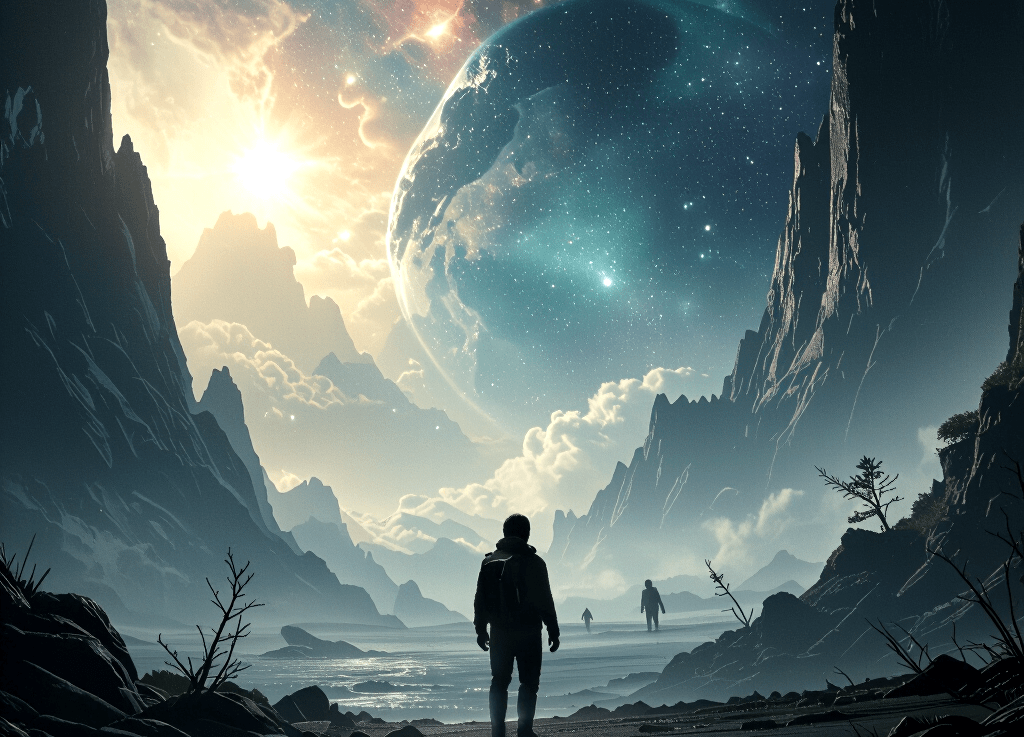
What if the fate of Earth rested in the hands of strangers thrust into unimaginable circumstances? What if the stars held not only answers but also devastating threats? These are just some of the gripping questions explored in Earth’s Last Hope, a science fiction masterpiece by Scott Taylor that blends cosmic mystery, survival, and human resilience into an unforgettable journey.
A Cosmic “What If” That Inspires Wonder
The seeds of Earth’s Last Hope were planted during a time when interstellar phenomena like ‘Oumuamua and 3I/ATLAS captured imaginations worldwide. Inspired by these celestial visitors, Taylor crafted a story that dives into humanity’s place in the universe and the choices we make when faced with the unknown. Adding a thrilling twist, he reimagines the possibilities of planetary alignment—a rare event that occurs every 13.4 trillion years—and weaves it into a narrative brimming with tension and awe.
Taylor, like any great sci-fi writer, thrives on “what ifs.” What if Earth’s magnetic poles shifted, throwing the planet into chaos? What if alien civilizations were quietly watching, waiting for their moment? By blending real science with speculative fiction, Taylor creates a story that feels both grounded in reality and boundless in imagination.
Meet Samantha Richards: A Heroine Worth Rooting For
At the heart of this riveting tale is Dr. Samantha Richards, a fiercely independent woman with a complicated past and a unique connection to alien technology. Samantha’s journey begins in Alaska, where she’s trying to escape her father’s shadow. But everything changes when she accepts a dare to survive 21 days on a cursed volcanic island for a reality TV show. What starts as a test of survival quickly spirals into something much darker and more mysterious. Her resilience, intelligence, and vulnerability make her a protagonist you’ll be cheering for long after you’ve turned the final page.
Joining her is Harry, a former soldier grappling with his own haunted past. Together, they face the unforgiving wilderness, a cursed island shrouded in secrets, and a cosmic mystery that threatens to unravel everything they know about the universe—and themselves.
An Island Like No Other
The volcanic island where Samantha and Harry find themselves stranded is more than just a setting—it’s a character in its own right. Taylor’s vivid prose brings the jungle to life, making you feel the suffocating heat, hear the whispers of the wind in the trees, and sense the looming danger hidden in its depths. But the island isn’t just dangerous—it holds a secret that could change the fate of humankind forever.
Science Meets Suspense
At its core, Earth’s Last Hope is a love letter to science and the mysteries of the cosmos. Taylor masterfully blends real-world physics with speculative fiction, exploring themes like planetary alignment, geomagnetic reversals, and the fragility of humanity in the face of the universe’s vastness. Every twist and turn is grounded in scientific plausibility, making the story all the more captivating for readers who love to think as much as they love to be thrilled.
A Story That Stays With You
While Earth’s Last Hope delivers on action, suspense, and cosmic intrigue, it’s ultimately a story about people—about love, loss, and the choices that define us. Samantha’s complicated relationship with her father, her evolving bond with Harry, and the struggles of the alien tribes searching for a new home all serve as poignant reminders of our shared humanity.
This is more than just a story about survival—it’s a story about discovery, both of the universe and of ourselves.
What Readers Are Saying
✨ “A gripping blend of survival drama and cosmic mystery. I couldn’t put it down!”
✨ “Taylor’s writing is vivid and immersive. I felt like I was right there on the island with Samantha and Harry.”
✨ “Equal parts thrilling and thought-provoking. This book will stick with you long after you turn the final page.”
If you’re a fan of science fiction that combines edge-of-your-seat thrills with thought-provoking ideas, Earth’s Last Hope is the book you’ve been waiting for. Don’t miss out on this unforgettable adventure through survival, discovery, and the uncharted territories of the human heart.
Grab your copy today and see what the stars have in store!
Imagine this: Just a few weeks back, I poured my heart into a story for a contest, a challenge sparked by a single, piercing prompt:
“Center your story around someone who’s tired of always being second best (or second choice).”
Now, pause for a moment.
Have you ever felt the sting of being overlooked? The frustration of putting in all the effort, only to watch someone else bask in the spotlight that should have been yours? If you’ve ever been the one doing the heavy lifting, holding everything together while credit slips through your fingers, then this story is for you.
Don’t Block the Light
They say her name, and the room detonates; applause ricochets off glass, off my ribs. I clap too, because that’s the rule when you’re paid to be second.
Priscilla skims to the front, hair catching the lights like a net of gold, heels fluent as a second language. She sells my dragons like she felt their heat first, like her fingerprints are pressed into every scale. The author leans in, hungry. The publicist beams, blinding. “Brilliant,” the client breathes, and my coffee-stained notebook stays shut on my lap, warming my thigh like a secret I don’t dare open.
I hold the smile that keeps meetings smooth and credit slippery. Her perfume hits before her words do, a soft, expensive fog that coats my tongue. I listen for my name, for a glance, a nod, any thin thread. The silence has perfect posture. I swallow the word that claws its way up, “mine.”
I know this choreography: keep the pitch in the air, juggling what no one can see, while someone else steps into the light and takes the bow. My palms sting from clapping. My chest hums with the dragons I birthed and cannot name. And still, I clap.
They’re lauding her pitch when my mind rips backward. Applause smears into a gym’s roar. I’m sixteen, the air tastes like rubber and dust; the lights are cruel; the floor is a mirror for every mistake. Match point. The ball sails long; I dive—knee slams. Pain blooms white. My palm finds leather, just enough to keep it alive. I’m still on the floor when the pretty blonde rises, arm a guillotine, and hammers it home. The crowd explodes… for her.
After, the coach presses the game ball into her hands. “We did it,” she says. I nod and swallow the word we, thick, chalky, like it might scrape me raw all the way down.
The conference room snaps back into focus. Priscilla wears that practiced, cheerleader-bright glow, teeth, lashes, shine, until someone asks how she came up with the idea. A hairline crack of panic splits her face. Her eyes hunt for me; I fix my stare just past her shoulder, gifting her nothing but air.
“Jamie and I were talking about it. Do you want to tell them what we were thinking?”
We, she says. Bullshit. It was me. But I’m paid to be part of the team, not the star; the chorus, not the solo. I clear my throat. The author leans in—the publisher stills. Perfume drifts. My pulse ticks like a metronome for a song only I know. The dragons kick against my ribs.
I glance up, let the silence tighten like a net, and hold it—right before I speak.
I clear my throat. The room stills.
“Dragons are about being chosen, and choosing. Adoption is the key.”
I let that settle, let their chests open for it.
“The idea is to hatch your dragon. A fast, intimate quiz: what scares you, what do you guard, when do you burn. It matches each reader to a dragon from the book. They get a named digital egg and a keeper’s guide.”
I can feel them leaning in.
“For seven days, the egg warms. Short messages in the hero’s voice, in the dragon’s voice—belonging, anger, shame, bravery, love. The art darkens as the shell thins. Day five: a ten-second whisper. And on launch day, the egg cracks in AR. Lift your phone and your dragon unfurls across your room, leaves a scorch trail to buy, plus a dragon-type-only chapter.”
A pause. A pulse. I keep going.
“IRL: indie shops give foil ‘scale’ stickers. Show your hatch, get a scale. Collect three; a heat-ink code appears and unlocks a city map of secret roosts, murals, chalk sigils, and window clings, leading to prizes and a midnight Hatch Night projection where a dragon climbs the bookstore. Every hatch funds a school library.”
I let a smile find the edge of my mouth.
“Creators hatch early on BookTok and name theirs on camera. Tagline: Claim your fire.”
If they need the jargon, I hand it to them, palm up.
“If you prefer, call it omnichannel. I call it the click in your chest when the egg breaks and the feeling of being chosen washes over you. I understand that emotion.”
I meet the author’s eyes. Then the publisher’s.
“We should present it to them. We create the app. Users subscribe. If they gather enough virtual eggs, they’re rewarded with a discount code for your book. Meanwhile, participating bookstores are suddenly bustling. More feet, more hands, more heat. Tell me, what store refuses to stock the book everyone is crossing town to hatch?”
Priscilla’s smile held; her eyes cut like I’d let something loose. Heat from the lights on my face; a colder heat from her stare.
“I sketched the initial concept,” I say—five thin words. I open the old sketchbook—coffee rings, pencil ghosts—and Blair, the author, glances at me and smiles.
The publisher looks to Blair. A smile spreads, catches, multiplies. Nods land. The room clicks into yes. The deal is done. Blair and I make eye contact, a silent chord that says more than it should.
Priscilla’s glare blades across the table. Someone corrals us for a photo, shoulders touching, flash primed. The feeling of being caught doing something wrong rises from the pit of me. Did I say too much? Should I have handed it back, gift-wrapped, with her name on the tag?
The practiced smile slides on; my cheeks burn under it. The taste of pennies blooms—regret already shaping the word sorry.
I feel the apology rise, muscle memory. Give it back. Say we. Say Priscilla. Make yourself smaller; fit better. My tongue touches the word, and I swallow it hard.
I see the notebook: coffee rings, midnight sketches, the spine of the idea forming under my hands. Mine.
Her eyes say too much. My palms press together to stop the shake. Maybe this is it—finally enough to hear my name, even if only inside my own head. I hold it there, a small, stubborn ember no flashbulb can burn out.
I trailed the client into the hallway, applause still echoing like it belonged to someone else’s life. Priscilla slid past close enough for her perfume to touch my tongue, then her shoulder clipped mine—sharp, deliberate. My cup jerked. Coffee jumped. Heat slapped my white blouse and bled fast, a brown bloom across my chest.
“Sorry” rose out of habit, like I should apologize for straying into her orbit. I bit it back. She didn’t look over her shoulder. The click of her heels said everything: I’d talked too much. I’d forgotten to stay small. I wasn’t the pretty one.
Dan saw. He stopped mid-step, eyes dropping to the stain, then back to my face. The world tilted. Someone had witnessed the part where she shines, and I clean up. Heat crawled up my neck: coffee, humiliation, and something fierce that’s tired of swallowing itself.
I pressed my thumb into the cup, breathing through the bitterness. Dan’s gaze held—steady, alert. Not pity. Something worked behind his eyes, a shape he hadn’t spoken yet. He knew it wasn’t an accident. His mouth was tight, like he was holding a word between his teeth, something that could turn this into more than a stain, if I let it.
“Why don’t you take the rest of the week off?”
I didn’t know what to think, so I nodded, automatic, obedient. Maybe he knew a brown stain doesn’t just disappear. Perhaps he was offering me comp time before the cut, a soft edge to a harsh reality. Comp time before firing me. The thought flicked its switchblade open.
Her gaze lingered long enough to watch the coffee seep, the dark spreading fast across my white blouse. She grinned, a small, satisfied crescent that said I had it coming. Maybe I did. That’s a lie, I know by heart.
Dan didn’t want the odd one out. That’s what I heard in my head. The stain made me louder than I’m allowed to be. Priscilla made sure no clients were close enough to overhear; she scanned the corridor like a director protecting a brand. She was a vibrant splash of color stepping out of an advertisement, all gloss and glow, and I was the matte background that sucked in light.
Under the fluorescents, I could feel every imperfect edge of myself: the flyaway hair I’d smoothed twice, the scuffed heel on my sensible shoes, the blouse I bought on sale now wearing its stain like a name tag. I wasn’t the poster girl. I was a smudge on the poster.
Dan’s eyes lingered for a second too long, and I caught the unspoken memo: clean lines, clean faces, clean stories. I’m good at disappearing on cue. I folded my shoulders in, pressed the cup to my chest like a shield, willing the brown to stop blooming, telling myself to move, fix, be easy, anything but visible.
Before I could turn away, I caught Blair’s eyes. Brief. Bright. Not pity. A different meaning, a secret kept behind his teeth. Something like a door, neither open nor closed. A promise, or a plan. A look that said: this moment can be more than a stain, if you let it.
Priscilla’s laugh follows me down the hall, bright and hollow, like ice in a glass. I don’t have to turn to see her leaning in, voice dipped in honey, the others chiming all the right words—brilliant, inspired, visionary—like a chorus that only knows one name.
I hit the side door with my shoulder. The metal bar is cold; the air beyond it is hotter, heavy with exhaust and summer. The door thuds shut behind me, cutting off the performance mid-applause. My blouse has dried into a stiff shell where the coffee hit, a brown, uneven blotch blooming over my chest.
Out in the parking lot, my brain does what it always does to keep me from crying—it writes.
A kids’ book, simple enough for small hands to hold without it hurting too much. A girl with black pigtails, me, really in a too-starched uniform, knees scuffed, shoes half-size too big. She carries hot chocolate instead of coffee, careful as a tightrope walker. And a glossy-haired princess swings a backpack just wide enough to tip the cup.
The cocoa blooms brown on white. That high, tinkly laugh names you second before anyone votes. Teachers don’t look. The girls shrug. You stare at the stain and decide you’re the mess.
In your room, there’s a corkboard of second-place ribbons like a constellation you never asked for, chocolate rings ghosting the corners of worksheets, and you practicing small—shoulders tucked, breath quiet. The book gives you what I didn’t have: a voice that doesn’t apologize. You’re not the spill, kid. You’re the one who keeps getting up.
The mean girls? Peacocks in cardboard crowns, noise and shimmer that only gleam in borrowed shadow. You learn to steady your cup when they bump you, to wear the stain like a map that says I was here. Don’t shrink to be their wind. You’re the eagle, spread your wings. Hot chocolate in both hands. A real smile, not because the room demanded it, but because you know you don’t have to disappear to matter.
Out in the sultry parking lot, the only cheering is the rattle of the HVAC and a distant car alarm. I stood on oil-slicked concrete and let myself breathe, the taste of her perfume finally lifting off my tongue.
Inside, she’s winning them. I’m the echo that left the room, so no one had to hear it. I tell myself I’m getting fresh air. Mostly, I’m getting out of their way. And I can already see Monday: my things in little brown boxes, stacked neatly, the whole of me slid into the back of my car like I was never here at all.
I don’t sleep. Instead, I rehearse losing my job. Every time I close my eyes, I see Dan’s mouth flatten, hear myself saying too much, watch Priscilla’s smile slice four a.m. to ribbons. By then, I’m at the kitchen table in yesterday’s blouse, scrubbing at the ghost of coffee like I could scrub the night out of my head.
The rest of the week plays the same loop. I circle job listings in the paper with a dull pen while I polish my resume, swapping verbs, sanding edges. I tell myself I’m better than this, better than office politics, and repeat it until the words go tinny in my mouth.
On Monday, I arrive early. The office is a hush, the empty halls a place I can hide in. The garage hums; rain ghosts the air, threading itself through the thick smell of oil. My hatchback exhales into its familiar, sunbaked spot. I walk past the RESERVED placards like a gallery of names I don’t belong to, eyes down, counting steps, averting my gaze until the end of the row.
Her space was empty.
No red sports car gleaming under the soft lights like a trophy. No wink of vanity plates. Just a clean rectangle of concrete and a painted sign above it—Reserved—MVP—staring back like a punchline missing its laugh.
I stopped breathing. Such a small thing, a gap where she should be. But it felt like standing in front of a mirror and not seeing the person who always takes center stage. Late? Sick? Called in early to be crowned again? Fired, a wild part of me whispered, and hope flared so fast it scared me. I don’t think that way, not really.
I pressed my palm to the cool pillar until the heat in my face drained off. Don’t be stupid, I told myself. Empty doesn’t mean anything. Titles shift. People are late. I’m the one who gets fired in this story, remember?
Still, as I walked toward the elevator, the garage sounded different. The quiet didn’t echo with her. For the first time since last week, my chest loosened enough to let a full breath in. I slipped into the elevator before the feeling could notice and run.
Turning the corner, the long hall humming with tired fluorescents, I was already rehearsing how to make myself small. Then I saw it, right there on my desk—a clear glass vase. A single red rose lit up like a stoplight in the gray of morning, its stem needled with thorns, its bloom loud as a heart.
WTF. For a beat, I think I’ve wandered to the wrong workstation. My chair. My mug. My stack of marked-up briefs—and then the rose, impossibly bright, siren-red in a clear glass vase. A folded card leans against it. My name is on the front. My name.
I glance over my shoulder, expecting a camera crew or Priscilla’s laugh snapping shut around me. Nothing; just the copier grinding itself awake somewhere down the corridor. My fingers tremble as I slide a nail beneath the fold and open the note.
“Jamie, it was clear that you were the brainchild behind the campaign for my book after you left. I look forward to working with you, even if your teammates don’t appreciate you, I do.” — Blair Thomas
I read it twice. A third time. As if the ink might evaporate if I blink too hard. The paper is heavy, expensive, like proof you can hold. Heat climbs my throat, the kind that warns tears are loading whether I’ve granted permission or not. I press my thumb hard into the card’s edge until the sting steadies me.
Someone finally saw me. Not a coworker doing damage control, the author, the prize they were courting, while I ghosted through the side exit, coffee bleeding through my white blouse, sliding warm over my ribs toward my belly.
Inside me, the girl with hot chocolate and scuffed knees stands up a little. She squares her shoulders. She lets the smile happen, not because the room asked for it, but because it turns out my name sounds different when I say it to myself and believe it.
My first instinct was to hide it. I slid the card half under my keyboard, pulled it back out, then tucked it into my planner like a secret I wasn’t ready to let the light touch for long. I could already hear the spin if this got around. I could already see Priscilla’s mouth curdle at the edges. But for once, the fear didn’t sweep the table clean. It just sat beside the rose and made room.
I leaned in and breathed the rose. It smelled like something I couldn’t name—like a door opening. The empty spot in the garage flashed through my mind. The way Dan’s eyes had held mine. The hours I’d spent rehearsing the script where I was told I was too much.
Maybe I was. Maybe too much is exactly what it takes to finally be seen.
I straightened the vase, smoothed the corner of the note, and sat down. The chair felt different under me, as if it had been mine all along and I was only now letting myself believe it.
By noon, certainty unraveled. The rose looked like a mistake again; the note read like a fever dream. Then Dan pinged: “Got a minute?” My stomach did the trapdoor thing. I followed him past the bullpen, past the glass where I usually catch my small reflection, down the hush of the executive row. He stopped at the empty office next to his—the one everyone called the waiting room for gods.
The lock chirped. He opened the door and held out a keycard. “You’ll need this.”
The thin plastic was heavier than it should have been. It lay on my palm like a new word I wasn’t sure I was allowed to say yet. My pulse climbed into my throat. The rose’s red burned in my periphery, a stoplight turned green. I didn’t ask what for. I just felt the floor of my old story tilt, and the next one open.
I waited for the after, for the neat sentence that would put me back where I belong. Instead, he said, “Blair’s publisher called at eight. They want to scale your concept across their list. We’re building a dedicated group to do author campaigns. I want you to lead it.”
For a second, all I could hear was gym noise from another life. Match point. My knee hitting the floor. The cheer going to someone else. My mouth went dry. “Me?” It came out small and hoarse, a kid asking if the grown-ups mean it.
“You,” he said, like it was obvious. Like it had always been obvious.
He walked me through the space—where my team would sit, the whiteboard we’d crowd with ideas, the budget I’d sign off on. I nodded like I knew how to carry a room with my name on the door. Inside, the girl with the pigtails stared at the keycard in my hand and didn’t dare blink.
An hour later, Facilities emailed: Parking Reassignment. I took the elevator down just to prove it wasn’t a joke. The MVP spot wasn’t an empty rectangle anymore. A temporary placard was taped over the old sign. My name. Spelled right. I touched the paper like it might smudge, like names only belong to other people.
Back upstairs, I sat in my new office with the door half-open, the rose on the windowsill, the note tucked where I could see it if I needed proof. The publisher liked my idea. We were expanding. I’d be the one steering now—not just keeping the ball in play while someone else took the bow.
I didn’t feel triumphant. I felt careful, like holding something warm and alive that might choose me back if I didn’t flinch. I let my name be loud in my head for once. I let the chair take my weight. And for the first time, being second wasn’t the ending I was braced for. It was just a story. I didn’t have to keep telling.
I hope you enjoyed this story. Yes, sharing my stories is part of a marketing campaign, which, if you’re an author, you might try.
Keep an eye on this space for news about the release date of The Big Beautiful Book of Stupid Shit. Sharing with friends is encouraged, as is leaving comments.
As the Director of the Carrollton League of Writers, I talk a lot about marketing. Like, a lot. Why? Because, as a writer, you’re basically doing one of three things at any given moment: writing, editing, or trying to convince people to buy the damn thing you wrote. And let me tell you right now: that third one is where dreams go to die.
That’s why I tell people to keep their day jobs. Seriously. Writing is a business, sure, but half the time, it’s just a fancy way to justify a tax write-off. “No, honey, it’s not a failed hobby—it’s a business expense.” And let’s just say most writers aren’t exactly raking in Stephen King-level royalty checks.
But hey, I’m not here to crush your dreams of being the next EL James (although I could). Instead, let me help you out with some marketing tips. Because let’s face it: if you don’t sell your book, nobody’s gonna read it. Well, except for your mom—and even she might “accidentally” forget to finish it.
1. Develop a Book Marketing Strategy
This is step one, folks. Before you do anything else, you need a plan. I know, planning isn’t sexy or fun, but neither is explaining to your friends why your book has been on Amazon for two years and still has zero reviews.
Here’s the deal: set some goals, figure out who the hell you’re writing for (hint: it’s not “everyone”), and decide how you’re going to reach them. A clear marketing strategy will help you avoid wasting time on pointless crap that doesn’t work.
2. Build Your Author Platform
Look, if nobody knows who you are, nobody’s gonna care about your book. That’s where your author platform comes in. It’s basically your online stage—so make sure you don’t look like a total amateur while you’re standing on it.
Create an Author Website: Think of this as your digital home base. It’s where people will go to learn about you, your book, and why they should give you their money. Plus, it’s a great place to collect email addresses for future marketing. (Yes, we’re going to talk about email lists later, so don’t roll your eyes yet.)
Engage on Social Media: This is where you can pretend you’re a celebrity, even if you’re just a writer with 12 followers and a lot of opinions about coffee. Platforms like Twitter, Instagram, Facebook, and TikTok are your friends—if you use them right. Post updates, share behind-the-scenes tidbits, and actually interact with people. Nobody likes a self-promotional robot.
3. Prepare for Launch
Your book launch is a big freaking deal. It’s like a party, except instead of booze and karaoke, you’re hoping people will buy your book and leave nice reviews. So, yeah, slightly less fun, but still important.
Write a Killer Author Bio: This is your chance to convince readers that you’re an actual human being and not some faceless entity who churned out a book because ChatGPT told you to. Be relatable. Be funny. (Or don’t be funny, if that’s not your thing—but at least try to be interesting.)
Build a Launch Team: Gather a group of people who are willing to hype you up. These could be friends, family, or random strangers you bribed with the promise of free copies. They’ll leave early reviews, share your book on social media, and generally make you look like you’ve got a whole squad cheering for you.
Find Reviewers: Bloggers, influencers, that one book nerd you know—they’re all fair game. Reviews matter. A lot. Especially on platforms like Amazon. Without them, your book might as well not exist.
4. Optimize Your Book’s Online Presence
Your book’s online presence is like its dating profile. If it’s boring, confusing, or full of typos, nobody’s swiping right.
Metadata and Keywords: This is the boring part, but it’s super important. Make sure your book’s title, description, and keywords are optimized for search engines. Basically, make it easy for people to find your book when they’re browsing online.
Decide Where to Sell: Amazon is the obvious choice, but you’ve got options. You could go exclusive with Kindle Direct Publishing (and maybe Kindle Unlimited) or distribute your book more widely. Just know that Amazon is kind of like the popular kid at school—if you’re not hanging out there, you’re probably missing out on a lot of attention.
5. Promote Your Book
Here’s where the real hustle comes in. You’ve got to put yourself out there and make people want to read your book.
Leverage Social Proof: Translation: beg readers to leave reviews. The more people are talking about your book online, the more likely it is that others will check it out.
Reach Out for Publicity: Bloggers, podcasters, and media outlets can help spread the word. Guest blogging and podcast interviews are great ways to get in front of new audiences. Plus, you get to feel important for a hot second.
Run Promotions: Discounts, giveaways, limited-time offers—these are all great ways to generate buzz. Everyone loves free stuff, so use that to your advantage.
6. Keep the Momentum Going
Here’s the thing about book marketing: it doesn’t stop after your launch. If you want your book to keep selling, you’ve got to keep working at it. (Yeah, I know. It sucks. Welcome to the grind.)
Build an Email List: Remember when I said we’d talk about email lists? Well, here we are. Use your website and social media to collect email addresses, then send out regular newsletters to keep your audience engaged. Think of it as your personal fan club.
Keep Marketing: Try new things. Experiment. Fail. Learn. And then try again. Marketing is an ongoing process, and the more you do it, the better you’ll get.
Start thinking about marketing before you finish your book. I know, it’s tempting to just focus on the writing and hope people will magically find your work later, but that’s not how it works. The earlier you start planning and building your platform, the better your chances of success.
And hey, if all else fails, at least you can say you gave it a shot. Worst case scenario, you’ve got a great story to tell at parties: “Remember that time I tried to be a famous author? Yeah, that was wild.”
If you want me to dig deeper into any of these steps—or if you just need someone to commiserate with—I’m here for you. Let’s make your book the next big thing (or at least a thing).
Point Blank: Lessons I Learned on the Wrong Side of a Badge
A Book You Didn’t Know You Needed (But Oh, You Do)
Let me hit you with a question: Have you ever looked back on your life, shaking your head like, What the actual hell was I thinking? Ever had cops point guns at you like you just robbed a damn bank? Or been pulled over for speeding, on a bicycle? If you answered yes to any of that, welcome to the club. And if you didn’t, buckle up, because this book will give you a front-row seat to the kind of weirdness you didn’t know you needed in your life.
Now, take that “what the hell” feeling, crank it up to eleven, sprinkle in a heaping dose of stupidity, and slather it all with dark humor. That’s my life in a nutshell. Well, that, and now it’s also my book.
Point Blank isn’t just a catchy title, it’s basically the theme of my existence. It’s a front-row seat to the absurdity of growing up chasing lizards in Carrollton, Texas, and somehow ending up walking a tightrope between comedy and total catastrophe. And let’s be real—who hasn’t been there?
This book is my love letter to the moments that make life… well, incredibly dumb. It’s a collection of stories, life lessons, and the facepalm-worthy memories that prove one thing: no matter how much you think you’ve got life figured out, you don’t. (Spoiler alert: no one does.) But honestly, isn’t that where the fun is? In the ridiculous, the unexpected, and the holy-crap-why-is-this-happening moments?
So, What the Hell Is Point Blank About?
At its core, Point Blank is a comedic deep dive into life’s dumbest moments. But it’s not just that. It’s part memoir, part roast, part free therapy session (for me, not you). It’s the kind of book you pick up when life’s been kicking you in the teeth, and you need a reminder that you are not the only one out here navigating the chaos.
Here’s a little teaser of what you’re in for:
Lessons I Learned While Staring Down the Barrel of a Gun
Pro tip: Don’t try to argue your case with the cops on the side of the road. Just don’t.
How to Survive a Head-On Collision (And the Bureaucratic Circus That Follows)
Because apparently, getting hit by a drunk driver isn’t enough. Nope, fate has to throw in paperwork, insurance nightmares, and a side of complete nonsense.
The Great Paper Route Fiasco
Picture this: ink-stained hands, 5 a.m. bike rides, and a not-so-charming run-in with the local cops. (Spoiler: they weren’t impressed.)
“Arrest-Me Red” and Other Car Choices I’d Like to Forget
Fast cars, flashing lights, and one particularly chaotic road trip from Miami to Key West that felt more like a cop magnet convention.
Reinvention 101
From engineer to IT guy to sci-fi writer, because apparently, I like to keep my life as unpredictable as possible.
Why You’re Gonna Love This Book
Okay, I get it. You’re probably thinking: Do I really need another book about someone else’s ridiculous life? But hear me out, this one’s different. It’s not just about my life. It’s about our lives.
It’s about the universal stupidity we all encounter—the shared facepalm moments that remind us we’re all just winging it. You’ll laugh (hard). You’ll cringe (probably harder). You might even tear up a little, but only in that holy crap, this is too real kind of way.
Think of Point Blank as sitting down with that one friend who’s been through some serious shit, lived to tell the tale, and somehow managed to find the punchline in every disaster.
Who’s This Book For?
If you’ve ever made a decision so dumb it deserves its own monument, this book’s for you.
If you’ve ever looked at someone else’s life and thought, Well, at least I’m not that guy, this book’s definitely for you.
If you’re a fan of George Carlin’s brutal honesty, Douglas Adams’ absurd humor, or David Sedaris’ ability to find hilarity in misery, congrats—you’ve found your new favorite read.
If you just need a good laugh, a break, or a reminder that life’s most chaotic moments are often the most memorable, this book is 1000% for you.
Where to Read It
Picture this: You’re sitting on the toilet (don’t even pretend you don’t scroll or read in there), flipping pages or swiping through your phone, and suddenly you’re laughing so hard you almost fall off the damn seat. That’s what this book is for.
It’s for the bathroom, the waiting room, the coffee break, the long-ass flight, or those sleepless nights when you just want to escape the madness for a bit.
A Final Word
Point Blank isn’t just a book. It’s an experience. It’s a rollercoaster through the highs and lows, the WTF moments, and the laughs that make life worth living—and retelling.
So here’s the deal: Buy the book. Read the book. Laugh at the book. Share the book. And who knows? Maybe you’ll start seeing your own life in a slightly less serious, slightly more ridiculous light.
Because let’s face it, isn’t that what we’re all trying to do? Find the humor in the madness, make sense of the chaos, and keep moving forward, one hilariously stupid moment at a time.
Go grab your copy of Point Blank. Trust me, your life will be better (or at least funnier) for it.
Then do me a solid, give it a review from where you bought it, or even read it for free on KDP.
A lot of you are staring at flat sales and asking me the same thing I see in my inbox every week: are people still reading?
Short answer: yes. Longer answer: hell yes, but reading has changed outfits. People still love romance, fantasy, and thrillers, yet a lot of them are grabbing audiobooks, e-books, and snackable serials on Wattpad and Substack. Attention is a fragile little beast, so readers also go for shorter, punchier stuff, or they want summaries and adaptations like podcasts and quick recaps that fit between life, work, and whatever Netflix is feeding them tonight.
Where Are People Reading?
Online platforms: Wattpad, Kindle Direct Publishing, Substack, and even Reddit are buzzing with new voices and weirdly passionate niche communities.
Social media: Instagram’s Bookstagram, TikTok’s BookTok, and Twitter’s BookTwitter can catapult a book from “who the hell is this?” to “I saw that everywhere.”
Audiobooks and podcasts: Multitaskers unite. People listen while commuting, cleaning, working out, or pretending to stretch.
Why, you might ask. Have you listened to the news? Then you know the answer.
How Can an Unknown Writer Get Known Today?
1) Social media is a tool, not a religion
Use it if it helps. It’s great for visibility, networking, and actually talking to readers, but it shouldn’t swallow your writing time.
Yes, some authors thrive with little or no social presence. They are the exception. For most of us mortals, social helps put the work in front of eyeballs.
2) Other ways to get noticed
Self-publishing: KDP and Wattpad can get your work to readers without asking anyone’s permission.
Newsletter and email list:Gold. You own that relationship, and it beats shouting into the algorithm void.
Collaborations: Guest posts, podcast interviews, swaps with other writers. Borrow audiences like a pro.
Local events: Bookstores, libraries, and fairs still move the needle. Also, free cookies sometimes.
3) If you do social, do it smart
Go where your readers hang out. TikTok is huge for YA and romance. Twitter is strong for sci-fi and literary fiction.
Post more than “buy my book.” Share behind-the-scenes bits, the messy writing process, personal stories, and jump into reader conversations. Be a human, not a billboard.
The Business of Writing: From A to Z
Writing a great story matters. Editing matters. Neither will save you if you treat your book like a message in a bottle. Authors are not just artists. You are a business. That means strategy, systems, and marketing that moves people to talk about your work and you.This is not selling out. This is how you get read.
What “Business” Means for Authors
Product: Your book, your series, your backlist, your bonus content.
Brand: The promise you make to readers and the vibe you deliver every time.
Distribution: How your work reaches people, both digital and physical.
Marketing: How you attract attention and convert it into actual readers.
Operations: Calendars, budgets, deadlines, tools, contracts, taxes. The glamorous stuff.
Analytics: Knowing what works so you can do more of it and stop guessing.
The A to Z of Author Biz
A — Audience: Define a reader persona, not a vague blob. Who are they, what do they read, where do they hang out, why do they care.
B — Brand: One line that nails your promise. Keep your covers, copy, and tone consistent.
C — Copywriting: Your blurb and ad hooks must carry their own weight. Clarity beats clever.
D — Distribution: Go wide, or go exclusive. Pick based on genre norms and your goals.
E — Email: Build a list. Own your audience. Send value, not spam.
Invite participation: Polls, challenges, reading sprints, live Q&A.
Close with an ask: If you loved it, tell a friend, leave a review, join the list. Simple and direct.
Now, for all this free advice…My latest creation The Big Beautiful Book of Stupid Shit is almost ready for publication. If you like what you read, give me a follow, a thumbs up, hell repost it for me because what I have written will not only assist other writers but this book which is as large as “The Big Beautiful Bill.” is almost ready.
Years ago I worked at an advertising agency. We had to be creative. Today while watching the news I was shocked by the big pharma ads. The tag line: is death right for you, came to mind.
Thinking back to those days, I formulated an ad campaign that would never get played, but it should. Do we really need pills that keep us hooked on more pills to fix the side effects of those pills?
Tell me what you think.
Alright, team. Gather ‘round. I’ve got a pitch for you that’s equal parts brilliance, absurdity, and just the right amount of “what the actual f***.” You’re going to love it. Or hate it. Either way, we’re making history—and probably pissing off Big Pharma in the process.
Picture this: A pharmaceutical commercial. But not just any pharmaceutical commercial. Oh no, this isn’t your run-of-the-mill “cure one thing, destroy seven others” nonsense. This is bold, it’s darkly funny, and it’s honest. Strap in, because I’m about to sell you the next big thing in healthcare advertising.
Opening Scene: A Hallmark Dream
We start with the usual formula—because let’s face it, the best parody thrives on clichés.
Imagine a serene meadow: golden sunlight pouring through the trees, a golden retriever frolicking in slow motion, and a woman spinning in circles like she just discovered her life has been sponsored by Xanax. The piano music? Uplifting. The visuals? Pinterest-worthy. The voiceover? Smooth as silk.
“Are you tired of your minor discomfort? Is that pesky rash ruining your Tuesday? Does your slight headache feel like the universe is conspiring against you? Introducing PanaceaX™—because being mildly inconvenienced is clearly the worst thing that can happen to you.”
Cue the woman laughing with her family. She’s baking cookies with zero regard for her gluten intolerance. The dog’s wagging its tail like it’s auditioning for a Disney movie. You feel warm, cozy, safe. But then… oh, then, the voiceover takes a turn.
The Twist: Side Effects from Hell
“Side effects may include nausea, dizziness, dry mouth, explosive diarrhea, uncontrollable vomiting, hallucinations, existential dread, spontaneous combustion, and, oh yeah—death.”
Pause for dramatic effect.
“Ask your doctor if PanaceaX™ is right for you.”
Now, let’s linger on this for a second. Death. We’re not even trying to sugarcoat it. We’re leaning all the way in. Because, let’s be real—half the drugs on the market already come with side effects that sound like rejected horror movie plots. Why not own it?
The tagline? Simple, catchy, and just the right amount of nihilistic charm:
“PanaceaX™: Because if you’re gonna die anyway, you might as well do it medicated.”
Now, I know what you’re thinking: “But how do we make people laugh about something as horrifying as spontaneous internal bleeding or uncontrollable rage?” Easy. We do what pharmaceutical ads already do—bury it under a montage of happy people living their best lives. Except we call attention to how absolutely insane it is.
The voiceover speeds up, auctioneer-style. You know the drill: “Nausea. Vomiting. Headaches. Diarrhea so explosive it’ll put food poisoning to shame. Dry mouth so bad you’ll think you’ve been licking sandpaper. And for those of you lucky enough to hit the jackpot: sudden personality changes, hallucinations, and the occasional bout of spontaneous combustion. PanaceaX™: Because nothing says ‘healthcare’ like becoming a walking dumpster fire.”
Meanwhile, the visuals continue to show people doing things that have nothing to do with the drug. A dad teaching his kid to ride a bike. A couple on a beach. A grandma knitting a sweater for her cat. No one’s vomiting. No one’s combusting. It’s all lies. But that’s the beauty of it.
Let’s Talk About the Rare Side Effects
Now, this is where we really shine. These aren’t your run-of-the-mill “oops, I sneezed too hard” side effects. Oh no. These are the real gems. The ones that make you question your life choices.
Uncontrollable Rage: Perfect for holiday dinners with the in-laws.
Sudden Hair Loss: Because bald is the new black.
Loss of Taste: Both literal and metaphorical. Say goodbye to your sense of flavor and your fashion sense.
Spontaneous Internal Bleeding: A fun surprise for everyone involved.
Death: The ultimate cure for all ailments. Guaranteed 100% effective every time.
And we have to include this one: “May cause an irrational fear of ducks.” Why? Because it’s weird, it’s random, and it makes people pay attention.
The Irony of It All
Here’s the kicker, folks: The diseases these drugs are treating? They’re usually not that big a deal. Heartburn? Allergies? A little anxiety? You don’t need a pill for that—you need a nap and a decent therapist. But no, we’ve been conditioned to think that every minor inconvenience requires a chemical solution. And let’s be honest, we eat it up. Why? Because the ads show us what we want to see: happiness, health, freedom.
That’s the genius of it. They dangle the perfect life in front of us, and we bite. Even if the fine print basically says, “May cause your organs to implode.”
Final Scene: The Closing Pitch
So here’s how we wrap it up. The screen fades to black. The piano music swells. The logo for PanaceaX™ appears, glowing softly. And the voiceover delivers the final line with just the right amount of smug optimism:
“PanaceaX™: Ask your doctor if death is right for you. (Spoiler alert: It probably is.)”
Cue the woman spinning in the meadow one last time, but this time, she’s holding a giant bottle of PanaceaX™ like it’s the Holy Grail.
Why This Works
This pitch is self-aware, sarcastic, and just unhinged enough to go viral. It pokes fun at the absurdity of pharmaceutical advertising while staying true to the format. It’s dark, it’s funny, and most importantly—it’s memorable. People will be quoting, “Ask your doctor if death is right for you” for years.
So, what do you think? Are we ready to take the pharmaceutical world by storm, or should we just prescribe ourselves a big ol’ dose of “f*** it” and call it a day?
A Taste of Stupid Shit (Coming Soon to a Brain Near You)
That, my friends, is just a tiny sample of the glorious nonsense you’ll find in The Big Beautiful Book of Stupid Shit, which is currently in the editing process. Yes, I’m editing it—because apparently, society frowns upon just flinging raw stupidity into the world without a little polish. Go figure.
I’m hoping to release it in the next few weeks because, let’s be real, the world desperately needs this. We’re drowning in stupidity every day—on TV, on social media, at family reunions—and someone (me) needs to catalog it, mock it, and gift-wrap it for your reading pleasure.
So, do me a favor: subscribe, follow, comment, and tell me what you think. Or don’t. I’m not your mom. But if you do, you’ll get to say you were here before this book becomes the literary equivalent of a viral cat meme. And let’s face it—who doesn’t want that level of cultural credibility?
Go forth, let your voice be heard and spread the word far and wide. Or don’t. No matter what, this book will come to fruition, and it promises to be an exceptionally enjoyable experience. Stay tuned, and prepare for comedy gold written in bite-sized chapters that will have you laughing as if you were at a live show.






You must be logged in to post a comment.