Category: hobby

What would you surrender for a story that won’t stop knocking?

What would you surrender for a story that won’t stop knocking?

I surrendered the glow. The soft, blue hum that filled the room after dinner. I set the remote down the way some people set aside sugar for Lent—deliberately, almost ceremonially—like I was laying a coin on a ferryman’s palm. The one-eyed monster blinked into its own reflection, and the living room exhaled. No laugh track. No canned cliffhanger. Only the fridge whispering, the clock ticking, the house going quiet enough for another world to speak.

That was the night my AR clicked on.

Not augmented reality. Author Reality. The dimension that lives behind every closed door and blinking cursor. It doesn’t need a headset, and it doesn’t apologize for being demanding. It’s the world that asks you to show up with the same seriousness you bring to your job, your family, your grief, your joy. It rewards the faithful, and it keeps its secrets from the curious who wander in for a minute and wander back out.

Is it worth it? Depends on what you want from a story: to be carried, or to build the boat.

Here’s the rhythm I’ve learned, the three-beat cadence of making a book: if I’m not writing, I’m editing. If I’m not editing, I’m sharing—sending flares from my lighthouse so readers can find the shore I’ve drawn by hand. The work doesn’t pause when inspiration does. The tide moves with or without me, and the only way to get anywhere is to put an oar in the water every day, even when the fog is thick.

In AR, everything means more than it looks. A mug of coffee stops being a mug. Steam rolls out like sea fog over the harbor city I sketched in a January notebook—the one with crooked alleys and market bells and a lighthouse whose stair treads know my footsteps by now. The keyboard isn’t plastic and wires; it’s a compass that points toward scenes I haven’t met and scenes I’m avoiding. The cursor blinks like a beacon: here, here, here. Come back to work.

Characters are the first to step through. They don’t knock; they appear mid-argument, mid-laugh, mid-betrayal, dragging weather from their world into mine. A woman with ink-stained fingers and a secret she thinks is hers to keep sits across a table I’ve never owned, tapping out a rhythm that nags me until I write it. A courier with a map stitched into his jacket refuses to sleep until I let him miss his train. They bring me their trouble and their hope and ask me to be brave enough to tell the truth about both.

Writing is the first excavation. It’s the rush of discovering a bone in the sand and imagining the whole animal in a heartbeat. Then comes editing—the archaeology that happens with a brush instead of a shovel. Line by line, brush, brush, brush. I dig out the clean edges of the story from the clay of my habits. I cut the clever lines that don’t serve the skeleton. I sand away the splinters of scenes that snag but don’t support.

Editing is humbling. It asks: if you were a reader with a train to catch and twenty minutes to spare, would you keep turning pages? It makes you honest. It makes you protective of the reader’s time like it’s your own. It teaches you that your favorite sentence is sometimes the one that has to go.

Then there’s the sharing. I used to call it marketing and feel like I’d swapped my compass for a billboard, but that was before I understood it as lighthouse work. A story without a reader is a ship locked in the bottle: complete, exquisite, invisible. So I keep the glass polished. I write the note that says, “This is the world waiting inside,” and I send it in a thousand bottles. I accept that some will wash back to my own feet. I light the lamp again tomorrow. Maintenance isn’t glamorous, but neither is missing land because the light went out.

What did I trade for this? The easy glow of someone else’s story. The comfort of predictable arcs and neat resolutions. I traded hours that evaporated into hours that accrue. The time I used to float became time I build.

Not all trades feel noble. There are nights when the couch calls me by name, when the news scrolls like a slow-motion car wreck and every good show has three seasons ready to swallow me whole. There are mornings when the alarm sounds like a dare. I don’t always win. But I keep a little ledger—a trade log that tells me, honestly, what I gave up and what I made instead.

Gave up: an hour of television, a mindless scroll, a snack I didn’t need. Built instead: 827 words that moved a character from lying to telling the truth. Reshaped a chapter so the secret doesn’t leak too soon. Jotted a note about how the lighthouse uses a lens I’d never heard of before—Fresnel, a word that tastes like a bell.

Some nights the ledger holds only this: showed up. Sat with the blank and did not run. That counts. That’s a bead on the string.

Is it worth it? I don’t pretend I don’t miss the weightless time. Ease is its own kind of bliss. But there’s another kind: the exhale that comes when a paragraph clicks into place after a week of sanding. The email that says, “I brought your character to the doctor with me; she kept me company in the waiting room.” The message that says, “I didn’t think anyone knew how this felt until I read your chapter.” Those are the moments when the ledger pays interest.

Author Reality is not glamorous. It’s not a montage scored to moody piano. It’s a series of ordinary choices that turn into extraordinary pages. It is the practice of saying no to something pleasant so you can say yes to something that will outlast you. It’s a room you have to reenter every day because the door locks when you leave. And it is, somehow, always worth the key.

Maybe you feel the familiar itch in your palms. The tug toward building instead of consuming. The quiet knowing that you are meant to make something you cannot yet see the edges of. If that’s you, come with me. We can navigate together, even in different boats.

Here’s how to open your AR door:

For one week, switch off the one-eyed monster. Thirty minutes a day is enough to crack the seam between here and there. Put your remote in a drawer, set a timer, and let silence stretch long enough to get uncomfortable. On the other side of discomfort is a voice that wants to talk to you.

Choose your role each day so you don’t fight your own weather. Calm sea? Write new words, even if they’re ugly. Wind picking up? Edit yesterday’s draft with gentle eyes. Fog horn blowing? Share a piece—a paragraph, a line, a feeling—with someone who might need it. Writing, editing, sharing. Every day has a job.

Keep a tiny trade log. One line. What you traded. What you built. Gave up: 40 minutes of scrolling. Built: 3 new pages and a better scene transition. Gave up: a second helping of dessert. Built: the energy to reread my own work without hating it. The log is proof. The log is a map.

Offer a postcard from your AR. A sentence, a sketch of a character, a logline that scares you a little to say out loud. Tell me why it matters to you. We anchor each other when we speak our worlds into air.

You don’t need a headset to live in augmented reality. You need intention. You need a door you’re willing to close and a light you’re willing to switch on. You need the courage to choose your story over the millions that want to borrow your attention for free and charge you with regret later.

I won’t pretend it’s easy to keep that light burning. But I can promise this: the worlds we build in AR have a way of building us back. They give us patience and precision and a tenderness for our own imperfect drafts. They teach us to wait for the fog to lift and to move forward anyway, even when it doesn’t. They send back echoes in the shape of readers who bring our characters to breakfast, to chemotherapy, to bed. They make meaning out of minutes.

The light is on. The keys are warm. The door is unlocked. If you’re ready, step into your AR. Leave your shoes at the threshold and carry only what you need: your stubbornness, your curiosity, a pen that doesn’t mind being chewed. I’ll be in the lighthouse, keeping watch, sending signals. When your boat appears on the horizon, I’ll wave you in.

We have worlds to make.

#WritersLife #BookTok #Bookstagram #WritingCommunity #AmWriting #IndieAuthor #WritersOfInstagram #AuthorTok #WritersOfTwitter #WritersOfX #Worldbuilding

ANYCUBIC and other 3D printers

ANYCUBIC and other 3D printers

As an author, I must keep my mind busy when not engrossed in an alternate world. This often means diving into research or brainstorming new plot twists.

People frequently accuse me of having an excessive amount of hobbies.

In my free time, I immerse myself in a multitude of hobbies.

Writing, reading, painting, hiking, golfing, traveling, fishing, and even howling at the moon. Ok, not howling exactly, but the night sky calls to me, and through astronomy, I unravel the mysteries of the universe, awestruck by its vastness. In addition to that list, I would include computers, as I delight in exploring and experimenting with various operating systems and applications.

One might wonder how I have time for this list of activities.

I don’t watch television. With all the garbage and propaganda that comes with that contagion, I just assume not to have one. I attempt to spend very little time on social media as it is a contagion that fills society with false flags, indoctrinating our young and old with non-sequitur ideas. Some of the filth that makes its way through those mediums is downright evil. I don’t waste any time playing video games as that is a total waste of energy. Instead of playing by their rules, I live in my world.

3D printing has become a fun activity. As an engineer, thinking about some ‘thing,’ designing said thing, and, much like a Star Trek replicator, creating it with our technology is fun.

3D printing challenges one to think; we have too little thinking in this world today, so I applaud it.

I started with the legacy Ender product. If you can print with that printer, you are qualified to use other, more advanced printers.

In this article, I want to talk about ANYCUBIC.

I purchased an Anycubic Mega Pro. That printer was an upgrade from the ender product with a built-in auto bed leveling routine.

I will get straight to the cons. Every cooling fan on that thing is absolute junk. Why in the devil would they skimp on cheap fans with zero bearings? That is beyond me.

If you allow it to ‘warm up,’ the noise eventually abates, but that is a black eye for the brand.

While looking at upgrades, I purchased another ANYCUBIC product, the Viper.

Quieter product, a little faster, and the auto bed level works well.

I have had it for less than a year. I print something occasionally, definitely not every day or week. During my last print, I noticed a loud clicking noise. Upon thorough examination, we discovered that the Y-axis tensioner had a defective bearing.

More on this in a moment.

Lastly, I had a Kobra Plus that made strange noises and blew up the hot end.

That is a defective hot-end cable.

Like many companies, they prefer to be contacted through a web portal, which often results in delayed responses that can take days, if not weeks. There also seems to be a translation issue, which can get annoying when they don’t understand English.

Parts, which are the bugaboo, are unavailable. Someone in Germany has constructed a cable to replace their defective cable for $50 us dollars. Refurbished Kobra Plus can be found for a little over $129.

I can go to Amazon and find parts for Ender products, but there are very few for ANYCUBIC.

While more companies are jumping on the 3D bandwagon, I am curious about what printers you use and which ones last more than a few months

I am interested in your experiences with 3d Printers. Feel free to leave comments.

-Scott

If you want to support my work as an author, please visit my author page.

Watch Out For Crap Like This.

Watch Out For Crap Like This.

From the early 70’s I was tinkering with electronics.  While my peers were playing ball or getting their hearts broken, I was getting shocked and talking to people all over the world.

Peering through the back of a radio or perhaps the TV, one would see all these glowing amber lights.  Soon after my fascination with the front of the radiant dial on the old floor model radio piqued, I wanted to know how it worked.

Garage sales and discarded appliances became a source of amusement for me.  Boxes of small parts from different devices soon lived in the closet, under my bed, and soon I had to pare down the collection.  A borrowed receiver, some junk box parts, and a crystal as were the rules back then, I was on the air as a newly minted Novice Amateur Radio Operator.  The glowing 6AQ5 tube was the final for a whopping 7 watts unmodulated Carrier wave controlled by the steady fist of what they used to call ‘brass pounders.’

Today, 47 years after the date, I still remember Morse code, but I must confess I have not pounded a key in eons.

Tubes gave way to transistors, which soon turned into integrated circuits. Now we have software-defined radio that minimalizes the power usage and, of course, exaggerates the complications if you need to troubleshoot it.

Time marches on. 

A man once stipulated that we stand on the shoulders of giants, and the same is true of the law of accelerated return of advancement regarding technology.

Most teenagers today have more technology in their back pocket or on their wrist than we used to send a man to the moon.  What they do with it remains to be seen but, the possibility of great things is within their grasp.

Licensing for the Amateur Radio Service is nothing like it was.  One could argue that nobody builds anything anymore, so it does not need to be as difficult as it was back in 1973.

I still tinker, albeit minimally and mostly with antenna design and theory.  All that said to get to the point of this blog.

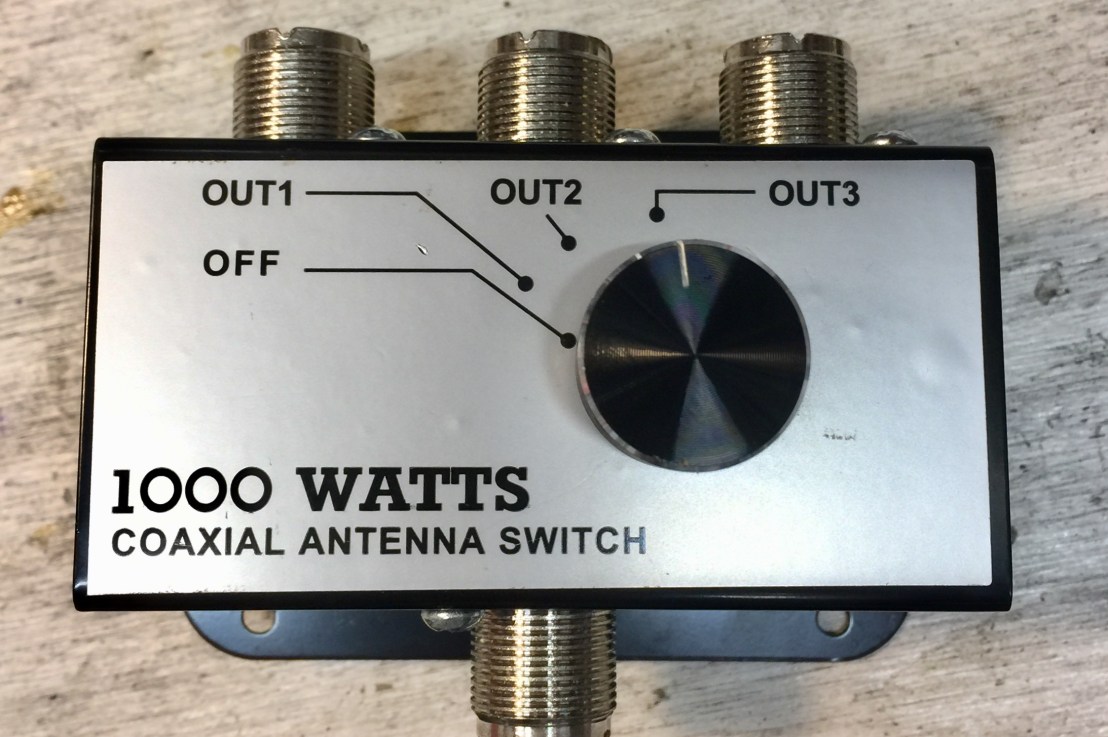
When I purchased this switch box online, I knew what to expect.  Never in a million years would I push any wattage through this thing.

When I wiggled the wires a number of them came lose of their own accord, cold solder joints.
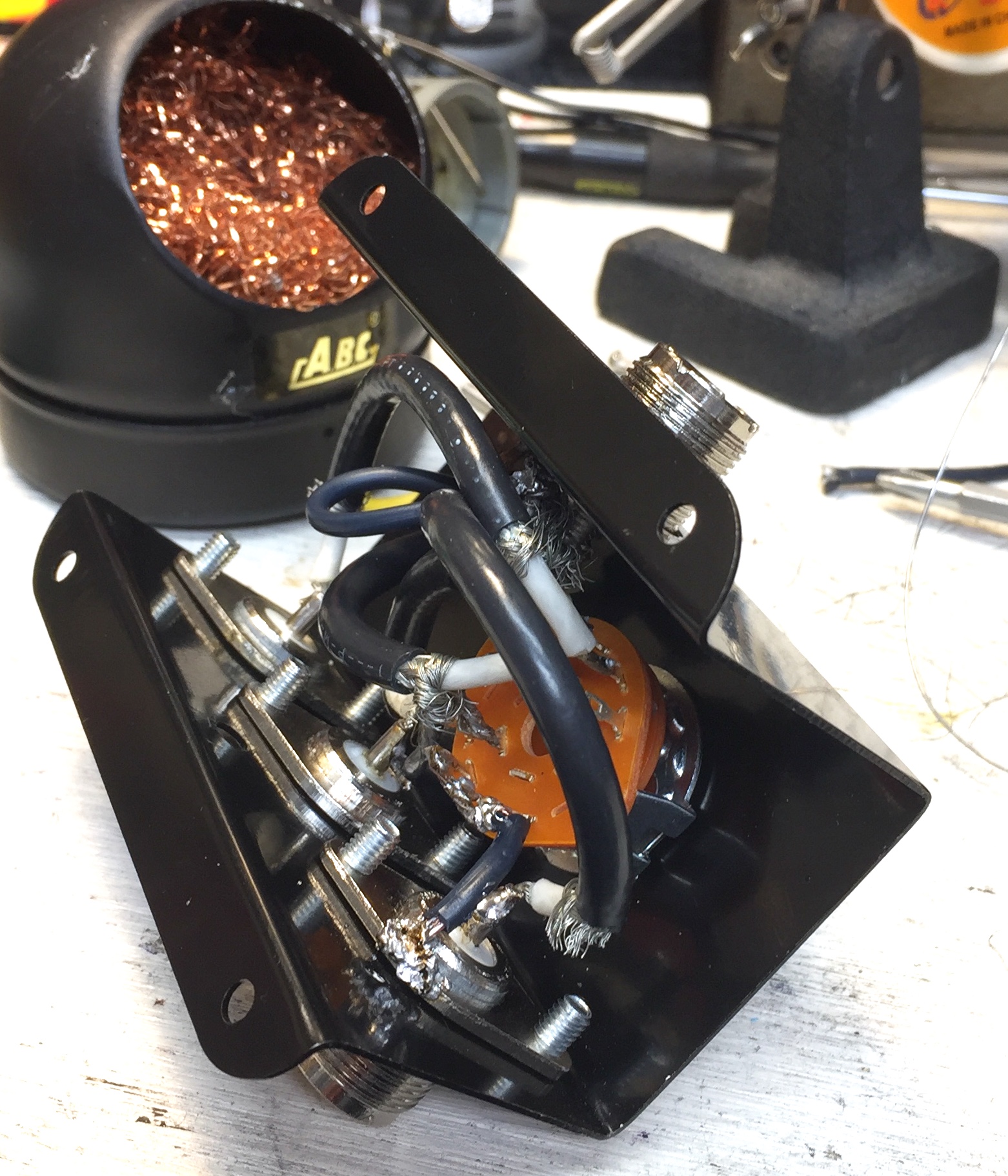
Here is the inside of the box. Wow.

In my office resides a desk, with several different apparatuses on it.  From state of the art to antique, I still listen to and ‘mess’ with them on occasion.  You see I always appreciate the glow from the dial light of old shortwave radios.  I wanted a way to control the RF from my antenna to the different devices without messing with cables.

The name of this device is miss-leading, and I am confident if put to the test, they would call it a ‘name’ and say they never meant it to handle 1000 watts. With the wording CB in the advertisement, they could argue the illegality of using more than 12 watts PEP ergo ‘what were you doing with this thing?’

A smart person could take them to task, in that this thing would perform miserably at 27mhz.

Whoever designed it had a handle on DC but not AC.  The integrity of the 50 ohms impedance is violated, making this a horrible device even for switching between receivers.  Again I knew what to expect when I spent the $20.  Why then did I buy it?

IMG_5771

Real coaxial switches have the same essential components, they are just well thought out.   If you look at the contact on the switch, you can tell that any kind of wattage would burn the connections and or arc over to the next.  In its original construction, I would not even use it for low wattage use.

Below you can see how I modified it with coax and common grounds.  One last modification is to add a ground lug to it, so I can ground the box to earth ground.

IMG_5774

Enjoy your hobbies, and be very wary of crap from the Far East.  While it is all made there, ‘for the most part,’ some companies have a reputation at stake, while some just want to sell cheap junk.

In its original form, it was just that, junk.

-Best

Scott


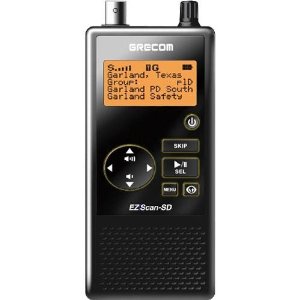
GreCom PSR 700

GreCom PSR 700

Tacky radio

psr-700

Well, one would think that I was about to write a commentary on some DJ, or perhaps some radio personality that was messy, or ill fit for their job but, that is not the case.

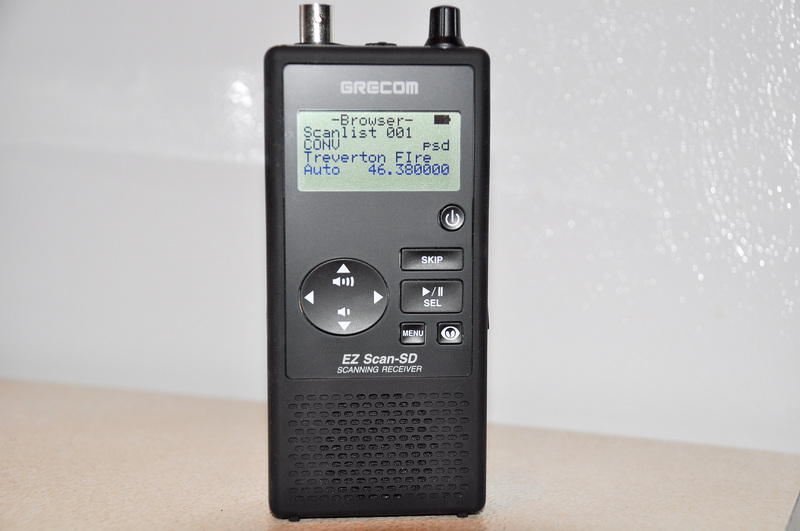
This is actually a technical article regarding the GRECOM PSR 700.

This radio is actually a very nice, easy to use scanner, for the person who wants to listen immediately without punching in all of those dozens of frequencies.

The data base comes on a small SD card that you simply install in the radio under the batteries and it is then menu driven with familiar controls as it mimics the old iPod in many respects.

I picked up the radio the other day as I have not used it in over a year.  With Trumps visit coming up and all of the protesters I thought that listening in might prove interesting.

When I picked up the radio it literally stuck to my hand.  This thing was made in China and I am guessing that like their famous capacitor flub up they too did not do something right with the chemical makeup of the case on the radio.  The plastic actually started to break down and reacted with the atmosphere “I am guessing.”

If you run your fingernail along the back of the plastic the “sticky” actually comes off and adheres to your fingernail much like the glue on those nasty little labels that you find on so many things that you buy now days.

Going on the web looking for a solution there was not one.  There are others that have reported this but, Grecom is out of business.   I am guessing that the refund or warrantee of all of the radios that this affected was too much for them and they abandoned those customers.

I took the battery cover off and simply tried to wash it.  Dish soap and a brush just made a sticky mess of both the brush and my hands.

Even if it worked you could not run the radio under water so some other form of “fix” was going to have to be discovered.

Goo Gone to the rescue.

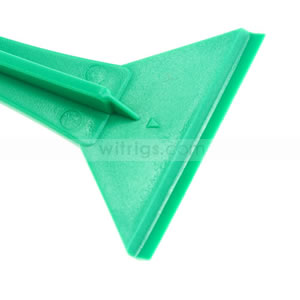
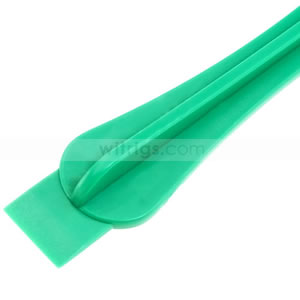
Using Goo Gone and that little plastic tool that you use to take laptops of smartphones apart worked nicely.

Simply get a little goo gone on your finger and rub it on to the area that you want to clean.

After it sits for a few minutes use the tool much like a scraper and small deliberate strokes and you will see the sticky crap come off and pile up at the end of the stroke.

If you feel comfortable dismantling the radio first that might be your best bet as any mistake will have this stuff inside your radio.

I carefully did this too all of the surfaces removing as much as the sticky stuff as possible.  I then got a cloth rag and with some force rubbed and buffed the rest as best I could.

I finished the process with “Windex,” and a paper towel. Dampen the paper towel with Windex, never spray it on to the radio.  Small deliberate forceful strokes, removed the rest of the nastiness that was nothing more than flypaper on my radio.  Cosmetically the radio is not as pristine as it once was, and the lettering that was under the sticky mess disappeared as well.

The radio is still usable, and does not stick too anything any longer.

If you are thinking about buying one of these online think twice as you may be buying a sticky mess.

This is not for the faint of heart and I am disappointed that I spent that kind of money and have a radio that clearly is not as pristine as it was when I bought it.

If you have one of these here is the page for downloads and if you want third party out of warranty service..  I contacted them several days ago and no response so, your mileage may very…

http://www.greamerica.com/

346589

108556-03 108556-04 GooGone-4oz

-Best

© All Rights Reserved 2015

Vintage Radio’s

Vintage Radio’s

  • How about a post that has nothing political in it?
  • How about a post that is instructional and interesting?
  • Think I can do it?

Me personally, sometimes I feel like someone is going to have to develop a twelve step program to break the addiction of collecting and repairing these things.  Truth be known some of these are highly collectable and some are well, just not.

I am guessing that if one saves them long enough the radios that are not collectable today will be at some point in the future.

To that end, I collect those that are “collectible” today as well as radio’s that are unique or sought after for some reason ie the Owl Radio from Clash of the Titans.

Owl Radio from the 60's

More often than not I will purchase a collection of radio’s from different sources.  I might purchase the entire collection because one of the radio’s in that collection is collectable or I might get them because I need parts that I know they will render.

Radio from lot

The bottom line is the case must be intact.  It must look good with no cracks etc.  If it is busted all to hell it turns into a parts piece and devalued substantially.

Today I worked on a radio that was marketed to the US although it is typically marketed to the Russians.

Spica
Repaired, aligned and cleaned up….

Someone had worked on it sometime in the past as the slugs were all out of place.  I guess it is terribly irresistible to resist  putting a screwdriver in the transformers and trimmer caps, as I get more radio’s that have been tweaked, by someone with a screwdriver, instead of the proper alignment tool.

IMG_0590

Having said that this radio defies common logic, in that the wire colors that we come to expect over here in the states is backwards.  Red which normally denotes positive, was the negative lead and of course that made the black wire positive.

IMG_0587

When I first apply power to one of these radios I do so with a variable supply.  Turning the radio on first, then slowly increasing the voltage from 0 to whatever the voltage should be whether it be 3,6 or 9 volts or somewhere in between.  The trick is to have a power supply with an amp meter.

Most transistor radios draw very little current.  If you start to raise the voltage and the current starts to jump and maybe hold at 10 milliamps or so, check your polarity.

Bottom line is that after I figured out that the power leads are opposite of what one might expect the next thing needed was an alignment.

In most radio’s like this you start with injecting a signal at 455khz.  After tuning the proper transformer and trimmer cap for this, than I move on to tweaking the rest of them for maximum sensitivity at 1600, 55 and finally around 800khz.

The process takes less than a five minutes and when finished the radio is as good as new.

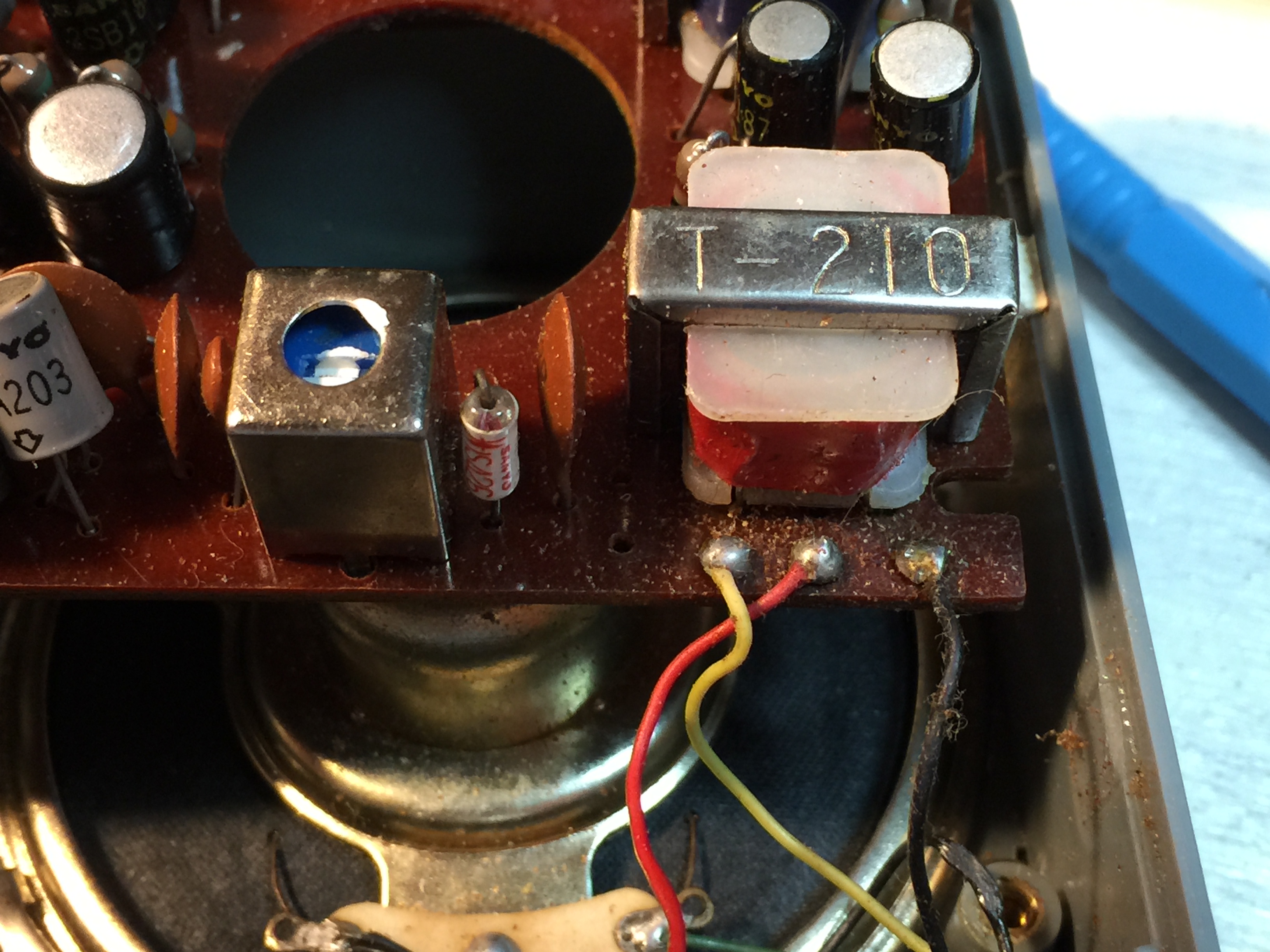
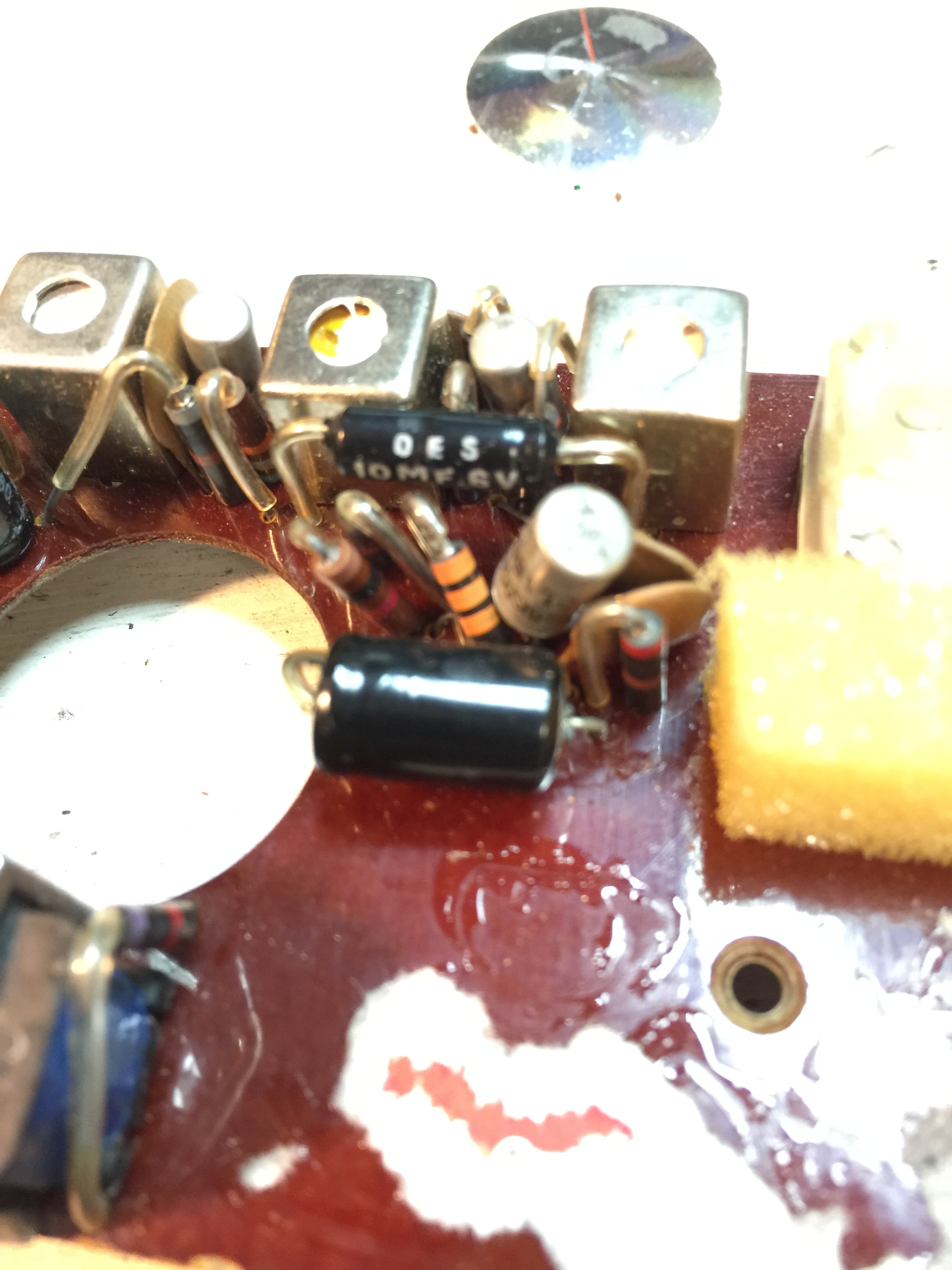
Most of these vintage electronics need new caps “electrolytic capacitors.”  Caps made in the day were expensive so the manufacturers used the minimums that they could get by with.   Tracing and/or injecting a signal one can usually tell which if any caps are bad, and within moments, have the audio back to where it should be.

Radio needing new caps.

Some of the newer capacitors on the market are NP or non-polarized!  Too often I pull out and old cap to find I did not remember which direction to install the new one as I need to keep the negative and positive leg in the correct holes.  With NP caps simply install them and move on.

I suggest that you take pictures before taking too much apart as without a print if a wire pops off, you can have a devil of a time figuring out where it went.

Six transistor radio’s are the most common and really all you need to pull in strong station and actually differentiate between the different stations without too much overlap.

Eight Transistor Radios have much better sensitivity and are able to differentiate strong stations from weak ones thus, you can have much better selectivity.  My favorite radio to actually keep batteries in are the 8 transistor variety.

Some manufacturer’s in the day found that they could use the PN junction as a diode but yet claim that they had 10, 12 or even 16 transistors!  The unknowing public equated that to the “jewels in a watch.”  The more the better and so they had a gimmick until some government agency clamped down on them.  If the transistor is being used as a diode it cannot be counted as a transistor.

Ross to name just one of the brands was one of the manufacturers that became famous for this tactic.

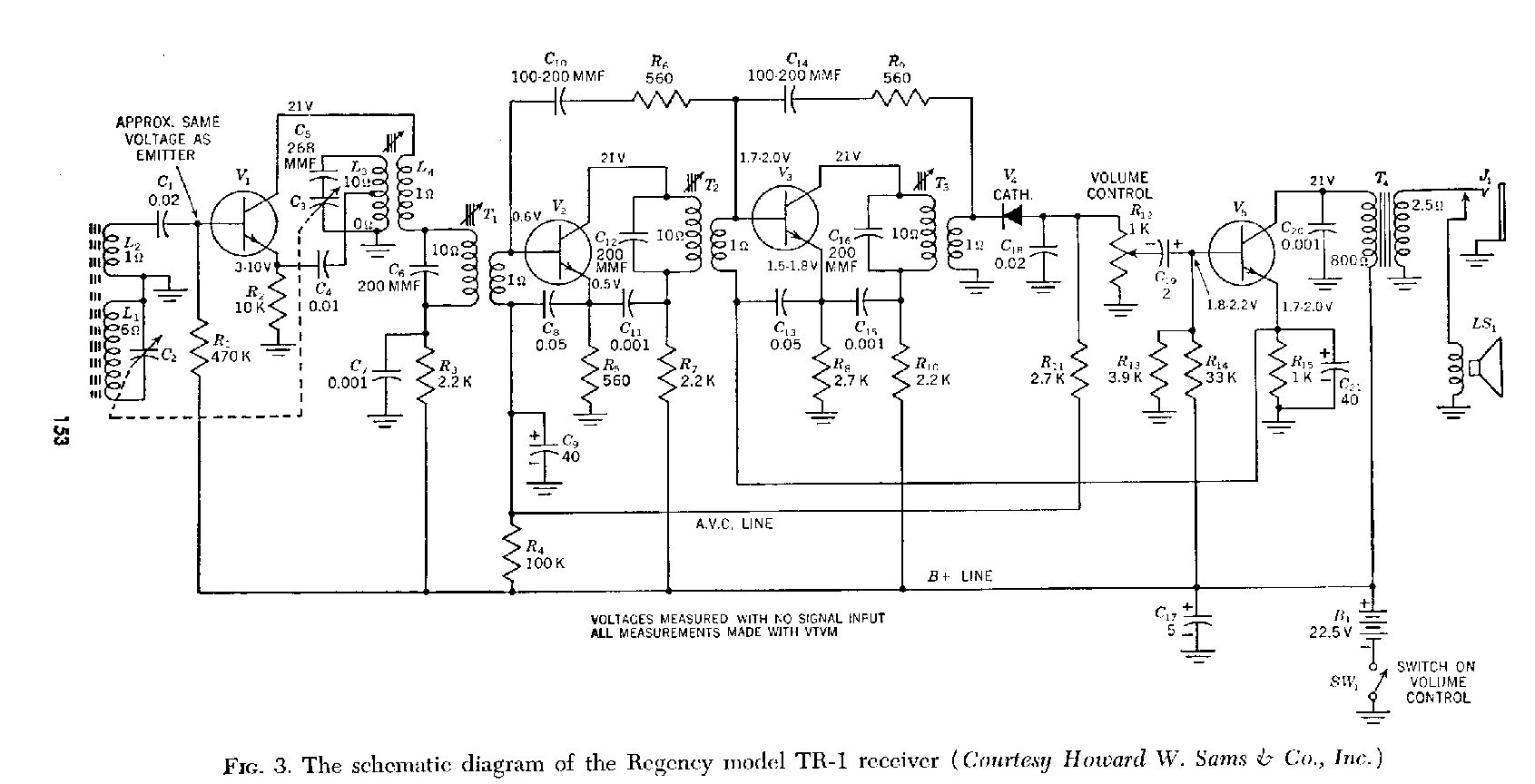
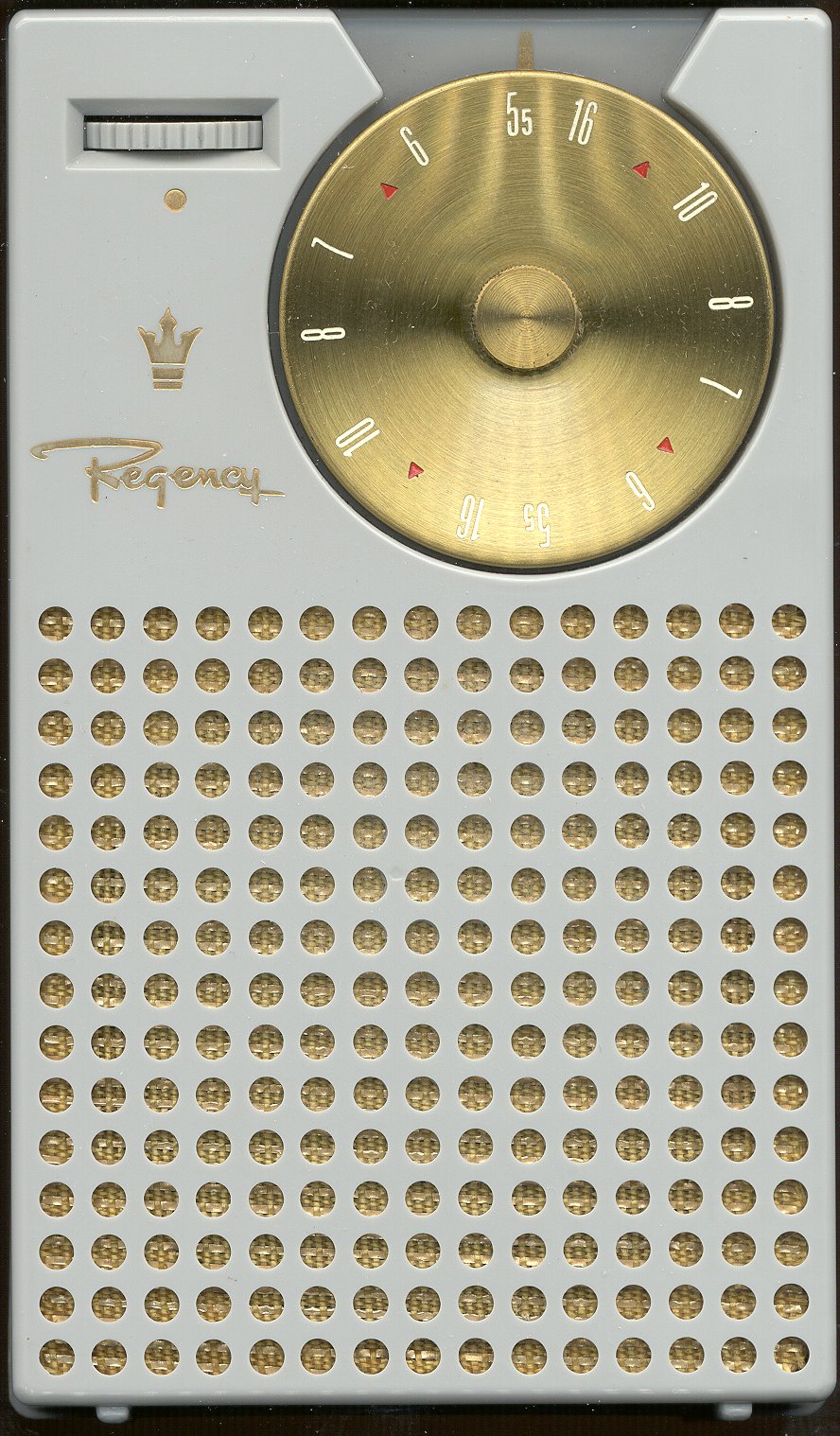
Shortly after Bell labs came out with the transistor Raytheon and a company named Idea came out with the first transistor radio.  It was know as the Regency TR-1.

regencyTR-1

regency_mod_TR1_schematic

These are highly collectible even today.  Around $100 might get you one that the case is basically in tact.

closeup_front_gray
This is a nice looking example of the TR-1

Before this portable radio’s were tube based and used two different batteries to play them.  One of the I believe was a high voltage battery known as the “B” battery, and one drove the filaments and I think it was 1.5 volts.

HARPERS_JAPANESE_SMALL_TUBE_PORTABLE_BROADCAST_PERSONAL_RADIO_GK-501_BATTERY_COMPARTMENT

fasj_worth_feb2012

I have a few of these but, with no availability of the B battery, I think that other than something to sit on a shelf; it is a waste of time and energy to collect.  Your mileage may vary…

If I get enough interest I might post more radio stuff in the future as I work on many of these and it is a hobby.

See, no political rhetoric on this post, I can do it!  🙂

-Best and 73

© All Rights Reserved