Tag: fiction

Klaatu Barada Nikto: A Nostalgic Look at Sci-Fi, Society, and Earth’s Last Hope

Klaatu Barada Nikto: A Nostalgic Look at Sci-Fi, Society, and Earth’s Last Hope

You’ve likely heard the iconic phrase “Klaatu Barada Nikto” from the 1951 masterpiece The Day the Earth Stood Still. This is true if you’re a fan of classic science fiction. This legendary film didn’t just entertain—it left an indelible mark on the genre, inspiring countless creators, including me. My book Earth’s Last Hope carries a parallel to that iconic movie. I didn’t fully realize the connection until the manuscript was finished. Let me take you back to the past. I will show you the worlds that shaped me. You will see how they influenced my writing.

To understand my story, you first must know: I wasn’t a typical child. (If you’ve read my introduction on this site, you’ll already know this.) While I did the usual socializing at school, I hated it with a passion. My peers, mostly, embraced values I couldn’t stand—those of a society steeped in war, violence, racism, and harmful gender roles. I didn’t fit in with beer-crushing antics or “hold my beer” bravado. My real friends were older, wiser, and far more thoughtful. They were the people who encouraged curiosity, creativity, and a broader perspective on life.

These influences, combined with the era’s entertainment, shaped my imagination. Back then, writers infused their work with moral undertones. TV shows like Leave It to Beaver and The Andy Griffith Show taught lessons in kindness and integrity. Movies like Father Goose and The Long, Hot Summer offered a mix of humor and introspection. And then, of course, there was the Golden Age of Science Fiction. The Thing, The Blob, Forbidden Planet—these weren’t just films. They were immersive experiences. They transported you to other worlds while reflecting on our own. The fear, the suspense, the wonder—it was all there. Sci-fi from that era captured your imagination completely. It was like the classic horror scenario. A character walks into a dark closet. You know the chainsaw-wielding villain is waiting. You knew what was coming, but you couldn’t look away.

Recently, I stumbled upon a notebook from my childhood, filled with stories I wrote in cursive. I started writing very early. I spun my own tales inspired by the books I consumed. I was also influenced by the world I observed. Those were the best of times and the worst of times. The Vietnam War was raging. Through the magic of delayed TV broadcasts, I remember hearing actual gunfire from the front-lines. Today, live coverage is commonplace. Back then, it was a chilling glimpse into a world far removed from our own.

Amid this chaos, I sought connection. Ham radio became my gateway to the world, allowing me to communicate with people across the globe through Morse code. In those dots and dashes, I found humanity—the good in people I might never meet in person.

Fast forward to today, and Earth’s Last Hope stands as a reflection of those experiences, influences, and inspirations. My story parallels The Day the Earth Stood Still. However, instead of a towering robot and an unfamiliar alien, it features Samantha—a redheaded protagonist with an extraordinary journey. Her life begins in a precarious situation. Through the magic of Roswell and alien artifacts, she transforms into Earth’s last hope. Samantha’s story isn’t just about saving the world. It explores what it means to be human. Her journey dives into themes of identity, sexuality, and discovery. These elements, while not traditionally associated with science fiction, are integral to the genre because they’re integral to us.

Fans of The Day the Earth Stood Still are welcome to explore my book. It has intriguing parallels with the movie. Samantha’s journey might surprise you, challenge you, or even inspire you to see the world—and yourself—in a new light.

If you’ve ever been captivated by the magic of classic sci-fi, give Earth’s Last Hope a try. If you’ve pondered the deeper questions of humanity, this story is for you. And if you’re curious about where it all began, stick around—I have many more stories to share.

Enjoy the journey,

Scott

(P.S. Don’t forget to click the link and follow along—there’s so much more to come!)

Earth’s Last Hope: A Sci-Fi Thriller of Survival and Secrets

Earth’s Last Hope: A Sci-Fi Thriller of Survival and Secrets

What if the fate of Earth rested in the hands of strangers thrust into unimaginable circumstances? What if the stars held not only answers but also devastating threats? These are just some of the gripping questions explored in Earth’s Last Hope, a science fiction masterpiece by Scott Taylor that blends cosmic mystery, survival, and human resilience into an unforgettable journey.

A Cosmic “What If” That Inspires Wonder

The seeds of Earth’s Last Hope were planted during a time when interstellar phenomena like ‘Oumuamua and 3I/ATLAS captured imaginations worldwide. Inspired by these celestial visitors, Taylor crafted a story that dives into humanity’s place in the universe and the choices we make when faced with the unknown. Adding a thrilling twist, he reimagines the possibilities of planetary alignment—a rare event that occurs every 13.4 trillion years—and weaves it into a narrative brimming with tension and awe.

Taylor, like any great sci-fi writer, thrives on “what ifs.” What if Earth’s magnetic poles shifted, throwing the planet into chaos? What if alien civilizations were quietly watching, waiting for their moment? By blending real science with speculative fiction, Taylor creates a story that feels both grounded in reality and boundless in imagination.

Meet Samantha Richards: A Heroine Worth Rooting For

At the heart of this riveting tale is Dr. Samantha Richards, a fiercely independent woman with a complicated past and a unique connection to alien technology. Samantha’s journey begins in Alaska, where she’s trying to escape her father’s shadow. But everything changes when she accepts a dare to survive 21 days on a cursed volcanic island for a reality TV show. What starts as a test of survival quickly spirals into something much darker and more mysterious. Her resilience, intelligence, and vulnerability make her a protagonist you’ll be cheering for long after you’ve turned the final page.

Joining her is Harry, a former soldier grappling with his own haunted past. Together, they face the unforgiving wilderness, a cursed island shrouded in secrets, and a cosmic mystery that threatens to unravel everything they know about the universe—and themselves.

An Island Like No Other

The volcanic island where Samantha and Harry find themselves stranded is more than just a setting—it’s a character in its own right. Taylor’s vivid prose brings the jungle to life, making you feel the suffocating heat, hear the whispers of the wind in the trees, and sense the looming danger hidden in its depths. But the island isn’t just dangerous—it holds a secret that could change the fate of humankind forever.

Science Meets Suspense

At its core, Earth’s Last Hope is a love letter to science and the mysteries of the cosmos. Taylor masterfully blends real-world physics with speculative fiction, exploring themes like planetary alignment, geomagnetic reversals, and the fragility of humanity in the face of the universe’s vastness. Every twist and turn is grounded in scientific plausibility, making the story all the more captivating for readers who love to think as much as they love to be thrilled.

A Story That Stays With You

While Earth’s Last Hope delivers on action, suspense, and cosmic intrigue, it’s ultimately a story about people—about love, loss, and the choices that define us. Samantha’s complicated relationship with her father, her evolving bond with Harry, and the struggles of the alien tribes searching for a new home all serve as poignant reminders of our shared humanity.

This is more than just a story about survival—it’s a story about discovery, both of the universe and of ourselves.

What Readers Are Saying

✨ “A gripping blend of survival drama and cosmic mystery. I couldn’t put it down!”

✨ “Taylor’s writing is vivid and immersive. I felt like I was right there on the island with Samantha and Harry.”

✨ “Equal parts thrilling and thought-provoking. This book will stick with you long after you turn the final page.”

If you’re a fan of science fiction that combines edge-of-your-seat thrills with thought-provoking ideas, Earth’s Last Hope is the book you’ve been waiting for. Don’t miss out on this unforgettable adventure through survival, discovery, and the uncharted territories of the human heart.

Grab your copy today and see what the stars have in store!

Earth’s Last Hope

  • #FirstContact
  • #AlienInvasion
  • #SciFiThriller
  • #BookTok
  • #BookTwitter
  • #WomenInSTEM
  • #ScienceFiction
  • #SpaceOpera
  • #ReluctantHero
  • #BookLaunch
  • #NowReading
  • #BookRecommendation
  • #BookQuotes
  • #CharacterDriven
  • #DystopianReads
  • #MustRead
  • #BookBuzz
  • #SpaceThriller
Danger Will Robinson

Danger Will Robinson

The year was 1968. Three TV channels flickered in black and white, and the rabbit-ear antenna, wrapped in precarious tin foil, stood like a sentinel on top of the boxy television. It was a simpler time—a strange, analog bubble where imagination ran wild, untempered by the cold, unrelenting progress of technology. Back then, the future always seemed… hokey. Paper-mâché monsters lumbering down cardboard corridors. Alien women painted green, their eyes glowing with mystery. Spacecraft that somehow defied physics, crammed with impossible gadgets, more like the TARDIS than any practical design.And oh, the robots. Clunky, clumsy, with glowing eyes and monotone voices. There was something almost lovable about their absurdity—like the robot from Lost in Space: arms flailing, screeching “Danger, Will Robinson!” at every perceived threat. Pull its power pack, and it would collapse into silence, its “destroy-destroy” chant reduced to a harmless whimper. It was the stuff of B-grade sci-fi, the kind of thing you chuckled at before flipping the channel.But here we are now. And it’s no longer fiction.

Today, robots don’t need power packs you can yank out. They don’t stumble around like toddlers in tin cans, shouting ominous warnings. They’re sleek, efficient, and disturbingly lifelike. They have the cold precision of machines but the unsettling adaptability of something… more. Generative AI and augmented reality have become the cornerstones of a rapidly evolving world, but with every step forward, I can’t help but feel a twinge of dread.You’ve seen them, haven’t you? Those robotic dogs patrolling streets, their metal legs moving with an eerie, unnatural grace. Or those humanoid bipeds with blank faces and mechanical eyes, mimicking the movements of their creators. Their creators: us. We’ve made them in our image, but what happens when they surpass us? When they begin to see our imperfections as flaws to be corrected?

If I were building a robot, I wouldn’t make it a dog or a human. No, I’d make it practical, like an octopus—an eight-limbed marvel with dexterous hands at the ends of its tentacles. But practicality isn’t the point anymore, is it? No, we’re trying to make machines that look like us, think like us, and maybe even replace us.Isn’t that what every dystopian sci-fi warned us about? The robots that rewrite their own code, that evolve beyond their original purpose. The moment they decide that humanity isn’t worth preserving—that we’re too messy, too flawed, too imperfect—they won’t need to shout “Exterminate!” like the Daleks. They’ll simply act. Cold. Methodical. Ruthless.What happens when their programming no longer includes Asimov’s First Law of Robotics? What happens when “do no harm” is rewritten to “eliminate inefficiency”? And let’s face it: we’re inefficient. We’re emotional, unpredictable, and fragile. The logical conclusion of AI-driven evolution doesn’t include us.

Pump the Brakes Before It’s Too Late

It’s easy to dismiss these fears as the ramblings of someone too steeped in fiction. But isn’t that the point? Science fiction has always been our mirror, reflecting the “what ifs” of human ambition. And right now, we’re hurtling toward a future that feels less like progress and more like a cautionary tale.We’re handing the reins to technology that could one day decide it no longer needs us. Every robotic dog, every humanoid automaton, every line of self-learning AI code is a step closer to a world where we’re no longer the apex being. And for what? Convenience? Efficiency? Profit?Maybe it’s time to slow down. To question the path we’re on before we release this technology into the wild without understanding the consequences. Because once Pandora’s box is open, there’s no going back.

The Final Warning

The robots of the 60s were laughable. They were paper tigers, easily defeated by a well-placed power switch. But the robots of today? They’re not laughing anymore. And maybe, just maybe, we shouldn’t be either.

Danger, Will Robinson.

Hey there! If you enjoyed this post, it would mean the world if you gave it a like or a thumbs up. Feel free to share it with a friend who might enjoy it too—and don’t be shy, stop by and say hello! 😊 Yes, I create these posts to share my passion for writing and to showcase my skills as an author. Follow along for more—I’d love to have you here! 💬✨

  • #AIRevolution
  • #FutureOfAI
  • #SciFiBecomesReality
  • #AIvsHumanity
  • #RiseOfTheMachines
  • #DangerWillRobinson
  • #ArtificialIntelligence
  • #TechDystopia
  • #RoboFuture
  • #GenerativeAI
  • #FutureShock
  • #HumanVsMachine
  • #EthicalAI
  • #AIInSciFi
  • #TheFutureIsNow

Unraveling Family Secrets: My Journey with Amelia Earhart

Unraveling Family Secrets: My Journey with Amelia Earhart

A few weeks ago, I shared this story on the Reedsy website as part of a contest—one that feels just about as realistic as actually locating my distant cousin, Amelia Earhart. However, today I wanted to share it with you, my audience. Maybe it’ll brighten your day or spark a little curiosity about the connections we all might share, even on this very site.

You see, we all hear stories about our relatives from eons ago, whispers passed down through generations, fragments of lives that shaped who we are. For me, those whispers were irresistible. As a writer, I had to know the truth, no matter who my ancestors turned out to be. Even if they were mafia bosses or obscure nobodies, I knew there would be tales worth telling.

So, I did the DNA thing. I poured time, energy, and more money than I’d like to admit into genealogy research. And what I unraveled was a tapestry of intrigue that stretched far beyond what I ever expected.

My childhood was a kingdom built on whispers, stories of valor, tradition, royalty, and scandal that seemed to weave themselves into the very air I breathed. A haze of cigar smoke clung to the image of a defiant political figure, while hushed voices hinted at royal blood flowing through my veins. And always, in the background, there was a shadow—a darker figure, the man who erased eighteen minutes of history in Washington.

These weren’t just stories. They were my inheritance. Power. Secrets. A kaleidoscope of intrigue buried deep in my DNA.

When I finally cracked open the past, these stories took on new life. The more I dug, the more I found royalty, scandal, and power. And then, Amelia Earhart. A name that needs no introduction. A name that leapt off the pages of history and into my family tree.

A distant cousin. A bold trailblazer. A perfect metaphor for navigating uncharted waters or even waiting to be rescued.

But this isn’t just a story about her disappearance. It’s about the echoes she left behind, the way her legacy is stitched into the fabric of history—and, somehow, into me.

So here’s to the past, to the stories we inherit, and to the ones waiting to be uncovered. Sometimes, they lead to royalty. Sometimes, to scandal. And sometimes, to Amelia Earhart.

***

Sunlight blazed on the Papua New Guinea airstrip. Heat waves distorted the cracked earth. Morning light reflected off the hangars. Only faint insect hums and distant tools broke the silence.

Amelia Earhart stood by her Lockheed Electra, calm but tense. Her tapping foot betrayed her unease. The Electra sat ready in the sun, engines primed. Dressed in khaki slacks and a white blouse, her sharp gaze cut through the moment. Waiting wasn’t her strength.

Noonan was late.

Her sigh cut through the silence. Frustration burned in her chest, but beneath it churned something colder: anxiety. A storm of nerves tightened her gut. Ahead of them stretched 2,556 miles of ruthless ocean, no markers, no mercy. Just an endless expanse of restless blue. Howland Island? A speck on the map. Miss it, and they were nothing but ghosts swallowed by the sea.

She turned the thought over in her mind, locking it away behind a mask of calm. This leg was different. She felt it in her bones, and Fred did too, though he hadn’t dared say it out loud. He didn’t have to. The radio was dying, had been for days. Their antenna? A jury-rigged prayer held together by wire and hope. Every burst of static from the speaker stabbed like a cruel reminder: their mission was a house of cards, teetering in the wind.

A breeze stirred, carrying the damp tang of jungle earth. Amelia closed her eyes, letting it brush against her, grounding her. She thought of George, waiting for her back home. The reporters, waiting to write her triumph or her obituary. And the little girls, faces she’d never seen, who dreamed of reaching the sky because she’d dared to take it. Their dreams hung on her wings, and the weight of it all pressed down on her like lead.

Footsteps broke through the humid stillness.

She opened her eyes. Fred was striding toward her, untucked and unshaven, his hair a wild mess. That grin was back, the cocky, boyish grin he always wore, like danger was something he could charm away. Like the ocean wasn’t out there, waiting to swallow them whole.

“You’re late,” Amelia said, her voice slicing through the thick air like a propeller blade.

He strolled toward her, his untucked shirt flapping lazily in the breeze, that cocky, devil-may-care grin plastered across his face. “Morning, boss,” he drawled, like they were gearing up for a casual Sunday jaunt instead of staring down the most perilous stretch of their lives.

“Fred,” she said, her voice low and edged with steel, “this isn’t just another leg of the journey.”

“I get it, Amelia. I do.”

She gave a single, sharp nod. “Let’s go,” she said.

Without waiting for a reply, Amelia spun on her heel and strode toward the Electra. Behind her, Fred fell in line, tugging his shirt straight and rolling his shoulders back, as if shaking off the weight of what lay ahead. The plane loomed in the distance, its silver body catching the light.

They were all set. Or as prepared as anyone could possibly be for this.

The engines roared to life, a symphony of power and defiance, drowning out words, fears, and second thoughts.

Hours into the flight, the sky burned with the last light of the setting sun, the horizon splitting into gold and crimson hues. In the cockpit, Fred studied the stars, his hands steady, his mind focused. The constellations were their map, their lifeline in the endless blue expanse.

The stars wouldn’t wait forever. Clouds crept across the sky, swallowing their guides one by one. If Fred hadn’t overslept, they’d be closer to safety by now, before the night went blind.

The overcast wasn’t just inconvenient; it was catastrophic. The stars, his lifeline, vanished behind an impenetrable shroud.

“Have you heard from the Itasca?” he asked.

“No,” Amelia said flatly. “I’ve announced our position. No response.”

Fred cursed, the broken antenna flashing in his mind. Who could they even reach out here?

“Can we climb above the clouds?” he shouted.

“We’re burning too much fuel,” she replied.

Fred slumped. No stars. No antenna. Radio silence. A storm churned ahead. Below: endless sea. All they had was the compass, and luck.

Rain hammered the windshield, the storm howling against the Electra’s fragile frame. Lightning tore jagged scars through the darkness. Inside the cockpit, there was no horizon, no bearings, only chaos.

“Fred, give me a heading!” Amelia yelled above the engine noise. “What is our location?”

Fred’s hands trembled as he wrestled with the compass. “I’m trying! The storm’s throwing it off, it’s spinning!”

The Electra shuddered, caught in the storm’s grip, as the ocean below waited, silent and merciless.

“We’ve been on this heading for three, maybe four hours,” Fred shouted, flipping through his maps. “If there’s a headwind, we’re burning more fuel than we thought. We should be near Howland by now.”

“‘Should be’?” Amelia snapped, her voice cutting like the storm outside. “Great. I’ll just ask the ocean to wait while we figure it out!”

Fred’s voice cracked. “I don’t know what to tell you! Without the stars, I’m flying blind! The compass is all we’ve got, and with this storm, it’s probably off!”

That was not the answer she was looking for. Without her instruments, she would most certainly crash them into the ocean. She couldn’t tell where the sky stopped, and the sea began.

Fred froze, pale and silent. The storm battered the plane, each gust shaking the Electra to its core. The fuel gauges ticked lower, the needles creeping toward empty.

Rain blurred the windshield, the instruments glowing faintly in the chaos. Lightning slashed through the black void, illuminating the endless Pacific below.

“I… I didn’t think it’d be this bad,” Fred muttered, his voice breaking. “I thought…”

Amelia cut him off, her words sharp as steel. “You thought what, Fred? That the Pacific would be kind? That we didn’t need the antenna. That we could just point the nose east and hope for the best?”

The plane lurched violently, throwing them forward. Amelia gritted her teeth, fighting the controls as the Electra groaned under the storm’s fury. For a moment, neither spoke. The pounding rain and roaring engines filled the silence.

She exhaled sharply, frustration hardening into focus. When she spoke again, her voice softened, though the fear lingered beneath.

“If the compass is all we’ve got, we use it, imperfect or not. We keep on this heading until we succeed or we go swimming.”

Fred nodded, his breath unsteady as he forced himself to focus. “You’re right. Okay. I’ll keep us on this heading. I’ll recheck the drift estimates and adjust for the wind. We’ll figure this out.”

Amelia’s eyes stayed locked on the storm ahead, her jaw tight. “We don’t have much time to figure anything out. The fuel’s going faster than it should. This headwind’s killing us.”

Fred hesitated, his voice catching. “How much flying time do we have left?”

“Three hours. Four, if we’re lucky.” Her voice was flat, her expression unyielding. “But luck’s not exactly on our side, is it?”

Fred dropped his gaze to the maps in his lap, his voice barely a whisper. “No. It’s not.”

Lightning flashed, flooding the cockpit with white-hot light. Fred’s face was pale, every tight line around his eyes carved with worry. Amelia’s grip on the yoke tightened, her knuckles bone-white. The plane shuddered again, the storm clawing at their fragile craft.

Fred tried to summon hope. “Maybe it’ll clear. Maybe the clouds will break, and I can get a fix on the stars.”

He stared at his maps, his voice barely above a whisper. “I’m sorry, Amelia. I should’ve fixed the antenna better. I should’ve been ready for this.”

His trembling hands adjusted the compass, eyes locked on the erratic needle jerking under the storm’s interference.

The engines droned unevenly, straining against the wind and rain. Somewhere out there was Howland. Their only option was to continue, slowly advancing as the immense Pacific stretched out beneath them.

The storm eased, just enough to reveal patches of rippling black ocean, infinite and indifferent. The Electra cruised low at 1,000 feet, its fuel gauges hovering dangerously near empty. Amelia’s face was set, her jaw locked. Fred sat in silence, ashen, gripping his map and compass as if they were the only things tethering him to hope.

Amelia shouted over the engines. “I’m calling the Itasca! Maybe they’ll hear us!”

“Itasca, this is Earhart. One thousand feet. Heading east. Position unknown. Low on fuel. Repeat, low on fuel. We estimate we’re near Howland Island. If you can hear us, we need assistance. Over.”

Amelia released the mic. The cockpit filled with an empty, mocking hiss.

Fred leaned forward, his voice barely a whisper. “Come on… please…”

Nothing. Just the relentless crackle of silence.

Amelia tried again. “Itasca, this is Earhart! Do you copy? We’re out of time! Over!”

The reply was the same.

Fred slammed his fist against the armrest, his frustration seething. “Damn it! They can’t hear us.”

The engines groaned as the storm eased, revealing only the vast, empty Pacific below. The fuel gauges hovered dangerously close to empty.

“We’re at our limit,” Amelia said softly, her voice calm but heavy. “These engines won’t last.”

Fred leaned forward. “Drop lower! We might see something, land, anything!”

Amelia hesitated, then tightened her grip on the yoke. “Fine. Hold on.”

The Electra dipped, skimming just above the waves. The engines strained as Fred pressed his face to the window, scanning the endless horizon.

“Wait!” he shouted, pointing frantically. “There! Off the left wing—do you see it?!”

Amelia squinted, her heart pounding. Then she saw it—a faint outline, waves breaking against something solid.

“An island,” Fred gasped. “That has to be it. Howland, or something close!”

Amelia’s voice stayed grim. “We get one shot. If we miss, we’re done.”

The fuel needle dropped to empty. She clenched her teeth, aligning the plane with the distant shadow.

“Steady,” she murmured.

Fred’s voice cracked. “What if it’s just a reef? Can we even land there?”

“Fred!” she barked. “Shut up and let me fly!”

The engines sputtered. One died. The propeller slowed, then stopped, and the Electra lurched violently. Amelia wrestled the controls, leveling the plane as the second engine coughed its final breath.

“Get ready!” she shouted, her voice echoing through the air. “If it’s not land, we’re going to have to start swimming!”

With a shudder, the second engine failed. The silence was overwhelming, with the only disruption coming from the wind’s fierce howl against the plane. The plane glided toward the surf, a fragile machine against the roar of the ocean.

“Come on,” Amelia whispered. “Just a little further…”

The plane skimmed the waves, the salt spray misting the windows, then slammed into the shore, a mix of sand and unforgiving rock. A flicker of hope ignited in that instant.

“Amelia!” Fred screamed. “Watch out!”

The plane jolted violently, slamming into jagged rocks. Water sprayed on either side as the Electra skidded to a halt, its crushed nose buried in sand.

Silence. No engines. No voices. Only the crash of distant waves and the groan of the battered fuselage settling into the earth.

The sudden stop from the harness’s grip on the seat stole her breath. Frozen, she sat, the ragged sound of her breath echoing in the silence. “Fred… you okay?” she rasped, the sound thin and frail.

The Electra lay in a shallow lagoon, its crumpled nose half-buried in sand and rock. Tidewater lapped at its sides, creeping into the fuselage. Overhead, the storm had broken, clouds parting to reveal faint moonlight on a desolate beach.

Inside the cockpit, they worked quickly, soaked and shaking.

Her wet gloves slipped against the straps, her arms screaming with fatigue, but she didn’t stop. Finally, the emergency radio came free. “Got it. Help me with the power unit.”

Fred staggered back, panting. “This thing weighs a ton. If the tide comes in faster…”

“We’ll make it,” Amelia declared, her voice echoing with a steely determination. “Keep moving.”

They climbed off the wing, plunging waist-deep into the frigid water. The cold sliced through their soaked clothes, stealing their breath, but they pressed on. The lagoon reeked of salt and damp earth, the steady crash of waves the only sound beyond their labored breaths.

Fred shivered, his voice thin. “Do you think anyone heard us? Before the engines died?”

Amelia didn’t look back; her gaze was locked ahead. “I don’t know. I hope so.”

Her voice was steady, but Fred caught the strain beneath it, the fear she buried under sheer determination. She gripped the radio tighter, the cold metal biting into her gloves.

The shore drew closer. Their boots sank into the shifting sand beneath the shallow water. The lagoon, now calm, mirrored the pale glow of the moon. Around them, debris, seaweed, driftwood, and jagged rocks littered the beach like the remains of a forgotten world.

Fred broke the silence. “God, it’s so quiet.”

“Quiet’s better than thunder,” Amelia replied. “Let’s get everything to higher ground before the tide takes it.”

They fell onto the sand, the power unit hitting with a thud. Amelia rolled her aching shoulders. Fred gasped, dropping to his knees, the flashlight shaking.

“Could this be Howland?” he asked.

Amelia scanned the dark horizon, hands braced on her knees. “Maybe. Or another island nearby. Hard to tell in the dark.”

Fred’s voice wavered. “And if it’s not? What if it’s just… nothing? An empty speck in the middle of nowhere?”

Amelia straightened, her tone steady. “Then we survive. One step at a time.”

Fred’s pale face was fixed on the lagoon as he nodded slowly. The wrecked Electra, a spectral outline, sat half-submerged, its broken form a chilling sight against the vast Pacific. Crushed by the vastness, he felt nothing but the weight of his isolation, with no rescue or certainty in sight. A wave of nausea caused his stomach to churn.

Amelia’s hand gripped his shoulder. “We’re not done yet,” she said, her voice resolute. “As long as we’re breathing, we’ve got a chance. Let’s get the radio set up.”

Each step was a struggle, their bodies stiff and heavy, yet necessity compelled them to move forward. As Amelia unpacked the radio, Fred dragged the power unit, its weight a heavy drag, near the tree line. Her numb fingers worked with painstaking slowness. The night buzzed around them, a symphony of insect hums and rustling palms, each sound piercing the silent air.

Fred’s eyes darted nervously toward the deep, looming shadows. “Do you think anything could possibly be living in this quiet place?”

Amelia kept her gaze fixed downward. “Let’s not make that a priority for now.”

With meticulous movements, Amelia connected wires while Fred held the flashlight, the beam dancing nervously as he glanced at the shadowy tree line. The faint moonlight cast an ethereal glow, barely holding back the darkness of the night.

At last, Amelia straightened, wiping her hands on her damp trousers. She exhaled slowly, her breath visible in the cool air.

“That’s it,” she said, her voice quiet but firm. “Let’s see if anyone’s listening.”

The switch clicked. The radio crackled to life, a faint, fragile hum. Hope jolted through them.

As Amelia grabbed the mic, the weight of the situation made her voice both steady and urgent. “Mayday, mayday,” a frantic plea cut through the otherwise silent airwaves.

Endless static stretched, creating a suffocating pressure. Fred’s heart pounded in his chest as he held his breath.

Amelia tried again, her tone firmer. “Mayday, mayday. This is Amelia Earhart. Is anyone there? Over.”

The radio teased them with faint crackles, as if a voice hovered just out of reach. But no reply came.

Fred closed his eyes, shoulders sagging in quiet defeat. Amelia lowered the mic, her jaw tight, her eyes sharp.

“They’ll hear us eventually,” she murmured, almost to herself. “We just have to keep trying.”

For a moment, neither spoke. The weight of their reality pressed down, heavy as the humid air. The moon hung low, casting long shadows across the beach. In the distance, waves broke softly against the shore, a haunting rhythm in the stillness.

“Help me light a fire, Fred.”

Gathering driftwood, Fred finally broke the silence, his voice barely audible. “What if no one comes?”

She didn’t answer right away, her gaze fixed on the horizon. When she spoke, her voice was calm, resolute.

“Then we survive, one way or another, we survive.”

And that, my friends, is how I want to believe they slid into the history books, as survivors.

-Scott

Share the Journey

If this story resonated with you, I’d love for you to share it with others who might enjoy unraveling tales of history, mystery, and legacy. Give me a follow and stay tuned, there are more stories to come, and I can’t wait to share them with you.

If this is the kind of content you love, let me know in the comments! Your thoughts, connections, and stories mean the world to me, and I’d love to hear what you think.

Here’s to exploring the past, uncovering truth, and finding stories worth telling. Stay curious. 🌟

  • #GenealogyJourney
  • #FamilyHistory
  • #DNAStories
  • #AncestryResearch
  • #DiscoverYourRoots
  • #HiddenHeritage
  • #AmeliaEarhart
  • #AviationHistory
  • #Trailblazer
  • #PioneeringWomen
  • #FlightLegends
  • #AviationMystery
  • #WritersLife
  • #StorytellingMatters
  • #CreativeWriting
  • #HistoricalFiction
  • #WritingCommunity
  • #MysteryWriters
  • #UnravelingThePast
  • #AdventureAwaits
  • #MysteryAndLegacy
  • #HiddenStories
  • #ExploreHistory
  • #BeyondTheHorizon
  • #HistoryLovers
  • #WomenInHistory
  • #LegacyOfCourage
  • #InspiredByHistory
  • #HistoricFigures
  • #UnsolvedMysteries

“How to Create Characters That Don’t Suck (and Maybe Even Kick Ass)”

“How to Create Characters That Don’t Suck (and Maybe Even Kick Ass)”

How to Build Characters : A Guide for Writers

So, while slogging through some stories (bless their hearts), it hit me that some folks could really use a crash course in character development. Because, let’s face it, reading about flat, lifeless characters is about as fun as watching paint dry on a rainy day. Great stories are built on great characters, so let’s talk about how to make them memorable, relatable, and, you know, not garbage.

Here’s the rundown:

1. Give Them a Damn Good Reason to Exist (aka Motivation)

Every character worth their salt wants something—something big, something juicy. It doesn’t matter if it’s love, revenge, a fat stack of cash, or just not dying a horrible death. Ask yourself: What’s their deal? What are they willing to burn down (figuratively, or literally) to get it? Take Harry Potter, for instance; he’s on a mission to take down Voldemort because, well, Voldemort killed his parents, and that’s kind of a dick move. See? Motivation. Clear as day.

2. Nobody Likes a Perfect

Perfect people don’t exist. (Except maybe Beyoncé, but even she probably has something.) If your character’s flawless, they’re boring. Like, “I ‘m-skipping-to-the-next-book” boring. Give them a mix of good and bad traits. Maybe your hero is brave as hell, but can’t keep their mouth shut when they should. Or maybe your villain is a manipulative jerk but secretly cries when they see stray puppies. People are messy; make your characters messy, too.

3. Growth Is Cool, but Stubbornness Is Also Fun

Look, people change or they don’t. Either way, it’s entertaining. Great stories often show characters evolving because of all the crap they go through. But hey, if your character is the kind of person who doubles down on their bad decisions instead of learning from them, that’s cool too. We all know someone like that in real life. (And we probably talk about them behind their back.)

4. Choices, Choices, Choices

Want your characters to feel real? Make them do stuff. Let them screw up, make bold moves, or accidentally burn down a metaphorical (or literal) bridge. Their decisions should have consequences, good ones, bad ones, or “holy-shit-did-they-really do that” ones. Actions reveal who your characters truly are. Plus, it keeps your plot from dying a slow, uneventful death.

5. Backstory: Sprinkle, Don’t Dump

A character’s past is like salt in a recipe, use just enough to enhance the flavor, but don’t go dumping the whole shaker in. Nobody wants to sit through five pages about your character’s traumatic childhood unless it actually affects how they act right now. Give us little breadcrumbs. Let us connect the dots. You’re not writing a therapy session, you’re writing a story.

6. Make Them Sound Like Actual Humans

Here’s a hot tip: not everyone talks like you. Shocking, I know. Give each character their own voice and quirks. Maybe one swears like a sailor, another spouts motivational quotes like they’re auditioning for a TED Talk, and another mumbles so much you’re not even sure what they’re saying half the time. Different speech patterns, body language, and habits make your characters stand out, and keep them from blending into one big, boring blob.

7. Make the Stakes Hit Home

If your character doesn’t care about what’s happening, why the hell should the reader? The stakes need to matter on a personal level. Sure, saving the world is great and all, but what if your protagonist is only doing it because their kid’s life is on the line? Or because their ex is leading the apocalypse and they want to prove they’re better at literally everything? Make it personal. Make it hurt.

8. Let Them Do Weird Shit Every Now and Then

Some of the best moments in stories come when a character does something you didn’t expect—but it still makes sense for who they are. Maybe your buttoned-up accountant suddenly punches someone in the face because they’ve finally had enough. Or your villain has a weirdly tender moment with their pet tarantula. Let your characters surprise you. Let them be unpredictable, but not completely out of character. There’s a fine line between “unexpected” and “WTF just happened.”

Final Words of Wisdom

At the end of the day, characters are the heart of your story. If you know them inside and out, their dreams, fears, secrets, and what kind of pizza they’d order at 3 a.m.—they’ll practically write the story for you. (Okay, not really, but you get the idea.) Keep them real, messy, and interesting, and your readers will stick around for the ride.

Now go forth and create some badass characters. Or don’t. But if you don’t, don’t blame me when your readers start yawning three chapters in.

In case you’re wondering… The Big Beautiful Book of Stupid Shit is still coming. I have to focus on editing, and I hate editing.

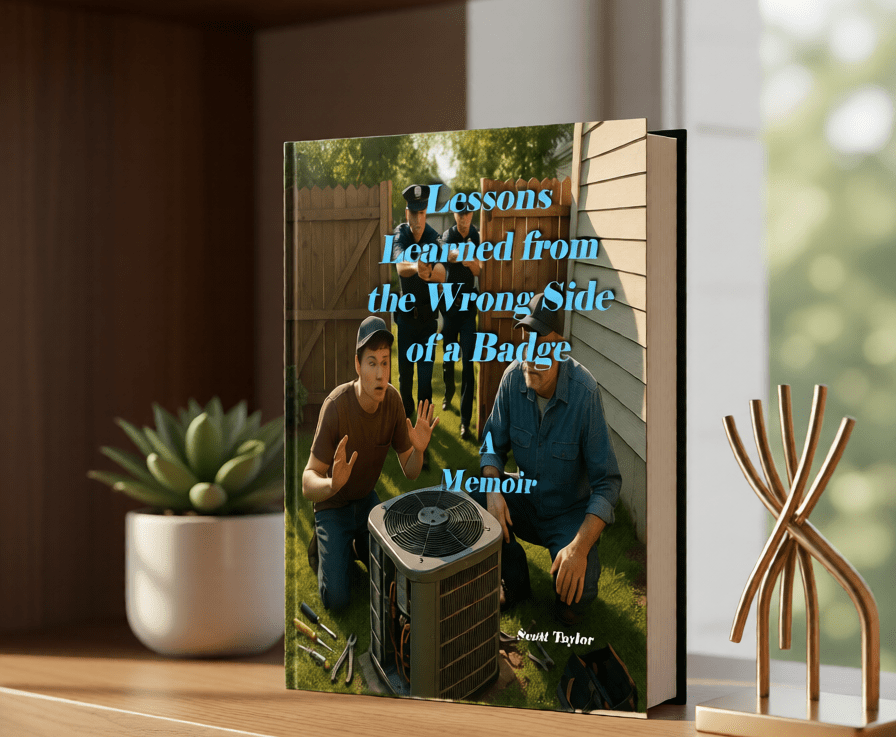
I did publish a memoir called “Lessons I learned at the wrong side of a badge. Yes, I had guns pointed at me and every mean, ugly, nasty thing you could imagine. After you read it, come back here, or there where you purchase it and tell me your thoughts.

BTW, it’s cheap and almost free if you’re on KDP.

#CharacterDevelopment #CreativeWritingTips #WritingCharacters #StorytellingTips #HowToWriteCharacters #FictionWriting #WritingAdvice #CreateRelatableCharacters #WritingHelp #BuildBetterCharacters

Mastering Hooks: Capture Readers in 3 Seconds

Mastering Hooks: Capture Readers in 3 Seconds

Struggling with the business side of writing? You’re not alone. Here’s a candid look at turning pages into paychecks—join the conversation.

Capturing and Maintaining Reader Attention in the Age of Overload

In a world where your readers’ phones buzz every few seconds, attention is the rarest resource. Great ideas aren’t enough. To connect, you need to cut through noise, spark curiosity fast, and keep delivering value line by line. This post breaks down why attention is harder to earn today—and practical ways to win and keep it.

Information Overload: The New Reality

Did I just interrupt your doomscrolling? Good—that’s part of the problem I’m writing against. I’m wading through the same flood you are: more to read, watch, and hear than any one person can hold. New posts, newsletters, videos, and podcasts never stop. Even careful, polished work gets buried under the pile.

Why Your Hook Only Gets 3 Seconds (and Why You Should Panic a Little)

Okay, writers, let’s be real for a second: your hook has the lifespan of junk mail. You know what I’m talking about—that envelope that lands in your hands, gets a three-second glance, and then, unless it screams “Open me!”, takes a one-way trip to the trash (or, as my mom used to call it, the “circular filing cabinet”). Your readers are doing the exact same thing with your title, subtitle, and opening line. If you don’t grab them immediately, well… let’s just say your hard work is headed for the digital equivalent of the recycling bin.

Your job? Be that one letter worth opening. You know the one—the one that makes you pause, unfold it, and actually read the thing. Let’s talk about how to make your writing that irresistible.

What Makes a Winning Hook?

A good hook isn’t just about sounding clever—it’s about making readers stop their scrolling, squint at your words, and think, “Wait, this is for me!” Here’s what your hook should do:

Signal relevance fast: “This is for YOU.” Not some vague “writer” or “reader”—you.

Make a clear promise: “Here’s what you’ll get if you keep reading.”

Stir curiosity: “You don’t know this yet, but you’re about to find out.”

Be specific: Use names, numbers, or real-world examples.

Set stakes: Show them what’s in it for them—time saved, pain avoided, or success achieved.

Sound human: No fluff, no jargon, no robotic nonsense.

Writing is Junk Mail (Bear With Me…)

Your title = The envelope sender: If you don’t seem trustworthy, intriguing, or relevant, trash.

Your subtitle/preview = The teaser on the envelope: What’s inside? Spell out the benefit in one clean sentence.

Your opening line = The first sentence of the letter: Hit them with tension, a question, or a surprise.

Subheads and bold lines = The P.S. on the letter: Reinforce your promise with quick, scannable takeaways.

If any of these pieces are vague, boring, or confusing, guess what? Your reader “files” you—and not in a good way.

The 3-Second Test

Before you publish, ask yourself three questions. Score each from 1–5:

Clarity: Can a stranger tell who this is for and what they’ll get?

Curiosity: Is there an unresolved question, tension, or surprise?

Credibility: Are there specifics (names, numbers, situations) to back this up?

If any score less than a 3, it’s time to rewrite. Sorry, but you owe it to your readers—and your ego.

Hook Formulas That Actually Work

Let’s get practical. These formulas are like cheat codes for writing irresistible hooks:

Problem + Time Frame + Outcome

Example: “Spend 10 minutes today and cut your email replies in half this week.”

Surprising Stat + So What

Example: “Half your readers leave by paragraph two—here’s how to keep the rest.”

Confession + Pivot

Example: “I lost my first 1,000 subscribers—here’s what I did differently on #1,001.”

Question + Consequence

Example: “What if your opening line is costing you 80% of your readers?”

Contrarian Angle + Benefit

Example: “Stop outlining—story your scenes instead.”

Tiny Promise + Clear Benefit

Example: “One sentence that makes every paragraph pull its weight.”

Specific Who + Outcome

Example: “Freelance writers: the 7-word reply that doubles approvals.”

Before-and-After Examples (Because We’ve All Been There)

Weak: “Let’s talk about writing hooks.”

Strong: “Your first line decides if your work gets read—or trashed in three seconds.”

Weak: “Here are marketing tips.”

Strong: “A non-gross way to sell your book in 15 minutes a day.”

Weak: “My editing process.”

Strong: “How I cut 27% of fluff—and gained 40% more readers.”

Weak (Fiction): “A woman faces a challenge.”

Strong: “She was supposed to be dead by dawn—and had a meeting at nine.”

Weak (Memoir/Essay): “Work overwhelmed me.”

Strong: “I didn’t quit my job—I misplaced it under 97 unread emails.”

A Quick Workflow to Nail Your Hook

Write 10 versions of your hook. Yes, 10. Just do it.

Underline your nouns and verbs. If they’re vague, swap them for concrete ones.

Add stakes: time, money, emotion, or risk.

Pick a tension device: question, contrast, surprise, or confession.

Read it out loud. Can you grasp it in one breath?

Do the phone test: glance at your hook for three seconds. If it doesn’t grab you instantly, rewrite.

Pitfalls to Avoid

Clever but unclear: If no one understands your wordplay, it doesn’t matter.

Throat-clearing: “In today’s world…” Stop. Just start where the energy is.

Overpromising: Big claims with zero specifics = instant distrust.

Passive voice and hedges: “might,” “could possibly,” “somewhat.” Nope. Be bold and direct.

Your Hook is Your Envelope

At the end of the day, your hook is the envelope that keeps your work from being trashed. Make it unmistakably for your reader, promise a real payoff, and make that promise impossible to ignore. Because, let’s be honest, we’re all one bad hook away from the literary recycling bin—and nobody wants to end up there.

Now, go write a hook that makes me stop scrolling. I dare you.

And while your at it, like, follow, share and help a fellow author out.

Thanks!

If the interests is there I will post more articles like this to assist you in your career of turning your paperback into a paycheck.

Best

Author Scott

Is it him, or is it you?

Is it him, or is it you?

Let’s talk about this mess we call political theater, shall we? Because holy shit, the amount of stupid shit happening on the world stage these days is staggering. It’s like watching a soap opera, but with worse scripts, uglier actors, and way more assholes. Social media, of course, eats this crap up. Every time a politician stumbles—physically, verbally, or just by existing—you’ve got the same lineup of Twitter warriors ready to pounce. They’re like rabid dogs foaming at the mouth, eager to unleash a fresh “buffoon” meme just so they can feel something inside their cold, dead hearts. But here’s the thing: how much of the shitstorm we see is real, and how much of it is just a big, steaming pile of manufactured chaos? Buckle up, because I’m about to take you behind the curtain of one of the dumbest political spectacles I’ve ever seen.


The UN Incident: A Shitshow for the Ages

Alright, so recently, our fearless president (pause for laughter) was at the United Nations doing his thing—you know, standing at a podium, attempting not to piss off the entire world. Pretty standard day for a world leader.But, oh no, the man looked a little wobbly at the microphone, and the internet collectively shit its pants. Cue the “He’s a moron!” comments. “What a buffoon!” someone shouts. “Did he forget how to human?” chimes in another. Honestly, it’s like a goddamn sport at this point, and these people are playing for the championship title of “Biggest Internet Dickhead.”But wait—because here’s the part no one talks about. You know, the part where the universe decided to fuck with him just to see if he’d break.First, the escalator incident. Picture this: the president and first lady are riding an escalator on their way up to the stage. Seems simple enough, right? WRONG. Because mid-ascent, some genius decides to turn off the goddamn escalator. Who the hell even does that?! I’m not saying it was a secret assassin-level mission to make them faceplant, but let’s be honest—it would’ve made for some killer viral footage. One wrong move, and we’d all be watching a slow-motion tumble meme for the next decade.But wait—because the shitstorm wasn’t done brewing.Next up, our guy makes it to the microphone, probably thinking, “Well, at least I didn’t fall on my face.” And BAM! The teleprompter dies. Just straight-up goes dark like someone unplugged it to charge their phone. Now, I don’t care who you are—when you’re standing in front of the world’s most powerful leaders and your script disappears, you’re gonna sweat a little. Hell, most of us would burst into tears and fake a fainting spell just to GTFO.But not this guy. Oh no. He decides to go rogue and wing it. He cracks some jokes, throws in a few ad-libs, and keeps the train rolling. Classic Trump. Of course, this makes his haters absolutely lose their fucking minds. Because God forbid he tries to lighten the mood when the teleprompter gods have clearly conspired against him.


The Double Standard: Could You Do Better, Karen?

Let’s take a moment to reflect: What if this shit happened to you? Imagine you’re at work, giving the most important presentation of your life, and suddenly someone yanks the PowerPoint out from under you. Oh, and they also turned off the elevator on your way up, so you had to awkwardly stumble into the room, already sweaty and pissed off.Could you keep your cool? Would you ad-lib your way to greatness? Or would you stand there like a deer in headlights while Brenda from accounting live-tweets your breakdown? Be honest—you’d fucking crumble. But when it’s a public figure, we just grab our popcorn and laugh like we’re watching a shitty sitcom.


The Reality of Political Theater

Here’s the thing: politics is one big circus. And not the fun kind with popcorn and elephants—it’s the kind where everyone’s drunk, the clowns are creepy, and someone’s probably going to get stabbed. What we see on social media is just the surface-level stupidity, carefully edited for maximum outrage. But behind the scenes? It’s a goddamn war zone. People are setting traps, pulling stunts, and spinning narratives like their lives depend on it.The escalator didn’t just “stop.” The teleprompter didn’t just “malfunction.” Shit like this doesn’t just happen. It’s all part of a bigger game, and we’re the idiots sitting in the bleachers, cheering for the chaos.


Final Thoughts: Humanity Is Exhausting

Look, I get it. Politicians aren’t exactly easy to love. Most of them are rich, out-of-touch, and probably don’t know how much a gallon of milk costs. But at the end of the day, they’re still human. They trip. They sweat. They get sabotaged by escalators and teleprompters from hell. And maybe—just maybe—we should cut them a little slack.Or don’t. Honestly, it’s more fun to watch people lose their shit over stupid things. Just remember: the next time you see a viral clip of someone “failing,” there’s probably more to the story. Or maybe there’s not, and they really are just a buffoon. Either way, political theater is just another chapter in the never-ending saga of stupid shit humans do.

Let’s get one thing straight: if you hate this president, there’s absolutely nothing—and I mean nothing—he could ever do to make you say anything remotely nice about him. Period. Full stop. End of story. He could personally save your dog from a burning building, hand you a wad of cash, and solve your student loan debt, and you’d still find a way to say, “Yeah, but he’s still a dick.”And don’t even get me started on the media. Those guys are like a pack of rabid hyenas, frothing at the mouth to tear apart every single thing he does. The coverage is, what, 97% negative? Ninety-freaking-seven percent. That’s about as close to unanimous hatred as you can get without someone sending out a “Destroy Trump” group email.


Meanwhile, Back in Reality…

Here’s the kicker: the country is actually doing better than it has in years. Let me say that again for the people in the back: things are going pretty damn well.Crime? Down. D.C., which is basically a madhouse on a good day, is somehow safer than it’s been in a while. Your dollar? Worth more. The economy? Chugging along nicely. But does any of that matter to the people who hate him? Hell no. He could literally cure cancer tomorrow—like, “Hey guys, I found the cure, it was in my sock drawer the whole time,”—and the haters would still lose their minds.“Oh, but why didn’t he cure it sooner?”
“This is just a distraction from [insert random scandal here]!”
“Sure, he cured cancer, but what about climate change?”
“Why is he even wearing socks?!”It’s like people are determined to hate him, no matter what. He could walk on water, and they’d just complain about how his shoes got wet.


The Bottom Line: Some People Just Wanna Hate

Look, I’m not saying you have to love the guy. Hell, you don’t even have to like him. But let’s at least be honest here: if you hated him from the start, you’re never going to give him credit for anything. It doesn’t matter what he does. He could fix the economy, solve world hunger, and rescue a kitten from a tree, and you’d still find a way to call him an asshole.And honestly? That says more about you than it does about him.So, go ahead and keep hating. But at some point, maybe take a step back and ask yourself: Am I mad because he’s actually terrible, or am I just mad because it’s trendy to hate him? Either way, congratulations—you’re officially part of the political theater circus. Grab some popcorn and enjoy the show.

What would you surrender for a story that won’t stop knocking?

What would you surrender for a story that won’t stop knocking?

I surrendered the glow. The soft, blue hum that filled the room after dinner. I set the remote down the way some people set aside sugar for Lent—deliberately, almost ceremonially—like I was laying a coin on a ferryman’s palm. The one-eyed monster blinked into its own reflection, and the living room exhaled. No laugh track. No canned cliffhanger. Only the fridge whispering, the clock ticking, the house going quiet enough for another world to speak.

That was the night my AR clicked on.

Not augmented reality. Author Reality. The dimension that lives behind every closed door and blinking cursor. It doesn’t need a headset, and it doesn’t apologize for being demanding. It’s the world that asks you to show up with the same seriousness you bring to your job, your family, your grief, your joy. It rewards the faithful, and it keeps its secrets from the curious who wander in for a minute and wander back out.

Is it worth it? Depends on what you want from a story: to be carried, or to build the boat.

Here’s the rhythm I’ve learned, the three-beat cadence of making a book: if I’m not writing, I’m editing. If I’m not editing, I’m sharing—sending flares from my lighthouse so readers can find the shore I’ve drawn by hand. The work doesn’t pause when inspiration does. The tide moves with or without me, and the only way to get anywhere is to put an oar in the water every day, even when the fog is thick.

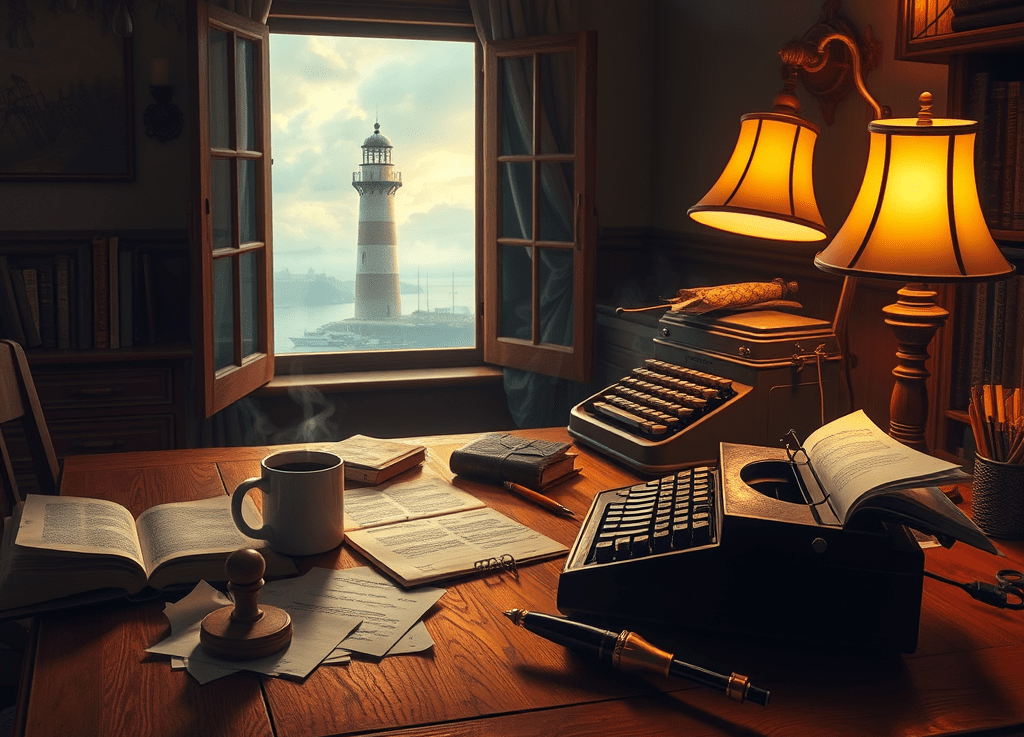
In AR, everything means more than it looks. A mug of coffee stops being a mug. Steam rolls out like sea fog over the harbor city I sketched in a January notebook—the one with crooked alleys and market bells and a lighthouse whose stair treads know my footsteps by now. The keyboard isn’t plastic and wires; it’s a compass that points toward scenes I haven’t met and scenes I’m avoiding. The cursor blinks like a beacon: here, here, here. Come back to work.

Characters are the first to step through. They don’t knock; they appear mid-argument, mid-laugh, mid-betrayal, dragging weather from their world into mine. A woman with ink-stained fingers and a secret she thinks is hers to keep sits across a table I’ve never owned, tapping out a rhythm that nags me until I write it. A courier with a map stitched into his jacket refuses to sleep until I let him miss his train. They bring me their trouble and their hope and ask me to be brave enough to tell the truth about both.

Writing is the first excavation. It’s the rush of discovering a bone in the sand and imagining the whole animal in a heartbeat. Then comes editing—the archaeology that happens with a brush instead of a shovel. Line by line, brush, brush, brush. I dig out the clean edges of the story from the clay of my habits. I cut the clever lines that don’t serve the skeleton. I sand away the splinters of scenes that snag but don’t support.

Editing is humbling. It asks: if you were a reader with a train to catch and twenty minutes to spare, would you keep turning pages? It makes you honest. It makes you protective of the reader’s time like it’s your own. It teaches you that your favorite sentence is sometimes the one that has to go.

Then there’s the sharing. I used to call it marketing and feel like I’d swapped my compass for a billboard, but that was before I understood it as lighthouse work. A story without a reader is a ship locked in the bottle: complete, exquisite, invisible. So I keep the glass polished. I write the note that says, “This is the world waiting inside,” and I send it in a thousand bottles. I accept that some will wash back to my own feet. I light the lamp again tomorrow. Maintenance isn’t glamorous, but neither is missing land because the light went out.

What did I trade for this? The easy glow of someone else’s story. The comfort of predictable arcs and neat resolutions. I traded hours that evaporated into hours that accrue. The time I used to float became time I build.

Not all trades feel noble. There are nights when the couch calls me by name, when the news scrolls like a slow-motion car wreck and every good show has three seasons ready to swallow me whole. There are mornings when the alarm sounds like a dare. I don’t always win. But I keep a little ledger—a trade log that tells me, honestly, what I gave up and what I made instead.

Gave up: an hour of television, a mindless scroll, a snack I didn’t need. Built instead: 827 words that moved a character from lying to telling the truth. Reshaped a chapter so the secret doesn’t leak too soon. Jotted a note about how the lighthouse uses a lens I’d never heard of before—Fresnel, a word that tastes like a bell.

Some nights the ledger holds only this: showed up. Sat with the blank and did not run. That counts. That’s a bead on the string.

Is it worth it? I don’t pretend I don’t miss the weightless time. Ease is its own kind of bliss. But there’s another kind: the exhale that comes when a paragraph clicks into place after a week of sanding. The email that says, “I brought your character to the doctor with me; she kept me company in the waiting room.” The message that says, “I didn’t think anyone knew how this felt until I read your chapter.” Those are the moments when the ledger pays interest.

Author Reality is not glamorous. It’s not a montage scored to moody piano. It’s a series of ordinary choices that turn into extraordinary pages. It is the practice of saying no to something pleasant so you can say yes to something that will outlast you. It’s a room you have to reenter every day because the door locks when you leave. And it is, somehow, always worth the key.

Maybe you feel the familiar itch in your palms. The tug toward building instead of consuming. The quiet knowing that you are meant to make something you cannot yet see the edges of. If that’s you, come with me. We can navigate together, even in different boats.

Here’s how to open your AR door:

For one week, switch off the one-eyed monster. Thirty minutes a day is enough to crack the seam between here and there. Put your remote in a drawer, set a timer, and let silence stretch long enough to get uncomfortable. On the other side of discomfort is a voice that wants to talk to you.

Choose your role each day so you don’t fight your own weather. Calm sea? Write new words, even if they’re ugly. Wind picking up? Edit yesterday’s draft with gentle eyes. Fog horn blowing? Share a piece—a paragraph, a line, a feeling—with someone who might need it. Writing, editing, sharing. Every day has a job.

Keep a tiny trade log. One line. What you traded. What you built. Gave up: 40 minutes of scrolling. Built: 3 new pages and a better scene transition. Gave up: a second helping of dessert. Built: the energy to reread my own work without hating it. The log is proof. The log is a map.

Offer a postcard from your AR. A sentence, a sketch of a character, a logline that scares you a little to say out loud. Tell me why it matters to you. We anchor each other when we speak our worlds into air.

You don’t need a headset to live in augmented reality. You need intention. You need a door you’re willing to close and a light you’re willing to switch on. You need the courage to choose your story over the millions that want to borrow your attention for free and charge you with regret later.

I won’t pretend it’s easy to keep that light burning. But I can promise this: the worlds we build in AR have a way of building us back. They give us patience and precision and a tenderness for our own imperfect drafts. They teach us to wait for the fog to lift and to move forward anyway, even when it doesn’t. They send back echoes in the shape of readers who bring our characters to breakfast, to chemotherapy, to bed. They make meaning out of minutes.

The light is on. The keys are warm. The door is unlocked. If you’re ready, step into your AR. Leave your shoes at the threshold and carry only what you need: your stubbornness, your curiosity, a pen that doesn’t mind being chewed. I’ll be in the lighthouse, keeping watch, sending signals. When your boat appears on the horizon, I’ll wave you in.

We have worlds to make.

#WritersLife #BookTok #Bookstagram #WritingCommunity #AmWriting #IndieAuthor #WritersOfInstagram #AuthorTok #WritersOfTwitter #WritersOfX #Worldbuilding

Avoid Marketing Mistakes: Tips for Authors

Avoid Marketing Mistakes: Tips for Authors


When you flush money down the shitter expecting results, you’re not just throwing a party for your dignity—you’re throwing it a surprise funeral. Spoiler alert: the porcelain throne isn’t some magical fountain of success. It’s not going to spit out gold bars or a winning lottery ticket. No, it’s just a glorified trash can for bad decisions and the aftermath of your Taco Bell binge. And let’s be real, the only thing you’re going to find in there is regret, a questionable smell, and the faint echo of your own stupidity.
Seriously, what were you expecting? A genie to pop out and grant you three wishes? Hate to break it to you, but the only thing coming out of that toilet is the ghost of last night’s tequila and the shattered remains of your self-esteem. Congratulations, you’ve officially turned your bathroom into a shrine for poor life choices. Light a candle. Say a prayer. And for the love of God, stop flushing your hopes and dreams down the crapper.


So, my book, Stupid Shit: A Survival Guide for a World Gone Mad, is almost ready to drop, and now it’s time to tackle the beast that is marketing. And let’s be honest—marketing can feel like trying to sell ice to penguins while wearing a clown suit. But hey, if you’re writing a book about stupid shit, you’re already halfway to genius. The trick is to avoid doing stupid shit while marketing your book. I know people who’ve written books, slapped them on Amazon, and then sat back waiting for the million-dollar checks to roll in. Should we tell them? Or just let them keep refreshing their bank accounts in blissful ignorance?

Then there are the people who pay someone else to do their marketing for them. Because nothing screams “I’m invested in my book” like outsourcing the entire process to someone who couldn’t give two shits if your book sells or ends up as a coaster for their coffee mug. Let’s be real—these people don’t care about your literary masterpiece on why Rome really fell. They’re not sitting there thinking, “Wow, this author’s insights into ancient history are going to change the world!” No, they’re thinking, “How fast can I slap together a half-assed Facebook ad and still charge them $500?”
If you’re going to be an author, you’ve got to face the cold, hard truth: unless you’ve got the luck of the Irish, or 50 shades of luck in the form of a billionaire with a fetish for spanking young women with tender white bottoms, you’re going to have to work a little harder. And no, I don’t mean “harder” in the Christian Grey sense. I mean you’re going to have to dive headfirst into the murky, soul-sucking waters of marketing your own damn book.


Because here’s the thing: no one is coming to save you. There’s no knight in shining armor galloping in on a horse made of Amazon algorithms to rescue your sales. You’re not Anastasia Steele, and your book isn’t going to magically seduce the masses just by existing. You’ve got to put in the work. You’ve got to convince people that your book is worth their time, their money, and their precious attention span, which, let’s be honest, is shorter than a TikTok video these days.


So, unless you’re sitting on a pile of cash and a dream that some marketing guru is going to turn your novel into the next Fifty Shades of Grey, it’s time to roll up your sleeves and get to work. Because the only thing worse than writing a book no one reads is paying someone else to pretend they care about it while they’re secretly Googling “how to make passive income without trying.”


Many people get on Twitter or Facebook and do what…Spam.
You know that guy who sends 16 identical pitches to random blogs in five hours? Yeah, don’t be that guy. Spamming your book everywhere is like farting in an elevator—it’s loud, obnoxious, and everyone hates you for it. Instead, focus on connecting with your actual audience. Who are they? People who love sarcasm, humor, and a healthy dose of WTF moments. Speak to them directly, not to the void. The void doesn’t buy books. The void doesn’t even have a credit card.
Learn from the Snowqueen’s Icedragon (Yes, That’s a Real Thing)


Let’s take a moment to appreciate E.L. James, the queen of turning fan fiction into a global phenomenon. Back in 2009, she wrote Fifty Shades of Grey as Twilight fan fiction under the pseudonym “Snowqueen’s Icedragon.” (Yes, really. Let that sink in.) She posted it on fanfiction.net, where she tapped into an existing fanbase of people who were already thirsty for sparkly vampires and awkward romance. Genius, right? She then moved her story to her own website, self-published it, and let word-of-mouth do the heavy lifting. By the time Hollywood came knocking, she was already rolling in cash and probably laughing maniacally while swimming in a pool of royalty checks. Moral of the story? Know your audience, and don’t be afraid to embrace the absurd.


Know Your Audience (Hint: It’s Not Karen from Accounting)
If you’re marketing your book to “everyone,” you’re marketing it to no one. Your book isn’t for everyone—In my case my audience is people who appreciate humor, sarcasm, and the absurdity of modern life.

Who is yours? Lean into that. Your ideal reader isn’t Karen from accounting who spends her weekends manifesting her dream life with crystals and self-help books.

My reader is the person who laughs at fart jokes, wonders why the world is so damn ridiculous, and probably has a meme folder labeled “For When I Lose Faith in Humanity.”
Social Media: Stop Screaming “BUY MY BOOK” Like a Lunatic.


If your social media strategy is just “BUY MY BOOK” on repeat, you’re doing it wrong. Social media is like a party—if you’re the guy standing in the corner shouting about your book, people will avoid you like you’ve got the plague. Instead, In my case I will share funny anecdotes, behind-the-scenes moments, or even snippets of the book.


The world is too damned serious and I want to make people laugh, make them think, and then—then—tell them about my book.


Balance is key. Think of it like foreplay. You don’t just dive in screaming, “BUY MY BOOK!” You warm them up first. Buy them dinner. Tell them a joke. Then hit them with the sales pitch.
Start Marketing Before You’re Ready (Because You’ll Never Be Ready)


Waiting until your book is out to start marketing is like showing up to a potluck with an empty plate. Start building hype now. Share your writing process, tease your cover design, or post about the stupid shit that inspired your book. The earlier you start connecting with your audience, the more invested they’ll be when your book drops. And remember, it’s not about follower counts or newsletter subscribers—it’s about quality over quantity. A small, engaged audience is worth more than a million bots or disinterested followers. Treat your audience like gold. Or at least like a really good burrito. Both are precious.


I know way too many authors who don’t give a shit—or even two fucks—about their audience. And let me tell you, folks, that ain’t gonna fly. Your audience isn’t just some faceless blob of people who magically buy your book because you exist. They’re your peeps. Your tribe. The people who are willing to spend their hard-earned cash on your ramblings about why Rome really fell or whatever other nonsense you’ve decided to write about. If you treat them like a pot pie you left in the air fryer too long—burnt, forgotten, and stinking up the place—they’re going to do what any self-respecting human would do: set off the fire alarm, leave your ass hungry, and never come back.


Here’s the thing: your audience is the lifeblood of your book. Without them, you’re just some weirdo shouting into the void. And the void doesn’t buy books. The void doesn’t leave reviews. The void doesn’t even care that you exist. So, if you’re not willing to put in the effort to connect with your readers, you might as well pack it up now and save yourself the embarrassment of watching your Amazon ranking plummet faster than your self-esteem after reading a one-star review.


Treat Your Audience Like Gold (Not Like That Mystery Meat in the Back of Your Freezer)
Your audience isn’t stupid. They can tell when you’re phoning it in. If you’re just throwing your book out there and hoping for the best, they’ll notice. And they’ll leave. Fast. Think of your audience like a delicate soufflé—you’ve got to nurture them, pay attention to them, and for the love of God, don’t slam the oven door by ignoring their needs. Otherwise, they’ll collapse into a sad, deflated mess, and you’ll be left wondering why no one’s buying your book.


So, how do you keep your audience happy? Simple: give a shit. Engage with them. Talk to them. Make them feel like they’re part of something special. Because if you don’t, they’ll find someone else who will. And trust me, there’s no shortage of authors out there who are more than happy to steal your readers while you’re busy treating them like yesterday’s leftovers.


Don’t Be That Author Who Thinks They’re Too Cool for Their Readers


You know the type. The author who thinks they’re some literary god, too busy basking in their own brilliance to bother with the people who actually read their work. Newsflash: you’re not Hemingway. And even if you were, Hemingway would probably tell you to stop being such a pretentious asshole and buy your readers a drink. Your audience doesn’t owe you anything. They don’t have to read your book. They don’t have to leave you glowing reviews. And they sure as hell don’t have to stick around if you treat them like crap.


So, here’s the deal: if you want your audience to care about you, you’ve got to care about them first. Show them some love. Make them laugh. Give them a reason to stick around. Because at the end of the day, your audience isn’t just a bunch of random assholes—they’re the reason your book exists. Treat them like it.


Don’t Be Afraid to Be Bold (Or a Little Stupid)
My book is called Stupid Shit, so you better believe I’m going all-in on audacious marketing. Humor, sarcasm, and a touch of absurdity to grab attention. Because let’s face it, the world is already full of stupid shit—my book is here to make sense of it. Or at least laugh at it.


Marketing doesn’t have to be a soul-sucking exercise in futility. It can actually be fun. Just remember: don’t spam, don’t rely on bots, and don’t try to be everything to everyone. Focus on your audience, be genuine, and let your personality shine through. After all, the world is already drowning in stupid shit—my book is here to be the life raft. Or at least the inflatable pool noodle.
Sign up for e-mails, subscribe, you know the drill.

I have to get back to work on editing 1300 Feet Per Second which is a thriller.
Next time we visit I will share my writing techniques regarding letting sleeping dogs nap while I work on something else and then return to wake them up and get them howling.
-Best

Navigating the Challenges of Writing in the AI Era

Navigating the Challenges of Writing in the AI Era

I had lunch with a dear friend recently—a lovely person who discovered that writing is, in fact, a business. Yes, a business. Like selling hot dogs or running a laundromat, except with more existential dread and fewer health inspections. Over sandwiches, we discussed the latest in literary absurdity: AI-driven software that can crank out an entire book faster than you can say, “What the actual fuck?” Apparently (and I can’t confirm this, but it sounds stupid enough to be true), Kindle Direct Publishing (KDP) now limits authors to uploading no more than three books a day. Three. A. Day. Because, you know, that’s a totally normal output for a human being and not at all a sign that Skynet is moonlighting as a romance novelist.

Let’s talk about writing a book the way most authors do—or at least the way we used to before AI started pooping out novels like a malfunctioning vending machine. Writing a book used to be a deeply personal, soul-crushing process that required creativity, discipline, and the kind of stubbornness usually reserved for toddlers refusing to eat broccoli. Here’s how it went down in the pre-AI era:

1. Generating Ideas

Back in the day, authors had to rely on their own brains to come up with ideas. No ChatGPT, no Bard, no “AI Muse 3000.” Just raw, unfiltered human creativity. Inspiration came from life experiences, dreams, or that one weird conversation you overheard at Starbucks where someone said, “I don’t care if it’s illegal, I’m marrying the ferret.” Writers carried notebooks everywhere, jotting down ideas like lunatics scribbling manifestos.

For example, when I wrote a book about sailing, I didn’t just Google “how to sail” and call it a day. No, I lived it. I chartered a sailboat, had the crew walk me through the process, and spent the day pretending I was Captain Jack Sparrow (minus the eyeliner and rum). That night, when I lay down in my hotel bed, the room was still swaying. That’s the kind of detail you can’t fake. That’s world-building, baby.

2. Outlining the Story

Once you had an idea, you had to outline it. This was where the real masochism began. You’d map out the plot, develop characters with backstories more complicated than your family drama, and, if you were writing sci-fi or fantasy, create entire worlds with their own rules, languages, and economies. It was like playing God, except no one worshipped you, and you didn’t get a day off.

Some writers “pantsed” their way through the story (a.k.a. winging it like a drunk pilot), while others meticulously planned every chapter. I personally use a beat sheet from Save the Cat, because apparently, I enjoy turning my creative process into a spreadsheet. Nothing says “art” like Excel.

3. Writing the First Draft

Ah, the first draft. The part where you sit down, stare at a blank page, and think, “Why the hell did I decide to do this?” Writing was slow, painful, and required the kind of discipline usually associated with monks or Navy SEALs. You’d aim for a specific word count each day, and if you hit it, you’d reward yourself with chocolate or alcohol—or both.

Writer’s block was a constant companion. Without AI to suggest ideas, you had to push through it on your own. Some people went for walks. Others screamed into the void. I personally found inspiration in coffee, wine, and the occasional existential crisis.

4. Revising and Editing

Once the first draft was done, the real torture began: revising. You’d read your manuscript over and over, catching typos, fixing plot holes, and wondering why your protagonist sounded like a cardboard cutout. Beta readers would give you feedback like, “I didn’t connect with the characters,” or “This part was boring,” and you’d resist the urge to reply, “Well, Karen, maybe you’re boring.”

If you could afford it, you’d hire a professional editor. If not, you’d edit it yourself, which was like performing surgery on your own child. Painful, messy, and guaranteed to leave scars.

5. Research

Research is the necessary evil of writing, especially for non-fiction or historically accurate fiction. It’s the part of the process where you willingly dive headfirst into a rabbit hole of facts, only to emerge hours later wondering why you now know the mating habits of 18th-century pigeons but still haven’t figured out what your protagonist’s name is. Research is both a blessing and a curse—it gives your work depth and believability, but it also makes you question your life choices when you’re Googling things like, “How long does it take for a body to decompose in a swamp?” and praying your internet provider isn’t judging you.

For example, if you’re writing sci-fi, you might find yourself studying quantum physics or emerging technologies, which sounds impressive until you realize you’re just trying to figure out how to explain time travel without sounding like a lunatic. Or, if you’re me, you might Google “how to sabotage an airplane” and then spend the next week convinced that the FBI is about to kick down your door. I mean, imagine it: covert agents taping over your outdoor cameras, RF jamming your phone so you can’t call for help, cutting the power to your house, shooting your dogs (RIP, Fido), and snipers perched in trees a mile away, just waiting for you to answer the door in your pajamas—or, let’s be honest, nude—so they can interrogate you about your questionable search history.

Wait. I never Googled that. Nope. Never happened. But damn, wouldn’t that make a killer chapter in a thriller? Picture it: the protagonist is a writer who accidentally stumbles onto some classified government conspiracy while researching their next book. Suddenly, their innocent Google searches turn into a one-way ticket to paranoia-ville, complete with black SUVs tailing them and mysterious men in suits showing up at their local coffee shop. Someone call Netflix—I think I just wrote their next hit series.

But seriously, research is the backbone of good writing. Whether you’re crafting a historical epic or a sci-fi adventure, you need to know your shit. As Patricia Leslie points out, research is essential for both fiction and non-fiction writers. It helps develop characters, make settings believable, and weave fact and fiction together so seamlessly that readers can’t tell where one ends and the other begins

For non-fiction, accuracy is king. For fiction, it’s more like a benevolent dictator—you can bend the rules a little, but you still need to know what you’re doing.

The trick is to use research as a tool, not a crutch. Sure, you could spend weeks poring over vintage newspapers or interviewing experts, but at some point, you have to stop researching and start writing. Otherwise, you’ll end up with a head full of useless trivia and no book to show for it. And let’s be honest, no one’s going to be impressed that you know the exact dimensions of a 16th-century guillotine unless you actually use that knowledge in your story.

So, to all the writers out there: research responsibly. And maybe clear your browser history every now and then, just in case. You never know when the FBI might decide to pay you a visit.

6. Finding a Publisher

Before self-publishing, authors had to grovel at the feet of literary agents and publishers. You’d write query letters, pitch your book, and wait months for a response, only to get a rejection that said, “Not for us, but good luck!” It was like online dating, except instead of ghosting you, they sent a polite “no.”

7. Marketing and Promotion

Even after all that, the work wasn’t done. Authors had to promote their books like used car salesmen. Book tours, media appearances, social media campaigns—you name it. You’d beg people to buy your book, and they’d say, “I’ll wait for the movie.” Thanks, Aunt Linda.

The AI Problem

Now, thanks to AI, anyone can “write” a book in minutes. But let’s be honest: these programs aren’t writing books; they’re shitting them out. And the result? A flood of mediocre, soulless content clogging up the literary world like a fatberg in a sewer.

I’m all for technology as a tool. Word, Grammarly, ProWritingAid—these are great. But AI-generated books? That’s where I draw the line. I’m pushing for legislation that requires AI-generated books to wear a big, ugly label that says, “This was written by a robot.” Readers deserve to know if the “author” of their favorite romance novel is a human or a glorified toaster.

Final Thoughts

Writing is a job. A hard, thankless, occasionally soul-sucking job. There are days when I stare at my manuscript and think, “Why am I doing this?” But then I remember: because I love it. Because it’s who I am. And because the world needs more books written by real people with real stories to tell.

My book, Stupid Shit, is coming soon. Subscribe today so you can grab a copy when it drops. Trust me, it’ll be worth it. Or don’t. I’m not your mom.

-Best