Tag: lawn

Timedok

Timedok

What is it, and why does it have that name?

The premise is this: Years ago, I was one of those inquisitive kids who took things apart to discover how they worked. When I was old enough to push a lawnmower, I learned that many in my area didn’t like mowing grass. This was long before there was such a thing as a lawn service. Why? I fought to collect $2 for the front and $2 for the backyards. That includes raking, edging, and so on.

Pop refused to let me use the ‘family lawn mower.’ Had that been my kid, I would have encouraged it. Pop failed to see the value of teaching kids leadership through stretching their wings. The cost of that ‘family mower’ was nothing compared to the growth potential of his son…me.

Fate or God intervened. On the way home from school one day (via the alleys on garbage day), someone was discarding an old mower that had seen better days.

I brought it home, went straight to the library, and found a book on small engine repair that helped me fix the troublesome item.

The journey had just begun, and at the ripe old age of eleven, I had to learn not only about the care of a lawn mower but also about marketing and business.

I grew that business by purchasing used equipment at garage sales and, yes, being mindful of taking the alleys home on trash days…just in case.

Fueling my interest in electronics, I embarked on a self-taught journey into radio and TV at the age of eight. I proudly earned my first amateur radio license at thirteen, becoming a certified operator.

You guessed it: I purchased a broken color TV at a garage sale. I fixed it, and I had the first color TV in our household. It wasn’t just a TV, mind you; it was a Curtis Mathes console entertainment system. The $50 I spent back then I earned by mowing yards was a huge chunk of change for the 60’s.

In the days before the Internet, the library acted as my personal Google, where I could find answers to any question. In those days, computers and electronics were filled with more tubes than transistors, creating a maze of wires and glowing glass.

I built the transmitter for my ham radio activities from used parts gathered from cannibalized radios and TVs that I bought at garage sales or brought home on garbage day. One man’s trash is another’s treasure, and this was not lost on me, even at that tender age.

We only had a few channels back in the day, and they went off the air after the nightly news. Books were my escape from reality when not working on something outside of the home.

Fast forward a few years, and the world around us has changed drastically.

Church had become a prominent fixture in my life, providing me a sense of community and spiritual fulfillment. I only say that to weave the tapestry of the Timedok story together.

At church, my reputation for being able to fix things, quickly spread. Despite all the VCRs and other items I repaired for my church family, I never received any payment. I never once requested that of them.

To this day, I consider them family, and the bonds we formed then are still strong.

One of my friends approached me, holding a broken file marker date stamp machine, and asked, “Could you possibly repair this?”

I shrugged, and from that simple gesture, Timedok was born.

Since that day in 1995, I have repaired thousands of them, spending countless hours tinkering with their intricate mechanisms.

I stopped marketing the business because word of mouth alone keeps me busy enough. The machines that make it to my shop, after failed repair attempts from other ‘companies,’ always take the longest to fix. The reasons are simple, not just anyone can fix these things.

Even though the original concept design dates back to 1939, these machines are still indispensable.

Despite technological advancements, the need for them has not entirely disappeared, and unless there is a significant shift in government practices, it is unlikely to ever happen.

Every year since I became a dealer for Rapidprint, they have consistently increased the price on all their products by at least 2%. Those machines have increased from around $500 to over $1000.00.

Their competition has not followed suit in drastically raising their prices, which leads me to believe that Widmer will eventually gain a more significant portion of the market share as Rapidprint prices itself out of the business of file stamp machines.

Even though future price increases may occur, Timedok has chosen to keep its labor prices unchanged.

Over time, the cost of goods and services has been steadily rising.

The freight charges from Connecticut to Dallas for one machine are upwards of $65. These companies are likely facing financial difficulties and are increasing prices across the board to generate more income.

Small companies like mine were adversely affected by the economic downturn caused by COVID and the subsequent shifts in the business landscape.

Point of this blog post….?

If you need assistance or plan to buy a new one of these machines, be sure to do so before the end of this year. Right after you folks (the government) get your new budgets, they conveniently change their prices. dok At Timedok.com

When not working on clocks, I focus on my writing career because it complements my lifestyle.

Stay tuned for the latest updates on my novels and short stories and my work as the Executive Director of The Carrollton League of Writers.

My latest novel, Earth’s Last Hope, can be found at this link.

-Best

Electronic News

Many of you will not really have much knowledge of what I am going to talk about here as it relates to the electronic industry and your pocket book. By the time your done reading this, you will be enlightened somewhat.ImageImage

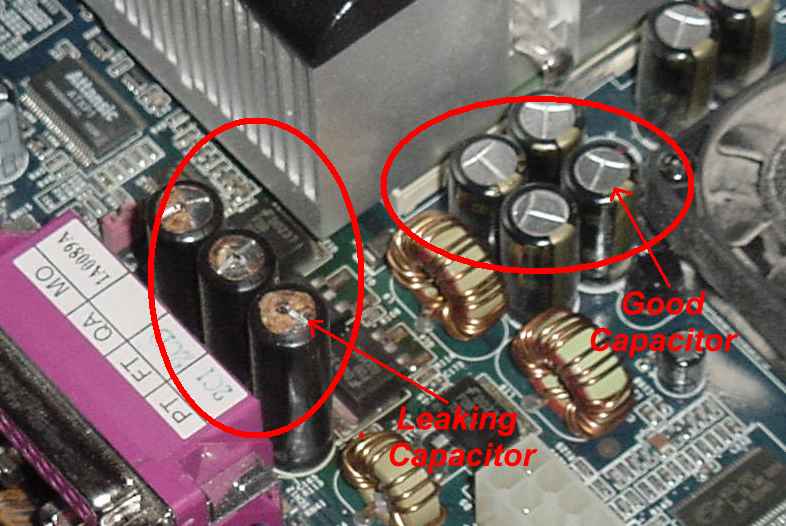
Not too long ago some Chinese company produced something known to me and anyone who knows technology as a capacitor.  These live in just about any electronic device that you might have.

The problem is that the formula for these was invented in Japan and it was liberated “Stolen” from the Japanese plant and sold to someone in China.  Industrial espionage happens all of the time and there are many famous cases that I could site; The TV and Radio are two off the top of my head.

The problem with this formula is that they did not get all of it.  They got the part for the dielectric, (the part that separates the internal plates from shorting) but they did not obtain the stabilizer for the dielectric; so after a few months to a few years the dielectric breaks down and fails.   These capacitors were sold to many different manufacturers including Dell and LG to name two.

Other computer board manufacturers are also loaded with these defective capacitors.  One of my LG monitors stopped working and for about $6 and change and about one hour worth of work, I replaced all of the capacitors on the power supply/ inverter board and, Viola; the monitor is as good as new.  The most difficult part of the procedure was taking the monitor apart without damaging it.

Last night one of my desktop crapped out.  The power supply went south.  I happen to keep new power supplies on hand so I simply upgraded the power supply from 300 watts to 600 watts which also sports a larger cooling fan.  It was a win win!

As the power supply houses some pretty cool parts for those of us who still build things, I took it apart and there it was, a capacitor that was bloated, standing out like a sore thumb.  The fix probably would have cost me $.50 but as it was a 300 watt power supply I elected to scrap it.  300 watts is really too small, and of course much cheaper than a 600watt.

A few weeks ago I was working on a dell for a gentleman and the onboard video card was working terribly.  There were lines in the picture and it was not syncing correctly.  Examining the board around the GPU I noticed, you got it, puffy capacitors.  I installed an inexpensive video card and turned off the internal one. Problem solved until some of the other capacitors in the box fail.

A friend of mine works for a City here in Texas and part of his job has him traveling to the Dump of all places.  There in some building at the dump are flat screen TV’s microwaves and so forth that have been discarded.  He picked up several flat screen TV’s that were discarded and for a few dollars repaired them.  While he is the ultimate recycler, it is a shame that we do not repair things any more.  One has to wonder if we are spending too much time with video games instead of tinkering. One night at dinner with some friends I was gob smacked to learn that one of the guys at the table had no idea how to change spark plugs.   These are the type of people who call on people to do things for them.  While it may make financial sense to do this I simply cannot pay someone to do something that I am perfectly capable of doing with a few exceptions.

This week being “earth week” I would encourage you to think about getting things repaired instead of trashing them when they break.  Electronics are known in the industry as Ejunk.  There are companies that specialize in recycling this type of thing but, they are becoming harder to come by.   I suspect that the EPA makes this type of business a tough one to run, and not be out of compliance in some small way.

Most of us have no reason to know this but, the dumps all over the country are filling up.  There is a dump not too far from me here in north Texas that at one time was low land covered in water; and is now reminding me of the foothills in NorthernCA.

A lot of this e-junk is shipped to third world countries where families hover over open fires, melting the solder with the fire, removing the parts off the circuit boards for the metals that they contain.  Since it is an open fire, the board is blackened and the people doing this breath in those toxins along with their children who are helping.  It does not even stop there as this residue litters the grounds, the water supply, the air, and what have you.  We here in this country do not have a clue; we simply think that we do our part by most of the time, throwing that soda can in the blue bin.  Once we toss stuff into the bin do we ever think about it?

I come from a time when there was not so much stuff trashed.  I bought a broken TV at a garage sale for $5 as a kid; and learned how TV’s worked and for about $3.50 for a new high voltage rectifier tube, I had a nice looking portable TV at the age of 10. At 13 I wanted money to buy a new CB and antenna.  Mowing lawns seemed like a good job. One could make $4 a yard…. Currently I pay $25 a week, and this is one thing that I will not give up.  As I put my plan in the early 70’s together, I would first need a lawnmower as my dad was dead set about me not using the family lawn mower on others peoples yards.  He was right to be concerned as I killed 3 lawnmowers on one person’s yard for $2. That is another story..

Again I went to garage sales and found a lawn mower that did not work.  I pulled it through to make sure that there was compression and nothing bent, and bought it for $15.  After a trip to the library checking out a book on small engines, I digested the book.  Lawn mowers have points and a condenser under the flywheel and those are known to be problematic.  I checked for spark and there was none.  The local grocery store sold parts such as these and for a few $$ back in the day, so I now had my own lawn mower.

I purchased three lawnmowers all together in similar fashion along with an edger.  Gas cost about a quarter to fill up my can and that would last me about a week.  I created my fist direct marketing campaign at the age of 13 with three sheets of paper, two pieces of carbon paper and my best penmanship that I could muster.

I mow yards

Please call 242-XXXX

For an estimate, ask for Scott.

I wrote this until I filled up a sheet of paper and then cut them out much like Avery labels would look today. Armed with a shirt pocket full of “flyers” and some scotch tape I went door to door canvassing my entire neighborhood.

The interesting thing about all of this is that those types of campaigns have about a 2% return or hit rate.  That was the figure 42 years ago and oddly enough, that is still the figure today! I still do direct marketing campaigns; just not to do yard work. J

I did this for several summers; it paid for my first car, and lots of photographic equipment, and oh yes a CB that quickly turned into Ham Radio equipment.

Where are those entrepreneurs today?

As you can tell, I still do this today.  Not that I go buy things at garage sales to repair but, I do restore antique radios that I have purchased either online or from individuals. Some just make their way too me as friends know that I do it, and they are tired of storing it.

So when your flat screen TV dies if you know anyone with any technical prowess, have them search the web to see if someone has posted a fix.  It may very have been me.  Have them try it.  The parts are available in the form of a kit from some people online for as little as $12.

There is a good feeling that comes from repairing something that otherwise would have been put into that growing mountain of pampers, kitchen waste, and of course defective electronic devices that needed about $6 to $10 in parts.

As a side note I did this with cars as well.  At one time I had 13 cars which I bought for next to nothing as they were broken. I picked up parts from a junk yard that the owner had an old TV, which always needed fixing.  I would fix them and sell them and I enjoyed the process.  That was back before the computer was installed into the car which controls everything relying on sensors for information.

Like the lawnmower, back then you needed spark, gas, air and compression.  Today you need an analyzer of some sort that can interrogate the onboard computer and find out what the failure is.  Usually some sort of sensor that you did not know that you had.

-Best to you and those that you care about!