

When lights fail, well they just fail!
Not so much with the CFL or LED variety.

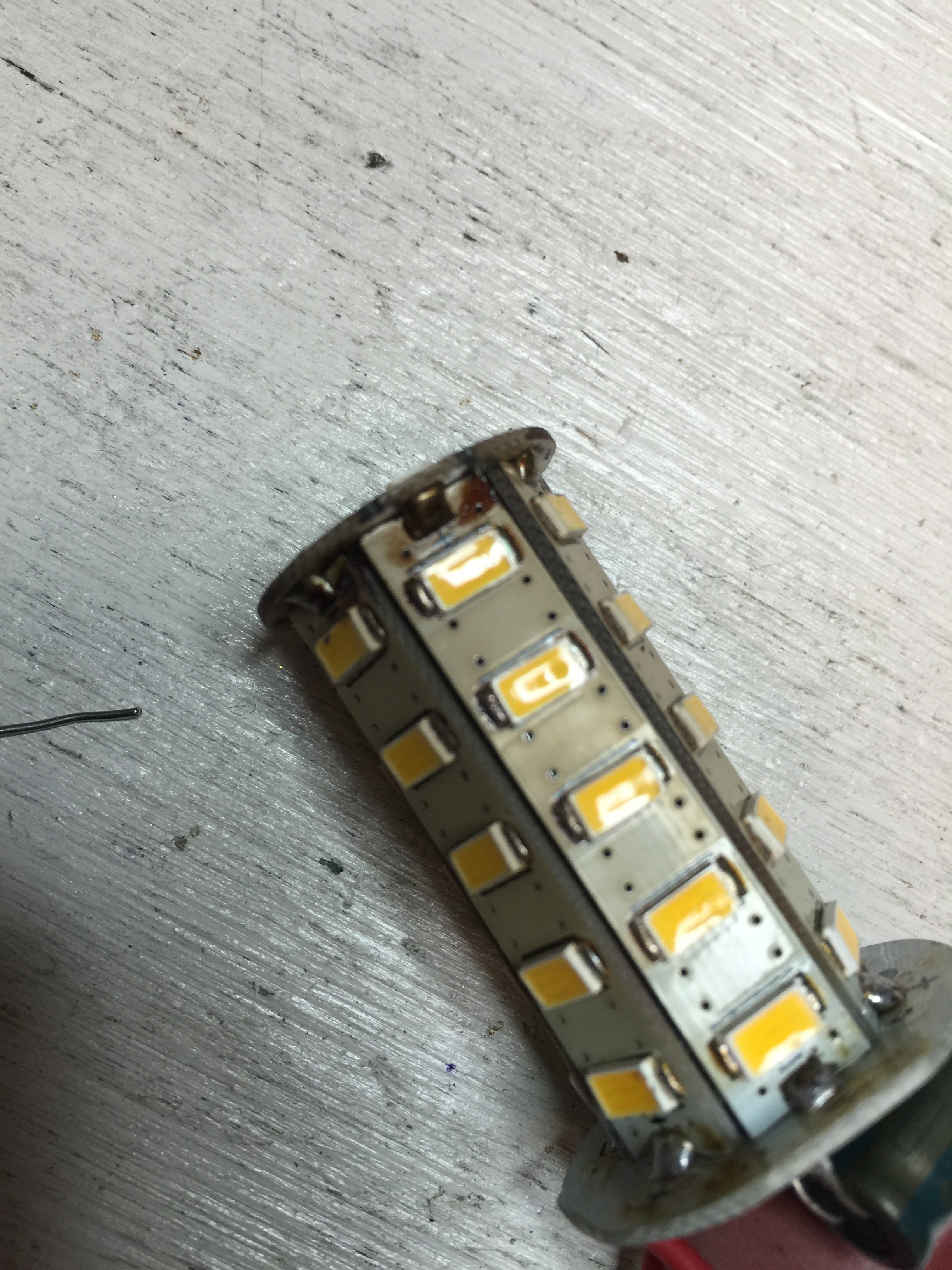
The first thing to notice that there was some sort of out-gassing during its use which adhered to the inside of the plastic dome and actually etched the plastic in such a way that it is no longer translucent but rather opaque even after I cleaned it with 409.
The reason I pulled it apart is that it became dim.
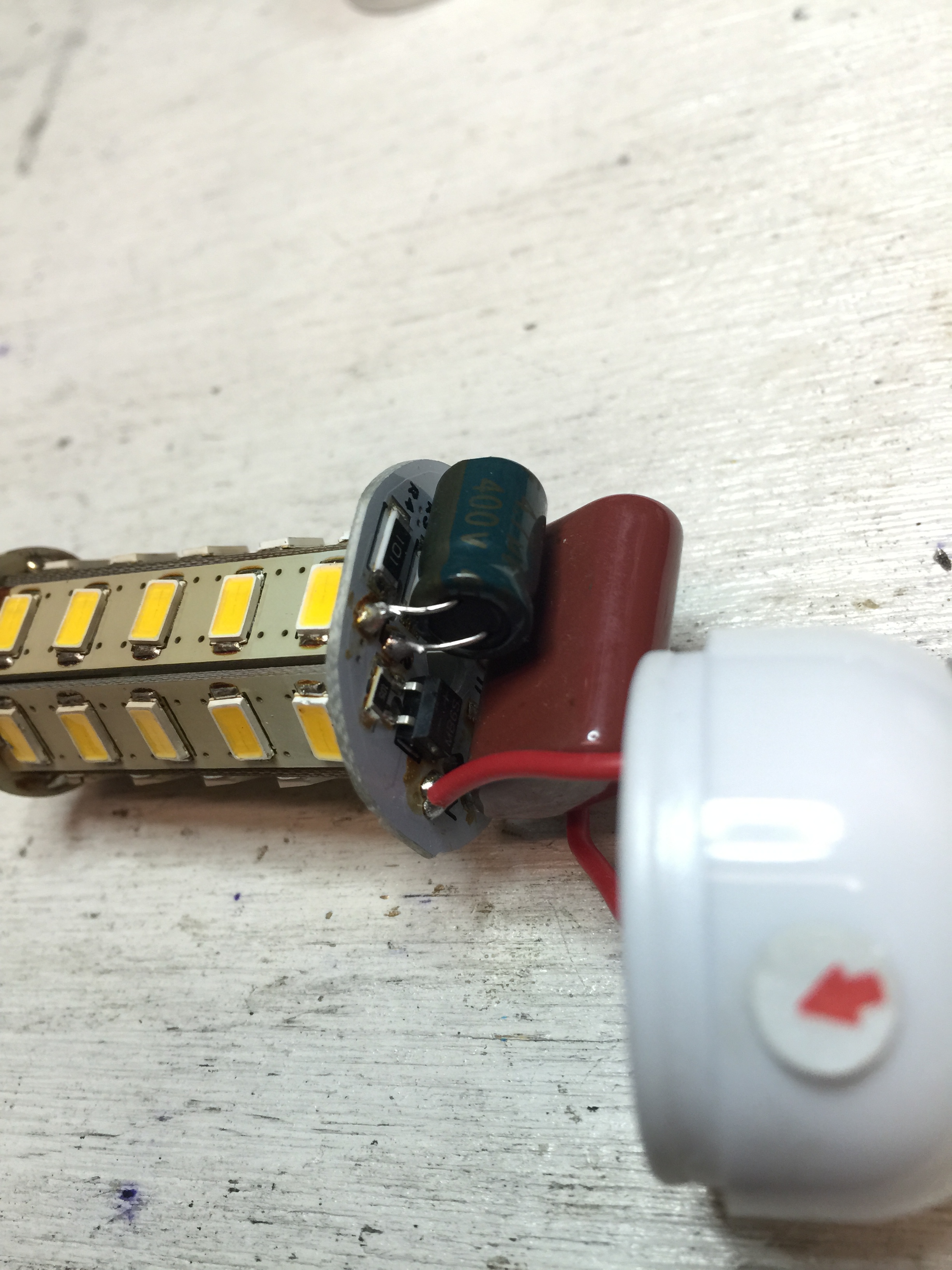
Re-soldering it and re-assembling it, the bulb became bright again for about a minute until it flickered and quit.


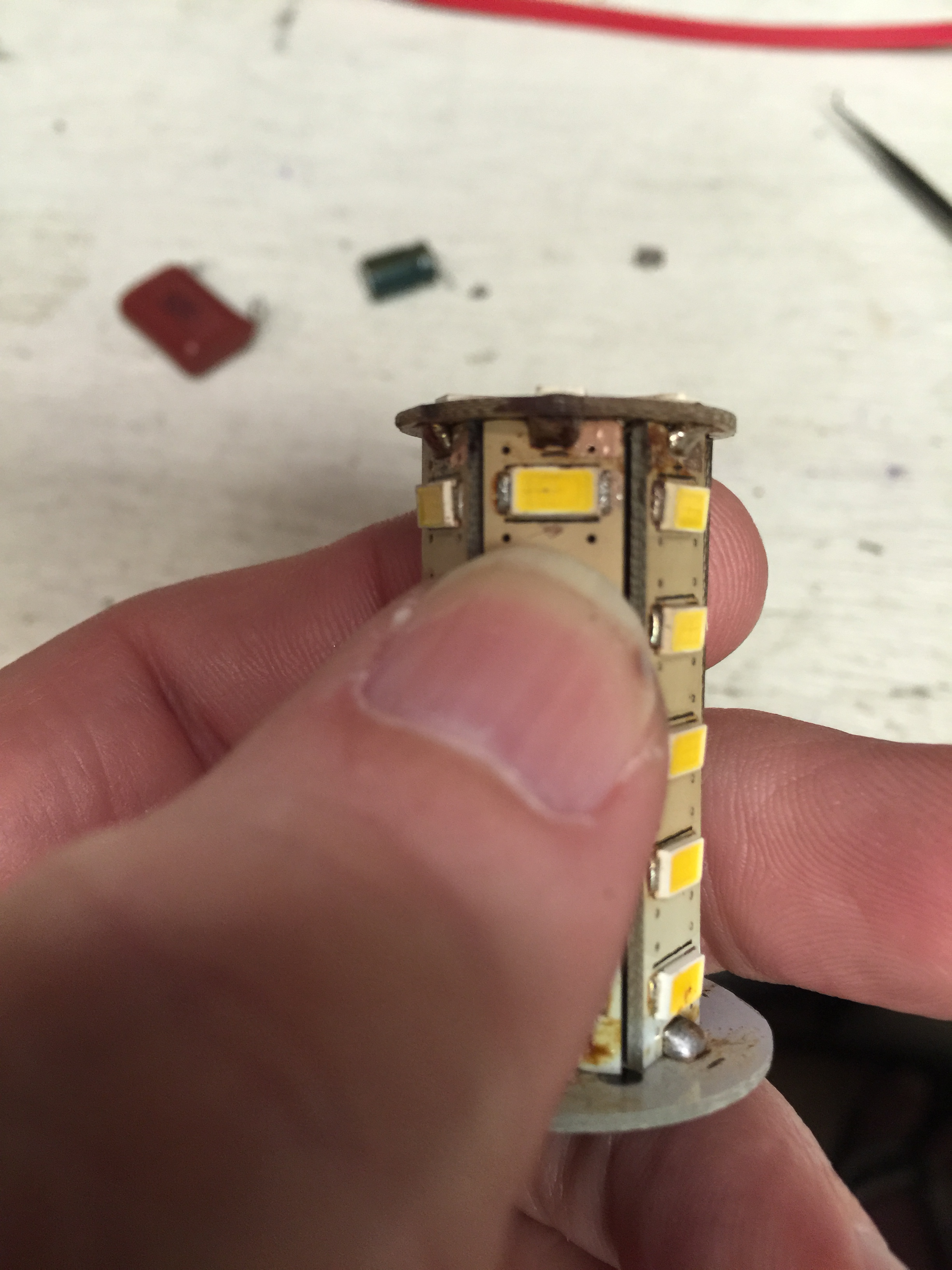
LED lights being in series to me says that when one fails, the light is dead and trashed. Much like that lousy string of Christmas lights that are a real bugger to keep going.

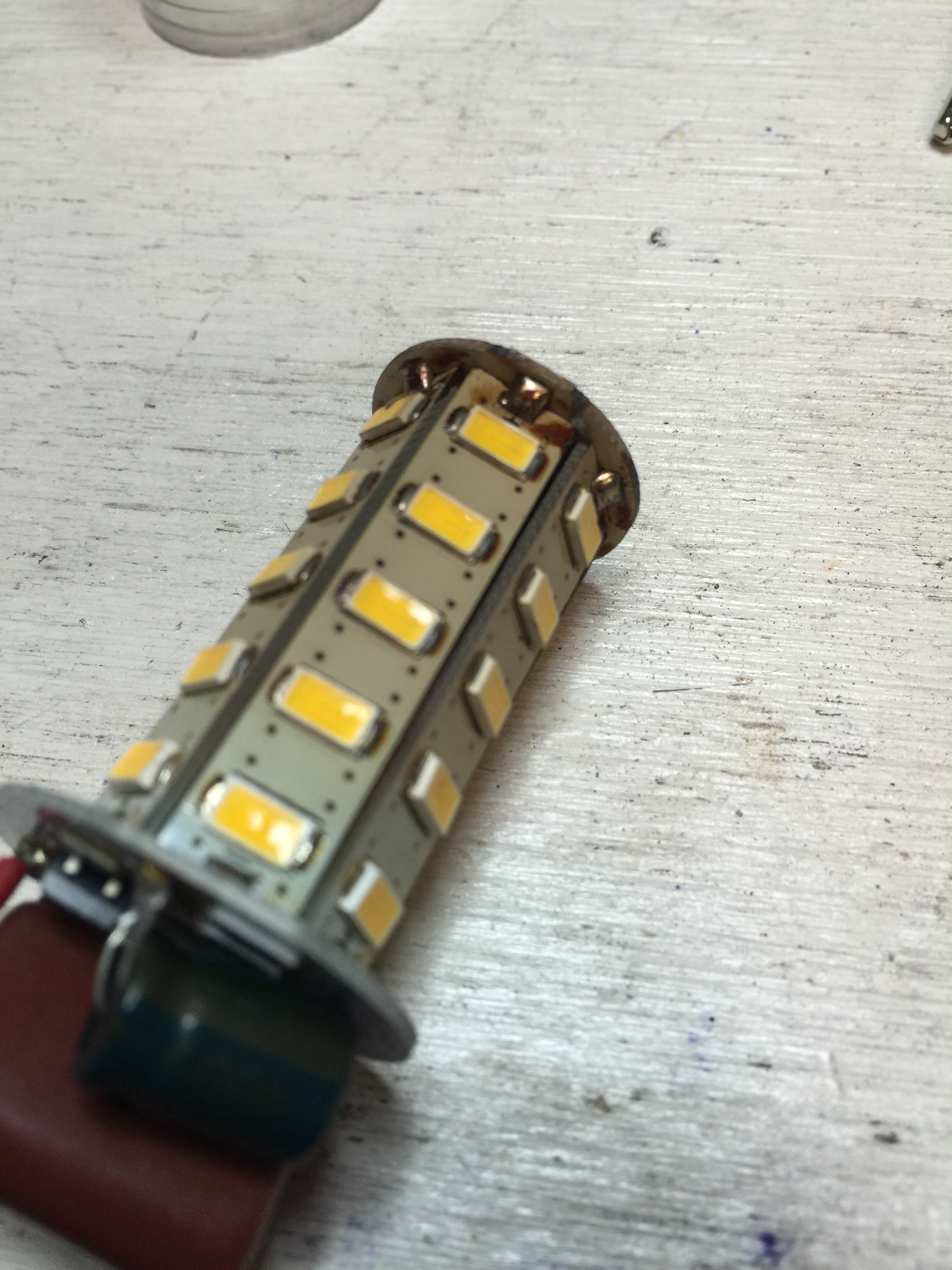
- Does it make financial sense to “repair” light bulbs?
- Will dead LED bulbs fill the garbage dumps with the same frequency of regular light bulbs or CFL bulbs?
- The good news about LED bulbs is that there is no lead in the solder as it is Tin.
I would be interested in knowing what actually out-gassed from the light during its use?
What actually pitted or etched the plastic?
Looking closely you will see what looks like flux, that suggest that there is heat generated with use.
While LED bulbs will save you cost in operation, will that cost be offset by the cost and reliability of the bulb? Even though there is a warranty on these bulbs as well as CFL bulbs, do you know anyone that puts a date on them when installed and then keeps up with the sales slip in case they don’t last the warranty?
I don’t think that you can prove much, and it would really be up to the benevolence of the store where you purchased them from to replace your product..
-Best
(c) All rights Reserved 2015
Discover more from TheTimeDok
Subscribe to get the latest posts sent to your email.


Great, thank you for a post about LED lamp repair, you helped me a lot.