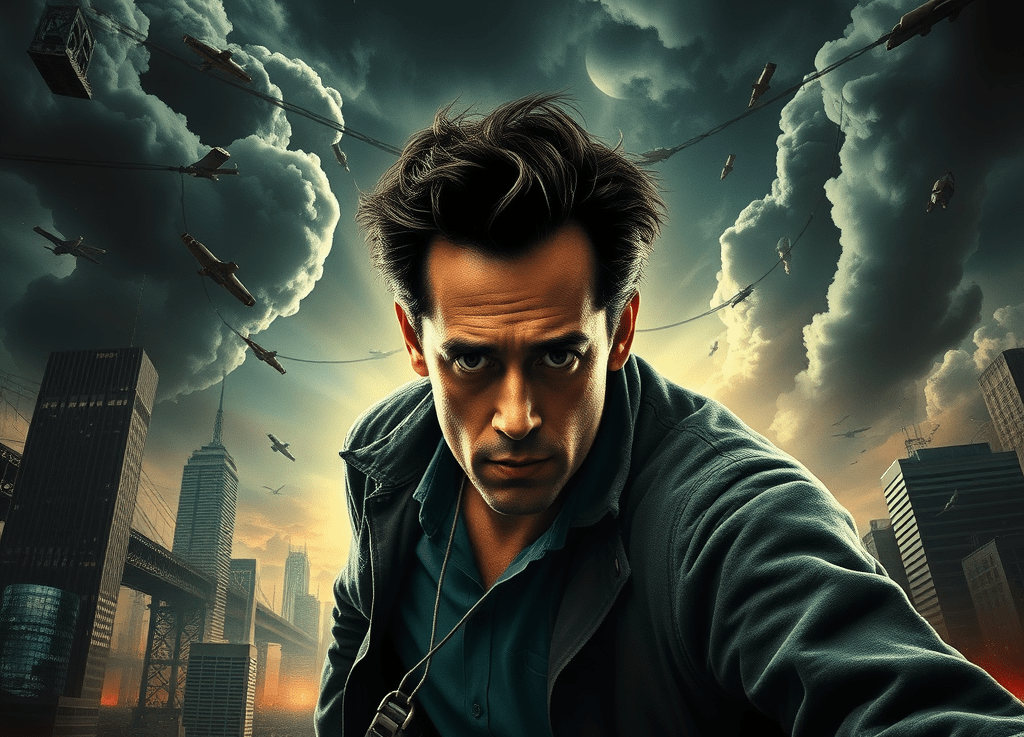
I don’t always watch movies on TV, but when I do, it’s usually because I’ve run out of excuses to avoid them. Truth be told, the last time I sat down for a cinematic experience, Twisters was still blowing cows across the screen. Why the long hiatus? Well, when you’ve written over 90 million words (yes, I counted), your brain tends to treat “relaxation” like a mythical creature—something you’ve heard about but never actually seen. But hey, even the most overworked wordsmith deserves a mental vacation every now and then, right?
So, I decided to dust off my popcorn bowl and dive into 2012, Roland Emmerich’s epic disaster flick. But because I’m a writer (and therefore incapable of turning off my analytical brain), I thought it’d be fun to dissect the movie through the lens of the Hero’s Journey. If you’re not a writer, you might be thinking, “Why should I care?” And honestly, fair point. But stick around—there’s a good chance you’ll leave this with a newfound appreciation for both storytelling and John Cusack’s ability to outrun the apocalypse in a limo.
The Hero’s Journey: A Quick Crash Course
Before we dive into the fiery pits of 2012, let’s talk about the Hero’s Journey—a storytelling framework so universal it’s basically the avocado toast of narrative structures. Coined by Joseph Campbell, it’s the blueprint for every epic tale, from The Odyssey to Star Wars to, yes, 2012. Here’s the gist:
Ordinary World: The hero starts in their boring, everyday life. Think “before Frodo left the Shire” or “before Harry got his Hogwarts letter.”
Call to Adventure: Something shakes up the status quo. Usually, it’s a big ol’ problem that can’t be ignored.
Refusal of the Call: The hero hesitates because, let’s face it, saving the world sounds exhausting.
Meeting the Mentor: Enter the wise guide who says, “You’ve got this!” (or, in some cases, “You’re doomed, but good luck!”).
Crossing the Threshold: The hero leaves their comfort zone and steps into the unknown. Cue dramatic music.
Tests, Allies, and Enemies: The hero faces challenges, makes friends, and punches bad guys (or, in this case, dodges tsunamis).
The Ordeal: The big, climactic moment where everything’s on the line.
The Reward: The hero achieves their goal—or at least survives long enough to celebrate.
The Road Back: Time to head home, but not without a few more hurdles.
The Resurrection: The hero emerges transformed, wiser, and probably in need of a nap.
Return with the Elixir: The hero brings back something valuable to share with the world. (Spoiler: It’s usually not an actual elixir. Sorry.)
How 2012 Fits the Hero’s Journey (With a Dash of Chaos)
1. The Ordinary World
Meet Jackson Curtis (John Cusack), a struggling writer and part-time limo driver. His life is as ordinary as it gets—divorced, juggling kids, and probably wondering why his book sales are flatter than a pancake. If this were a sitcom, his biggest problem would be forgetting his ex-wife’s birthday. But alas, this is a disaster movie, so things are about to get way worse.
2. The Call to Adventure
Jackson stumbles upon a conspiracy theorist (Woody Harrelson, in peak “crazy guy with a radio” mode) who warns him that the world is about to end. Naturally, Jackson’s first reaction is, “Yeah, okay, buddy.” But then the ground starts cracking open like a dropped egg, and suddenly, Charlie’s ramblings don’t seem so far-fetched.
3. Refusal of the Call
At first, Jackson doesn’t take the whole “apocalypse” thing seriously. I mean, who would? But when Los Angeles starts collapsing faster than my New Year’s resolutions, he realizes it’s time to grab the kids and hit the road. Or, in this case, the sky—because nothing says “family bonding” like escaping in a private plane.
4. Meeting the Mentor
Charlie Frost, our lovable doomsday prophet, serves as Jackson’s mentor. Sure, he’s a little unhinged, but he’s got the inside scoop on the government’s secret arks (because of course there are secret arks). His advice? “Head to the Himalayas.” His delivery? Equal parts helpful and unhinged.
5. Crossing the Threshold
This is where things go from “bad” to “holy crap.” Jackson and his family narrowly escape a crumbling Los Angeles in a limo—a scene so over-the-top it makes Fast & Furious look like a documentary. They’re officially in the unknown now, where survival is the name of the game.
6. Tests, Allies, and Enemies
The Curtis clan faces obstacle after obstacle: collapsing cities, selfish billionaires, and the occasional volcanic eruption. Allies include a Russian billionaire’s kids (because nothing says “teamwork” like rich kids in peril) and a geologist who’s trying to save humanity. Enemies? Pretty much everything else, including gravity.
7. Approach to the Inmost Cave
The gang finally reaches the Himalayas, where the arks are being prepped. But there’s a catch: they don’t have tickets. (Pro tip: Always RSVP to the apocalypse.) Sneaking aboard becomes their next big challenge.
8. The Ordeal
This is the big one. A massive tsunami threatens to destroy the ark, and Jackson has to risk his life to save everyone onboard. It’s tense, it’s dramatic, and it’s exactly what you’d expect from a movie where the stakes are literally “the end of the world.”
9. The Reward
Jackson and his family make it onto the ark, securing their survival. Humanity gets a second chance, and Jackson gets to be the hero his kids always wanted him to be. Win-win.
10. The Road Back
As the waters recede, the survivors aboard the ark prepare to face a drastically altered Earth. It’s a bittersweet moment—kind of like realizing you’ve survived a marathon, only to remember you still have to walk home.
11. The Resurrection
Jackson’s journey transforms him into a braver, more selfless version of himself. He reconciles with his family, proving that even in the face of global annihilation, there’s always time for personal growth.
12. Return with the Elixir
The survivors represent humanity’s chance to rebuild. Jackson’s “elixir” isn’t a magical potion—it’s hope, resilience, and the knowledge that even in the darkest times, we can find a way forward. (Cue inspirational music.)
Why the Hero’s Journey Matters
The Hero’s Journey isn’t just a storytelling formula—it’s a mirror for our own lives. We all face challenges, doubts, and moments of transformation. Sure, most of us aren’t dodging tsunamis or sneaking onto arks, but the core themes—struggle, growth, redemption—are universal. And that’s why it works, whether you’re writing a novel, watching 2012, or just trying to survive Monday morning.
So, the next time you watch a movie, ask yourself: Where’s the hero? What’s their journey? And most importantly, could you outrun an earthquake in a limo? (Spoiler: Unless you’re John Cusack or have a death wish, the answer is a resounding “hell no.”) But hey, if you’re feeling confident, go ahead and try. Just make sure someone’s filming it so the rest of us can enjoy your inevitable failure on YouTube.
Speaking of disasters, have you signed up for my emails yet? No? Why the hell not? What are you waiting for—a personal invitation? Fine. Here it is:
Dear Reader, please sign up for my emails so I can spam you with my questionable wisdom and occasional nuggets of brilliance. Love, Me.
There. Now you have no excuse. Unless, of course, you’re one of those people who still uses AOL and thinks email is for “serious business only.” In which case, I can’t help you.
Now, let me tell you about my current juggling act. I’m working on not one, but two books at the same time. That’s right—two. Because apparently, I enjoy torturing myself. One of them is called Stupid Shit, which, let’s be honest, is probably why you’re here. The other one? 1300 Feet Per Second, which is a psychological thriller.
And because I’m such a generous soul, I even find time to share blog posts about stupid shit. Or, occasionally, not-so-stupid shit. You know, for balance. It’s like a treasure chest of wisdom, except instead of gold coins, you’re getting sarcastic commentary and unsolicited advice. But hey, treasure is treasure, right? So go ahead—take something from my trove of brilliance. Or at least pretend you already knew all this stuff so I can feel like I’m making a difference.
Have a nice Day!
Discover more from TheTimeDok
Subscribe to get the latest posts sent to your email.
