Category: LifeStyle

“How to Run a City into the Ground: A Beginner’s Guide”

“How to Run a City into the Ground: A Beginner’s Guide”

So, let me get this straight—they elected a communist Marxist as mayor in New York? Really? That’s like hiring a pyromaniac to run the fire department. Wait, no, scratch that—it’s worse. Imagine replacing your town mayor with a SoundCloud rapper who thinks governing is just a series of TikTok dances and hashtags. That’s basically what happened here. And everyone’s sitting around wondering why the city’s falling apart. Shocking, right?

Meanwhile, over at the White House, they’re apparently “dumbfounded” by the blue wave that rolled in last night. Dumbfounded? Really? It’s not rocket science, people. The Democrats pulled a masterclass in manipulation, and it worked. They caused untold misery with the shutdowns, and now they’re clutching their pearls because they’re terrified of the “loon wing” of their party. You know the type—young, overconfident, with a cocktail of dumb ideas and a trust fund to back them up. Oh, and don’t forget, they’re bankrolled by a bunch of rich folks who want to squeeze every last dime out of the rest of us.

Enter the Tax Code.

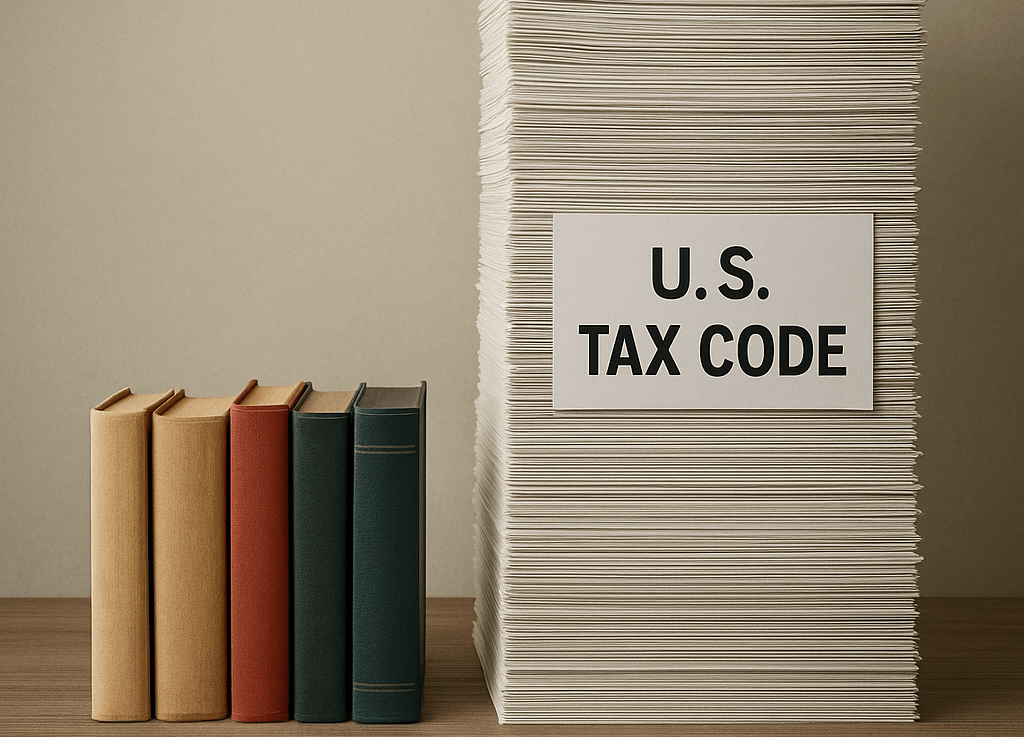
Speaking of the Tax Code, did you know the thing is longer than the entire Harry Potter series combined? The U.S. Tax Code is a bloated monstrosity—6,871 pages of bureaucratic nonsense. But wait! That’s just the appetizer. When you pile on tax regulations and official IRS guidelines, you’re looking at a staggering 75,000 pages. Seventy-five. Thousand. Pages.

Who’s reading this? Nobody. Not even the IRS knows what’s in there. It’s like they’re running a Choose-Your-Own-Adventure novel where every ending involves you paying more taxes.

And let’s talk words—because it’s not just about pages. The core tax code contains 3.4 million words. Add statutes and regulations, and you’re up to 4 million. Toss in IRS tax regulations, and the total hits 7.7 million words. That’s the literary equivalent of being waterboarded with legalese. But hey, at least the oligarchs are laughing. They control the media, the NGOs, and now, apparently, common sense.

Oh, and let’s not forget the UK. They’ve got their own problems, using stooges who still cling to ideologies that date back to the 16th century. It’s like watching someone fight over a VHS player in the age of Netflix. But the oligarchs? They don’t care. They’re too busy enjoying the spectacle from their yachts, sipping overpriced champagne, and watching the rest of us scramble to make sense of it all.

So, back to why the Democrats won. It’s simple. Perception is reality. And they’ve mastered the art of crafting perception like Michelangelo sculpted marble… except instead of beauty, it’s all smoke and mirrors. Alongside their trusty media cheerleaders, they managed to blame Trump for everything short of bad weather. Trump Derangement Syndrome became their rallying cry, and Big Pharma probably has a new vaccine ready just in case anyone starts thinking for themselves.

Liberals have cut off their nose to spite their face so many times that they’re starting to look like abstract art. But hey, perception is what matters, right?

Here’s the thing about perception: It’s like those funhouse mirrors at a carnival. It stretches, distorts, and twists reality until you’re not even sure what’s real anymore. If you think someone’s out to get you, they are—even if they’re not. If you believe your city’s mayor is a genius, well, congratulations, you’ve officially drunk the Kool-Aid. Perception shapes everything we do, from what we believe to how we vote to whether or not we buy into the nonsense being spoon-fed to us by the media. It’s manipulation 101, and the Dems have a Ph.D. in it.

I would bet the Dems are right now trying to figure out how to ride in on their white horses to save the day while still getting $1.5 T for their undocumented voters.

The truth? Things are not always as they seem. Or, as the Japanese say:

見た目通りとは限らない (Mitame dōri to wa kagiranai).

Translation: “That thing that looks like a dog? Yeah, it’s probably a raccoon.

Eventually, maybe, these blue cities will figure out that communism and socialism don’t work. But knowing them, they’ll probably blame Trump for their failed utopia first. It’s inevitable. And just to clarify, I’m not out here defending either party. I’m an equal-opportunity critic. I research the hell out of everything, which is why I’m currently writing The Big Beautiful Book of Stupid Shit. Coming soon to a bookstore near you.

And trust me, there’s no shortage of material.

More information will be available when the book is published, so stay tuned.

-Best

#StupidShitPolitics
#MarxistMayors
#PerceptionIsReality
#TaxCodeHell
#SoundCloudMayor
#BlueWaveWipeout
#CutYourNoseOffPolitics
#OligarchApproved
#TikTokGovernment
#DerangementNation
#WhenCommunismFails
#75KPagesOfPain
#PoliticalClownShow
#FauciFanClubNot
#ThingsArentWhatTheySeem
#BigBeautifulBookOfBS
#RealityDistortionField
#YoungAndStupidWing
#OligarchsLaughLast
#AmericaNeedsGeorgeCarlin

Unraveling Family Secrets: My Journey with Amelia Earhart

Unraveling Family Secrets: My Journey with Amelia Earhart

A few weeks ago, I shared this story on the Reedsy website as part of a contest—one that feels just about as realistic as actually locating my distant cousin, Amelia Earhart. However, today I wanted to share it with you, my audience. Maybe it’ll brighten your day or spark a little curiosity about the connections we all might share, even on this very site.

You see, we all hear stories about our relatives from eons ago, whispers passed down through generations, fragments of lives that shaped who we are. For me, those whispers were irresistible. As a writer, I had to know the truth, no matter who my ancestors turned out to be. Even if they were mafia bosses or obscure nobodies, I knew there would be tales worth telling.

So, I did the DNA thing. I poured time, energy, and more money than I’d like to admit into genealogy research. And what I unraveled was a tapestry of intrigue that stretched far beyond what I ever expected.

My childhood was a kingdom built on whispers, stories of valor, tradition, royalty, and scandal that seemed to weave themselves into the very air I breathed. A haze of cigar smoke clung to the image of a defiant political figure, while hushed voices hinted at royal blood flowing through my veins. And always, in the background, there was a shadow—a darker figure, the man who erased eighteen minutes of history in Washington.

These weren’t just stories. They were my inheritance. Power. Secrets. A kaleidoscope of intrigue buried deep in my DNA.

When I finally cracked open the past, these stories took on new life. The more I dug, the more I found royalty, scandal, and power. And then, Amelia Earhart. A name that needs no introduction. A name that leapt off the pages of history and into my family tree.

A distant cousin. A bold trailblazer. A perfect metaphor for navigating uncharted waters or even waiting to be rescued.

But this isn’t just a story about her disappearance. It’s about the echoes she left behind, the way her legacy is stitched into the fabric of history—and, somehow, into me.

So here’s to the past, to the stories we inherit, and to the ones waiting to be uncovered. Sometimes, they lead to royalty. Sometimes, to scandal. And sometimes, to Amelia Earhart.

***

Sunlight blazed on the Papua New Guinea airstrip. Heat waves distorted the cracked earth. Morning light reflected off the hangars. Only faint insect hums and distant tools broke the silence.

Amelia Earhart stood by her Lockheed Electra, calm but tense. Her tapping foot betrayed her unease. The Electra sat ready in the sun, engines primed. Dressed in khaki slacks and a white blouse, her sharp gaze cut through the moment. Waiting wasn’t her strength.

Noonan was late.

Her sigh cut through the silence. Frustration burned in her chest, but beneath it churned something colder: anxiety. A storm of nerves tightened her gut. Ahead of them stretched 2,556 miles of ruthless ocean, no markers, no mercy. Just an endless expanse of restless blue. Howland Island? A speck on the map. Miss it, and they were nothing but ghosts swallowed by the sea.

She turned the thought over in her mind, locking it away behind a mask of calm. This leg was different. She felt it in her bones, and Fred did too, though he hadn’t dared say it out loud. He didn’t have to. The radio was dying, had been for days. Their antenna? A jury-rigged prayer held together by wire and hope. Every burst of static from the speaker stabbed like a cruel reminder: their mission was a house of cards, teetering in the wind.

A breeze stirred, carrying the damp tang of jungle earth. Amelia closed her eyes, letting it brush against her, grounding her. She thought of George, waiting for her back home. The reporters, waiting to write her triumph or her obituary. And the little girls, faces she’d never seen, who dreamed of reaching the sky because she’d dared to take it. Their dreams hung on her wings, and the weight of it all pressed down on her like lead.

Footsteps broke through the humid stillness.

She opened her eyes. Fred was striding toward her, untucked and unshaven, his hair a wild mess. That grin was back, the cocky, boyish grin he always wore, like danger was something he could charm away. Like the ocean wasn’t out there, waiting to swallow them whole.

“You’re late,” Amelia said, her voice slicing through the thick air like a propeller blade.

He strolled toward her, his untucked shirt flapping lazily in the breeze, that cocky, devil-may-care grin plastered across his face. “Morning, boss,” he drawled, like they were gearing up for a casual Sunday jaunt instead of staring down the most perilous stretch of their lives.

“Fred,” she said, her voice low and edged with steel, “this isn’t just another leg of the journey.”

“I get it, Amelia. I do.”

She gave a single, sharp nod. “Let’s go,” she said.

Without waiting for a reply, Amelia spun on her heel and strode toward the Electra. Behind her, Fred fell in line, tugging his shirt straight and rolling his shoulders back, as if shaking off the weight of what lay ahead. The plane loomed in the distance, its silver body catching the light.

They were all set. Or as prepared as anyone could possibly be for this.

The engines roared to life, a symphony of power and defiance, drowning out words, fears, and second thoughts.

Hours into the flight, the sky burned with the last light of the setting sun, the horizon splitting into gold and crimson hues. In the cockpit, Fred studied the stars, his hands steady, his mind focused. The constellations were their map, their lifeline in the endless blue expanse.

The stars wouldn’t wait forever. Clouds crept across the sky, swallowing their guides one by one. If Fred hadn’t overslept, they’d be closer to safety by now, before the night went blind.

The overcast wasn’t just inconvenient; it was catastrophic. The stars, his lifeline, vanished behind an impenetrable shroud.

“Have you heard from the Itasca?” he asked.

“No,” Amelia said flatly. “I’ve announced our position. No response.”

Fred cursed, the broken antenna flashing in his mind. Who could they even reach out here?

“Can we climb above the clouds?” he shouted.

“We’re burning too much fuel,” she replied.

Fred slumped. No stars. No antenna. Radio silence. A storm churned ahead. Below: endless sea. All they had was the compass, and luck.

Rain hammered the windshield, the storm howling against the Electra’s fragile frame. Lightning tore jagged scars through the darkness. Inside the cockpit, there was no horizon, no bearings, only chaos.

“Fred, give me a heading!” Amelia yelled above the engine noise. “What is our location?”

Fred’s hands trembled as he wrestled with the compass. “I’m trying! The storm’s throwing it off, it’s spinning!”

The Electra shuddered, caught in the storm’s grip, as the ocean below waited, silent and merciless.

“We’ve been on this heading for three, maybe four hours,” Fred shouted, flipping through his maps. “If there’s a headwind, we’re burning more fuel than we thought. We should be near Howland by now.”

“‘Should be’?” Amelia snapped, her voice cutting like the storm outside. “Great. I’ll just ask the ocean to wait while we figure it out!”

Fred’s voice cracked. “I don’t know what to tell you! Without the stars, I’m flying blind! The compass is all we’ve got, and with this storm, it’s probably off!”

That was not the answer she was looking for. Without her instruments, she would most certainly crash them into the ocean. She couldn’t tell where the sky stopped, and the sea began.

Fred froze, pale and silent. The storm battered the plane, each gust shaking the Electra to its core. The fuel gauges ticked lower, the needles creeping toward empty.

Rain blurred the windshield, the instruments glowing faintly in the chaos. Lightning slashed through the black void, illuminating the endless Pacific below.

“I… I didn’t think it’d be this bad,” Fred muttered, his voice breaking. “I thought…”

Amelia cut him off, her words sharp as steel. “You thought what, Fred? That the Pacific would be kind? That we didn’t need the antenna. That we could just point the nose east and hope for the best?”

The plane lurched violently, throwing them forward. Amelia gritted her teeth, fighting the controls as the Electra groaned under the storm’s fury. For a moment, neither spoke. The pounding rain and roaring engines filled the silence.

She exhaled sharply, frustration hardening into focus. When she spoke again, her voice softened, though the fear lingered beneath.

“If the compass is all we’ve got, we use it, imperfect or not. We keep on this heading until we succeed or we go swimming.”

Fred nodded, his breath unsteady as he forced himself to focus. “You’re right. Okay. I’ll keep us on this heading. I’ll recheck the drift estimates and adjust for the wind. We’ll figure this out.”

Amelia’s eyes stayed locked on the storm ahead, her jaw tight. “We don’t have much time to figure anything out. The fuel’s going faster than it should. This headwind’s killing us.”

Fred hesitated, his voice catching. “How much flying time do we have left?”

“Three hours. Four, if we’re lucky.” Her voice was flat, her expression unyielding. “But luck’s not exactly on our side, is it?”

Fred dropped his gaze to the maps in his lap, his voice barely a whisper. “No. It’s not.”

Lightning flashed, flooding the cockpit with white-hot light. Fred’s face was pale, every tight line around his eyes carved with worry. Amelia’s grip on the yoke tightened, her knuckles bone-white. The plane shuddered again, the storm clawing at their fragile craft.

Fred tried to summon hope. “Maybe it’ll clear. Maybe the clouds will break, and I can get a fix on the stars.”

He stared at his maps, his voice barely above a whisper. “I’m sorry, Amelia. I should’ve fixed the antenna better. I should’ve been ready for this.”

His trembling hands adjusted the compass, eyes locked on the erratic needle jerking under the storm’s interference.

The engines droned unevenly, straining against the wind and rain. Somewhere out there was Howland. Their only option was to continue, slowly advancing as the immense Pacific stretched out beneath them.

The storm eased, just enough to reveal patches of rippling black ocean, infinite and indifferent. The Electra cruised low at 1,000 feet, its fuel gauges hovering dangerously near empty. Amelia’s face was set, her jaw locked. Fred sat in silence, ashen, gripping his map and compass as if they were the only things tethering him to hope.

Amelia shouted over the engines. “I’m calling the Itasca! Maybe they’ll hear us!”

“Itasca, this is Earhart. One thousand feet. Heading east. Position unknown. Low on fuel. Repeat, low on fuel. We estimate we’re near Howland Island. If you can hear us, we need assistance. Over.”

Amelia released the mic. The cockpit filled with an empty, mocking hiss.

Fred leaned forward, his voice barely a whisper. “Come on… please…”

Nothing. Just the relentless crackle of silence.

Amelia tried again. “Itasca, this is Earhart! Do you copy? We’re out of time! Over!”

The reply was the same.

Fred slammed his fist against the armrest, his frustration seething. “Damn it! They can’t hear us.”

The engines groaned as the storm eased, revealing only the vast, empty Pacific below. The fuel gauges hovered dangerously close to empty.

“We’re at our limit,” Amelia said softly, her voice calm but heavy. “These engines won’t last.”

Fred leaned forward. “Drop lower! We might see something, land, anything!”

Amelia hesitated, then tightened her grip on the yoke. “Fine. Hold on.”

The Electra dipped, skimming just above the waves. The engines strained as Fred pressed his face to the window, scanning the endless horizon.

“Wait!” he shouted, pointing frantically. “There! Off the left wing—do you see it?!”

Amelia squinted, her heart pounding. Then she saw it—a faint outline, waves breaking against something solid.

“An island,” Fred gasped. “That has to be it. Howland, or something close!”

Amelia’s voice stayed grim. “We get one shot. If we miss, we’re done.”

The fuel needle dropped to empty. She clenched her teeth, aligning the plane with the distant shadow.

“Steady,” she murmured.

Fred’s voice cracked. “What if it’s just a reef? Can we even land there?”

“Fred!” she barked. “Shut up and let me fly!”

The engines sputtered. One died. The propeller slowed, then stopped, and the Electra lurched violently. Amelia wrestled the controls, leveling the plane as the second engine coughed its final breath.

“Get ready!” she shouted, her voice echoing through the air. “If it’s not land, we’re going to have to start swimming!”

With a shudder, the second engine failed. The silence was overwhelming, with the only disruption coming from the wind’s fierce howl against the plane. The plane glided toward the surf, a fragile machine against the roar of the ocean.

“Come on,” Amelia whispered. “Just a little further…”

The plane skimmed the waves, the salt spray misting the windows, then slammed into the shore, a mix of sand and unforgiving rock. A flicker of hope ignited in that instant.

“Amelia!” Fred screamed. “Watch out!”

The plane jolted violently, slamming into jagged rocks. Water sprayed on either side as the Electra skidded to a halt, its crushed nose buried in sand.

Silence. No engines. No voices. Only the crash of distant waves and the groan of the battered fuselage settling into the earth.

The sudden stop from the harness’s grip on the seat stole her breath. Frozen, she sat, the ragged sound of her breath echoing in the silence. “Fred… you okay?” she rasped, the sound thin and frail.

The Electra lay in a shallow lagoon, its crumpled nose half-buried in sand and rock. Tidewater lapped at its sides, creeping into the fuselage. Overhead, the storm had broken, clouds parting to reveal faint moonlight on a desolate beach.

Inside the cockpit, they worked quickly, soaked and shaking.

Her wet gloves slipped against the straps, her arms screaming with fatigue, but she didn’t stop. Finally, the emergency radio came free. “Got it. Help me with the power unit.”

Fred staggered back, panting. “This thing weighs a ton. If the tide comes in faster…”

“We’ll make it,” Amelia declared, her voice echoing with a steely determination. “Keep moving.”

They climbed off the wing, plunging waist-deep into the frigid water. The cold sliced through their soaked clothes, stealing their breath, but they pressed on. The lagoon reeked of salt and damp earth, the steady crash of waves the only sound beyond their labored breaths.

Fred shivered, his voice thin. “Do you think anyone heard us? Before the engines died?”

Amelia didn’t look back; her gaze was locked ahead. “I don’t know. I hope so.”

Her voice was steady, but Fred caught the strain beneath it, the fear she buried under sheer determination. She gripped the radio tighter, the cold metal biting into her gloves.

The shore drew closer. Their boots sank into the shifting sand beneath the shallow water. The lagoon, now calm, mirrored the pale glow of the moon. Around them, debris, seaweed, driftwood, and jagged rocks littered the beach like the remains of a forgotten world.

Fred broke the silence. “God, it’s so quiet.”

“Quiet’s better than thunder,” Amelia replied. “Let’s get everything to higher ground before the tide takes it.”

They fell onto the sand, the power unit hitting with a thud. Amelia rolled her aching shoulders. Fred gasped, dropping to his knees, the flashlight shaking.

“Could this be Howland?” he asked.

Amelia scanned the dark horizon, hands braced on her knees. “Maybe. Or another island nearby. Hard to tell in the dark.”

Fred’s voice wavered. “And if it’s not? What if it’s just… nothing? An empty speck in the middle of nowhere?”

Amelia straightened, her tone steady. “Then we survive. One step at a time.”

Fred’s pale face was fixed on the lagoon as he nodded slowly. The wrecked Electra, a spectral outline, sat half-submerged, its broken form a chilling sight against the vast Pacific. Crushed by the vastness, he felt nothing but the weight of his isolation, with no rescue or certainty in sight. A wave of nausea caused his stomach to churn.

Amelia’s hand gripped his shoulder. “We’re not done yet,” she said, her voice resolute. “As long as we’re breathing, we’ve got a chance. Let’s get the radio set up.”

Each step was a struggle, their bodies stiff and heavy, yet necessity compelled them to move forward. As Amelia unpacked the radio, Fred dragged the power unit, its weight a heavy drag, near the tree line. Her numb fingers worked with painstaking slowness. The night buzzed around them, a symphony of insect hums and rustling palms, each sound piercing the silent air.

Fred’s eyes darted nervously toward the deep, looming shadows. “Do you think anything could possibly be living in this quiet place?”

Amelia kept her gaze fixed downward. “Let’s not make that a priority for now.”

With meticulous movements, Amelia connected wires while Fred held the flashlight, the beam dancing nervously as he glanced at the shadowy tree line. The faint moonlight cast an ethereal glow, barely holding back the darkness of the night.

At last, Amelia straightened, wiping her hands on her damp trousers. She exhaled slowly, her breath visible in the cool air.

“That’s it,” she said, her voice quiet but firm. “Let’s see if anyone’s listening.”

The switch clicked. The radio crackled to life, a faint, fragile hum. Hope jolted through them.

As Amelia grabbed the mic, the weight of the situation made her voice both steady and urgent. “Mayday, mayday,” a frantic plea cut through the otherwise silent airwaves.

Endless static stretched, creating a suffocating pressure. Fred’s heart pounded in his chest as he held his breath.

Amelia tried again, her tone firmer. “Mayday, mayday. This is Amelia Earhart. Is anyone there? Over.”

The radio teased them with faint crackles, as if a voice hovered just out of reach. But no reply came.

Fred closed his eyes, shoulders sagging in quiet defeat. Amelia lowered the mic, her jaw tight, her eyes sharp.

“They’ll hear us eventually,” she murmured, almost to herself. “We just have to keep trying.”

For a moment, neither spoke. The weight of their reality pressed down, heavy as the humid air. The moon hung low, casting long shadows across the beach. In the distance, waves broke softly against the shore, a haunting rhythm in the stillness.

“Help me light a fire, Fred.”

Gathering driftwood, Fred finally broke the silence, his voice barely audible. “What if no one comes?”

She didn’t answer right away, her gaze fixed on the horizon. When she spoke, her voice was calm, resolute.

“Then we survive, one way or another, we survive.”

And that, my friends, is how I want to believe they slid into the history books, as survivors.

-Scott

Share the Journey

If this story resonated with you, I’d love for you to share it with others who might enjoy unraveling tales of history, mystery, and legacy. Give me a follow and stay tuned, there are more stories to come, and I can’t wait to share them with you.

If this is the kind of content you love, let me know in the comments! Your thoughts, connections, and stories mean the world to me, and I’d love to hear what you think.

Here’s to exploring the past, uncovering truth, and finding stories worth telling. Stay curious. 🌟

  • #GenealogyJourney
  • #FamilyHistory
  • #DNAStories
  • #AncestryResearch
  • #DiscoverYourRoots
  • #HiddenHeritage
  • #AmeliaEarhart
  • #AviationHistory
  • #Trailblazer
  • #PioneeringWomen
  • #FlightLegends
  • #AviationMystery
  • #WritersLife
  • #StorytellingMatters
  • #CreativeWriting
  • #HistoricalFiction
  • #WritingCommunity
  • #MysteryWriters
  • #UnravelingThePast
  • #AdventureAwaits
  • #MysteryAndLegacy
  • #HiddenStories
  • #ExploreHistory
  • #BeyondTheHorizon
  • #HistoryLovers
  • #WomenInHistory
  • #LegacyOfCourage
  • #InspiredByHistory
  • #HistoricFigures
  • #UnsolvedMysteries

“If the Glove Shrinks: Lawyers, Loopholes, and the Big Beautiful Mess of Justice”

“If the Glove Shrinks: Lawyers, Loopholes, and the Big Beautiful Mess of Justice”

In my latest literary masterpiece, The Big Beautiful Book of Stupid Shit (yes, that’s the real title, and no, I don’t regret it), I dive headfirst into some of the most baffling, infuriating, and downright idiotic aspects of the human condition. Spoiler alert: humanity is weird, and I’m here to talk about it.For example, let’s chat about lawyers. Specifically, the ones willing to defend the absolute worst people among us—the ones who make you pause mid-sandwich and say, “Wait, why are they even trying?” You know the type. They’re the ones standing up in court for murderers, war criminals, and people who willingly put pineapple on pizza.Take Charlie Kirk, for instance. Imagine defending that walking, talking Facebook comment section. The guy could probably strangle a basket of kittens on live TV, and some lawyer would still show up in court, briefcase in hand, ready to argue that “the kittens provoked him.” It makes you wonder—why? Why do these people do it? Are they just morally bankrupt? Are they paid in gold bars? Is there some kind of secret lawyer cult that demands sacrifices to the God of Loopholes?

The O.J. Trial: A Masterclass in Legal Shenanigans

Let’s rewind to the O.J. Simpson trial, that glorious dumpster fire of the 90s that had the whole world glued to their TVs. I’m pretty sure I taped it, but who knows—I might’ve just blacked out from secondhand embarrassment. Everyone and their dog knew O.J. was guilty. The man practically left a bloody trail to his living room. But did that stop his “Dream Team” of lawyers from turning the trial into the Super Bowl of legal theatrics? Hell no.And then came the moment that will live in infamy: the glove. You know the one. The leather glove soaked in blood that obviously shrank because, fun fact, wet leather shrinks. It’s science, people. But when O.J. tried it on and did his little “oops, doesn’t fit” dance, the jury collectively nodded and said, “Well, if the glove doesn’t fit, we must acquit.” I mean, come on. That’s like saying, “If the shoes don’t tie, the guy didn’t die.”By the way, did you know Native Americans used wet leather as a weapon of torture? True story. They’d bury their enemies up to their necks, tie a wet leather strap around their heads, and let the desert sun do the rest. The leather would dry, shrink, and slowly crush their skulls. Brutal, right? Now imagine some modern lawyer defending that. “Your honor, my clients were simply engaging in culturally significant headgear practices. They’re innocent.”

The T. Cullen Davis Shitshow

Speaking of Texas-sized legal disasters, let’s talk about T. Cullen Davis. If you’ve never heard of him, congrats—you have a healthy brain that hasn’t been poisoned by true crime rabbit holes. This guy was a millionaire accused of, among other things, murder. And who was his lawyer? Racehorse Haynes, a man with a name so Texas it might as well be wearing spurs. Haynes was so good at his job that you have to wonder if he made some kind of Faustian deal with the Devil himself. Honestly, I wouldn’t be surprised if Haynes and Satan are currently doing laps together in the lake of fire, swapping war stories about all the guilty people they got off the hook.

So, Why Do Lawyers Defend These People?

Here’s the kicker: defense attorneys don’t take these cases because they’re evil or because they secretly enjoy high-fiving serial killers in the breakroom. Nope. They do it because the justice system, as gloriously messy and flawed as it is, only works if everyone gets a fair trial. That means even the scumbags, the psychos, and yes, even the pineapple-on-pizza people deserve someone in their corner.These lawyers aren’t there to say, “Hey, my client is a great guy who accidentally stabbed 14 people.” They’re there to make sure the system doesn’t screw it up. Because if the system can railroad the guilty, it can definitely railroad the innocent. And that’s when things go from “mildly horrifying” to “full-on dystopia.”

How the Hell Do They Sleep at Night?

You’re probably wondering how these lawyers manage to sleep at night after defending, say, a guy who stole candy from babies or a hedge fund manager who tanked the economy. The answer? Compartmentalization. That’s therapist-speak for “shoving all your guilt and moral dilemmas into a mental closet and slamming the door shut.”Defense attorneys also lean on professional ethics, peer support, and the occasional stiff drink to get through it. They convince themselves that they’re not defending the crime—they’re defending the process. And honestly? They’re not wrong. The legal system doesn’t work without them. Just don’t expect them to win any popularity contests.

Final Thoughts: The Big, Stupid Picture

At the end of the day, defending the indefensible is a thankless job, but somebody’s gotta do it. Without defense attorneys, the justice system would be about as fair as a rigged carnival game. Sure, it’s frustrating to watch some smirking sociopath walk free because of a technicality, but the alternative—living in a world where justice is arbitrary and rights are optional—is way worse.So, the next time you’re shaking your head at some lawyer defending a guy who obviously did it, just remember: they’re not sleeping peacefully because they condone the crime. They’re sleeping peacefully because they know they’re upholding the system. Or maybe they’re just really good at compartmentalizing. Either way, they’re doing their job—and, like it or not, we all benefit from it.Now, if you’ll excuse me, I’m off to write my next chapter: “Why People Still Put Up With Reality TV.” Spoiler: I have no idea.

Thanks for visiting. Make sure to subscribe so you don’t miss my next satiracle, look at humanity, or learn about putting virgin olive oil in coffee. (pro tip: be close to the bathroom)

Follow, repost, and comment for extra credit. 🙂

Thanks @thetimedokAuthorScott

#JusticeSystem
#DefenseAttorneys
#LegalLoopholes
#CourtroomDrama
#OJSimpsonTrial
#TrueCrimeHumor
#DarkHumorWriting
#LegalEthics
#LawyersLife
#MoralityAndJustice
#FairTrial
#DefendingTheGuilty
#SatiricalWriting
#NativeAmericanHistory
#DumbHumanBehavior

  • #TrueCrime
  • #LegalDrama
  • #OJSimpson
  • #JusticeForAll
  • #CourtroomChaos
  • #TrialByFire
  • #LawAndDisorder
  • #LegalLoopholes

Effective Book Marketing Strategies for Authors

Effective Book Marketing Strategies for Authors

As the Director of the Carrollton League of Writers, I talk a lot about marketing. Like, a lot. Why? Because, as a writer, you’re basically doing one of three things at any given moment: writing, editing, or trying to convince people to buy the damn thing you wrote. And let me tell you right now: that third one is where dreams go to die.

That’s why I tell people to keep their day jobs. Seriously. Writing is a business, sure, but half the time, it’s just a fancy way to justify a tax write-off. “No, honey, it’s not a failed hobby—it’s a business expense.” And let’s just say most writers aren’t exactly raking in Stephen King-level royalty checks.

But hey, I’m not here to crush your dreams of being the next EL James (although I could). Instead, let me help you out with some marketing tips. Because let’s face it: if you don’t sell your book, nobody’s gonna read it. Well, except for your mom—and even she might “accidentally” forget to finish it.

1. Develop a Book Marketing Strategy

This is step one, folks. Before you do anything else, you need a plan. I know, planning isn’t sexy or fun, but neither is explaining to your friends why your book has been on Amazon for two years and still has zero reviews.

Here’s the deal: set some goals, figure out who the hell you’re writing for (hint: it’s not “everyone”), and decide how you’re going to reach them. A clear marketing strategy will help you avoid wasting time on pointless crap that doesn’t work.

2. Build Your Author Platform

Look, if nobody knows who you are, nobody’s gonna care about your book. That’s where your author platform comes in. It’s basically your online stage—so make sure you don’t look like a total amateur while you’re standing on it.

Create an Author Website: Think of this as your digital home base. It’s where people will go to learn about you, your book, and why they should give you their money. Plus, it’s a great place to collect email addresses for future marketing. (Yes, we’re going to talk about email lists later, so don’t roll your eyes yet.)

Engage on Social Media: This is where you can pretend you’re a celebrity, even if you’re just a writer with 12 followers and a lot of opinions about coffee. Platforms like Twitter, Instagram, Facebook, and TikTok are your friends—if you use them right. Post updates, share behind-the-scenes tidbits, and actually interact with people. Nobody likes a self-promotional robot.

3. Prepare for Launch

Your book launch is a big freaking deal. It’s like a party, except instead of booze and karaoke, you’re hoping people will buy your book and leave nice reviews. So, yeah, slightly less fun, but still important.

Write a Killer Author Bio: This is your chance to convince readers that you’re an actual human being and not some faceless entity who churned out a book because ChatGPT told you to. Be relatable. Be funny. (Or don’t be funny, if that’s not your thing—but at least try to be interesting.)

Build a Launch Team: Gather a group of people who are willing to hype you up. These could be friends, family, or random strangers you bribed with the promise of free copies. They’ll leave early reviews, share your book on social media, and generally make you look like you’ve got a whole squad cheering for you.

Find Reviewers: Bloggers, influencers, that one book nerd you know—they’re all fair game. Reviews matter. A lot. Especially on platforms like Amazon. Without them, your book might as well not exist.

4. Optimize Your Book’s Online Presence

Your book’s online presence is like its dating profile. If it’s boring, confusing, or full of typos, nobody’s swiping right.

Metadata and Keywords: This is the boring part, but it’s super important. Make sure your book’s title, description, and keywords are optimized for search engines. Basically, make it easy for people to find your book when they’re browsing online.

Decide Where to Sell: Amazon is the obvious choice, but you’ve got options. You could go exclusive with Kindle Direct Publishing (and maybe Kindle Unlimited) or distribute your book more widely. Just know that Amazon is kind of like the popular kid at school—if you’re not hanging out there, you’re probably missing out on a lot of attention.

5. Promote Your Book

Here’s where the real hustle comes in. You’ve got to put yourself out there and make people want to read your book.

Leverage Social Proof: Translation: beg readers to leave reviews. The more people are talking about your book online, the more likely it is that others will check it out.

Reach Out for Publicity: Bloggers, podcasters, and media outlets can help spread the word. Guest blogging and podcast interviews are great ways to get in front of new audiences. Plus, you get to feel important for a hot second.

Run Promotions: Discounts, giveaways, limited-time offers—these are all great ways to generate buzz. Everyone loves free stuff, so use that to your advantage.

6. Keep the Momentum Going

Here’s the thing about book marketing: it doesn’t stop after your launch. If you want your book to keep selling, you’ve got to keep working at it. (Yeah, I know. It sucks. Welcome to the grind.)

Build an Email List: Remember when I said we’d talk about email lists? Well, here we are. Use your website and social media to collect email addresses, then send out regular newsletters to keep your audience engaged. Think of it as your personal fan club.

Keep Marketing: Try new things. Experiment. Fail. Learn. And then try again. Marketing is an ongoing process, and the more you do it, the better you’ll get.

Start thinking about marketing before you finish your book. I know, it’s tempting to just focus on the writing and hope people will magically find your work later, but that’s not how it works. The earlier you start planning and building your platform, the better your chances of success.

And hey, if all else fails, at least you can say you gave it a shot. Worst case scenario, you’ve got a great story to tell at parties: “Remember that time I tried to be a famous author? Yeah, that was wild.”

If you want me to dig deeper into any of these steps—or if you just need someone to commiserate with—I’m here for you. Let’s make your book the next big thing (or at least a thing).

  • #HowToBeAnAuthor
  • #WriteAndPublish
  • #MarketingYourBook
  • #BuildYourAudience
  • #SocialMediaForAuthors
  • #BookLaunchPlan
  • #WritingJourney
  • #BookMarketing
  • #BookLaunchTips
  • #HowToSellBooks
  • #AuthorPlatform
  • #BookPromotion
  • #IndiePublishing
  • #SellYourBook
  • #MarketingForWriters
  • #BookMarketingStrategy
A Thriller Writer’s Forensic Journey

A Thriller Writer’s Forensic Journey

Okay, Candace, pull up a chair and grab a cup of coffee, because this story’s got more twists than one of my thrillers. You’re diving into a rabbit hole that’s either leading to one of the most mind-blowing conspiracy theories of all time, think bigger than the single-bullet theory that still haunts JFK discussions, or, and this is where my money lies, someone’s feeding you breadcrumbs laced with arsenic to throw you off the trail and discredit you. And here’s why I think so.

So, let’s talk about that video. Yeah… I’ve seen it. Honestly, I wish I hadn’t. It sticks in my mind like a bad scene I wrote at 2 a.m. that I can’t unsee. But here’s the thing, no sniper worth their salt would be aiming for Charlie’s neck. That’s just not how these folks operate. Trust me, I write about these guys for a living. What they’re trained to hit is center mass; it’s the most significant, most reliable target. If they’re feeling fancy, or that he might have a bulletproof vest on, maybe they’ll go for a headshot, and when they do, it’s typically between the eyes. Period.

But a neck shot? That screams “accidental” or “inexperienced.” From what I’ve pieced together, the shooter was probably aiming for a headshot, JFK-style. And here’s where it gets even juicier: the perp and their family were hunters. Now, if you know hunters—and I’ve sat around enough campfires to hear these guys talk shop—they don’t usually roll with factory bullets straight off the shelf. No, they’re all about those custom reloads. It’s practically a badge of honor. You know the type: “I calibrated this one myself for the perfect takedown.” So, it’s highly likely the bullets used here were reloads, designed for something very specific.

And here’s where the FBI comes in. They’ve got the bullets, and believe me, they’ve already dissected them like a frog in high school biology. They know if those rounds were reloaded, what kind of powder was used, how much of it, and even the weight of the bullets. They probably even know what the shooter had for breakfast that morning —okay, maybe not —but you get the point.

Now, let’s play detective for a second. If the shooter was using a varmint load meant for small critters like coyotes or prairie dogs, you’ve got a light bullet, say 110 grains, that’s moving fast but drops like a rock. That could explain why the shot didn’t exit Charlie’s body. With a varmint round, you’re looking at 5 to 8 inches of drop, plus a couple more inches of wind drift, depending on the conditions. Makes sense, right?

But if we’re talking standard loads, something heavier, like 150 to 165 grains, the drop would be less, maybe around 4 inches. Which, let’s be real, would make the shooter a lousy shot if they missed their mark that badly. And even then, it doesn’t explain the lack of an exit wound. It’s like trying to solve a puzzle where half the pieces are missing.

Here’s the kicker, though: everything I’m telling you is out there, online, ripe for the picking. It’s like an open buffet for anyone willing to dig deep enough. The FBI has the details—they’re just not sharing them with the rest of us mere mortals. Typical, right?

So, Candace, I hope this adds a little clarity—or at least some food for thought. BTW, I have followed Charlie for several years, and I admired him.

Best,

Scott

  • @RealCandaceO
Mastering Syllable-to-Word Ratio for Better Writing

Mastering Syllable-to-Word Ratio for Better Writing

Have you ever come across one of those carts parked outside a half-price bookstore, overflowing with books so cheap that even the employees inside wouldn’t bat an eye if you walked off with one? Yeah, those. The literary graveyard of rejected paperbacks and forgotten hardcovers. I’m a sucker for them. I’ll sift through the pile, find something that piques my interest, and then march inside like a responsible adult to actually pay for it.

But here’s the thing: you ever wonder why those books ended up in the discount bin of shame? Nine times out of ten, it’s the writing. Oh boy, the writing. Either it’s drowning in purple prose, or the author decided, “Hey, let’s crank this up to a college-reading level and see how many people’s brains explode.”

Target Audience Problems: A Writer’s Existential Crisis

In creative writing, we’re always told to think about our target audience. Sounds simple, right? Wrong. Here’s where it gets messy. Imagine this: someone brings their masterpiece to a critique group. It’s a highbrow novel meant for intellectual types who sip chai tea and quote obscure philosophers. But the group? They hate it. They can’t explain why, but they just don’t. The writer spirals into a pit of frustration, and the critique group sits there awkwardly like, “Sorry, we don’t know what’s wrong, but it makes our brains hurt.”

Let me save you the trouble. It’s probably the syllable-to-word ratio. Yeah, I know, sounds nerdy, but stay with me.

What the Hell is Syllable-to-Word Ratio?

I’m glad you asked (or at least pretended to). The syllable-to-word ratio is this super-geeky metric that measures the average number of syllables per word in a chunk of text. Why should you care? Because it can make or break how your writing feels to your reader.

Here’s the gist:

Readability:

Low ratio (1.2–1.4): Short words, easy to read. Think, “See Spot run.”

High ratio (1.5–1.8+): Long, complex words that scream, “I have a Thesaurus and I’m not afraid to use it!”

Pacing and Flow:

Lower ratios = faster pace. Great for action scenes or snappy dialogue.

Higher ratios = slower, more reflective. Perfect for moody, poetic, or “I’m trying to win a Pulitzer” moments.

Style and Tone:

Writing a child’s perspective? Keep the words short and sweet.

Got a pretentious professor as your main character? Break out the big words and make them earn that Ph.D.

Let’s Look at Some Examples

Here’s a basic breakdown to show you the difference:

Paragraph 1 (Simple Language):

The cat sat on the mat. It looked at the sun and purred.

Words: 14

Syllables: 16

Ratio: 16 / 14 ≈ 1.14

Paragraph 2 (Complex Language):

The magnificent feline reclined gracefully upon the embroidered carpet, basking serenely in the golden illumination streaming through the window.

Words: 20

Syllables: 38

Ratio: 38 / 20 = 1.9

See the difference? The first paragraph is quick, punchy, and gets straight to the point. The second one? It’s like the writer wanted you to pause dramatically after every word and think about life’s meaning.

Why This Matters in Creative Writing

Knowing your syllable-to-word ratio isn’t just some geeky flex. It’s a tool. A sneaky little trick to control how your readers experience your writing. Here’s how you can use it:

Want to speed things up during an action scene? Keep the sentences short and the words even shorter.

Need to slow things down for an emotional moment? Stretch it out with longer words and more complex sentences.

Writing dialogue? Match the ratio to your character’s personality. A street-smart detective won’t talk like a philosophy professor (unless that’s part of the joke).

Tools to Make Your Life Easier

Let’s be real, no one’s doing this math by hand. Use an online syllable counter or plug your text into something like Hemingway Editor. These tools will tell you if your writing is too complex or if you’re on track for that sweet spot of readability.

Final Thoughts: The Ratio is a Jedi Mind Trick

The syllable-to-word ratio is one of those sneaky things that can make your writing flow better, feel more immersive, and keep readers glued to the page. It’s not about dumbing down your work; it’s about making sure your readers don’t feel like they need a dictionary just to keep up. Trust me, I’ve been there. When I first started writing, I thought flexing my vocabulary was the key to literary greatness. Spoiler alert: it wasn’t. People don’t want to stop every other sentence to Google a word. They want to stay in the story.

So, play around with it. Experiment. Try writing the same scene with different ratios and see what feels right. And for the love of all that’s holy, don’t be afraid to use simple words. Sometimes, “The cat sat on the mat” says everything you need it to.

Share the Wisdom, Spread the Love

These writing tips don’t write themselves… Yes, I care about writers, but let’s face it, I am an author and my books need a little marketing. So…

If this was helpful, share it with your writer buddies. One share is like sending a virtual high-five to both me and them. And who doesn’t love a good high-five?

Until next time, happy writing, and remember, fewer syllables can sometimes make for a hell of a better story.

  • #ContentCreation
  • #StorytellingTips
  • #ContentWriters
  • #WriterGoals
  • #FictionWriting
  • #HowToWrite

How to Craft a Compelling Author Bio for Your Book

How to Craft a Compelling Author Bio for Your Book

After spending months or even years pouring your heart into writing a book, it’s natural to ask yourself: What else goes into this book to make it complete? Beyond captivating stories or compelling content, one of the key elements that often gets overlooked is the author bio.

The back-of-book biography is your chance to make a memorable first impression on readers. Keep it short, relevant, and engaging. Focus on what makes you the right person to have written this book, and sprinkle in a touch of personality to make it relatable.

Whether you’re a seasoned author or publishing your first book, your bio is an opportunity to connect with your audience, so make it count!

As our writers group, The Carrollton League of Writers, is working on compiling a book of short stories,

I’ve been thinking a lot about author bios. With multiple contributors, we’ve decided to dedicate a “Meet the Authors” section in our book, offering each writer a chance to connect with readers. Even with more space available in this section, understanding the art of crafting a concise, back-of-book author bio is essential.

So, what exactly goes into an author bio for the back of a book? Let’s break it down.

What Is a Back-of-Book Biography?

A back-of-book biography—often called an author bio—is a brief, engaging snapshot of who you are as a writer. It’s designed to introduce you to readers, build a connection, and establish your credibility. This small piece of text can have a big impact on how readers perceive you and your work.

Key Elements of a Back-of-Book Biography

Here’s what to include for a polished, professional author bio:

1. Brevity

Keep it short and sweet. A back-cover bio is typically no more than a sentence or two. There’s no room for your full life story here—focus only on the essentials.

2. Relevant Credentials

Highlight any qualifications, experiences, or achievements that relate to your book. For example:

Are you a former detective writing a crime thriller? Mention it.

Writing about personal finance? Note your professional background in the field.

3. Personal Touch

Include a relatable or humanizing detail, like where you live, a hobby, or a quirky fact. This helps readers connect with you on a personal level.

4. Tone

Match the tone of your bio to the tone of your book.

A humorous book might call for a witty, playful bio.

A serious nonfiction work should strike a professional, polished tone.

5. Current Work or Achievements

If you’ve published other notable works or received awards, this is the place to highlight them. Mention only the most impressive or relevant ones to keep it concise.

6. Call to Action (Optional)

You can include a website, social media handle, or email for readers who want to connect or learn more about you. This is optional but can be a great way to engage your audience beyond the book.

What to Avoid in Your Author Bio

1. Too Much Detail

Save the lengthy biography for the inside of the book or a dedicated “About the Author” page. The back-of-book bio should be quick and to the point.

2. Overshadowing the Book

The bio is there to complement the book, not steal the spotlight. Don’t let it distract from the main event: your writing.

Example of a Back Cover Author Bio

To give you an idea, here’s a simple yet effective example:

Jane Smith is a former marine biologist whose adventures at sea inspired her debut novel. She lives in Seattle with her two cats and a love of coffee.

This bio is concise, includes relevant credentials, adds a personal touch, and matches the tone of the book (which might be a fun, adventure-filled tale).

But what about the Author page? you might ask…

Here’s an example of what a more detailed “About the Author” page might look like, followed by an explanation of how it differs from a back-of-book bio:
About the Author
Jane Smith is a former marine biologist turned novelist who draws inspiration from her years of exploring the oceans. During her career, she spent over a decade researching coral reef ecosystems and leading deep-sea dives, experiences that serve as the foundation for her debut novel, Beneath the Waves.
Jane holds a Master’s degree in Marine Biology from the University of Washington and has published several academic papers on marine conservation. After transitioning from science to storytelling, Jane discovered her passion for weaving gripping adventures with environmental themes, which she hopes will inspire readers to appreciate and protect the natural world.
When she’s not writing, Jane enjoys kayaking along the Pacific Northwest coastline, photographing wildlife, and experimenting with sustainable gardening. She currently lives in Seattle with her two cats, Luna and Neptune, and an ever-growing collection of sea glass.
You can learn more about Jane and her work by visiting her website at http://www.janesmithwrites.com or following her on Instagram at @janesmithwrites.
How a Dedicated About Page Differs from a Back-of-Book Bio
The “About the Author” page is much longer and more detailed compared to a back-of-book bio, and here’s how they differ:

  1. Length and Detail
    Back-of-Book Bio: Short and concise—usually just 1-3 sentences meant to give readers a quick introduction to the author.
    Example: Jane Smith is a former marine biologist whose adventures at sea inspired her debut novel. She lives in Seattle with her two cats.
    About Page: Longer and more comprehensive, allowing the author to go into greater detail about their background, education, career, and personal life.
  2. Purpose
    Back-of-Book Bio: Its primary purpose is to establish credibility and give a brief personal touch, helping readers understand why the author is qualified to write the book.
    About Page: Designed to provide a fuller picture of the author, including their expertise, motivations, hobbies, and potentially their journey as a writer, creating a deeper connection with the audience.
  3. Tone
    Back-of-Book Bio: Matches the tone of the book and is usually professional yet approachable (e.g., witty for a humorous book, formal for serious nonfiction).
    About Page: Can be more conversational and personal, giving readers insight into the author’s personality and life beyond the book.
  4. Call to Action
    Back-of-Book Bio: Sometimes includes a subtle call to action, like a website or social media handle, but this isn’t always included.
    About Page: Almost always includes links to the author’s website, social media, or other works, encouraging readers to engage further.
  5. Audience
    Back-of-Book Bio: Targets readers who are deciding whether to purchase or read the book.
    About Page: Targets readers who want to learn more about the author after enjoying their book or discovering their work online.
    When to Use Each
    Back-of-Book Bio: A must-have for any book, as it’s often the first impression readers get of the author.
    About Page: Ideal for an author’s website, blog, or even the back matter of a book for readers who want to dive deeper into the author’s life and work.
  • #WritingCommunity
  • #AuthorsOfInstagram
  • #WritersOfInstagram
  • #AuthorLife
  • #AuthorBranding
  • #MeetTheAuthor
  • #SelfPublishingTips
  • #IndieAuthors
  • #BookLovers
  • #ReaderConnection
  • #BooksAndAuthors
  • #HowToWrite 

No King Days: When Karen and Chad Reign Supreme

No King Days: When Karen and Chad Reign Supreme

Ah, No King Days, a time to reflect on freedom, equality, and how we collectively despise anyone who tries to play dictator in our lives. And yet, lurking within the cul-de-sacs of suburbia, we find some of the most oppressive regimes known to man: Homeowners Associations, or HOAs for short. Think of them as the “Karen and Chad” fan club, but with legal power and an unquenchable thirst for petty tyranny.

On paper, HOAs sound great. They’re supposed to keep neighborhoods looking tidy, protect property values, and maintain some semblance of order. But give these self-appointed overlords a sliver of authority, and they’ll wield it like a scepter of doom. Rules? Sure, rules are important—but these folks take it to the next level. They’re like fascists with clipboards, gleefully smiting anyone who dare step out of line.

The Rise of HOA Tyranny

HOAs begin with good intentions. They’re supposed to uphold Covenants, Conditions, and Restrictions (CC&Rs)—fancy legalese for “rules that keep your neighbor from painting their house neon green and installing a flamingo army on their lawn.” But here’s the kicker: these rules are often outdated, mind-numbingly specific, and enforced with the zeal of a hall monitor on a power trip.

Even worse, some of these CC&Rs can only be updated every ten years. So, you’re stuck dealing with rules written in the ‘90s when pogs were cool and AOL was cutting-edge. It’s stupid. It’s stupid shit, to be precise.

And when these rules are challenged in court, it’s like watching a soap opera: dramatic, ridiculous, and occasionally satisfying when the little guy wins. But let’s face it, most of us don’t have the energy to fight back—we’re too busy hiding our trash cans and mowing our lawns to HOA-approved heights.

A Tribute to the Dumbest HOA Rules

Let’s dive into the greatest hits of HOA absurdity, shall we? These are the rules that make you wonder if the board members are secretly trolling their own communities.

1. Lawn and Garden Gestapo

No Pink Flamingos Allowed: A Texas HOA decided pink flamingos were too “tacky” for their pristine lawns. Naturally, residents rebelled by planting an army of the forbidden birds. Power to the flamingos.

Mandatory Lawn Mowing on Tuesdays: In Florida, you must mow your lawn on Tuesdays. Rainstorm? Tornado? Tough shit. The Lawn Patrol is watching.

Too Many Roses? Foreclosure!: A California homeowner planted more rose bushes than allowed, and the HOA took them to court. The result? Foreclosure. Over roses. Let that sink in.

2. Holiday Buzzkills

No Christmas Decorations Before Thanksgiving: Because nothing screams “community spirit” like fining someone for stringing up lights a few days early.

No Sidewalk Chalk: Even during the pandemic, some HOAs decided kids drawing hopscotch violated neighborhood aesthetics. Hope they’re proud of crushing childhood joy.

No Flags Allowed: A homeowner was told to remove a Canadian flag, even though decorative flags were fine. Clearly, the HOA had a personal vendetta against maple leaves.

3. Your Home, Their Rules

Pre-Approved Paint Only: In Arizona, you need permission—and probably a bribe—to use anything other than HOA-approved paint colors on your house.

No Visible Trash Cans: God forbid your garbage bins offend the delicate sensibilities of the HOA board. Hide them. Build a shrine for them if necessary.

No Square Doorbell Frames: Yes, there’s a place where square doorbells are literally banned. Why? Because screw you and your non-round doorbell, that’s why.

4. Petty Pet Policies

No More Than 15 Pounds of Pet: Some HOAs have weight limits for pets. If your dog gains a little weight? Guess you’re putting them on a diet or giving them the old yeller treatment.

Carry Your Dog in the Lobby: A Long Beach condo requires residents to carry their dogs through the lobby—because nothing says “luxury living” like juggling a squirming terrier and your groceries.

5. Amenity Nonsense

No Towel Sharing at the Pool: $25 fines for towel-sharing. Because heaven forbid someone uses your towel for five minutes.

No Climbing Trees: In Pennsylvania, climbing trees is banned. Sure, the HOA says it’s about safety, but let’s be honest—they just hate fun.

6. Garage and Parking Madness

Garage Doors Must Stay Open: One HOA required everyone to keep their garage doors open during the day. Why? To prevent illegal subletting. Obviously, it caused chaos and got overturned—but not before the world collectively rolled its eyes.

Five-Minute Garage Rule: Another gem: open your garage for longer than five minutes, and you’re fined. Better hope you’re fast at unloading groceries.

7. Sales and Moving Shenanigans

No “For Sale” Signs: Selling your house? Too bad. Hide that sign in a window like it’s contraband.

Garage Sale Dress Code: In one community, you were required to wear polos and khakis to host a garage sale. Because nothing says “yard sale” like suburban business casual.

8. Technology and Energy Hypocrisy

No Solar Panels Without Approval: Oh, you want to save the planet? Reduce your carbon footprint? Maybe lower your electricity bill? Not so fast, Captain Planet. First, you’ll need to fill out what feels like 37 forms, pay a ridiculous “approval fee,” and wait on the HOA board to decide if your solar panels meet their completely arbitrary aesthetic standards. Spoiler alert: they probably won’t. Saving the environment is great and all, but not if it clashes with the beige vibe of the neighborhood.

No Transmitters: This one’s a throwback to the late 1900s, when CB radios were all the rage and over-the-air TV signals were the pinnacle of entertainment. Back then, CB radios could interfere with TV reception, so some genius decided to ban transmitters entirely. Fast forward a few decades, and this rule is still kicking around, even though literally everything about TV has changed. If the HOA were to actually enforce this, you’d have to ditch your car key fob, because that’s technically a transmitter. Oh, and your TV remote? Gone. Better start preparing your kids to be your new channel changers, because you’re out of luck. This is the kind of rule that makes you want to dig up the original author of the CCR and ask them, “Who hurt you?”

The bigger point here is that CCRs need to evolve with the times. It’s not the 1980s anymore, Karen. People can install solar panels, use key fobs, and—shockingly—even have a trampoline that isn’t HOA-approved green or black.

No Blue Trampolines: This one’s a classic. Apparently, blue trampoline covers are banned because someone decided that wildlife might mistake them for water. Really? That’s the reason? I’d love to meet the HOA member who thought up this gem. Were they worried about a deer swan-diving into someone’s backyard trampoline? Or maybe ducks having an existential crisis? It’s hard to say. Either way, it reeks of “Sure, Jan.”9. Miscellaneous Bans That Make You Want to Scream

No Smoking in Your Own Home: Yep, some HOAs have banned smoking inside your house. Courts have actually upheld this. What’s next, banning garlic because your breath offends the neighbors?

No Baby Gates Allowed: Someone got fined for using a baby gate as temporary fencing for their dog. Because obviously, baby gates are a menace to society.

Conclusion:

HOAs: they’re like that overzealous middle manager who treats the office supply closet like it’s Fort Knox. They enforce lawn-mowing schedules, ban pink flamingos, and dictate the shape of your damn doorbell frame—all while the rest of us are just trying to exist without stepping on their fragile egos.

What needs to be done is shockingly simple: standardized CCRs at the state level. These rules should be clear, fair, and modern, reflecting the world we live in, not the 1950s suburban fever dream some HOAs are stuck in. Want to enforce them? Fine, but only if your neighborhood agrees to it. And for the love of all that’s holy, can we ban arbitrary Karens and Chads from wielding unchecked power? No one should need a lawyer or a degree in contract law just to figure out if they can plant a rose bush.

Power corrupts, absolute power corrupts absolutely! Elect a petty dictator wanna be as your personal Karen or Chad, and you get what you paid for.

So, on this fine No King Days, let’s salute the real heroes: the renegades who decorate their lawns with forbidden flamingos, hang wet towels over balconies, and dare to climb trees in defiance of petty tyrants. You’re the reason we haven’t completely lost our minds. Cheers to you—may your roses bloom freely, your trampolines be blue, and your HOA board meetings be as empty as their sense of humor. Cheers.

  • #ModernLiving
  • #AdultingFails
  • #Satire
  • #WhyWeCantHaveNiceThings
  • #NeighborhoodLife
  • #SolarPanelDrama
  • #OutdatedRules

“How to Create Characters That Don’t Suck (and Maybe Even Kick Ass)”

“How to Create Characters That Don’t Suck (and Maybe Even Kick Ass)”

How to Build Characters : A Guide for Writers

So, while slogging through some stories (bless their hearts), it hit me that some folks could really use a crash course in character development. Because, let’s face it, reading about flat, lifeless characters is about as fun as watching paint dry on a rainy day. Great stories are built on great characters, so let’s talk about how to make them memorable, relatable, and, you know, not garbage.

Here’s the rundown:

1. Give Them a Damn Good Reason to Exist (aka Motivation)

Every character worth their salt wants something—something big, something juicy. It doesn’t matter if it’s love, revenge, a fat stack of cash, or just not dying a horrible death. Ask yourself: What’s their deal? What are they willing to burn down (figuratively, or literally) to get it? Take Harry Potter, for instance; he’s on a mission to take down Voldemort because, well, Voldemort killed his parents, and that’s kind of a dick move. See? Motivation. Clear as day.

2. Nobody Likes a Perfect

Perfect people don’t exist. (Except maybe Beyoncé, but even she probably has something.) If your character’s flawless, they’re boring. Like, “I ‘m-skipping-to-the-next-book” boring. Give them a mix of good and bad traits. Maybe your hero is brave as hell, but can’t keep their mouth shut when they should. Or maybe your villain is a manipulative jerk but secretly cries when they see stray puppies. People are messy; make your characters messy, too.

3. Growth Is Cool, but Stubbornness Is Also Fun

Look, people change or they don’t. Either way, it’s entertaining. Great stories often show characters evolving because of all the crap they go through. But hey, if your character is the kind of person who doubles down on their bad decisions instead of learning from them, that’s cool too. We all know someone like that in real life. (And we probably talk about them behind their back.)

4. Choices, Choices, Choices

Want your characters to feel real? Make them do stuff. Let them screw up, make bold moves, or accidentally burn down a metaphorical (or literal) bridge. Their decisions should have consequences, good ones, bad ones, or “holy-shit-did-they-really do that” ones. Actions reveal who your characters truly are. Plus, it keeps your plot from dying a slow, uneventful death.

5. Backstory: Sprinkle, Don’t Dump

A character’s past is like salt in a recipe, use just enough to enhance the flavor, but don’t go dumping the whole shaker in. Nobody wants to sit through five pages about your character’s traumatic childhood unless it actually affects how they act right now. Give us little breadcrumbs. Let us connect the dots. You’re not writing a therapy session, you’re writing a story.

6. Make Them Sound Like Actual Humans

Here’s a hot tip: not everyone talks like you. Shocking, I know. Give each character their own voice and quirks. Maybe one swears like a sailor, another spouts motivational quotes like they’re auditioning for a TED Talk, and another mumbles so much you’re not even sure what they’re saying half the time. Different speech patterns, body language, and habits make your characters stand out, and keep them from blending into one big, boring blob.

7. Make the Stakes Hit Home

If your character doesn’t care about what’s happening, why the hell should the reader? The stakes need to matter on a personal level. Sure, saving the world is great and all, but what if your protagonist is only doing it because their kid’s life is on the line? Or because their ex is leading the apocalypse and they want to prove they’re better at literally everything? Make it personal. Make it hurt.

8. Let Them Do Weird Shit Every Now and Then

Some of the best moments in stories come when a character does something you didn’t expect—but it still makes sense for who they are. Maybe your buttoned-up accountant suddenly punches someone in the face because they’ve finally had enough. Or your villain has a weirdly tender moment with their pet tarantula. Let your characters surprise you. Let them be unpredictable, but not completely out of character. There’s a fine line between “unexpected” and “WTF just happened.”

Final Words of Wisdom

At the end of the day, characters are the heart of your story. If you know them inside and out, their dreams, fears, secrets, and what kind of pizza they’d order at 3 a.m.—they’ll practically write the story for you. (Okay, not really, but you get the idea.) Keep them real, messy, and interesting, and your readers will stick around for the ride.

Now go forth and create some badass characters. Or don’t. But if you don’t, don’t blame me when your readers start yawning three chapters in.

In case you’re wondering… The Big Beautiful Book of Stupid Shit is still coming. I have to focus on editing, and I hate editing.

I did publish a memoir called “Lessons I learned at the wrong side of a badge. Yes, I had guns pointed at me and every mean, ugly, nasty thing you could imagine. After you read it, come back here, or there where you purchase it and tell me your thoughts.

BTW, it’s cheap and almost free if you’re on KDP.

#CharacterDevelopment #CreativeWritingTips #WritingCharacters #StorytellingTips #HowToWriteCharacters #FictionWriting #WritingAdvice #CreateRelatableCharacters #WritingHelp #BuildBetterCharacters

Point Blank: Lessons I Learned on the Wrong Side of a Badge

Point Blank: Lessons I Learned on the Wrong Side of a Badge

Point Blank: Lessons I Learned on the Wrong Side of a Badge

A Book You Didn’t Know You Needed (But Oh, You Do)

Let me hit you with a question: Have you ever looked back on your life, shaking your head like, What the actual hell was I thinking? Ever had cops point guns at you like you just robbed a damn bank? Or been pulled over for speeding, on a bicycle? If you answered yes to any of that, welcome to the club. And if you didn’t, buckle up, because this book will give you a front-row seat to the kind of weirdness you didn’t know you needed in your life.

Now, take that “what the hell” feeling, crank it up to eleven, sprinkle in a heaping dose of stupidity, and slather it all with dark humor. That’s my life in a nutshell. Well, that, and now it’s also my book.

Point Blank isn’t just a catchy title, it’s basically the theme of my existence. It’s a front-row seat to the absurdity of growing up chasing lizards in Carrollton, Texas, and somehow ending up walking a tightrope between comedy and total catastrophe. And let’s be real—who hasn’t been there?

This book is my love letter to the moments that make life… well, incredibly dumb. It’s a collection of stories, life lessons, and the facepalm-worthy memories that prove one thing: no matter how much you think you’ve got life figured out, you don’t. (Spoiler alert: no one does.) But honestly, isn’t that where the fun is? In the ridiculous, the unexpected, and the holy-crap-why-is-this-happening moments?

So, What the Hell Is Point Blank About?

At its core, Point Blank is a comedic deep dive into life’s dumbest moments. But it’s not just that. It’s part memoir, part roast, part free therapy session (for me, not you). It’s the kind of book you pick up when life’s been kicking you in the teeth, and you need a reminder that you are not the only one out here navigating the chaos.

Here’s a little teaser of what you’re in for:

Lessons I Learned While Staring Down the Barrel of a Gun

Pro tip: Don’t try to argue your case with the cops on the side of the road. Just don’t.

How to Survive a Head-On Collision (And the Bureaucratic Circus That Follows)

Because apparently, getting hit by a drunk driver isn’t enough. Nope, fate has to throw in paperwork, insurance nightmares, and a side of complete nonsense.

The Great Paper Route Fiasco

Picture this: ink-stained hands, 5 a.m. bike rides, and a not-so-charming run-in with the local cops. (Spoiler: they weren’t impressed.)

“Arrest-Me Red” and Other Car Choices I’d Like to Forget

Fast cars, flashing lights, and one particularly chaotic road trip from Miami to Key West that felt more like a cop magnet convention.

Reinvention 101

From engineer to IT guy to sci-fi writer, because apparently, I like to keep my life as unpredictable as possible.

Why You’re Gonna Love This Book

Okay, I get it. You’re probably thinking: Do I really need another book about someone else’s ridiculous life? But hear me out, this one’s different. It’s not just about my life. It’s about our lives.

It’s about the universal stupidity we all encounter—the shared facepalm moments that remind us we’re all just winging it. You’ll laugh (hard). You’ll cringe (probably harder). You might even tear up a little, but only in that holy crap, this is too real kind of way.

Think of Point Blank as sitting down with that one friend who’s been through some serious shit, lived to tell the tale, and somehow managed to find the punchline in every disaster.

Who’s This Book For?

If you’ve ever made a decision so dumb it deserves its own monument, this book’s for you.

If you’ve ever looked at someone else’s life and thought, Well, at least I’m not that guy, this book’s definitely for you.

If you’re a fan of George Carlin’s brutal honesty, Douglas Adams’ absurd humor, or David Sedaris’ ability to find hilarity in misery, congrats—you’ve found your new favorite read.

If you just need a good laugh, a break, or a reminder that life’s most chaotic moments are often the most memorable, this book is 1000% for you.

Where to Read It

Picture this: You’re sitting on the toilet (don’t even pretend you don’t scroll or read in there), flipping pages or swiping through your phone, and suddenly you’re laughing so hard you almost fall off the damn seat. That’s what this book is for.

It’s for the bathroom, the waiting room, the coffee break, the long-ass flight, or those sleepless nights when you just want to escape the madness for a bit.

A Final Word

Point Blank isn’t just a book. It’s an experience. It’s a rollercoaster through the highs and lows, the WTF moments, and the laughs that make life worth living—and retelling.

So here’s the deal: Buy the book. Read the book. Laugh at the book. Share the book. And who knows? Maybe you’ll start seeing your own life in a slightly less serious, slightly more ridiculous light.

Because let’s face it, isn’t that what we’re all trying to do? Find the humor in the madness, make sense of the chaos, and keep moving forward, one hilariously stupid moment at a time.

Go grab your copy of Point Blank. Trust me, your life will be better (or at least funnier) for it.

Then do me a solid, give it a review from where you bought it, or even read it for free on KDP.