Category: writing

More Stupid Shit

More Stupid Shit

and media manipulation

Vance Boelter, a man clearly not invited to the “Let’s Make Good Life Choices” seminar, decided one day to spice things up by dressing as a cop, strolling up to a Minnesota lawmaker’s house, and committing straight-up cold-blooded murder. Bold move, Vance. Bold, stupid-as-hell move.

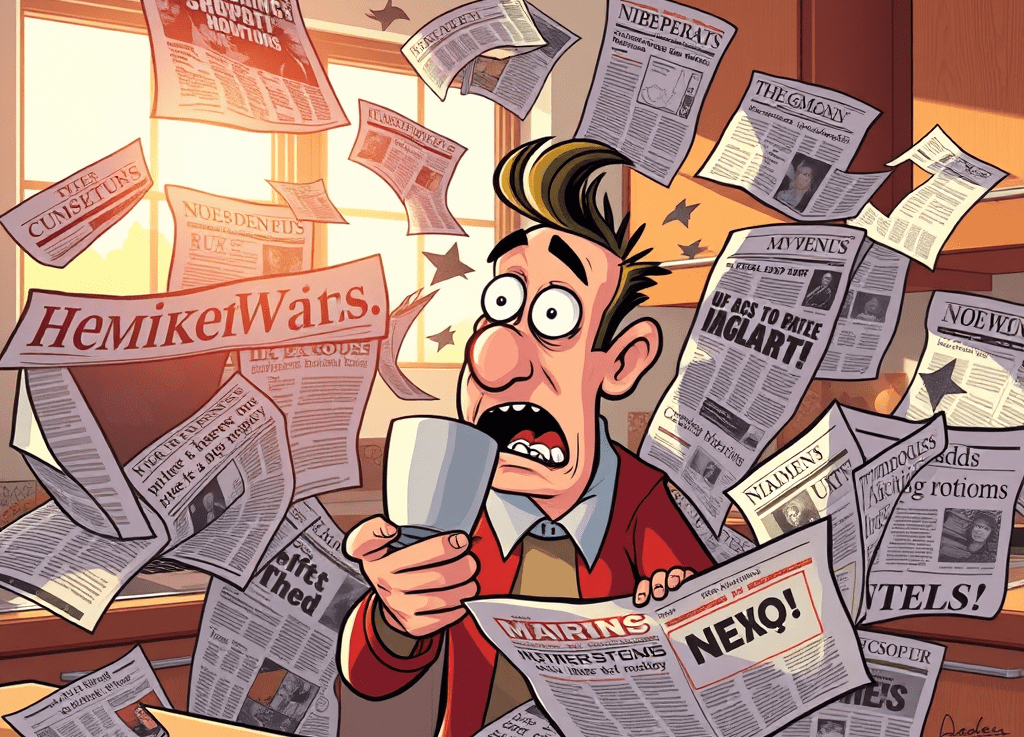
Now, as gruesome and shocking as that is, what really takes the cake here is the way Alexa—yes, Amazon’s Alexa—decided to break the news. Imagine walking into your kitchen, coffee in hand, ready to fight the soul-sucking Monday ahead, when your helpful little robot assistant pops up with:

“A murder occurred at the home of a Democratic Lawmaker. The perpetrator shot the husband and wife in cold blood.”

To be honest, the newsflash should have left out the word Democrat… Whoever writes this shit knows what they are doing and trust me, its deliberate.

Well, damn, Alexa. Way to brighten my day. That’s one hell of a headline to pair with my toast and jam. But you know what they didn’t mention? What they just conveniently left out? That Vance was… wait for it… a Democrat appointee, courtesy of Governor Tim Walz himself. Yeah, let that marinate. Tens of thousands of people see that vague little nugget of information and immediately start imagining some MAGA-hat-wearing lunatic foaming at the mouth. Because that’s what we do now: jump to conclusions faster than a squirrel on espresso.

Public Opinion: A Circus of Stupidity

This, ladies and gentlemen, is how public opinion is formed. Not with facts or nuance or even a shred of common sense. Nope. Just a headline and a whole lot of assumptions. And let’s be real here—critical thinking is about as popular these days as a Nickelback reunion tour. Nobody questions anything, nobody digs deeper. The media throws you a bone, and we all run with it like we’re championship greyhounds.

But wait! There’s more! Because, of course, there’s always more stupid shit to pile on top of the already steaming heap. Enter Alex Padilla, the guy who apparently thought it was a good idea to crash Kristi Noem’s press conference (because why not, right?). This same dude is now trying to tie these murders to Trump’s campaign. Yes, you read that right. The murders. Trump. Connected. Somehow. It’s like a bad game of Mad Libs where every blank gets filled with “Trump” because nobody knows what else to say anymore.

Why Are We Like This?

And here’s the million-dollar question: Why are tensions rising? Why is everybody so angry all the damn time? Well, buckle up, because here’s the answer—it’s stupid shit like this. The media stirs the pot with half-truths, people gobble it up without question, and before you know it, everyone’s picking sides and throwing punches. It’s human nature, sure, but it’s also human stupidity in its purest form.

So, there you have it. Murder, media, and a masterclass in how to divide a population. If this isn’t the poster child for my upcoming book, Stupid Shit, I don’t know what is. Oh, and if you’re still here, sign up for emails so you can snag the book on KDP when it drops because nothing cures the existential dread of living in a divided society like laughing at the sheer absurdity of it all.

Learn to ask questions and stop assuming shit.

-Scott

The Return of Firing Squad Executions in the U.S.

The Return of Firing Squad Executions in the U.S.


I have been on the fence regarding the Death Penalty since I was a child.
For those of you old enough to remember grade school, when we got back from lunch and there was a projector in the room it was a great day!


Well, that was not the case one day in the third grade—yes, third grade. Most of us were 9 years old, and we didn’t know too much about war. For me, Vietnam was fresh on our minds even though we couldn’t find it on a map; we all knew someone who was involved.


The film that day was The Execution of Private Slovik. In case you never saw the film, the story revolves around a soldier named Private Slovak, who is executed for the crime of cowardice.

The events unfold in a manner that highlights the absurdity and tragedy of war. Vonnegut uses dark humor and irony to convey the senselessness of the military’s decision, questioning the values and morals of those in power.


“The Execution of Private Slovak” serves as a powerful commentary on the nature of war and the moral dilemmas faced by individuals in extreme circumstances. Vonnegut’s unique style and perspective prompt readers to reflect on the consequences of conflict and the human capacity for both cruelty and compassion.


The film adaptation of “The Execution of Private Slovak” is likely aimed at a mature audience, primarily due to its themes of war, morality, and the psychological impact of conflict.
The film’s production was so compelling that I still suffer from PTSD after seeing it in 1974 as a child.
I don’t have to tell you that the ‘teacher’ who sucked at teaching BTW had no business showing that film to nine-year-olds.

That brings me to my reason for this blog post…


Recent Execution by Firing Squad
Today, March 8, 2025, marks a significant event in the realm of capital punishment in the United States, as Brad Sigmon, a 67-year-old inmate, was executed by firing squad in South Carolina. This execution is notable as it is the first firing squad execution in the U.S. in 15 years, with the last one occurring in Utah in 2010.

Brad Sigmon was convicted of a double murder in 2002, where he killed his ex-girlfriend’s parents. He opted for the firing squad as his method of execution, rejecting other options such as electrocution or lethal injection. This choice has sparked discussions about the ethics and humanity of various execution methods, especially given the controversies surrounding lethal injections and their potential for botched procedures.


The execution has drawn significant attention and criticism, with many labeling the firing squad as a “barbaric” method of execution. There have been calls for clemency and debates about the appropriateness of using such methods in modern society. The return of firing squads as a method of execution raises questions about the evolving landscape of capital punishment in the U.S. and the moral implications involved.


Well, I don’t have to tell you that his death has resonated with me.


Unlike many, I feel as if we gain something when a mass murderer doesn’t commit suicide by cop or just plain old taking the coward’s way out and offing themselves.


Learning from the experiences of convicted murderers can help identify patterns that lead to violent behavior. This knowledge can inform community preventive strategies, such as mental health support, conflict resolution programs, and educational initiatives to reduce violence.


I maintain that we have a mental health crisis in this country and most probably around the globe.
As the Trump administration focuses on improving America’s health, mental health should be a key component.

This person chose this method to die as a statement. Why? What was his reasoning to die in such a horrific manner? Will his death dissuade others from committing acts of violence?


What are your thoughts?
Should we have the death penalty?
If we have it how should it be carried out?

As you can see, I enjoy sharing my views on current events. Feel free to share your thoughts in the comments section below.


I am thrilled to share an exciting update with you—my latest book, 1300 Feet per Second, will be released soon! This novel delves into the intricacies of human resilience and the relentless pursuit of one’s dreams, all set against the backdrop of gripping adventure and unforeseen challenges.
Your support has always been invaluable to me, and I am incredibly eager for you to dive into the pages of 1300 Feet per Second. This story will captivate your imagination and resonate with your spirit, much like it did with mine during the writing process.


In addition to this new release, I invite you to explore my current collection of books available on Amazon. Each title carries a piece of my heart and endless hours of dedication, crafted to offer you memorable and enriching literary experiences.


Thank you for being such a passionate and supportive community. I look forward to hearing your thoughts on 1300 Feet per Second and hope you find joy and inspiration in all my works.
Happy reading!


Warm regards,
Scott
Discover more of my books:

If your in to reading short stories for free…Follow the link and read my contest entries on the Reedsy web site in the UK.

Mastering Story Pacing: Engage Readers Effectively

Mastering Story Pacing: Engage Readers Effectively

There are so many aspects to writing that I think we can get lost in the weeds.

Today I want to focus on pacing. What is it?

Pacing refers to the rate at which a story unfolds, influencing how quickly or slowly the narrative progresses. It is a crucial element of storytelling that affects reader engagement, emotional impact, and the overall mood of the piece.

The length of scenes can significantly affect the pacing. Short, punchy scenes can create a fast-paced narrative, while longer, more descriptive scenes tend to slow the pace down.

The intensity and frequency of action sequences versus descriptive passages also play a vital role. A story filled with rapid action will generally feel faster-paced, while a narrative that delves deeply into character emotions and settings may feel slower.

Different genres often dictate pacing styles. For example, thrillers typically have a brisk pace to maintain tension and excitement, whereas character-driven novels may adopt a slower pace to allow for deeper emotional connections.

Effective pacing often involves varying the speed throughout the story. This technique can help maintain reader interest and build tension, creating a dynamic reading experience.

The primary purpose of pacing is to control the speed at which the story is told, which is not always the same as the speed of the events occurring within the narrative. By manipulating pacing, writers can enhance tension, develop characters, and evoke specific emotional responses from readers.

A thriller might exemplify effective pacing through a combination of short, action-packed scenes and longer, descriptive passages. The rapid shifts between intense action and slower moments allow readers to catch their breath while still maintaining a sense of urgency throughout the story.

Tension through pacing is all about rhythm and balance. By using techniques like short sentences, fast dialogue, controlled information release, and alternating speeds, writers can craft a narrative that keeps readers on the edge of their seats. Whether it’s a high-stakes chase or a quiet moment of dread, pacing allows authors to manipulate the reader’s emotional experience and maintain suspense throughout the story.

Many can write a good story, but can they captivate their readers? Pacing is a key element in maintaining reader engagement.

Common Pacing Mistakes to Avoid

Pacing is a delicate balance in storytelling, and mistakes in this area can disrupt the flow of a narrative, disengage readers, or confuse them. Here are some common pacing mistakes and how to avoid them:


1. Rushing Through Key Moments

  • The Problem: Important scenes, such as climactic moments or emotional turning points, are glossed over too quickly. This can leave readers feeling unsatisfied or disconnected from the story.
  • How to Avoid: Slow down during pivotal moments. Use detailed descriptions, internal monologue, and sensory details to fully immerse readers in the scene. For example, explore their thoughts and feelings in depth instead of rushing through a character’s emotional reaction.

2. Dragging the Narrative with Too Much Description

  • The Problem: Overloading the story with excessive description or unnecessary details can bog down the pace, making the narrative feel slow and tedious.
  • How to Avoid: Be selective with descriptions. Focus on details that are relevant to the plot or character development. If a scene feels slow, consider cutting unnecessary exposition or dialogue.

3. Uneven Pacing

  • The Problem: The story alternates between being too fast in some parts and too slow in others, creating a jarring experience for readers.
  • How to Avoid: Plan your pacing intentionally. Use faster pacing for action scenes and slower pacing for introspection or world-building. Balance is key—vary the tempo to keep readers engaged without overwhelming or boring them.

4. Too Many Filler Scenes

  • The Problem: Including scenes that don’t advance the plot or develop characters can make the story feel stagnant and cause readers to lose interest.
  • How to Avoid: Every scene should serve a purpose. Ask yourself: Does this scene move the plot forward, reveal something about the characters, or build tension? If not, consider cutting or reworking it.

5. Overloading the Reader with Action

  • The Problem: Constant action without breaks can exhaust readers and make the story feel monotonous, even in genres like thrillers or action-adventure.
  • How to Avoid: Alternate between high-intensity action and slower, reflective moments. This gives readers time to process events and connect with the characters.

6. Skipping Over Transitions

  • The Problem: Jumping too quickly between scenes or events without proper transitions can confuse readers and disrupt the flow of the story.
  • How to Avoid: Use transitions to guide readers smoothly from one scene to the next. Even a brief sentence or two to establish time, place, or mood can help maintain clarity.

7. Ignoring Genre Expectations

  • The Problem: Pacing that doesn’t align with the genre can alienate readers. For example, a slow-paced thriller or a fast-paced literary drama may feel out of place.
  • How to Avoid: Understand the pacing norms of your genre. Thrillers and action stories typically require faster pacing, while literary fiction or romance may benefit from slower, more introspective pacing.

8. Failing to Build Tension Gradually

  • The Problem: Jumping straight into high-stakes moments without proper buildup can make the story feel rushed and reduce the emotional impact.
  • How to Avoid: Gradually increase tension by layering conflicts, foreshadowing events, and raising the stakes over time. This creates a more satisfying payoff when the climax arrives.

9. Repetition of Similar Scenes

  • The Problem: Repeating scenes that cover the same ground (e.g., similar conversations or conflicts) can make the story feel redundant and slow.
  • How to Avoid: Ensure each scene adds something new to the story. If two scenes feel repetitive, combine them or cut one entirely.

10. Overcomplicating the Plot

  • The Problem: Introducing too many subplots or unnecessary twists can overwhelm readers and make the pacing feel erratic.
  • How to Avoid: Streamline your plot. Focus on the main storyline and ensure subplots are relevant and resolved in a timely manner.

Hope this helps!

Why I Value Critiques Over Prizes in Writing Contests

Why I Value Critiques Over Prizes in Writing Contests

This week’s entry…

Many of you know I frequently submit contest entries to Reedsy, aiming for several submissions each month.

While the tease, the carrot, if you will, of $250 is nice, the reality is that I don’t even consider that part of the prize that I am seeking.

People around the world read my stories. While a simple “like” is an affirmation in that they took the time to click like, it is for the critiques of other writers I seek.

Since they don’t know me, they can tell me what they honestly think or feel. I also reciprocate for the stories that I read. I do that with the good, the bad, and the ugly.

This week’s entry was posted, and I received the following review.

Scott, your story masterfully blends humor, serendipity, and heartfelt moments into a captivating narrative that made me feel like I was right there in the snowed-in airport. The line, “No, I’m not tired,” he whispered sadly, “but I’m also sad to see the blizzard ending,” encapsulates the bittersweet feeling of fleeting connections and new possibilities. Your depiction of Victor and Emma’s banter and chemistry, especially their shared frustrations and quick wit, is utterly delightful. The humor throughout the story—like Emma’s hilarious commentary on airport bars—kept the mood lively while the underlying emotions added depth. Your vivid descriptions, especially of the bustling airport bar and Victor’s nostalgia for Toad Suck, created a rich, immersive backdrop. This is a wonderfully crafted piece with humor, heart, and charm. Thank you for sharing such a delightful read!

I am not sharing this as a brag but as an example.

Countless similar contests, with their own unique rules and prizes, undoubtedly exist across various platforms and communities. For me, these contests are much like a recess from grade school—a welcome break from the pressures of work, a chance to let loose and have some fun, just like those carefree days of childhood. The prompt transports me from my project – be it the chilling winds and barren rocks of an alien planet or the plush carpets and rich scents of a movie star’s boudoir. The challenge is to meticulously plan my writing, unlike my spontaneous, free-flowing pantster style. With a maximum of 3000 words, creating the arc, the storyline, and so on is excellent practice for that New York Times bestseller that is looming in the near distance of my imagination.

Follow the link to my entry and see what you think. Was she right?

Recently, I published a book of these entries called Ephemera, Tales of the Fleeting and Profound. Another book with the same name, Vol II, is in the making as I take these stories, edit them, add to them as I see fit, and re-publish them as a book of short stories. You can find my work here.

Welcome to 2025 and your personal connection to someone passionate about the craft of writing.  Cheers!

“Trim the Tree”

“Trim the Tree”

“Trim the Tree”

How to Edit Your Stories and ‘Kill Your Darlings’ This Holiday Season.

Critiquing is one of the most important things we do in a writers’ group.

With Christmas almost here in December, I felt inspired to offer a posthumous critique of Irving Berlin’s work.

In case you don’t know, Irving Berlin wrote the movie “White Christmas,” released in 1954. He not only composed the music for the film but also contributed to its screenplay. The film features several of Berlin’s classic songs, including the iconic title track, originally debuting in his earlier work, the 1942 film “Holiday Inn.”

Truth be told, nobody wants to watch a movie with me. Why?

As a storyteller, I dissect movies. Since I penned my first novel, I can’t help myself. I am told by those who know that I should smoke pot before watching a movie so I can sit back and enjoy it.

Since I don’t smoke or do drugs, I guess I will have to be me and watch movies or read books as a solo act.

Like any artist or tradesperson, we learn from watching others and doing.

I went to see a theatrical production of White Christmas last weekend. The film’s soundtrack and other elements were all very memorable. I vividly remember every dance’s choreography and performance. The problem is that I also dissected the play and the film throughout the performance.

If we examine the plot points of the movie, they are:

War Flashback: The film opens with a flashback to Christmas Eve in 1944, where Bob and Phil perform for their fellow soldiers during the war. This sets the stage for their strong friendship and shared experiences.

Post-War Success: After the war, Bob and Phil establish themselves as a popular entertainment duo. They enjoy fame and success in the show business world.

Meeting the Sisters: While in New York, they meet a sister act, Betty (Rosemary Clooney) and Judy (Vera-Ellen), and become romantically involved with them. The sisters are also aspiring performers, which adds to the story’s dynamic.

The Vermont Inn: Bob and Phil learn that their former commanding general, General Waverly, is struggling to keep his Vermont inn afloat during the winter season. They decide to help him by organizing a Christmas show at the inn.

Planning the Show: The duo travels to Vermont with the sisters to put on a spectacular Christmas performance to attract guests and save the inn. They face various challenges, including weather issues and the general’s pride.

Romantic Developments: Throughout the film, romantic tensions build between Bob and Betty, as well as between Phil and Judy. Their relationships evolve as they work together to save the inn.

The Big Show: The climax of the film features a grand Christmas show, where all the characters come together to celebrate the holiday spirit. The performance is filled with music, dance, and heartfelt moments.

Resolution: The film concludes with a heartwarming finale, where the inn is saved, and the characters find love and happiness, embodying the spirit of Christmas.

If you or I wrote a novel with that much Serendipity, no agent would touch it.

If I’d written it, I would have done a better job describing the Haynes sisters and their cousin. Several times, the’ dog-faced boy’ is the comic relief or the glue that binds the sisters’ connection to their army buddies.

What are the odds they all end up at an inn in Vermont that just happens to be owned by General Waverly, whom the guys respect and love?

By the way, army folks help me out. Would you love a commanding officer who puts you in harm’s way?

Why not connect the dots?

How about making the dog-faced boy related to the general, which is how the Haynes sisters got the gig in the first place?

Why am I picking on a show I have loved my whole life?

Within our field, the regrettable necessity of forgoing cherished elements is unavoidable. As a result, all editing options continue to be available. We refer to this as killing our darlings.

Dissecting the movies or books you loved as a child or even today will make you a better writer.

Read, Dissect, Reflect…

As we gather around our loved ones this holiday season, let’s take a moment to reflect on our creative journeys. Just as we carefully select ornaments to adorn our trees, may we also embrace the art of editing, trimming our narratives to shine even brighter.

Remember, every cut you make is a step toward clarity and impact in your writing. So, as you cozy up with your stories this Christmas, don’t be afraid to ‘kill your darlings’ and make room for the magic that truly resonates.

Wishing you a Merry Christmas filled with joy, warmth, and inspiration. Happy editing, and may your words flow as freely as the holiday spirit! 🎄✨

Currently, there are numerous works in progress featuring magic, one of which is a pulse-pounding thriller where a forensic assassin, acting as a hired gun, tracks down villains through dimly lit alleyways and shadowy corners, the city’s heartbeat a constant hum in the background. Make sure to stay tuned for additional details.

Here are the recently penned novels, their covers promising untold stories.

Ephemera Tales of the Fleeting & Profound was just released. This is a book of short stories inspired by prompts from Reedsy.  

Nudist Haven

Nudist Haven

Dear Readers,

Are you ready to embark on a journey filled with nostalgia, nature, and hidden secrets? Dive into “Nudist’s Haven,” where the past and present collide in a rustic cabin surrounded by enchanting woods and mysterious footprints.

Join Sarah as she revisits her grandmother’s secluded sanctuary, only to discover that solitude might not be as lonely as it seems. Between the whispers of the lake and the secrets of the forest, there’s a tale waiting to unfold—a tale of unexpected friendships, daring encounters, and the simple yet profound beauty of life stripped to its essence.

Will Sarah find the courage to face the shadows of the past and embrace the unexpected twists of her present? Who is the enigmatic Nathan, and what role does he play in this wilderness narrative?✨ We invite you to explore this captivating story and share your thoughts!✨Your comments and insights are the heartbeat of our storytelling community. We can’t wait to hear your reactions and discuss the surprising turns and heartfelt moments that make “Nudist’s Haven” an unforgettable read.

Click here to read this for free!  

Happy Reading and Warm Regards,

Author Scott📖💬


Show Don’t Tell

Show Don’t Tell

‘Show don’t tell’ is one of the foundational principles of writing, emphasizing the importance of vividly illustrating instead of simply stating.

The principle of “show, don’t tell” is a fundamental technique in writing that enhances storytelling by allowing readers to experience emotions and events more vividly. Here are several reasons this approach is effective:
Engages the Reader’s Imagination
When writers show rather than tell, they invite readers to interpret the emotions and actions of characters through descriptive language and sensory details. This engagement encourages readers to visualize scenes and feel emotions alongside the characters, creating a more immersive experience.
Creates Emotional Depth
Showing emotions through actions, dialogue, and body language adds layers to character development. For instance, instead of stating that a character is angry, a writer might describe clenched fists, a flushed face, and a sharp tone of voice. This method allows readers to understand the character’s emotional state more deeply and personally.
Enhances Character Development
Characters become more relatable and realistic when their emotions are demonstrated through their behavior. Readers can infer motivations and personality traits based on how characters react to situations, making them feel more authentic and complex.
Builds Tension and Conflict
By showing rather than telling, writers can create suspense and tension in a narrative. For example, a character’s internal struggle can be illustrated through their actions and decisions, allowing readers to sense the stakes without explicitly stating them. This technique keeps readers engaged and invested in the outcome.
Encourages Reader Interpretation
When writers show emotions and events, they allow readers to draw their own conclusions and interpretations. This active participation can lead to a more rewarding reading experience, as readers connect with the story on a personal level and reflect on its themes and messages.


Here are some basic emotions

Joy – A feeling of great pleasure and happiness.
Trust – A positive emotion characterized by reliance on someone or something.
Fear – An emotional response to perceived threats or danger.
Surprise – A reaction to unexpected events.
Sadness – A feeling of sorrow or unhappiness.
Disgust – A strong feeling of aversion or repulsion.
Anger – A strong feeling of annoyance, displeasure, or hostility.
Anticipation – A feeling of excitement about something that is going to happen.

Detailed or nuanced emotions.

Affection
Amusement
Anxiety
Apathy
Compassion
Confusion
Contentment
Curiosity
Despair
Disappointment
Empathy
Envy
Excitement
Fearfulness
Frustration
Guilt
Hope
Horror
Hostility
Interest
Jealousy
Loneliness
Nostalgia
Pride
Relief
Remorse
Satisfaction
Shame
Surprise
Tenderness
Worry


Examples:
Opening his birthday present, Tim was joyful when he saw the latest video game.

Opening his birthday present, Tim’s face lit up with joy as he saw the latest video game. He eagerly imagined the hours of fun ahead.


Tim was disappointed to learn he would have to wait to play the game until the weekend, as tomorrow was a school day.


The following example may be a bit excessive, but it effectively conveys his disappointment.

As Tim’s face fell, a deep furrow etched itself across his brow. His eyes, which had sparkled with anticipation just moments before, now held a hint of sadness. The corners of his mouth, which had been curved up in a hopeful grin, now turned downward, reflecting the weight of his disappointment. He sighed, a long, slow exhalation that seemed to carry the burden of his unmet expectations.
He stared at the game console, its vibrant colors and intricate graphics now a stark reminder of the fun he would have to postpone. His fingers, which had been itching to wrap around the controller, now drummed a slow, disheartened rhythm against the table.
The room, once filled with the excited chatter of friends eagerly discussing strategies and predicting outcomes, now fell silent, save for the soft ticking of the clock on the wall. The hands moved inexorably forward, marking the passage of time that Tim could not reclaim.
As the reality of his situation sunk in, Tim’s shoulders slumped, and his body language indicated his despondency. He glanced at his friends, their faces a mirror of his own emotions, and then back at the game console. The screen, with its glowing promise of adventure and excitement, now seemed cold and distant, a cruel reminder of the joy that was now out of reach.
With a final, resigned sigh, Tim turned away from the game, his eyes downcast, his heart heavy with disappointment. He knew he would have to wait until the weekend to play, but for now, he could only endure the long, slow hours until then.


Try your hand at it. Pick a couple of the basic emotions, tell the story, and then show the story.

If you want more of these types of interactions, share your thoughts or stories in the comments.

-Best

Retiring is Stupid!

Retiring is Stupid!

Those were the words of one Elon Musk. Were they out of context? I hope so.

Should you retire?
The choice to retire is a personal one that depends on several factors, including financial stability, health, interests, and personal preferences. Here are a few significant points that should be considered.


To attain financial stability, one must possess ample savings, investments, or pension income to sufficiently cover one’s living expenses during retirement.


Now here is the rub: I don’t see Gen Z or even the Millennials preparing for retirement. What I see is them living for today and not planning for tomorrow. It’s almost as if they never heard of Dave Ramsey.


The simple fact is that many could not pull together $500 in case of an emergency. It’s true, and the credit card folks love it. If you save money, you know that .50% is about all you can get unless you adopt some high-yield account of 5.5%


Conversely, if you use a credit card, which many Americans do, the interest rate has reached an all-time high of 28.4% APR. We should ask why the current administration is allowing the fat cat bankers to do this, but we can deduce the reasoning.

This administration creates inflation, forces people to use their savings and borrow money, and allows bankers to raise interest rates to encourage predatory lending. I’m sure it’s all on the up and up.


I was curious about what it would cost to borrow $10,000 and repay the loan by making minimum payments. Are you ready for this?
The total cost of borrowing $10,000 at an APR of 28.4% with minimum payments is infinite.

The minimum payment is assumed to be 2% of the outstanding balance each month, a common minimum payment percentage for credit cards. Suppose the minimum payment is less than the interest accrued in a month. In that case, the balance increases, leading to a situation where the balance never decreases, and the total cost of borrowing becomes infinite.


Since they don’t seem to teach introductory economics or critical thinking skills, what are the chances of retirement? Is that why Elon says Retirement is stupid?


Health and wellness: Reflect on your existing state of health and the potential healthcare needs. The presence of a well-developed plan addressing potential health issues can enhance the comfort of one’s retirement. Until you are 65, health insurance is a budget killer. The sad fact is that many companies will not hire older Americans. By older I mean over 50. Yeah, I know the HR bit about not discriminating, but trust me, they do. Getting a job over 50 is doable, but not for the average Joe.

Your track record must be exceptional and free from the embellishments often found in contemporary resumes.

Playing video games is not a career move, nor would it impress a boss who needs someone with critical thinking skills. Unless you are a developer of such games, turn off the game and get your hands dirty.

It’s not enough to have funds or adequate health to retire. What will you do when the day of the week no longer matters?


All too often the day and time of the week only matter to retired folks when a medical appointment is looming. That’s a sad fact, stay healthy.


Consider your interests and hobbies when contemplating how you would prefer to allocate your time during retirement. Certain individuals may enjoy pursuing hobbies, traveling, or engaging in volunteer work, while others may prioritize spending additional time with family or friends.

The ability to lead a satisfying life post-retirement may be contingent upon preserving social connections and actively participating in social activities.


If one derives pleasure and contentment from their occupation, they may pursue part-time employment or a more flexible role. Consulting is a frequent option until the consultee gets what they need from your head and no longer requires your expertise.


The company typically lacks loyalty towards its employees. A paycheck is owed to you for the job or duration of service completed. That sums it up. It can be pretty difficult to accept when you put forth your utmost effort for the company only to have them opt for a more cost-effective alternative. When setting goals, consider yourself and the needs of your family first.


Ultimately, the decision to retire should be based on a thorough evaluation of your financial, health, and personal circumstances. It’s essential to weigh the pros and cons and make a decision that aligns with your goals and priorities.

With inflation, remember that the million you thought you had in the bank now has substantially less purchasing power than what you think you have. If trends continue, you might be in real trouble.


We should discuss the G-word here: Goals. If you have been successful, you are most certainly familiar with goal setting by now.


It would be best if you were goal-setting now, even forty years away from retirement. We do this for several reasons. One of them is setting an example to our progeny. They are watching. They absorb everything you say and do like sponges.


You don’t want to be the grandparent or parent who writes checks to cover your kids’ or grandkids’ bad decisions, sacrificing everything you worked for to bail them out of their bad choices.


I watch them and talk to them, and I must tell you that very few of them have a grasp on reality. It’s almost as if the video games that steal so much of their waking hours are their reality.


If you want to give them a dose of reality, kill the power so that even the smartphones will not work. That topic deserves a book but unless it was in the form of a video game they would most probably never know of its existence.


Your final goal is to run out of money and life simultaneously. When you slide into the home plate (the grave), have it paid for in advance. Whatever your residual is, is what it is. If you teach your children right, they won’t be counting on your investments for their retirement.

Should you retire?
Stress comes out of your hide. Those gray hairs and wrinkles are badges of honor and a price paid for being the best you could be.


In a future blog, I want to explore the subject of jobs. What should you or your child focus on for a career choice? Is college the only way to go?

Stay tuned, follow and comment.

In case you’re new to this blog…I am a writer.
With several works in process.

My books are here, and your support is always appreciated.

-Best

A four-hour tour or another distraction?

A four-hour tour or another distraction?

Writer’s block, is there a cure?

Ahoy there, landlubber! Do you have writer’s block? Let’s take a four-hour cruise in a few moments (time dilation) and see if we can impart some wisdom. I am ready to whisk you away on a tale of wit, wisdom, and neurotic writer’s block. So, buckle up and hold on tight, for we’re about to embark on a literary adventure!

“Lovee, have you seen Teddy?”

Now, dear reader, imagine you’re on a ship, sailing through a tempest of ideas as the sun sets and the stars begin to twinkle. Suddenly, a mighty muse appears a mischievous sea creature that’s as unpredictable as the ocean itself. This muse could be a siren, tempting you with a new story idea, or a kraken, wrapping its tentacles around your keyboard to keep you from writing.

Your phone rings, and it’s like a mermaid singing her enchanting song, enticing you to answer her call. You take the bait, only to find yourself in the clutches of a maritime monologue that drags on for hours. You wonder, “Is this a tale of my own making?”

As you sail on, you reach the infamous Sargasso Sea of Writer’s Block, where the water is murky, and the winds are as unpredictable as the muse’s whims. You’re in the middle of your literary voyage, and the muse has lost interest, leaving you adrift. Your ship starts to lose speed, and you’re struggling to keep it afloat.

You know what that means, don’t you? It’s time to spice up your story with a little something extra, like a dash of Viagra to the mushy middle. And while you’re at it, why not take a break and try your hand at a short story for a contest? It’s a great way to flex your creative muscles and prove that you’re not a quitter!

So, whether you’re a seasoned scribe or a budding bard, remember that the ocean of writing is vast and filled with adventure. And when the muse strikes, be prepared to dive in headfirst and create a story that will leave readers hooked!

Before I leave you to return to the depths of my latest story, subscribe to this blog so we can keep up. Secondly, as a reward, I have free stories for you to ponder on the Reedsy website.

A few weeks ago, I introduced Aunt Haddie, the eccentric relative who has a fondness for blending weed and Magick. Last night, as I entered another story with Aunt Haddie, I could hear the buzz of excitement from the audience, who were already raving about her performance. It’s a freebie that you definitely don’t want to miss out on.

Where the Wild Skunks Roam https://blog.reedsy.com/short-story/r0gsys/

At The Roads End https://blog.reedsy.com/short-story/si9llh/

Reviews on the Reedsy site are great, and I love them. Again, it’s all free…

Sign up for an e-mail notification from me so you don’t miss out.

Now, if you’ll excuse me, I must dive back into the ocean’s depths to search for more literary treasures. Bon voyage, my friend, and may your writing journey be filled with excitement and inspiration!

-Best