Author: The Timedok

The Art of the Deal: What’s Really in Trump’s Drug Pricing Agreements?

The Art of the Deal: What’s Really in Trump’s Drug Pricing Agreements?

An Opinion Piece on Transparency, Pharmaceutical Interests, and the Curious Timing of Hemp Industry Regulations


Donald Trump has always prided himself on being a dealmaker. His book, The Art of the Deal, famously acknowledges that not everyone walks away happy when the ink dries. That’s the nature of negotiation—someone wins, someone loses, and often, the details remain hidden from those most affected by the outcome.I’ve been paying close attention to the deals coming out of this administration, and I find it troubling that the American public rarely learns what’s actually in them. We hear the headlines. We see the press conferences. But the fine print? That stays behind closed doors.


The Lower Drug Prices Announcement

Let’s take the recent announcement on lower drug prices. On the surface, it sounds like a win for consumers. Who wouldn’t want more affordable medications?But here’s the question no one seems to be asking: What did the pharmaceutical industry get in return?Deals are, by definition, exchanges. If drug companies agreed to lower their prices, what incentive did they receive? What concession was made on their behalf?


A Curious Coincidence: The Federal Crackdown on Hemp

Shortly after the lower drug prices were announced, federal agencies turned their attention to the hemp industry with surprising intensity. For those who follow both markets, the timing raised eyebrows.Was this a coincidence? Perhaps. But consider this: hemp and CBD products have emerged as direct competitors to a wide range of pharmaceutical drugs—often at a fraction of the cost and without requiring a prescription or doctor’s visit.Could restricting the hemp industry have been part of the deal?


What Hemp and CBD Offer Consumers

To understand why pharmaceutical companies might view the hemp industry as a threat, consider the health benefits these products claim to provide:CBD (Cannabidiol) Benefits:

  • Pain Relief – Interacts with the endocannabinoid system to reduce inflammation
  • Anxiety and Stress Reduction – Helps alleviate symptoms of anxiety disorders
  • Sleep Improvement – Promotes relaxation and reduces insomnia
  • Epilepsy Treatment – FDA-approved (Epidiolex) for rare seizure disorders
  • Neuroprotective Properties – Potential benefits for Parkinson’s, Alzheimer’s, and MS
  • Anti-inflammatory Effects – May benefit arthritis and autoimmune conditions
  • Addiction Management – May help reduce cravings and withdrawal symptoms
  • Heart Health – Could lower blood pressure and improve cardiovascular function
  • Skin Conditions – Topical applications for acne, eczema, and psoriasis

Hemp Seeds, Oil, and Protein Benefits:

  • Nutrient-Rich – High in vitamins E, D, and A, plus essential minerals
  • Complete Protein – Contains all 9 essential amino acids
  • Heart Health – Omega-3 and omega-6 fatty acids improve cholesterol levels
  • Digestive Health – High fiber supports gut health
  • Hormonal Balance – GLA may reduce PMS and menopause symptoms
  • Energy and Weight Management – Promotes sustained energy and satiety

Note: While these benefits are promising, more research is needed, and individual results may vary.


The Competition: Pharmaceutical Alternatives

Now consider the pharmaceutical drugs that treat these same conditions—and the prices attached to them:

ConditionPharmaceutical Options
Pain ReliefOpioids (OxyContin, Vicodin), NSAIDs (Celebrex), Gabapentin, Lyrica
Anxiety/StressZoloft, Lexapro, Xanax, Ativan, Valium
Sleep IssuesAmbien, Lunesta, Trazodone
EpilepsyDepakote, Keppra, Lamictal, Epidiolex
InflammationPrednisone, Methotrexate, Humira
AddictionSuboxone, Methadone, Chantix
Heart HealthLipitor, Crestor, Lisinopril
Skin ConditionsTretinoin, Protopic, Humira
Digestive IssuesRemicade, Asacol, Miralax
Hormonal BalanceHRT, oral contraceptives, SSRIs

These medications require prescriptions, doctor visits, and often expensive medical tests. They generate billions in revenue for pharmaceutical companies—and for the broader healthcare system.


Who Wins and Who Loses?

Here’s the central question: If you can walk into a local vape shop and try hemp products—much like visiting GNC for supplements—who benefits, and who loses?When consumers can self-select affordable, over-the-counter alternatives to treat common symptoms, the following parties see reduced revenue:

  • Pharmaceutical companies – Fewer prescriptions filled
  • Doctors and clinics – Fewer office visits
  • Imaging centers and hospitals – Fewer diagnostic tests
  • Pharmacies – Lower prescription volume

Conversely, if hemp products are restricted or banned, consumers are funneled back into the traditional healthcare pipeline—often seeing a PA or NP instead of a physician, cycling through multiple medications to find one that works, and paying significantly more in the process.


The Call for Transparency

Here’s my bottom line: There needs to be full transparency in these deals.After recent revelations about mismanaged funds in learning centers and other federally funded programs, it’s clear we need stronger oversight mechanisms. We have the IRS to track tax compliance—why don’t we have an equivalent agency to track where our tax dollars actually go and to provide public accountability for these high-stakes agreements?The American people deserve to know:

  • What concessions were made in the drug pricing deal?
  • Why did the federal crackdown on hemp follow so closely?
  • Who benefits from these arrangements—and at whose expense?

Until we get answers, we’re left speculating about deals made in our name but without our knowledge.


What do you think? Is there a connection between lower drug prices and the hemp crackdown, or is it just coincidence? Share your thoughts in the comments below.

What a Vermont Farmhouse Novel Taught Me About GMO Corn

What a Vermont Farmhouse Novel Taught Me About GMO Corn

Writing for the ADHD

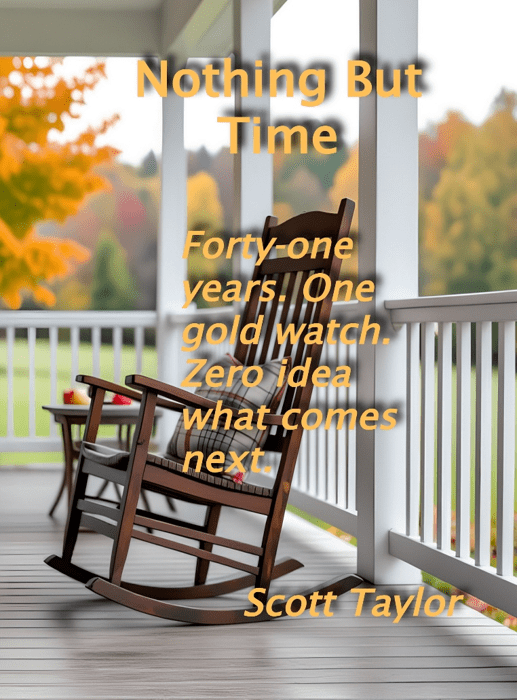
As a writer, I’m no stranger to research rabbit holes—especially the kind that start with a simple “why?”After completing Nothing But Time—a literary fiction novel about redemption, second chances, and learning to live after a lifetime of existing—I found myself pulled into unexpected territory. The book follows a retired workaholic who inherits a Vermont farmhouse from a deceased friend, along with an urgent final message about what it means to be alive. Originally written in 1985 and restored in 2026, the story required me to understand something I’d only glimpsed as a child: farming.


A Memory Resurfaces

My uncle had a farm in Minnesota. When I was very young, he set me on a yellow tractor and pointed me toward a field. That memory has never faded.While researching modern agriculture online, I discovered Laura Wilson‘s story on Pioneer’s website—and that childhood memory came flooding back. Laura and her husband Grant are working farmers whose videos gave me the inspiration I needed. In Nothing But Time, my protagonist Jack Harper learns what I learned watching them: that farming is both simpler and far more complicated than most people imagine.


The Question That Stopped Me

One detail in Laura and Grant’s videos made me pause. They mentioned the cost of corn seed—roughly $110 per box, covering about two and a half acres—and then said something I didn’t expect:It’s illegal to replant your own seed.They didn’t elaborate. They stated it as fact and moved on. But I couldn’t.


Why Can’t Farmers Save Their Own Seed?

The answer leads to one name: Monsanto (now part of Bayer).The seed Laura and Grant purchase is genetically modified—what consumers know as “GMO.” Farmers are legally prohibited from saving and replanting patented seeds because seed companies hold intellectual property rights over modern crop varieties, particularly genetically engineered or hybrid strains. These protections give corporations exclusive control over how their products are used, including the right to ban replanting.The strictest restrictions apply to utility-patented seeds (most GMOs), where saving and replanting is prohibited outright. For some other protected varieties, limited saving for personal use may be allowed, but selling or sharing is not. Enforcement comes through a combination of patent law, licensing contracts, and active monitoring by seed companies.


What Genetic Modification Does to Corn

Here’s what modern GMO corn is engineered to do:1. Resist Pests Bt corn contains a gene from the bacterium Bacillus thuringiensis that produces a protein toxic to insects like the European corn borer but reportedly safe for humans and animals. This reduces the need for chemical pesticides. The open question: how confident can we be about long-term human ingestion of these proteins?2. Tolerate Herbicides GM corn is engineered to survive specific herbicides such as glyphosate, allowing farmers to kill weeds without harming their crop. This simplifies weed management and can reduce soil-eroding tilling.3. Increase Yields Researchers have altered genes like zmm28 to function as growth triggers, producing varieties that yield up to 10 percent more than conventional types.4. Reduce Chemical Use By decreasing reliance on pesticides and herbicides, GM corn can contribute to more sustainable practices—at least in theory.5. Improve Nutritional Content Some varieties are biofortified with higher levels of vitamin A, lysine, or tryptophan, targeting nutritional deficiencies in regions where corn is a dietary staple.6. Adapt to Climate Stress GMO corn can be engineered to withstand drought, temperature extremes, or poor soil—extending viable growing regions.


The Health Question No One Wants to Fund

Here’s what concerns me: while no long-term human health studies exist, laboratory rats fed GMO corn have shown evidence of prediabetic conditions and organ changes. That alone should warrant rigorous, independent research.Why doesn’t it exist? Consider the economics:

  • U.S. GMO corn gross sales (2025 est.): ~$14 billion annually, projected to reach $19.8 billion by 2035
  • Global GMO corn market (2023): $264 billion, expected to grow to $440 billion by 2033
  • U.S. adoption rate: More than 90 percent of American corn production uses genetically engineered varieties

With that much revenue at stake, the absence of funded long-term health research feels less like an oversight and more like a choice. Which government officials are looking the other way? What financial relationships exist between regulators and seed corporations? I suspect transparency there would be illuminating—and uncomfortable.


The Takeaway

Know what’s in your food. If it’s overprocessed and genetically modified, I’d recommend caution.And as for me—I’d love to go back to that Minnesota farm. To remember the quiet. The only sounds at night were wind through the trees or distant thunder rolling across the fields.


Did you find this post useful, informative, or entertaining? Drop a comment below.

Ellie Morrow: A Tale of Grief and Magic

Ellie Morrow: A Tale of Grief and Magic

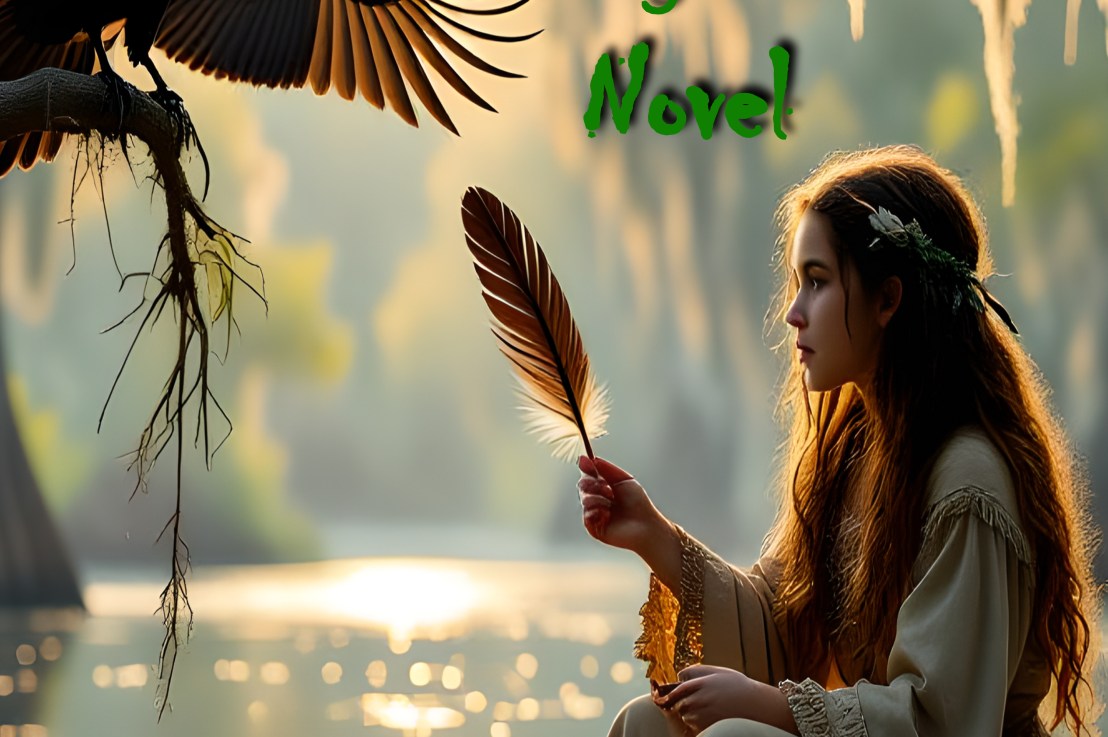
Ellie Morrow has spent six years in the foster care system learning one lesson above all others: she breaks things.

Televisions implode when she’s angry. Pipes rupture when she dreams. Crows gather wherever she goes—silent, watchful—as though waiting for a signal only they can hear. And deep behind her sternum, something that is not quite a heartbeat pulses with a power she never asked for: a residual fire left over from the night a mysterious golden light filled her parents’ car on Route 9, killed everyone inside except her, and left a seven-year-old child without a scratch or an explanation.

“You are not broken, Ellie. You are not dangerous. And you are not disposable.”

But the foster care system disagrees. And so, when an estranged grandmother named Agatha Morrow arrives to claim her—a woman who chose thirty years of silence over the burden of explanation—Ellie is pulled from the only world she has ever known into something older and stranger: the breathing, sentient world of the Morrow women. A bloodline of immense power stretching back centuries. A house on a nameless mountain, built above a nexus of forces older than language. A legacy of magic and grief, of doors that should not be opened and things that sleep beneath foundations, of wards that answer to family and a home that has been waiting for the right Morrow to return.But Ellie is not merely inheriting power. She is awakening something. The blood moon is coming, and whatever has been dreaming in the deep places beneath the Morrow house—vast, impossibly old, and stirring for the first time in generations—has begun to rise, drawn upward by a girl whose emotions can crack buildings and whose light can fill a room with the color of old gold.

Part coming-of-age story, part Gothic supernatural mystery, and part meditation on grief, survival, and the terrible weight of belonging to something larger than yourself, the Girl Who . . . series asks one question and dares its heroine to answer it:

Get your copy here…

Where they are
Plotter + Pantser = Planster: The Best of Both Worlds

Plotter + Pantser = Planster: The Best of Both Worlds

What happens when you stop choosing sides in the great writing debate and embrace the chaos and the structure? You get what I like to call a Planster — and it just might be the most productive approach to writing you’ve never tried.


The Pantser Days

When I first started writing, I was a pure stream-of-consciousness writer — much like Stephen King, who famously describes his process as uncovering a fossil, brushing away the dirt one sentence at a time. I’d sit down, let the words pour out, and trust the story to find its own shape. There was a raw, electric energy to writing that way. The surprises my characters threw at me were my surprises too.But here’s the thing about pantsing: for every story that found its way to a satisfying ending, there were others that wandered into dead ends, spiraled into subplots that led nowhere, or simply ran out of steam halfway through. I had hard drives full of half-finished manuscripts collecting digital dust — stories with heart but no spine.

The Shift to Plotting

Eventually, I began studying story structure — the beats, the arcs, the underlying architecture that makes a narrative work. I dove into frameworks like the three-act structure, Save the Cat, and the Hero’s Journey. I learned about inciting incidents, midpoint reversals, dark nights of the soul, and satisfying climaxes.And suddenly, I understood why some of my old stories had stalled. They had voice. They had characters I loved. But they were missing the bones that hold a story upright.So I became a plotter. I outlined. I structured. I mapped every scene before writing it.And something was lost.The outlines were solid, sure — but sitting down to write a scene I’d already planned in detail felt like retracing someone else’s steps. The spontaneity, the discovery, the magic of pantsing had dried up.

The Planster Revelation

Then a thought hit me: What if you plot the structure but pants the beats?What if, instead of choosing one camp or the other, you used story structure as a roadmap — just the major landmarks, the critical turns — and then let your pantser brain run wild between them?That’s the Planster method in a nutshell:

  1. Create a beat sheet. Identify the key structural moments your story needs — the hook, the inciting incident, the first plot point, the midpoint, the crisis, the climax, the resolution.
  2. Know your destination for each beat. Understand what needs to happen at each structural turn and why it matters.
  3. Pants everything in between. Let the characters breathe. Let the scenes surprise you. Let the dialogue flow the way it wants to. Trust your creative instincts to fill the space between the signposts.

You get the reliability of structure with the energy of discovery. The bones are there, but the flesh is alive.

The Proof Is in the Publishing

I decided to put this method to the test — not with a brand-new idea, but with those old stories buried on dusty hard drives from my pantsing days. Stories that had voice, had spark, but had never found their shape.I pulled three of them out, built beat sheets around their cores, and then pantsed my way through the beats.The results? Three completed novels in a fraction of the time it would have taken me using either method alone:

  • 📖 Written in Skin — published on Amazon
  • 📖 Nothing But Time — published on Amazon
  • 📖 The Girl Who Broke Everything — coming soon

Three abandoned stories. Three finished books. That’s not a fluke — that’s a process that works.

Why the Planster Method Works

  • Structure prevents you from getting lost. You always know where you’re headed next.
  • Pantsing keeps the writing alive. You’re still discovering the story as you write it — just within guardrails.
  • It’s faster. You spend less time staring at a blank page and less time rewriting entire drafts that went off the rails.
  • It resurrects old work. Got abandoned manuscripts? They might just need a skeleton to stand on.

Are You a Planster?

If you’ve ever felt torn between the freedom of pantsing and the security of plotting, give yourself permission to be both. Grab a beat sheet template, sketch out your structural landmarks, and then let yourself fly between them.You might be surprised how many stories you’ve already started that are just waiting for the right structure to finally be told.


Have you tried the Planster method? Got old manuscripts collecting dust? I’d love to hear about your experience — drop a comment below or find my published works, Written in Skin and Nothing But Time, on Amazon. And keep an eye out for The Girl Who Broke Everything, coming soon.

A Tiny, Totally Non-Desperate Plea From Your Friendly Neighborhood Author

If you enjoyed this post — or even if you just tolerated it with mild amusement — I have a few small, completely reasonable requests:1. Share this post. Hit that share button like it owes you money. Text it to a friend. Email it to your mom. Print it out and leave it on a stranger’s windshield. I don’t judge distribution methods.2. Spread the word. Tell people about this blog. Whisper it in crowded elevators. Mention it casually at dinner parties. Skywriting is also acceptable.3. Buy a book. Look, I’m not starving. Let’s not be dramatic. But I am a coffee-dependent creature with a very real and very expensive caffeine habit, and those lattes aren’t going to fund themselves. Every book purchase keeps a moderately-fed author adequately caffeinated and typing away at the next thing you’ll (hopefully) enjoy.So if you’re feeling generous, kind, or just impulsive enough to click “Add to Cart” — I salute you, you beautiful human.☕ Keep the coffee flowing. Keep the words coming.

Where they are
The Uncomfortable Truth About Writing Contests: Where’s the Feedback?

The Uncomfortable Truth About Writing Contests: Where’s the Feedback?

Let us speak of something that has been troubling me, and likely many of you, about the writing contest industry. It is a thing that hums beneath the surface of our submissions like a second heartbeat we have learned to ignore.

The Business Behind the “Opportunity”

Here is the hard truth, plain as the words that appear unbidden on a blank page at three in the morning: writing contests are a money-making business. There is nothing altruistic about the companies that hold them. They rely on your ego, your dreams, and your hope to willingly surrender that entry fee for a chance at recognition. The fee slips from your fingers like sand, like memory, like the last line of a poem you swore you would remember. Sound familiar? It should. This strategy is not new. The lottery counts on your optimism (and perhaps your misunderstanding of probability) to keep buying tickets. Vegas has built an empire on this exact psychology for generations. Writing contests? They are playing the same ancient game, only dressed in literary clothing, their true nature hidden behind promises that shimmer and shift like heat rising from summer pavement.

My Real Frustration: The Silence

What bothers me most is not the business model itself; everyone needs to make money. It is the complete lack of engagement with the work we submit. Our stories vanish into the void, swallowed whole, and we are left listening for an echo that never returns. Is it too much to ask for some modicum of evidence that someone actually read our stories? Even the smallest bit of feedback would transform the experience:

  • “Your opening didn’t hook me.”
  • “Did you read the prompt?”
  • “Strong voice, but the pacing faltered.”

These words, however brief, would be enough. They would prove that our stories had weight, that they existed somewhere beyond the submission portal, that they touched, however briefly, another human mind. With platforms like Reedsy, I understand that a five-dollar entry fee is not breaking the bank. But still, is it really too much to ask for something in return beyond silence and a form rejection? The silence is its own kind of haunting. It lingers in the inbox, in the space between refreshing the page and accepting, once again, that no reply will come.

The Bottom Line

We are paying for a service. Should that service not include at least a sentence of human acknowledgment? A single line to prove that our words, however flawed, were witnessed? Tell me your thoughts in the comments below. Am I asking for too much, or is it time contests stepped up and broke their long, strange silence?

How to Critique Other Writers’ Work When You’re Not the Intended Audience

How to Critique Other Writers’ Work When You’re Not the Intended Audience

Tonight I read a story for comments from my writers’ group. One person stopped listening and rolled their eyes when the word Dragon was spoken. The dragons are a metaphor for those who resist government overreach. The story was inspired from a prompt on the Reedsy website. There is a link below if you want to see the story for yourself. It is short and enjoyable if I say so myself…

What if the most valuable critique you ever give is on a book you’d never buy?

Writers are often told to find critique partners who “get” their genre. But the reality of writing groups, workshops, and beta swaps is messier. Sometimes you’re handed a cozy mystery when you live for grim dark fantasy. Sometimes you’re reviewing a picture book manuscript, and you haven’t interacted with a five-year-old in years.

Does that make your feedback worthless? Not even close—if you know how to give it.

The trick isn’t pretending to be something you’re not. It’s learning to separate what’s broken from what simply isn’t built for you. Here’s how to offer meaningful, respectful critiques—even when the story was never written for someone like you.

Acknowledge Your Position First

The most important step is transparency. Before diving into your feedback, tell the writer:

“I want to be upfront—I’m not typically a reader of [genre/age category]. I’ll do my best to evaluate the craft, but please weigh my feedback with that in mind.”

This simple disclaimer does two things:

It helps the writer contextualize your opinions

It keeps you accountable to critique fairly rather than based on personal taste

Separate Craft from Preference

Even if you’re not the target reader, you can still evaluate fundamental craft elements that apply universally:

What you CAN critique objectively:

Clarity – Is the prose easy to follow?

Consistency – Do characters behave consistently? Are there plot holes?

Pacing – Does the story drag or rush in places?

Dialogue – Does it sound natural and distinct for each character?

Structure – Is the narrative arc clear?

Grammar and mechanics – Are there technical errors?

What you should be cautious about:

Tropes common to the genre (they may be expected, not flaws)

Tone or content that feels “too much” for you but fits the audience

Subjective style choices that serve the intended readers

Ask Questions Instead of Making Declarations

When you’re uncertain whether something is a flaw or simply “not for you,” frame your feedback as questions:

Instead of: “This romance subplot feels overdone.”

Try: “Is this level of romantic tension typical for your target readers? It felt heavy to me, but I recognize I may not be calibrated for the genre.”

This invites dialogue rather than shutting down the writer’s choices.

Research the Target Audience

If you’re committed to giving useful feedback, do a little homework:

Read a few popular titles in the genre or age category

Look at reader reviews to understand what fans love and hate

Ask the writer who their ideal reader is and what comparable titles they’re targeting

This context helps you distinguish between “this doesn’t work” and “this doesn’t work for me.”

Focus on the Reader Experience You Can Assess

Even as an outsider, you’re still a reader. You can report your experience without declaring it universal:

“As someone unfamiliar with this genre, I found the magic system confusing at first. Intended readers might follow it more easily, but you may want to check if the explanation is clear enough.”

“I wasn’t sure if the pacing in chapter three is intentionally slow for atmosphere or if it might lose some readers.”

This approach provides data to the writer without presuming authority over their audience.

Know When to Step Back

Sometimes the most helpful thing you can say is:

“I don’t think I’m the right person to evaluate this aspect of your story.”

If you actively dislike a genre or feel unable to assess its conventions fairly, it’s okay to limit your feedback to craft basics—or to recommend the writer seek a critique partner who better matches their audience.

Final Thoughts

Critiquing outside your comfort zone can actually make you a better reader and writer. It forces you to examine why certain choices work for certain audiences and sharpens your understanding of craft versus taste.

The golden rule: Critique the story the writer is trying to tell, not the story you wish they had written.

When you approach feedback with humility, curiosity, and respect for the intended audience, your critiques become genuinely useful—even when the book was never meant for you.

You can read the story in question here and tell me what you think?

As always, I hope this assists you with your writing journey.

What strategies do you use when critiquing outside your usual reading preferences? Share your thoughts in the comments!

The Girl in the Gilded Frame

The Girl in the Gilded Frame

Some love stories are eternal. But at what cost?

I took a short story and turned it into a full fledged novel. If Dark Romance of the Vampire type is your thing, look no further.

How far would you go to save someone who’s already stolen your heart?

The painting had always hung in the east corridor, though no one could say precisely when it arrived. It existed the way certain old things do: quietly, with the certainty of having been there longer than the walls themselves. It was not supposed to matter. And then, one October evening, it did.

Peter Thomas had taken the night guard position for ordinary reasons. A young art student with empty pockets and a reverence for beauty, he believed that proximity to masterpieces might teach him what textbooks could not. He did not anticipate the portrait of the woman in the guilded frame, nor the warmth that radiated from her canvas on cold nights, nor the way hunger could live inside oil and pigment.

The painting breathed. This was not metaphor.

As Peter wandered deeper into the museum’s shadowed galleries, he uncovered the story of Vanessa, a king’s daughter folded into gold leaf and varnish by an ancient curse, and the vampire who had spent centuries whispering promises of liberation through the lacquer. But freedom required an exchange: one living soul for another. Under October’s blood moon, Peter understood what the portrait had been asking of him all along.

Caught between a love story older than memory and the quiet horror of Vanessa’s imprisonment, Peter faced an impossible choice: his life, or hers.

For readers who cherish Crimson Peak, The Picture of Dorian Gray, and stories where love and sacrifice blur into haunting beauty, The Girl in the Guilded Frame invites you through a door that cannot be closed.

How far would you go to save someone who has already stolen your heart?

Click here to see the books I have published.

Essential Steps for Self-Publishing on KDP

Essential Steps for Self-Publishing on KDP

Hi there! I’m the proud owner of Purple Pen Productions LLC, and one of the things I often find myself doing is helping others understand what they need to think about before diving into the world of self-publishing.
Here’s the thing—writing isn’t just about crafting a great story. If you’re anything like me, writing is also a business. My creations are not only meant to entertain but also designed to build a passive income stream. So, how do you make that leap from writer to published author with a profitable book?
It all starts with one simple step: getting your ducks in a row! Let me show you how. 😊

Punchlist for Publishing a Book on KDP (Kindle Direct Publishing)

Publishing a book on Amazon’s KDP platform requires a combination of preparation, organization, and adherence to specific guidelines. Below is a comprehensive punchlist to help you gather everything you need before hitting “Publish.”


1. Manuscript Preparation

  • Final Manuscript:
    • Ensure the manuscript is proofread and edited.
    • Save the file in one of the accepted formats: DOCDOCXRTFTXT, or PDF. (KDP also accepts EPUB for reflowable eBooks.)
  • Formatting for Kindle:
    • Apply Kindle-specific formatting (e.g., use consistent headings, avoid excessive tabs or spaces).
    • Ensure the Table of Contents is properly linked (for eBooks).
    • Remove page numbers (for eBooks, as they vary by device).
  • Print-Ready PDF (for print books):
    • Ensure correct page trim size and margins based on the selected trim size.
    • Embed all fonts used in the document.

2. Cover Design

  • eBook Cover:
    • Dimensions: 2560 x 1600 pixels minimum (or a 1.6:1 aspect ratio).
    • Save the cover in JPEG or TIFF format at 300 DPI for high quality.
  • Print Book Cover:
    • Download KDP’s Cover Template for the specific trim size and page count.
    • Include a spine and back cover with space for the barcode.
    • Save the cover as a high-quality PDF (300 DPI).
  • Important Elements to Include on Cover:
    • Title and subtitle.
    • Author name.
    • Eye-catching design that reflects the genre of the book.

3. Metadata (Book Details)

  • Title and Subtitle:
    • Ensure your title and subtitle are finalized and optimized for keywords.
  • Author Name:
    • Use either your real name or a pen name consistently.
  • Book Description:
    • Write a captivating description (up to 4,000 characters).
    • Use HTML formatting (like bold and italics) for better readability on Amazon’s product page.
  • Keywords:
    • Brainstorm and research 7 keywords or phrases to help readers find your book.
  • Categories:
    • Choose 2 categories that best fit your book’s genre and content.
  • Age and Grade Range (for children’s books or specific audiences):
    • Specify if your book is for a particular age group or educational level.

4. ISBN and Publishing Rights

  • ISBN (International Standard Book Number):
    • KDP provides a free ISBN for print books, or you can use your own purchased ISBN.
  • Publishing Rights:
    • Confirm whether your content is public domain or original work.
    • Verify you hold the proper rights to publish the book.

5. Pricing and Royalty Options

  • Pricing:
    • Research competitive prices for books in your genre.
    • Set pricing for each marketplace (e.g., US, UK, EU).
  • Royalty Option:
    • Choose between 35% and 70% royalties (based on pricing and distribution preferences).
  • Kindle Unlimited/Kindle Select:
    • Decide if you want to enroll in Kindle Select for exclusivity and additional promotional options.

6. Marketing and Promotions

  • Author Page:
    • Set up or update your Amazon Author Page on Author Central.
  • Book Launch Plan:
    • Prepare announcements, social media posts, and newsletters.
  • Promotional Tools:
    • Consider running an Amazon Advertising campaign.
    • Plan free or discounted promotions (if enrolled in Kindle Select).

7. Test and Review

  • Preview Your Book:
    • Use KDP’s Previewer tool (both online and downloadable versions) to check formatting.
  • Proof Copies (for print books):
    • Order a print proof to verify layout, design, and content.

8. Post-Publication Essentials

  • Monitor Sales Reports:
    • Track sales and royalties in the KDP dashboard.
  • Gather Reviews:
    • Encourage readers to leave honest reviews on Amazon.
  • Update Metadata:
    • Periodically refine keywords, categories, or descriptions based on performance.

If you have questions, comment below.

I hope this helps!

Click here to see my latest books.

The Downsides of AI in Government Automation

The Downsides of AI in Government Automation

Title: AI Is Automating Government—But Not Where It Matters Most


If you’ve ever fought with your medical insurance carrier, you already understand the frustration of dealing with automated systems. The same algorithms now examining your insurance claims are coming for your tax returns—and the consequences could be far worse.

The Problem with Automated Decision-Making

Whether it’s a hospital billing department or the IRS, organizations increasingly rely on artificial intelligence to process claims and returns. These systems operate on rigid logic: either 2 + 2 equals 4.0000, or your submission is rejected. There’s no room for nuance, context, or critical thinking.Here’s how it breaks down:

  1. Billing departments must code everything precisely, or insurers reject claims automatically.
  2. Doctors must navigate coverage rules that change constantly.
  3. You are left calling multiple departments, waiting on hold for hours, and hoping the person on the other end isn’t distracted by screaming children or household chores.

I recently spent hours contesting a bill. One representative deflected my questions for thirty minutes before I heard her child screaming in the background. After another hour on hold, the line went dead. Coincidence? I doubt it.

The IRS Is Next

The IRS plans to adopt this same model for examining tax returns. Every discrepancy flagged by an algorithm must theoretically be reviewed by a human—but will those reviewers be focused, or will they be working from home with dishes piling up and dinner to make?Meanwhile, the U.S. tax code contains approximately four million words—seven times longer than the Bible—and has grown 70 percent since the 1990s. Americans collectively spend 1.5 billion hours filing returns each year. The complexity is staggering, yet the government’s response is automation without accountability.

The Real Question

Here’s what frustrates me most: if companies like Palantir can build software to audit taxpayers, why aren’t those same tools being used to prevent the billions of dollars in fraud we only discover when a determined thirty-one-year-old investigates Learning centers in Minnesota?

A Better Path Forward

  1. End remote work for critical government roles. As Elon Musk bluntly called it, “pretend work” undermines accountability.
  2. Build taxpayer-facing AI tools. Let citizens plug numbers into an IRS website that references the tax code automatically—no paid preparers required.
  3. Deploy fraud-detection AI aggressively. Use the same technology auditing citizens to audit government spending and political corruption.

Americans shouldn’t need to pay hundreds of dollars and spend dozens of hours just to comply with a tax system designed to confuse them. And they certainly shouldn’t watch politicians enter office as bartenders and leave as multimillionaires while algorithms reject legitimate returns over decimal points.If we’re going to let AI run the bureaucracy, let’s aim it at the right targets.

The Covid Fever

The Covid Fever

The Covid Fever by Scott Taylor

The woman’s hands burned against my spine—not the good burn of muscle releasing, but something older, stranger. I felt it enter through the skin.

“You feel that?” I asked.

She said nothing. Her Mandarin would have been useless to me anyway. Sweat beaded on her forehead despite the sixty-eight-degree room, and I watched a single drop fall onto my shoulder blade where it hissed, briefly, like water on a summer stone.

I should have known then.

“You’re warm,” I said. “Are you sick?”

She pressed her thumb into the scar tissue beneath my ribs—the place where the drunk driver’s sedan had rearranged my organs thirty years before—and I saw it: a thin red thread trailing from her breath, drifting toward my open mouth. It hung in the air the way dust motes do in late afternoon light, almost beautiful.

I inhaled.

The fever dreams came three nights later, vivid as prophecy. I stood in a city of masks, millions of faces covered, and watched the thread multiply—splitting and splitting until it webbed the whole world in crimson. A woman in a car screamed at me through her window, but I couldn’t hear her. A man on a motorcycle wove between the threads, helmetless, grinning.

“You’re not wearing protection,” my wife said, appearing beside me in the dream.

“Neither is he,” I said, pointing to the motorcyclist.

“He’s already dead,” she replied. “He just doesn’t know it yet.”

I woke with my throat on fire and a rash climbing my arms like ivy.

Dr. Chen examined my feet two weeks later, frowning at the purple discoloration on my toes.

“COVID toes,” she said, as though naming a new species. “You’re one of the early ones.”

“Early ones?”

“The thread-touched.” She wrote something on her clipboard. “You’ll carry it now. The mark doesn’t fade.”

I looked down at my feet. The purple had arranged itself into a pattern—forking lines like a river delta, or perhaps like the branching of a virus seen under a microscope.

“What does it mean?” I asked.

She smiled, but it didn’t reach her eyes. “It means you survived. That’s all survival ever means.”

Outside her window, I watched a red thread drift past, catching the light.

The Needle’s Bargain

The vaccination center smelled of antiseptic and something else—ozone, maybe, or the particular electricity of collective fear. We stood in lines that snaked through a converted gymnasium, each of us clutching appointment cards like tickets to uncertain salvation.

“Roll up your sleeve,” the nurse said. She didn’t look at my face.

“Which arm is better?”

“Doesn’t matter.” She drew the liquid into the syringe, and I watched it catch the fluorescent light. For a moment—just a moment—it shimmered gold, like something precious. Like a promise.

Then she jabbed.

“Jesus—” I jerked back. “You hit bone.”

“Hold still.” She pressed the plunger anyway.

I felt it enter: not just the vaccine, but something else. A cold that spread from the injection site down through my chest, branching like frost on a window. When I looked down at my arm, I could see it moving beneath the skin—silver threads racing toward my heart.

“Is that normal?” I asked.

She was already calling the next number. “Fifteen minutes in the observation area. If you don’t collapse, you’re fine.”

My wife found me that night in the bathroom, staring at my reflection.

“What are you doing?”

“Looking.” I pulled down my shirt collar. The silver threads had surfaced near my clavicle, forming delicate patterns like circuit boards. “Can you see them?”

She squinted, leaned closer. “See what?”

“The lines. Right here.” I traced them with my finger.

“There’s nothing there, honey.” She touched my forehead. “You’re warm. Maybe you should lie down.”

But I could see them. I could see them spreading.

The Fog

The cardiologist spoke in a voice designed for delivering bad news—soft, measured, with strategic pauses.

“Myocarditis,” he said. “Inflammation of the heart muscle.”

“From the vaccine?”

Another pause. “We’re seeing it in some patients. Rare, but not unheard of.”

“And these?” I held out my hands. The silver threads had reached my fingertips now, visible only to me, pulsing faintly with each heartbeat.

He examined my palms, frowning. “I don’t see anything unusual.”

“The patterns. Like veins, but silver.”

He made a note on his chart. “Brain fog is another reported side effect. Confusion, visual disturbances.” He looked up. “Are you sleeping?”

I laughed—a hollow sound. “When I sleep, I dream of red threads. When I’m awake, I see silver ones. Which would you prefer?”

The fog descended slowly, like weather moving in from a distant coast.

At first, it was small things: forgetting where I’d left my keys, losing words mid-sentence, standing in rooms without knowing why I’d entered. Then the gaps grew wider. Hours would vanish. I’d find myself in the garden at dusk, dirt under my fingernails, with no memory of planting anything.

“You were talking to the roses,” my wife said one evening. “For almost an hour.”

“What was I saying?”

“I couldn’t hear. But they were listening.” She handed me a glass of water. “The red ones were leaning toward you.”

I looked out the window. The roses—which I didn’t remember planting—had indeed turned their blooms toward the house. Toward me.

“They’re infected too,” I said.

“The roses?”

“Everything.” I could see it now: thin red threads connecting each flower to the next, running through the soil, climbing the fence posts, stretching toward the neighbor’s yard and beyond. The whole world, stitched together with virus.

My wife took my hand. “Maybe you should stop looking.”

“I don’t know how.”

***

I found others like me in the waiting rooms of specialists, in the comments sections of articles no one else would read, in the eyes of strangers who held my gaze a moment too long.

There was Marcus, a former marathon runner whose legs now traced with gold instead of silver—a different vaccine, a different pattern, the same bewilderment.

“Can you see them?” he asked, the first time we met in the parking lot of a blood clinic.

“The threads?”

He exhaled. “Thank God. My wife thinks I’m losing my mind.”

“Maybe we are.”

“Maybe.” He rolled up his sleeve. The gold lines spiraled from his wrist to his elbow, intricate as manuscript illumination. “But if we’re both losing it the same way, doesn’t that make it real?”

We started meeting weekly—Marcus, myself, and eventually others: Linda with her copper tracery, Ahmed whose patterns shifted colors with his mood, young Sophie who’d been marked at twelve and saw not threads but wings unfolding beneath everyone’s shoulder blades.

“What do the wings mean?” I asked her once.

“How ready they are,” she said.

“Ready for what?”

She looked at me with eyes too old for her face. “To leave.”

***

The nurse at my general practitioner’s office still wore her mask in late 2024, long after most had abandoned theirs.

“You know those don’t work,” I said. It came out sharper than I intended.

She stiffened. “They’re recommended.”

“Give me your hand.”

“Excuse me?”

“Just—here.” I took the bottle of scented sanitizer from the counter and squeezed some onto her palm. “Now smell your hands. Through the mask.”

She hesitated, then raised her hands to her face. Inhaled.

“Can you smell it?”

A pause. “Yes.”

“Those molecules—the ones carrying that lavender scent—they’re larger than the virus particles. Much larger.” I leaned back. “So what exactly is the mask catching?”

She pulled the cloth down from her nose, and I saw—briefly, flickering—a cloud of red threads escaping with her breath. She’d been carrying them all along. We all had.

“You can see it too,” she whispered. “Can’t you?”

I nodded.

She put the mask back on, hands trembling. “I’d rather not.”

***

I stopped asking doctors for answers. The answers lived elsewhere now—in the patterns themselves, in the spaces between breaths, in the dreams that came whether I wanted them or not.

One night, I dreamed of a man in a white coat, standing at a podium beneath a sky filled with branching red.

“Why?” I asked him.

He smiled. “The species was overgrown. Too many threads tangled together. We simply… pruned.”

“Millions died.”

“Millions die every year.” He gestured to the sky. “We just gave it a name. A face. Something to fear.” He leaned closer. “Fear is its own kind of virus, you know. It spreads faster than any pathogen. It changes behavior. It creates compliance.”

“Was it the virus or the cure?”

“Does it matter?” He began to fade. “You’re marked either way. You survived. That’s the only question that ever mattered.”

I woke with the song in my head—that old Bobby McFerrin tune, absurdly cheerful, a relic from a world that no longer existed.

Don’t worry. Be happy.

***

The threads never faded. If anything, they grew more vivid with time.

Marcus stopped seeing his gold after the third booster—said it burned away, left behind something like scar tissue in his vision. Linda’s copper turned green, then vanished entirely. Ahmed’s colors settled into a permanent amber.

Mine stayed silver. My wife learned to believe in them, eventually—not because she could see them herself, but because she could see me seeing them. She learned to read my face when the patterns shifted, to know when the fog was rolling in, to sit with me in the garden when the roses started whispering.

“What do they say?” she asked one morning.

“That it’s not over.”

“The pandemic?”

“The change.” I touched a petal, watched the red thread pulse beneath its surface. “We’re different now. All of us. Whether we can see it or not.”

She took my hand—the one laced with silver, the one that would never again be simply mine.

“Different isn’t dead,” she said.

“No,” I agreed. “It’s not.”

The roses turned toward us. The threads hummed. Somewhere, a new variant was learning its name.

And the world, marked and woven and strange, kept spinning anyway.