Category: LifeStyle

The Woman Who Learned to Listen

The Woman Who Learned to Listen

Elena had forgotten the sound of her own breathing. Forty-seven years of city noise, deadlines, and the electric hum of fluorescent lights had buried it somewhere beneath layers of static, pressed into that velvet darkness where forgotten things take root and wait.

So when her doctor (a soft-spoken woman whose silver-threaded hair caught light that wasn’t there, holding it like small, patient ghosts) told her to “find stillness,” Elena drove until the road turned to gravel and the gravel turned to sand.

The highway signs began to lose their letters somewhere past the third town, words slipping away like names from an aging tongue. She did not find this strange. The sand, when she finally stopped, hummed a frequency just beneath hearing, a sound her lungs seemed to recognize before she did. When she inhaled, truly inhaled, the breath tasted of salt and years, and something inside her chest unfolded like a letter she had written to herself long ago and never sent.

The beach was unremarkable at first glance. Gray-blue water. Foam curling like lace against the shore.

A weathered wooden bench that seemed to have grown from the dunes rather than been placed there; its grain twisted in the same spirals as the seagrass, its wood soft and salt-worn, remembering tides it had no business knowing.


She sat.


For the first hour, nothing happened. Her mind churned with grocery lists and unanswered emails, those small tyrannies of the living. But as the sun dipped lower, painting the clouds in shades of apricot and rose, Elena noticed something peculiar.


The waves were speaking.

Not in words, exactly, but in rhythm; a language older than syllables, older than the naming of things. And stranger still, she understood them. Each wave that kissed the shore carried a message: Let go. Let go. Let go. The words arrived not through her ears but through her sternum, settling into her ribs like birds returning to a familiar roost.


She laughed, thinking herself foolish.

But then she saw the herons. Three of them stood in the shallows, perfectly still, their reflections unbroken on the water’s surface (as if the sea had chosen, just for them, to hold its breath). And as Elena watched, they turned their long necks toward her in unison, not with curiosity, but with recognition, as though they had been waiting for her all along, as though her name had been written in the tide charts for forty-seven years.

Over the following days, Elena returned to the bench. She learned that if she sat quietly enough, the sea would show her things. Memories rose from the water like mist: her grandmother’s hands kneading bread (flour dusting the air like small, edible stars), her daughter’s first steps, a summer evening when she’d felt, for one perfect moment, completely whole. These visions arrived without explanation, and Elena did not ask for one. The sea gave what it chose to give.

The tide pulled her grief out gently, grain by grain, carrying it past the breakwater to wherever sorrow goes when it is finally ready to leave.

One morning, an old man appeared beside her. His skin was weathered like driftwood, and his eyes held the silver of deep water; not the color of it, but its weight, its patience, its memory of every drowned thing it had ever cradled. He smelled of salt and woodsmoke and something older, something before.

“You’re learning,” he said.

“Learning what?”

He smiled and gestured toward the endless horizon, where the sky stitched itself to the sea with threads of light. “That peace isn’t something you find. It’s something you become when you stop running from the silence.”

When Elena turned to respond, he was gone. In his place, a single white feather rested on the bench, still warm, as though it had only just remembered how to be still.

She never told anyone about the speaking waves or the herons or the old man who might have been the sea itself wearing a human shape, trying on bones and breath the way one tries on an old coat. Some truths aren’t meant for telling; only for carrying, quietly, like a stone smoothed by centuries of water. They live best in the body’s hidden rooms, in the spaces between heartbeats where language has no jurisdiction.


But her daughter noticed the change.


“You breathe differently now,” she said one evening, her voice soft with something close to wonder. “Like you finally have enough air.”


Elena smiled and thought of the ocean, still murmuring its ancient lullaby miles away, singing her name in a voice made of foam and forgetting.

She thought of the bench that grew from the dunes, the feather she still kept in her pocket (warm, always warm, as though it remembered flight). She thought of how silence, when you stop fearing it, becomes a kind of homecoming.

Somewhere, past the city lights and the hum of a world that never rests, the tide was turning. And deep in her chest, where her breath had finally learned to settle, Elena felt the waves answer.


Let go. Let go. Let go.


She had. And in the letting go, she had, at last, arrived.

When clickbait and other forms of noise enter your life, remember this story. The clamor of the city does not stop at your front door; it slips through your screens like water through cracks, hums from the radio in frequencies designed to unsettle, and arrives even through friends who carry their own static, their own buried breath, their own need to hear what the waves have always been saying.


Fear and anxiety are not merely emotions. They are small, patient thieves. They breed toxins in the marrow, shorten the years the body was promised, and fill the spaces where stillness ought to live with a noise that masquerades as urgency.


But somewhere, there is a bench growing from the dunes. Somewhere, herons stand in the shallows, waiting with recognition in their ancient eyes. Somewhere, the tide is turning, ready to carry your grief out past the breakwater, grain by grain, to wherever sorrow goes when it is finally ready to leave.


Sit by the ocean (or by whatever ocean you can find; silence wears many shapes). Listen for the rhythm older than syllables.


And let it go.


Let it go.


Let it go.


—Scott
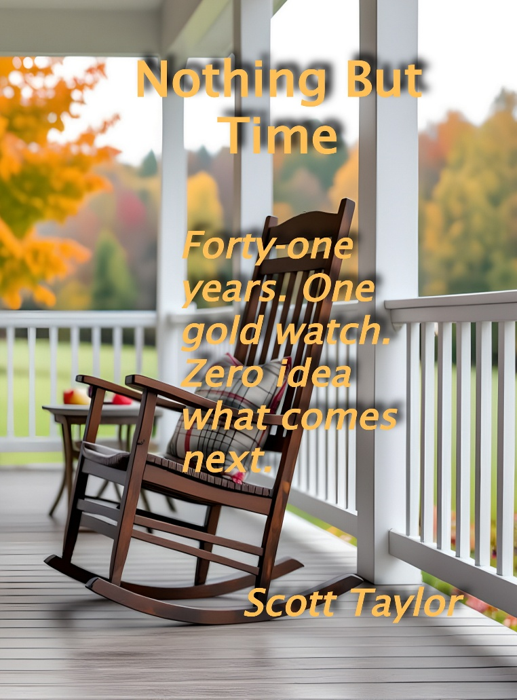
He spent his whole life working. Now he has nothing but time.

Jack Harper was the most dedicated employee his company ever had. Forty-one years without missing a deadline. Forty-one years without truly living.

When a forced retirement leaves him lost in the silence of his empty apartment, a letter from beyond the grave changes everything. His oldest friend, Ed, has died and left Jack a farmhouse in Vermont, along with a message he can no longer ignore:

“You’ve spent your whole life working. Now, it’s time to actually live.”

But the farmhouse holds more than memories. An antique radio plays songs from decades past. Fireflies rise from the grass like childhood returning. And sometimes, in the golden light of sunset, Jack sees Ed standing at the edge of the overgrown rose garden, waiting. Can a man learn to live when he’s spent a lifetime forgetting how?

When Silence Became My Only Frequency

When Silence Became My Only Frequency

When Silence Became My Only Frequency

Thirty-six months ago, I switched off the radios. Just like that, a hobby that had been woven into the very fabric of my identity went into hiding. The reason? One of my closest friends passed away. He wasn’t the first. Heartbreakingly, he wasn’t even the last to leave me. There have been so many others since. But this man—he was different. He was a father figure. He kept me grounded, kept me out of trouble. His absence left a void that static could never fill.Amateur Radio—Ham Radio—was my world from the time I was 13 years old. Through those airwaves, I didn’t just hear voices from distant lands; I connected with souls. Hours of late-night conversations turned strangers into friends, radio calls into coffee shop meetups, and eventually… into eulogies I never wanted to write.I became the youngest. The last man standing.


The Truth About #Grief No One Tells You

Here’s the thing about grief that catches you off guard: you never “get over it.” You don’t move past the loss—you learn to move with it.Yes, life goes on. The sun rises. Responsibilities call. But life? Life is never, ever the same. And that’s okay. It took me years to accept that this isn’t a flaw in healing—it’s the very nature of love. We grieve deeply because we loved deeply. The ache is proof that what we had was real. If you’re reading this and you’re in that dark place right now, please hear me: Your grief is not weakness. It’s not something to “fix.” It’s something to honor, to sit with, and eventually—when you’re ready, not when anyone else says you should be—to carry forward.


Finding My Way Back

I moved. Downsized from suburbia to the country, surrounded by open land and quiet skies. Every single one of those friends I lost would have loved it here. Plenty of room for antennas. Peaceful nights perfect for DXing.I finally built a shop—or as we hams call it, a shack.One by one, I began unboxing the old radios.Some I had purchased myself over the years. But many—so many—were bequeathed to me through wills I didn’t even know existed until long after my friends were resting. Each radio carries a memory. Each trinket, each piece of equipment, holds a story. One of them still carries the distinct scent of cigarette smoke. Its owner passed at 54. Smoking almost certainly led to his untimely demise. Every time I catch that faint smell, I hear his laugh, his voice breaking through the static late at night.


The First Transmission in Nine Years

Today, nine years after losing my dear friend, I finally turned one of the radios on.The crackle of static filled the room. It wasn’t the same. How could it be?But it was something. A small spark. A whisper of what once was—and maybe, just maybe, what could be again.


A Step Forward: Field Day 2026

As we approach another ARRL Field Day on June 27th, I’ve made a decision: I’m going to attend as a spectator.Ham conventions will never be the same without my friends. I suspect this event won’t be what I remember either. The voices will be different. The faces unfamiliar.But perhaps that’s the point.


The Battle Within

There’s a large part of me that wants to leave this chapter of my life buried—resting peacefully alongside those friends who made it so meaningful.But there’s also this quiet voice inside. A small but persistent whisper saying: It’s time.Time to embrace what is rather than mourn what was.Time to maybe—just maybe—become that person for someone else. The mentor. The father figure. The steady voice on the other end of the frequency who keeps a young ham out of trouble and shows them the magic of connection.


If You’re Grieving Too

To anyone reading this who has stepped away from something they loved because the pain of loss made it unbearable:

  • Give yourself permission to grieve on your own timeline. There is no “right” way or “right” amount of time.
  • Honor the memories, but don’t let them become a prison. Our loved ones wouldn’t want their memory to steal our joy forever.
  • Consider small steps. You don’t have to dive back in. Spectating, like I’m doing, is still showing up.
  • Talk about them. Say their names. Share their stories. They live on through us.
  • Seek support when you need it. Whether it’s friends, a counselor, or a community who understands—grief was never meant to be carried alone.
  • Know that honoring their legacy might mean continuing what you shared. Perhaps the greatest tribute is to keep going—and to be for someone else what they were for you.

The static crackles. The frequency awaits.I don’t know what comes next. But for the first time in a long time, I’m willing to find out.

73, my friends. 📻


If you’re curious about Field Day or want to find a local event to attend, visit: http://www.arrl.org/field-day

  • #FindingMyWayBack
  • #SmallStepsMatter
  • #StartingAgain
  • #EmbraceWhatIs
  • #GriefToGrowth
  • #VulnerabilityIsStrength
  • #MentalHealthMatters
  • #HonoringTheirMemory
  • #LastManStanding
  • #MentorsMatter
  • #CarryingTheTorch
  • #LegacyOfLove
  • #ConnectionMatters
  • #BeTheLight
  • #HamRadio
  • #AmateurRadio
  • #FieldDay2026
  • #ARRL
  • #73
  • #HamLife
  • #RadioAmateur
  • #HamRadioCommunity
  • #SilentKey
  • #GriefJourney
  • #GriefIsLove
  • #HealingTakesTime
  • #GriefAwareness
  • #LossAndLove
  • #GrievingProcess
  • #ItsOkayToGrieve
  • #GriefSupport
  • #HealingFromLoss
  • #YouAreNotAlone
12 Activities to Energize Your Writers’ Group and Elevate the Craft

12 Activities to Energize Your Writers’ Group and Elevate the Craft

May 28, 2026


As the director of a League of Writers, I’m constantly searching for activities that bring genuine value to our members. Over time, I’ve realized that writers’ groups exist everywhere—each one filled with passionate individuals striving to improve their craft and find community. With that in mind, I’ve compiled a list of activities that have worked well for us and might benefit your group too.Whether you’re leading a small local circle or a larger organization, these ideas can transform your meetings into dynamic spaces for creativity, learning, and mutual support.


1. Guest Speakers and Workshops

Inviting guest speakers breathes fresh energy into any group. Consider reaching out to published authors, editors, literary agents, or experts in fields relevant to your members’ interests.For example:

  • A sci-fi author could discuss world-building techniques
  • A psychologist could share insights into crafting realistic characters with complex psychological profiles
  • A comedian or humorist could explore how to weave humor into prose

These sessions expose members to new perspectives and provide invaluable insider knowledge.


2. Critique and Feedback Sessions

Constructive feedback is the lifeblood of improvement. Establish a structured critique process that feels safe and productive:

  • Writers read their work aloud or distribute it beforehand
  • Listeners provide constructive feedback while the author listens quietly—no defending or explaining during the critique
  • End with a Q&A where the author can ask clarifying questions

This approach helps writers truly absorb feedback rather than react defensively, allowing them to refine their craft with fresh eyes.


3. Creative Writing Prompts and Challenges

Prompts spark imagination and push writers outside their comfort zones. Try these approaches:

  • Write a short story based on a single evocative word or phrase
  • Use provocative music or artwork as inspiration for a scene
  • Challenge members to write in a genre they’ve never attempted—sci-fi, psychological thriller, romance, or horror

The element of surprise and constraint often produces surprisingly powerful work.


4. Themed Writing Exercises

Align exercises with your group’s collective interests:

  • Humor Writing: Craft a comedic piece inspired by a favorite comedian’s style
  • World-Building: Collaboratively create a fictional universe, with each member contributing a unique element—technology, culture, history, or geography
  • Character Deep Dives: Develop a character harboring a dark secret and brainstorm how it could drive an entire plot

Themed exercises create cohesion and allow members to learn from each other’s interpretations.


5. Book and Style Analysis

Studying the masters sharpens our own skills. Dedicate sessions to analyzing published work:

  • Compare the opening lines of two novels to discuss style, tone, and hooks
  • Have members share a favorite book and explain why the author’s voice resonates with them
  • Dissect humor writing techniques by examining essays or routines from beloved comedians

Understanding why something works teaches us how to replicate that magic.


6. Writing Retreats

There’s something transformative about stepping away from daily life to focus entirely on writing. Organize a retreat where members can immerse themselves in their projects:

  • A weekend getaway at a cabin, hotel, or retreat center
  • A virtual retreat with scheduled writing blocks and group check-ins

The camaraderie, shared goals, and uninterrupted focus can be profoundly motivating—and often produce breakthrough progress.


7. “Brags” and Celebrations

Writing can be isolating, and achievements often go unnoticed. Dedicate time at each meeting for members to share their wins:

  • Completing a chapter or draft
  • Submitting a manuscript to agents or publishers
  • Publishing a piece, receiving positive feedback, or hitting a word count goal

Celebrate these milestones with applause, small rewards, or simple acknowledgment. This fosters a sense of accomplishment and reminds everyone that progress—however small—matters.


8. Collaborative Projects

Working together builds community and teaches valuable lessons about the writing process:

  • Anthology: Each member contributes a short story around a shared theme
  • Collaborative Novel: Use the Snowflake Method or another plotting technique to outline a novel together, then divide chapters among members
  • Round-Robin Stories: One member writes the opening paragraph, then passes it to the next person to continue

These projects create tangible results the group can be proud of—and potentially publish.


9. Skill-Building Sessions

Target specific craft elements that challenge your members:

  • Writing natural, compelling dialogue
  • Crafting openings that hook readers immediately
  • Editing and revision techniques
  • Show versus tell
  • Pacing and structure

Use writing craft books, online resources, or invite a writing instructor to guide the session. Focused skill-building creates measurable improvement.


10. Fun and Interactive Activities

Not every meeting needs to be serious. Inject playfulness into your group:

  • Storytelling Games: Use random prompts or words to create a story collaboratively in real-time
  • Writing Roulette: Each member writes a paragraph, then passes their paper to the next person to continue—chaos and creativity ensue
  • Genre Swap: Rewrite a scene from your current project in a completely different genre (turn a thriller into a comedy, or literary fiction into sci-fi)

Laughter and play unlock creativity in unexpected ways.


11. Unconventional Inspiration Exercises

Draw writing prompts from unexpected sources:

  • Craft a story based on overheard conversations, mysterious radio transmissions, or strange signals
  • Use historical photographs or news headlines as story seeds
  • Write from the perspective of an inanimate object or an unusual narrator

Unusual starting points lead to original stories.


12. Psychological Exploration for Character Development

Deep, believable characters drive memorable fiction. Create exercises that explore psychology:

  • Write a scene from the perspective of a character with a specific psychological trait, fear, or condition
  • Explore how a character’s past trauma influences their present decisions and relationships
  • Develop detailed backstories that never appear on the page but inform every action

Understanding the human mind—its quirks, defenses, and desires—makes characters leap off the page.


Final Thoughts

A writers’ group should be more than a meeting—it should be a space where creativity flourishes, skills sharpen, and writers find the support they need to keep going. By incorporating a variety of activities, you can keep your group fresh, engaged, and continuously growing.I hope this list proves useful to writers’ groups everywhere. After all, when we lift each other up, we elevate the entire craft.What activities have worked well for your writers’ group? I’d love to hear your ideas.


Happy writing!

Here are a few of my projects…

When “Love” Becomes a Cage: The Silent Exploitation of Aging Parents

When “Love” Becomes a Cage: The Silent Exploitation of Aging Parents


The Scene We Know All Too Well

“Oh Dad, you fell. Listen, you can’t live by yourself anymore. You need someone taking care of you.”It sounds like concern. It looks like love. But far too often, it’s neither.What is disguised as an act of compassion is, in reality, a calculated move to get Dad out of the way—so that his assets can be quietly liquidated, his autonomy erased, and his life reduced to a transaction.


The Question No One Wants to Ask

Instead of bringing Dad into their home—cooking for him, checking on him, being present—what do you think this generation is all too eager to do?They put him in a facility. Out of sight. Out of mind. Out of the way.I’ve seen it far too many times. In fact, I wrote a short story based on a true account of this very thing: “Just As I Am”—because some truths are too painful to ignore and too important to stay silent about.


A Prison Disguised as “Care”

Once the parent is removed from their home, their freedom is absconded. They become a prisoner of their children’s making.The “rules” are set—not by doctors, not by the parent—but by the kids:

  • Dad is not to leave the facility under any circumstances unless they decide to take him out for a doctor’s appointment.
  • His world shrinks to a small room, a bed, a small TV, and a communal bathroom shared with strangers.
  • His identity dissolves. The man who built a life, raised a family, and earned everything he had is now reduced to a room number.

And then what happens?Dad becomes depressed. Bitter. Isolated. He tries to hold on through the few friends who still come to visit—but the light fades faster than it ever would have at home.He dies earlier than he should have. Not from illness, but from heartbreak.


Follow the Money

While Dad withers in his small room, here’s what’s happening on the outside:

  • His pension becomes their income.
  • His savings become their spending money.
  • His Social Security gets redirected.
  • His home and belongings are sold off or trashed.

The kids figure out exactly what it costs to keep Dad “housed”—and spend the rest on their own debt, a vacation, maybe a new car. After all, they’ve convinced themselves they deserve it.


The Lie They Tell Themselves

Once the adult children convince themselves that the Boomers owe them something—that they’re entitled to what their parents built—it becomes disturbingly easy to justify taking it.“They had it easier.”“They ruined the economy.”“They owe us.”But do they? They absolutely do not.


The Truth

Let me be blunt: This is a disgraceful way to treat your parents.Your parents deserve dignity—while they’re living and even after they stop breathing. No generation—Gen X, Millennials, Gen Z—has any right to anything that was not freely given to them.Your parents’ home is not your inheritance to claim early. Their pension is not your piggy bank. Their freedom is not yours to revoke because it’s inconvenient for you to actually care for them.A fall does not mean a life sentence. A moment of vulnerability does not give you permission to strip someone of everything they are.


A Call to Do Better

If your parent falls, help them up. Move in with them. Check on them daily. Hire in-home help. Modify their house. Be present.Do not warehouse them so you can raid their life’s work.They raised you. They sacrificed for you. They gave you the foundation you’re standing on.The least you can do is let them live—and die—with dignity.


Have you witnessed this happen to someone you love? I’d like to hear your story. And if you haven’t yet, read “Just As I Am”—a story born from watching this tragedy unfold in real life.

Here are some truths worth knowing…

Generational Responsibility: Moving Beyond Blame and Toward Action


While Millennials and Gen X face real economic challenges, blaming Baby Boomers for their financial struggles overlooks deeper cultural shifts in mindset and personal responsibility. History shows Boomers overcame severe adversity through frugality, hard work, and self-reliance—values that remain relevant today. Millennials who reject the blame narrative and embrace actionable financial discipline, such as Dave Ramsey’s Baby Steps, are proving that personal accountability is still the most effective path to financial independence.


Blaming Baby Boomers for the financial difficulties faced by Millennials and Gen X is, in many cases, an oversimplification that ignores both historical context and the power of personal responsibility. While it’s true that the cost of living has risen and economic conditions have changed, Boomers also faced significant adversity—such as double-digit inflation and sky-high mortgage rates—yet responded with a mindset of frugality, delayed gratification, and self-reliance. Today, a cultural shift toward instant gratification, externalized blame, and increased reliance on government assistance has contributed to a victimhood narrative among some younger generations. However, many Millennials who reject this narrative and instead focus on actionable steps—like those outlined in Dave Ramsey’s financial philosophy—are successfully building wealth and achieving independence.


1. Generational Mindset Gap: Work Ethic, Frugality, and Responsibility

Baby Boomers:

  • Core Values: Hard work, perseverance, loyalty, and the belief that success is earned, not given.
  • Financial Habits: Frugality, saving diligently, avoiding unnecessary debt, and practicing delayed gratification.
  • Attitude Toward Assistance: Strong stigma against government dependency; self-reliance was a point of pride.
  • Cultural Narrative: Setbacks were internalized as personal challenges to overcome, not blamed on external forces .

Millennials & Gen X:

  • Core Values: Flexibility, agility, and seeking purpose or fulfillment in work.
  • Financial Habits: Greater focus on experiences, instant gratification, and pragmatic use of debt.
  • Attitude Toward Assistance: More openness to government support and systemic solutions; increased focus on external barriers.
  • Cultural Narrative: Greater tendency to attribute setbacks to systemic issues, sometimes fostering a sense of victimhood or entitlement . | Dimension | Baby Boomers | Millennials & Gen X | | —————————- | ————————————- | ——————————————– | | Work Ethic | Earn what you have, loyalty | Flexibility, purpose-driven | | Financial Responsibility | Frugality, saving, delayed rewards | Experience-focused, instant gratification | | Attitude to Assistance | Self-reliance, stigma on welfare | Openness to support, systemic critique | | Narrative on Success/Failure | Personal responsibility | Systemic barriers, externalized blame |

2. Historical Examples: Boomers Overcoming Adversity

  • 1970s-80s Economic Turmoil: Boomers faced double-digit inflation and mortgage rates as high as 17%. Instead of relying on government aid, they responded by aggressively paying down debt, practicing minimalism, and prioritizing savings .
  • Debt Aversion: Consumer debt was avoided; Boomers aimed to be debt-free before retirement.
  • Steady Investing: Despite market downturns, Boomers invested consistently and lived below their means.
  • Cultural Frugality: Many Boomers repaired rather than replaced, bought in bulk, and delayed gratification to build long-term wealth .


Boomers’ financial discipline was forged in adversity, not ease. Their wealth-building habits were rooted in a culture of self-reliance and long-term planning.


3. Cultural Shift: From Self-Reliance to Victimhood

  • Boomers: Internalized setbacks, focused on what they could control, and saw government assistance as a last resort.
  • Millennials/Gen X: Greater focus on external barriers (e.g., student debt, housing costs), amplified by social media and cultural narratives that sometimes encourage blame and entitlement .
  • Result: While some economic challenges are real, the core difference is a shift in mindset—from “What can I do?” to “Who is to blame?” .

4. Millennials Succeeding Through Personal Responsibility

Despite the narrative, many Millennials are rejecting blame and building wealth through:

  • Budgeting and Saving: 59% prioritize saving, 41% stick to budgets, and 42% focus on debt payoff.
  • Side Hustles: 44% consider second jobs or side gigs to boost income.
  • Financial Literacy: Leveraging online resources and communities for education and support.
  • FIRE Movement: Many Millennials are pursuing Financial Independence, Retire Early (FIRE) through aggressive saving and investing .


Millennials who embrace personal responsibility and disciplined financial habits are disproving the notion that generational circumstances are destiny.


5. Dave Ramsey’s 7 Baby Steps: A Roadmap for Financial Responsibility

Dave Ramsey’s program offers a practical, actionable path for Millennials (and anyone) to take control of their finances:

StepDescriptionKey Principle
1Save $1,000 for a starter emergency fundBuild a buffer against small emergencies
2Pay off all debt (except mortgage) using the debt snowballMotivation through quick wins
3Save 3–6 months of expenses in a fully funded emergency fundSafety net for major life events
4Invest 15% of household income in retirementPrioritize long-term wealth
5Save for children’s college fundPlan for future generations
6Pay off your home earlyAchieve financial freedom
7Build wealth and giveGenerosity and legacy
Core Ramsey Principles:

  • Live below your means and avoid lifestyle inflation.
  • Attack debt with intensity (debt snowball method).
  • Build an emergency fund before investing or increasing lifestyle spending.
  • Take personal responsibility: “Personal finance is 80% behavior and 20% head knowledge.”
  • Avoid blaming external factors; focus on what you can control.
  • Hard work and hustle are essential for breaking cycles of debt and dependency .

Dave Ramsey Quote:
“You have to control the person in their mirror.”
“There’s freedom on the other side of debt. You don’t have to live like everyone else.”


Blaming Boomers for today’s economic challenges is not only historically inaccurate but also disempowering. Boomers faced—and overcame—serious adversity through a culture of self-reliance, frugality, and hard work. Millennials who reject the blame narrative and instead embrace personal responsibility, disciplined money management, and actionable steps like Dave Ramsey’s Baby Steps are proving that financial independence is still achievable. The most effective path forward is not to point fingers, but to take ownership and act.


Read the story on Reedsy and tell me what you think in the comments below. Thanks

The Art of the Deal: What’s Really in Trump’s Drug Pricing Agreements?

The Art of the Deal: What’s Really in Trump’s Drug Pricing Agreements?

An Opinion Piece on Transparency, Pharmaceutical Interests, and the Curious Timing of Hemp Industry Regulations


Donald Trump has always prided himself on being a dealmaker. His book, The Art of the Deal, famously acknowledges that not everyone walks away happy when the ink dries. That’s the nature of negotiation—someone wins, someone loses, and often, the details remain hidden from those most affected by the outcome.I’ve been paying close attention to the deals coming out of this administration, and I find it troubling that the American public rarely learns what’s actually in them. We hear the headlines. We see the press conferences. But the fine print? That stays behind closed doors.


The Lower Drug Prices Announcement

Let’s take the recent announcement on lower drug prices. On the surface, it sounds like a win for consumers. Who wouldn’t want more affordable medications?But here’s the question no one seems to be asking: What did the pharmaceutical industry get in return?Deals are, by definition, exchanges. If drug companies agreed to lower their prices, what incentive did they receive? What concession was made on their behalf?


A Curious Coincidence: The Federal Crackdown on Hemp

Shortly after the lower drug prices were announced, federal agencies turned their attention to the hemp industry with surprising intensity. For those who follow both markets, the timing raised eyebrows.Was this a coincidence? Perhaps. But consider this: hemp and CBD products have emerged as direct competitors to a wide range of pharmaceutical drugs—often at a fraction of the cost and without requiring a prescription or doctor’s visit.Could restricting the hemp industry have been part of the deal?


What Hemp and CBD Offer Consumers

To understand why pharmaceutical companies might view the hemp industry as a threat, consider the health benefits these products claim to provide:CBD (Cannabidiol) Benefits:

  • Pain Relief – Interacts with the endocannabinoid system to reduce inflammation
  • Anxiety and Stress Reduction – Helps alleviate symptoms of anxiety disorders
  • Sleep Improvement – Promotes relaxation and reduces insomnia
  • Epilepsy Treatment – FDA-approved (Epidiolex) for rare seizure disorders
  • Neuroprotective Properties – Potential benefits for Parkinson’s, Alzheimer’s, and MS
  • Anti-inflammatory Effects – May benefit arthritis and autoimmune conditions
  • Addiction Management – May help reduce cravings and withdrawal symptoms
  • Heart Health – Could lower blood pressure and improve cardiovascular function
  • Skin Conditions – Topical applications for acne, eczema, and psoriasis

Hemp Seeds, Oil, and Protein Benefits:

  • Nutrient-Rich – High in vitamins E, D, and A, plus essential minerals
  • Complete Protein – Contains all 9 essential amino acids
  • Heart Health – Omega-3 and omega-6 fatty acids improve cholesterol levels
  • Digestive Health – High fiber supports gut health
  • Hormonal Balance – GLA may reduce PMS and menopause symptoms
  • Energy and Weight Management – Promotes sustained energy and satiety

Note: While these benefits are promising, more research is needed, and individual results may vary.


The Competition: Pharmaceutical Alternatives

Now consider the pharmaceutical drugs that treat these same conditions—and the prices attached to them:

ConditionPharmaceutical Options
Pain ReliefOpioids (OxyContin, Vicodin), NSAIDs (Celebrex), Gabapentin, Lyrica
Anxiety/StressZoloft, Lexapro, Xanax, Ativan, Valium
Sleep IssuesAmbien, Lunesta, Trazodone
EpilepsyDepakote, Keppra, Lamictal, Epidiolex
InflammationPrednisone, Methotrexate, Humira
AddictionSuboxone, Methadone, Chantix
Heart HealthLipitor, Crestor, Lisinopril
Skin ConditionsTretinoin, Protopic, Humira
Digestive IssuesRemicade, Asacol, Miralax
Hormonal BalanceHRT, oral contraceptives, SSRIs

These medications require prescriptions, doctor visits, and often expensive medical tests. They generate billions in revenue for pharmaceutical companies—and for the broader healthcare system.


Who Wins and Who Loses?

Here’s the central question: If you can walk into a local vape shop and try hemp products—much like visiting GNC for supplements—who benefits, and who loses?When consumers can self-select affordable, over-the-counter alternatives to treat common symptoms, the following parties see reduced revenue:

  • Pharmaceutical companies – Fewer prescriptions filled
  • Doctors and clinics – Fewer office visits
  • Imaging centers and hospitals – Fewer diagnostic tests
  • Pharmacies – Lower prescription volume

Conversely, if hemp products are restricted or banned, consumers are funneled back into the traditional healthcare pipeline—often seeing a PA or NP instead of a physician, cycling through multiple medications to find one that works, and paying significantly more in the process.


The Call for Transparency

Here’s my bottom line: There needs to be full transparency in these deals.After recent revelations about mismanaged funds in learning centers and other federally funded programs, it’s clear we need stronger oversight mechanisms. We have the IRS to track tax compliance—why don’t we have an equivalent agency to track where our tax dollars actually go and to provide public accountability for these high-stakes agreements?The American people deserve to know:

  • What concessions were made in the drug pricing deal?
  • Why did the federal crackdown on hemp follow so closely?
  • Who benefits from these arrangements—and at whose expense?

Until we get answers, we’re left speculating about deals made in our name but without our knowledge.


What do you think? Is there a connection between lower drug prices and the hemp crackdown, or is it just coincidence? Share your thoughts in the comments below.

Ellie Morrow: A Tale of Grief and Magic

Ellie Morrow: A Tale of Grief and Magic

Ellie Morrow has spent six years in the foster care system learning one lesson above all others: she breaks things.

Televisions implode when she’s angry. Pipes rupture when she dreams. Crows gather wherever she goes—silent, watchful—as though waiting for a signal only they can hear. And deep behind her sternum, something that is not quite a heartbeat pulses with a power she never asked for: a residual fire left over from the night a mysterious golden light filled her parents’ car on Route 9, killed everyone inside except her, and left a seven-year-old child without a scratch or an explanation.

“You are not broken, Ellie. You are not dangerous. And you are not disposable.”

But the foster care system disagrees. And so, when an estranged grandmother named Agatha Morrow arrives to claim her—a woman who chose thirty years of silence over the burden of explanation—Ellie is pulled from the only world she has ever known into something older and stranger: the breathing, sentient world of the Morrow women. A bloodline of immense power stretching back centuries. A house on a nameless mountain, built above a nexus of forces older than language. A legacy of magic and grief, of doors that should not be opened and things that sleep beneath foundations, of wards that answer to family and a home that has been waiting for the right Morrow to return.But Ellie is not merely inheriting power. She is awakening something. The blood moon is coming, and whatever has been dreaming in the deep places beneath the Morrow house—vast, impossibly old, and stirring for the first time in generations—has begun to rise, drawn upward by a girl whose emotions can crack buildings and whose light can fill a room with the color of old gold.

Part coming-of-age story, part Gothic supernatural mystery, and part meditation on grief, survival, and the terrible weight of belonging to something larger than yourself, the Girl Who . . . series asks one question and dares its heroine to answer it:

Get your copy here…

Where they are
Essential Steps for Self-Publishing on KDP

Essential Steps for Self-Publishing on KDP

Hi there! I’m the proud owner of Purple Pen Productions LLC, and one of the things I often find myself doing is helping others understand what they need to think about before diving into the world of self-publishing.
Here’s the thing—writing isn’t just about crafting a great story. If you’re anything like me, writing is also a business. My creations are not only meant to entertain but also designed to build a passive income stream. So, how do you make that leap from writer to published author with a profitable book?
It all starts with one simple step: getting your ducks in a row! Let me show you how. 😊

Punchlist for Publishing a Book on KDP (Kindle Direct Publishing)

Publishing a book on Amazon’s KDP platform requires a combination of preparation, organization, and adherence to specific guidelines. Below is a comprehensive punchlist to help you gather everything you need before hitting “Publish.”


1. Manuscript Preparation

  • Final Manuscript:
    • Ensure the manuscript is proofread and edited.
    • Save the file in one of the accepted formats: DOCDOCXRTFTXT, or PDF. (KDP also accepts EPUB for reflowable eBooks.)
  • Formatting for Kindle:
    • Apply Kindle-specific formatting (e.g., use consistent headings, avoid excessive tabs or spaces).
    • Ensure the Table of Contents is properly linked (for eBooks).
    • Remove page numbers (for eBooks, as they vary by device).
  • Print-Ready PDF (for print books):
    • Ensure correct page trim size and margins based on the selected trim size.
    • Embed all fonts used in the document.

2. Cover Design

  • eBook Cover:
    • Dimensions: 2560 x 1600 pixels minimum (or a 1.6:1 aspect ratio).
    • Save the cover in JPEG or TIFF format at 300 DPI for high quality.
  • Print Book Cover:
    • Download KDP’s Cover Template for the specific trim size and page count.
    • Include a spine and back cover with space for the barcode.
    • Save the cover as a high-quality PDF (300 DPI).
  • Important Elements to Include on Cover:
    • Title and subtitle.
    • Author name.
    • Eye-catching design that reflects the genre of the book.

3. Metadata (Book Details)

  • Title and Subtitle:
    • Ensure your title and subtitle are finalized and optimized for keywords.
  • Author Name:
    • Use either your real name or a pen name consistently.
  • Book Description:
    • Write a captivating description (up to 4,000 characters).
    • Use HTML formatting (like bold and italics) for better readability on Amazon’s product page.
  • Keywords:
    • Brainstorm and research 7 keywords or phrases to help readers find your book.
  • Categories:
    • Choose 2 categories that best fit your book’s genre and content.
  • Age and Grade Range (for children’s books or specific audiences):
    • Specify if your book is for a particular age group or educational level.

4. ISBN and Publishing Rights

  • ISBN (International Standard Book Number):
    • KDP provides a free ISBN for print books, or you can use your own purchased ISBN.
  • Publishing Rights:
    • Confirm whether your content is public domain or original work.
    • Verify you hold the proper rights to publish the book.

5. Pricing and Royalty Options

  • Pricing:
    • Research competitive prices for books in your genre.
    • Set pricing for each marketplace (e.g., US, UK, EU).
  • Royalty Option:
    • Choose between 35% and 70% royalties (based on pricing and distribution preferences).
  • Kindle Unlimited/Kindle Select:
    • Decide if you want to enroll in Kindle Select for exclusivity and additional promotional options.

6. Marketing and Promotions

  • Author Page:
    • Set up or update your Amazon Author Page on Author Central.
  • Book Launch Plan:
    • Prepare announcements, social media posts, and newsletters.
  • Promotional Tools:
    • Consider running an Amazon Advertising campaign.
    • Plan free or discounted promotions (if enrolled in Kindle Select).

7. Test and Review

  • Preview Your Book:
    • Use KDP’s Previewer tool (both online and downloadable versions) to check formatting.
  • Proof Copies (for print books):
    • Order a print proof to verify layout, design, and content.

8. Post-Publication Essentials

  • Monitor Sales Reports:
    • Track sales and royalties in the KDP dashboard.
  • Gather Reviews:
    • Encourage readers to leave honest reviews on Amazon.
  • Update Metadata:
    • Periodically refine keywords, categories, or descriptions based on performance.

If you have questions, comment below.

I hope this helps!

Click here to see my latest books.

The Downsides of AI in Government Automation

The Downsides of AI in Government Automation

Title: AI Is Automating Government—But Not Where It Matters Most


If you’ve ever fought with your medical insurance carrier, you already understand the frustration of dealing with automated systems. The same algorithms now examining your insurance claims are coming for your tax returns—and the consequences could be far worse.

The Problem with Automated Decision-Making

Whether it’s a hospital billing department or the IRS, organizations increasingly rely on artificial intelligence to process claims and returns. These systems operate on rigid logic: either 2 + 2 equals 4.0000, or your submission is rejected. There’s no room for nuance, context, or critical thinking.Here’s how it breaks down:

  1. Billing departments must code everything precisely, or insurers reject claims automatically.
  2. Doctors must navigate coverage rules that change constantly.
  3. You are left calling multiple departments, waiting on hold for hours, and hoping the person on the other end isn’t distracted by screaming children or household chores.

I recently spent hours contesting a bill. One representative deflected my questions for thirty minutes before I heard her child screaming in the background. After another hour on hold, the line went dead. Coincidence? I doubt it.

The IRS Is Next

The IRS plans to adopt this same model for examining tax returns. Every discrepancy flagged by an algorithm must theoretically be reviewed by a human—but will those reviewers be focused, or will they be working from home with dishes piling up and dinner to make?Meanwhile, the U.S. tax code contains approximately four million words—seven times longer than the Bible—and has grown 70 percent since the 1990s. Americans collectively spend 1.5 billion hours filing returns each year. The complexity is staggering, yet the government’s response is automation without accountability.

The Real Question

Here’s what frustrates me most: if companies like Palantir can build software to audit taxpayers, why aren’t those same tools being used to prevent the billions of dollars in fraud we only discover when a determined thirty-one-year-old investigates Learning centers in Minnesota?

A Better Path Forward

  1. End remote work for critical government roles. As Elon Musk bluntly called it, “pretend work” undermines accountability.
  2. Build taxpayer-facing AI tools. Let citizens plug numbers into an IRS website that references the tax code automatically—no paid preparers required.
  3. Deploy fraud-detection AI aggressively. Use the same technology auditing citizens to audit government spending and political corruption.

Americans shouldn’t need to pay hundreds of dollars and spend dozens of hours just to comply with a tax system designed to confuse them. And they certainly shouldn’t watch politicians enter office as bartenders and leave as multimillionaires while algorithms reject legitimate returns over decimal points.If we’re going to let AI run the bureaucracy, let’s aim it at the right targets.

The Covid Fever

The Covid Fever

The Covid Fever by Scott Taylor

The woman’s hands burned against my spine—not the good burn of muscle releasing, but something older, stranger. I felt it enter through the skin.

“You feel that?” I asked.

She said nothing. Her Mandarin would have been useless to me anyway. Sweat beaded on her forehead despite the sixty-eight-degree room, and I watched a single drop fall onto my shoulder blade where it hissed, briefly, like water on a summer stone.

I should have known then.

“You’re warm,” I said. “Are you sick?”

She pressed her thumb into the scar tissue beneath my ribs—the place where the drunk driver’s sedan had rearranged my organs thirty years before—and I saw it: a thin red thread trailing from her breath, drifting toward my open mouth. It hung in the air the way dust motes do in late afternoon light, almost beautiful.

I inhaled.

The fever dreams came three nights later, vivid as prophecy. I stood in a city of masks, millions of faces covered, and watched the thread multiply—splitting and splitting until it webbed the whole world in crimson. A woman in a car screamed at me through her window, but I couldn’t hear her. A man on a motorcycle wove between the threads, helmetless, grinning.

“You’re not wearing protection,” my wife said, appearing beside me in the dream.

“Neither is he,” I said, pointing to the motorcyclist.

“He’s already dead,” she replied. “He just doesn’t know it yet.”

I woke with my throat on fire and a rash climbing my arms like ivy.

Dr. Chen examined my feet two weeks later, frowning at the purple discoloration on my toes.

“COVID toes,” she said, as though naming a new species. “You’re one of the early ones.”

“Early ones?”

“The thread-touched.” She wrote something on her clipboard. “You’ll carry it now. The mark doesn’t fade.”

I looked down at my feet. The purple had arranged itself into a pattern—forking lines like a river delta, or perhaps like the branching of a virus seen under a microscope.

“What does it mean?” I asked.

She smiled, but it didn’t reach her eyes. “It means you survived. That’s all survival ever means.”

Outside her window, I watched a red thread drift past, catching the light.

The Needle’s Bargain

The vaccination center smelled of antiseptic and something else—ozone, maybe, or the particular electricity of collective fear. We stood in lines that snaked through a converted gymnasium, each of us clutching appointment cards like tickets to uncertain salvation.

“Roll up your sleeve,” the nurse said. She didn’t look at my face.

“Which arm is better?”

“Doesn’t matter.” She drew the liquid into the syringe, and I watched it catch the fluorescent light. For a moment—just a moment—it shimmered gold, like something precious. Like a promise.

Then she jabbed.

“Jesus—” I jerked back. “You hit bone.”

“Hold still.” She pressed the plunger anyway.

I felt it enter: not just the vaccine, but something else. A cold that spread from the injection site down through my chest, branching like frost on a window. When I looked down at my arm, I could see it moving beneath the skin—silver threads racing toward my heart.

“Is that normal?” I asked.

She was already calling the next number. “Fifteen minutes in the observation area. If you don’t collapse, you’re fine.”

My wife found me that night in the bathroom, staring at my reflection.

“What are you doing?”

“Looking.” I pulled down my shirt collar. The silver threads had surfaced near my clavicle, forming delicate patterns like circuit boards. “Can you see them?”

She squinted, leaned closer. “See what?”

“The lines. Right here.” I traced them with my finger.

“There’s nothing there, honey.” She touched my forehead. “You’re warm. Maybe you should lie down.”

But I could see them. I could see them spreading.

The Fog

The cardiologist spoke in a voice designed for delivering bad news—soft, measured, with strategic pauses.

“Myocarditis,” he said. “Inflammation of the heart muscle.”

“From the vaccine?”

Another pause. “We’re seeing it in some patients. Rare, but not unheard of.”

“And these?” I held out my hands. The silver threads had reached my fingertips now, visible only to me, pulsing faintly with each heartbeat.

He examined my palms, frowning. “I don’t see anything unusual.”

“The patterns. Like veins, but silver.”

He made a note on his chart. “Brain fog is another reported side effect. Confusion, visual disturbances.” He looked up. “Are you sleeping?”

I laughed—a hollow sound. “When I sleep, I dream of red threads. When I’m awake, I see silver ones. Which would you prefer?”

The fog descended slowly, like weather moving in from a distant coast.

At first, it was small things: forgetting where I’d left my keys, losing words mid-sentence, standing in rooms without knowing why I’d entered. Then the gaps grew wider. Hours would vanish. I’d find myself in the garden at dusk, dirt under my fingernails, with no memory of planting anything.

“You were talking to the roses,” my wife said one evening. “For almost an hour.”

“What was I saying?”

“I couldn’t hear. But they were listening.” She handed me a glass of water. “The red ones were leaning toward you.”

I looked out the window. The roses—which I didn’t remember planting—had indeed turned their blooms toward the house. Toward me.

“They’re infected too,” I said.

“The roses?”

“Everything.” I could see it now: thin red threads connecting each flower to the next, running through the soil, climbing the fence posts, stretching toward the neighbor’s yard and beyond. The whole world, stitched together with virus.

My wife took my hand. “Maybe you should stop looking.”

“I don’t know how.”

***

I found others like me in the waiting rooms of specialists, in the comments sections of articles no one else would read, in the eyes of strangers who held my gaze a moment too long.

There was Marcus, a former marathon runner whose legs now traced with gold instead of silver—a different vaccine, a different pattern, the same bewilderment.

“Can you see them?” he asked, the first time we met in the parking lot of a blood clinic.

“The threads?”

He exhaled. “Thank God. My wife thinks I’m losing my mind.”

“Maybe we are.”

“Maybe.” He rolled up his sleeve. The gold lines spiraled from his wrist to his elbow, intricate as manuscript illumination. “But if we’re both losing it the same way, doesn’t that make it real?”

We started meeting weekly—Marcus, myself, and eventually others: Linda with her copper tracery, Ahmed whose patterns shifted colors with his mood, young Sophie who’d been marked at twelve and saw not threads but wings unfolding beneath everyone’s shoulder blades.

“What do the wings mean?” I asked her once.

“How ready they are,” she said.

“Ready for what?”

She looked at me with eyes too old for her face. “To leave.”

***

The nurse at my general practitioner’s office still wore her mask in late 2024, long after most had abandoned theirs.

“You know those don’t work,” I said. It came out sharper than I intended.

She stiffened. “They’re recommended.”

“Give me your hand.”

“Excuse me?”

“Just—here.” I took the bottle of scented sanitizer from the counter and squeezed some onto her palm. “Now smell your hands. Through the mask.”

She hesitated, then raised her hands to her face. Inhaled.

“Can you smell it?”

A pause. “Yes.”

“Those molecules—the ones carrying that lavender scent—they’re larger than the virus particles. Much larger.” I leaned back. “So what exactly is the mask catching?”

She pulled the cloth down from her nose, and I saw—briefly, flickering—a cloud of red threads escaping with her breath. She’d been carrying them all along. We all had.

“You can see it too,” she whispered. “Can’t you?”

I nodded.

She put the mask back on, hands trembling. “I’d rather not.”

***

I stopped asking doctors for answers. The answers lived elsewhere now—in the patterns themselves, in the spaces between breaths, in the dreams that came whether I wanted them or not.

One night, I dreamed of a man in a white coat, standing at a podium beneath a sky filled with branching red.

“Why?” I asked him.

He smiled. “The species was overgrown. Too many threads tangled together. We simply… pruned.”

“Millions died.”

“Millions die every year.” He gestured to the sky. “We just gave it a name. A face. Something to fear.” He leaned closer. “Fear is its own kind of virus, you know. It spreads faster than any pathogen. It changes behavior. It creates compliance.”

“Was it the virus or the cure?”

“Does it matter?” He began to fade. “You’re marked either way. You survived. That’s the only question that ever mattered.”

I woke with the song in my head—that old Bobby McFerrin tune, absurdly cheerful, a relic from a world that no longer existed.

Don’t worry. Be happy.

***

The threads never faded. If anything, they grew more vivid with time.

Marcus stopped seeing his gold after the third booster—said it burned away, left behind something like scar tissue in his vision. Linda’s copper turned green, then vanished entirely. Ahmed’s colors settled into a permanent amber.

Mine stayed silver. My wife learned to believe in them, eventually—not because she could see them herself, but because she could see me seeing them. She learned to read my face when the patterns shifted, to know when the fog was rolling in, to sit with me in the garden when the roses started whispering.

“What do they say?” she asked one morning.

“That it’s not over.”

“The pandemic?”

“The change.” I touched a petal, watched the red thread pulse beneath its surface. “We’re different now. All of us. Whether we can see it or not.”

She took my hand—the one laced with silver, the one that would never again be simply mine.

“Different isn’t dead,” she said.

“No,” I agreed. “It’s not.”

The roses turned toward us. The threads hummed. Somewhere, a new variant was learning its name.

And the world, marked and woven and strange, kept spinning anyway.

Explore Love and Adventure in Tides of the Heart

Explore Love and Adventure in Tides of the Heart

Set Sail with My New Novel: Tides of the Heart

Any author will tell you, writing a book is only half the journey. The other half? Sharing it with the world and inviting readers to embark on the adventure with you. I’ve poured my heart into this story, and now I’m thrilled to introduce you to what I believe is one of my favorite creations yet.

Let me ask you this: What happens when love pulls you off course and into uncharted waters?

That question is at the heart of my new novel, Tides of the Heart, a sweeping tale of love, self-discovery, and the courage to rewrite your story.

About the Story

Meet Lily Pemberton, a librarian who’s always lived a life of quiet predictability. Her days are carefully structured, her evenings buttoned-up, and her future shaped by her parents’ expectations. But everything changes when she crosses paths with Jack Rothwell, a roguish sailor with a thirst for adventure.

Jack pulls Lily into a world she’s only dared to dream of—filled with sun-drenched horizons, daring escapes, and the kind of love that shakes the foundation of everything she thought she wanted. As their worlds collide—his wild and free, hers measured and cautious—Lily finds herself at a crossroads. Will she stay anchored in the safe harbor of her past, or will she take a leap of faith and set sail toward an unknown but exhilarating future?

Set against the stunning backdrop of Hawaiian beaches and the open ocean, Tides of the Heart is about more than just romance. It’s a story for anyone who’s ever questioned their path, dreamed of a second chance, or longed for a life filled with adventure.

Why This Story Matters

This book holds a special place in my heart, and here’s why: even as the author, I couldn’t put it down during the editing process. It’s a story that reminded me of the importance of taking bold chances, of living fully, of choosing a life that’s wild, beautiful, and uniquely your own.

For anyone who loves magical realism, daring romance, and the kind of characters who feel like old friends, this is a story for you.

Get Your Copy Today!

I’m thrilled to announce that Tides of the Heart is now available in paperback! You can grab your copy here: Amazon Paperback.

The e-book version is still publishing, but I promise it’ll be available soon. Keep an eye out!

Your Feedback Means the World

When you’ve had a chance to read Tides of the Heart, I’d love to hear your thoughts. Whether it’s a short review on Amazon, a comment on social media, or an email, your feedback helps me grow as a writer and reach more readers who might connect with Lily and Jack’s journey.

Let’s keep this conversation going—what did the story make you feel? Which moments resonated most with you? Your voice is as much a part of this journey as mine.

Thank You for Being Part of This Adventure

Writing a book is an adventure, but sharing it with readers like you is the most rewarding part of the process. Thank you for coming along on this journey with me. Whether you’re a longtime reader or new to my work, I’m so grateful to have you here.

So, what do you say? Are you ready to set sail with Tides of the Heart?

Grab your copy today, and don’t forget to share your thoughts—I can’t wait to hear from you!