
There’s a particular kind of writer I used to be. I read voraciously, watched films with a notebook in my lap, memorized the rhythms of sentences I admired. I could tell you how Hemingway handled dialogue, how Cussler broke a paragraph, how a certain director held a shot three seconds too long to make you squirm. I knew everything about writing.And I had almost nothing to say.
The Secondhand Problem
Here’s the thing nobody tells you when you’re starting out: you can absorb an enormous amount of craft and still produce work that feels like a photocopy of a photocopy. The edges are soft. The contrast is gone. Something essential got lost in the reproduction.That’s what happens when your entire emotional vocabulary comes from other people’s stories. You write about heartbreak the way you saw it in a movie: the rain, the suitcase, the lingering look. You write about grief with the cadence of a novel you loved at nineteen. You write about joy as though joy were a convention rather than a sensation.None of it is wrong, exactly. It’s just not yours. And readers can feel that, even if they can’t name it. They sense they’re being handed a souvenir instead of an artifact.
Experience Is the Only Original Material
Every writer who ever moved you was working from something. Not something they read, but something they did, something that happened to them, something they survived or failed at or couldn’t stop thinking about at 3:00 a.m.
- The specific smell of your grandmother’s house.
- The way your hands shook the first time you had to say something true to someone you loved.
- The job you hated and the strange tenderness you felt for the people trapped in it with you.
- The country you went to where nobody understood you and you discovered who you were without an audience.
These things are not available in any library. They cannot be streamed. They are generated exclusively by showing up to your own life.A novel can teach you how to build a sentence. Only living can tell you what to put in it. I would also note that you cannot do this with video games. Sorry…
The Trap of the Well-Read Life
I want to be careful here, because this isn’t an argument against reading. Reading is essential. Reading is how you learn what’s possible, how you find your lineage, how you avoid reinventing wheels that were perfected a century ago.But there’s a difference between reading as nourishment and reading as substitution.Nourishment: you read, you digest, you go out into the world, and what you’ve read sharpens your perception of what you encounter.Substitution: you read instead of going out. You accumulate other people’s experiences as though they were a retirement fund you could draw on later. You become fluent in literature and illiterate in your own existence.The same applies to screens. You can watch a thousand hours of brilliant television and know exactly how a scene should be structured, yet never once have been the person in the room where something real was happening.
Living Is Not Always Dramatic
Let me head off an objection: this doesn’t mean you need to climb mountains or move to Paris or blow up your life for the sake of material. That’s its own kind of borrowed script, the Romantic Writer narrative, which is just as secondhand as anything else.Living fully is often quiet. It’s:
- Paying attention when you’d rather zone out.
- Having the uncomfortable conversation.
- Staying somewhere long enough to understand it.
- Letting yourself be bored without immediately reaching for a device.
- Risking embarrassment. Risking rejection. Risking caring about something publicly.
- Noticing. Constantly, relentlessly noticing.
A writer who truly inhabits an ordinary life in a small town will always have more to say than one who skims a spectacular life without ever landing in it.
What Changes When You Start Living
When you begin treating your life as the primary text, a few things happen.Your details get weirder, and better. Invented details tend toward the generic because imagination defaults to cliché. Remembered details are strange, specific, and utterly convincing. Nobody would invent that the man crying at the funeral was wearing one brown shoe and one black one. But that’s the detail that makes a reader believe.Your emotional range expands. You stop writing feelings you’ve read about and start writing feelings you’ve had. There’s a texture to the latter (contradictory, inconvenient, resistant to tidy description) that cannot be faked.You develop opinions. Real ones. Not positions you adopted from a writer you admire, but convictions you earned by bumping into the world and getting bruised. Voice is largely just the sound of someone who has actually made up their mind about something.You stop waiting for permission. When your material is your own, you no longer need to measure it against anyone’s standard. It’s simply true, and true things have a weight that cleverness never achieves.
The Practical Instruction
So here’s the whole thing, compressed:Close the book. Turn off the screen. Go have the day.Then come back and write it down.Not literally; I’m not asking for a diary. I’m asking you to let your actual life, with its actual humiliations and small ecstasies and long uneventful Tuesdays, be the raw ore you’re refining. Everything you read and watch should be the tools. Your life is the material. Don’t confuse the two.
A Last Thought
Your story is being written whether you participate or not. The days are accumulating. The question isn’t whether there will be a narrative, because there will be. The question is whether you were present for it, or whether you spent it watching someone else’s.The most original thing you will ever produce is an honest account of having been alive.So go be alive. The writing will follow.
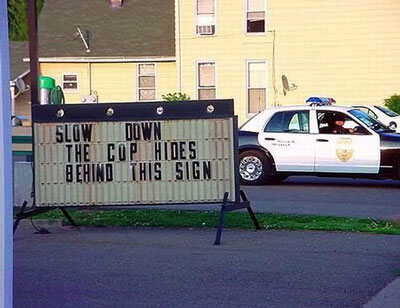
About the cover : I wrote this memoir, and I would like your opinion on the cover art. I won’t tell the whole story here, but suffice it to say, I have had more guns pointed at me by cops than should ever have been pointed at anyone. If there was ever a victim of police irresponsibility, I could have been the poster child.
You can find this book and others here.








You must be logged in to post a comment.